BPCE_URD_EN 2025
-

-
2025 Universal Registration Document and Annual Financial Report
Groupe BPCE, the second largest banking group in France, performs a full range of banking and insurance activities. With over 100,000 employees, Groupe BPCE serves 35 million clients worldwide including individuals, professionals, companies, investors and local authorities.
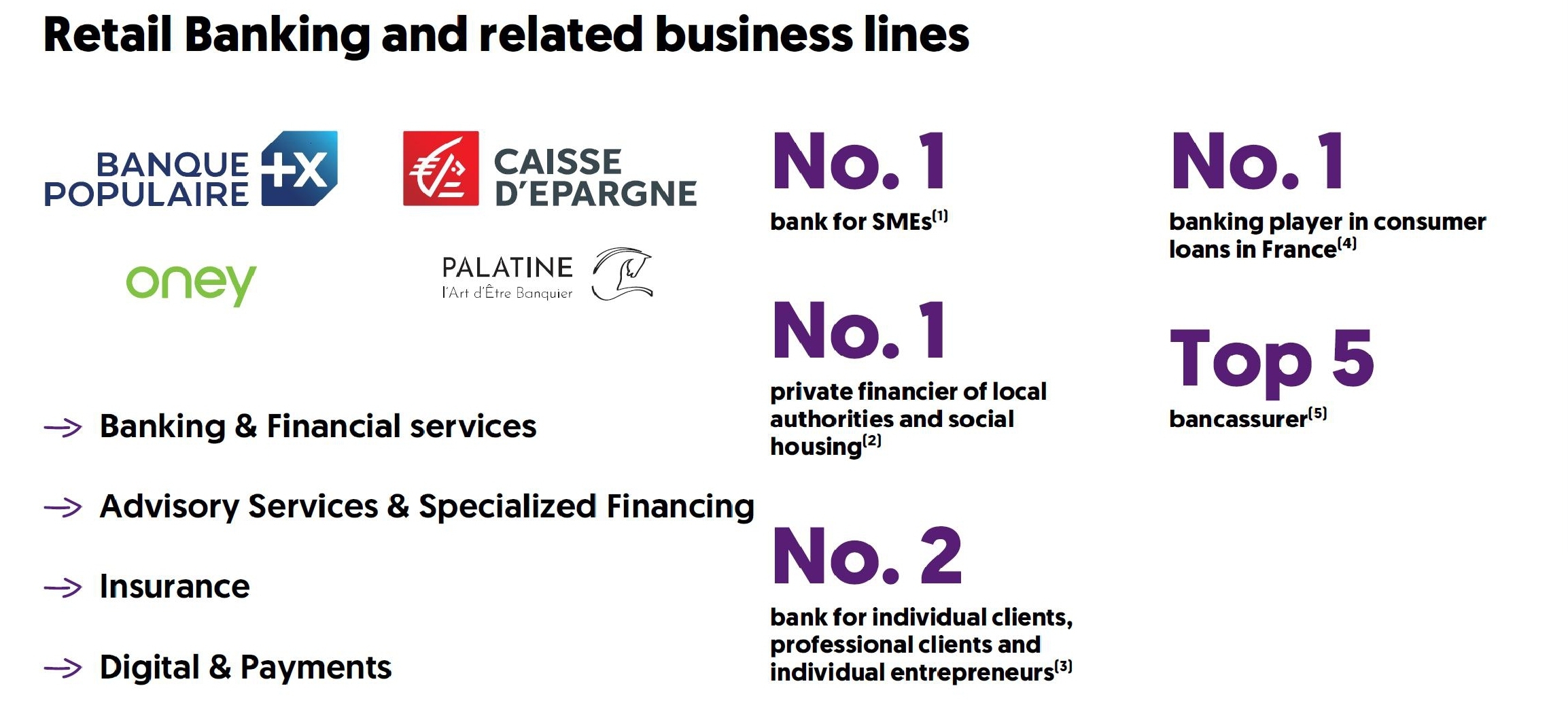
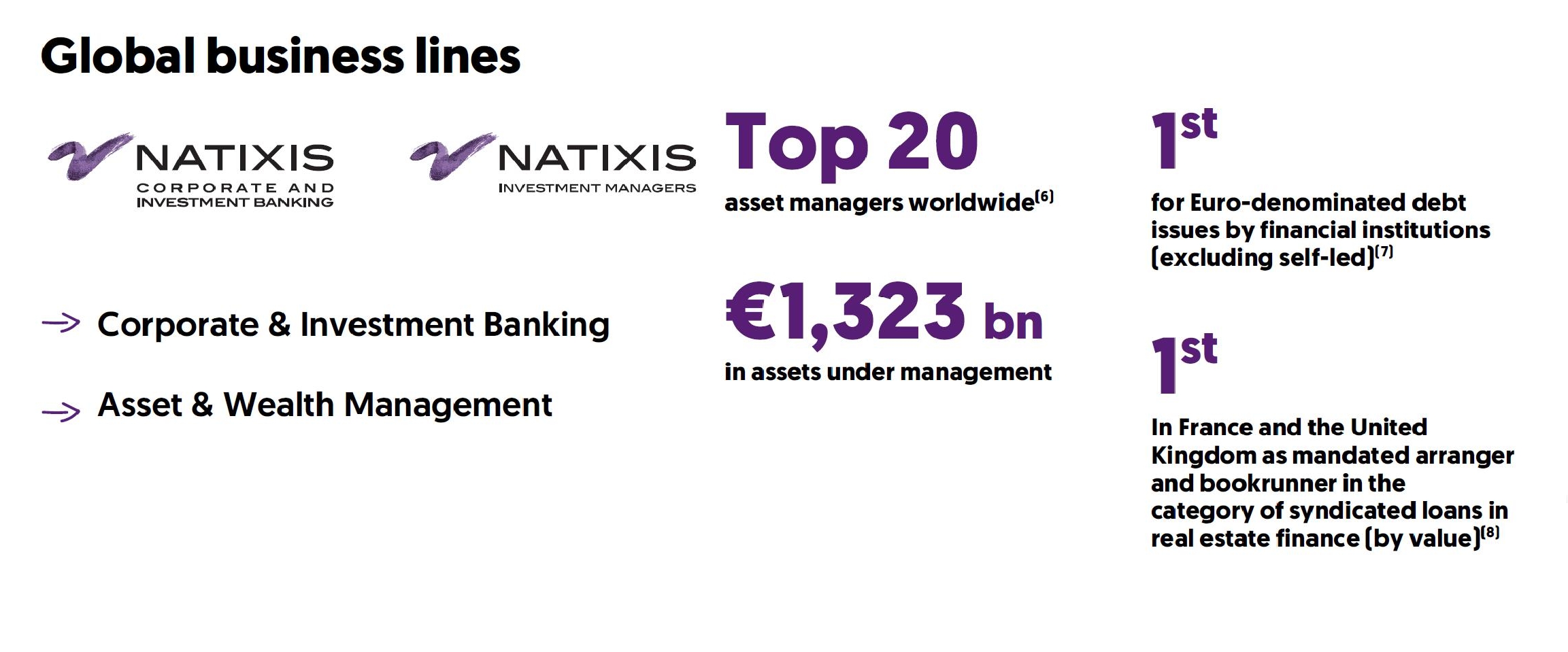
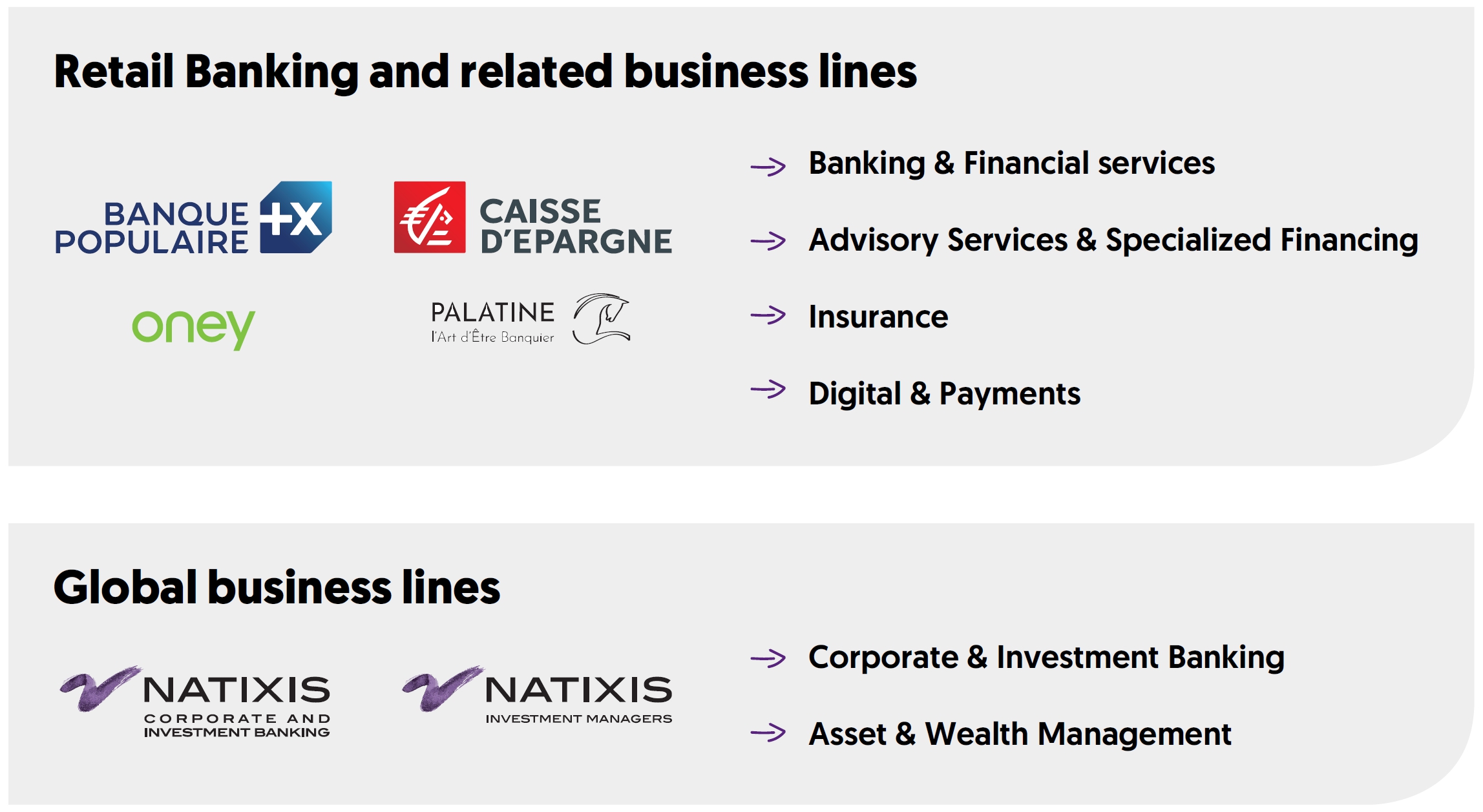
It operates in the retail banking and insurance fields in France via its two major cooperative networks, Banque Populaire and Caisse d’Epargne, along with Banque Palatine and Oney. It also pursues its activities worldwide with the Corporate & Investment Banking services provided by Natixis Corporate & Investment Banking and Asset & Wealth Management, with Natixis Investment Managers.

www.groupebpce.com
This Universal Registration Document was filed on March 19, 2026 with the AMF, in its capacity as the competent authority in respect of Regulation (EU) No. 2017/1129, without prior approval pursuant to Article 9 of said regulation. The Universal Registration Document may only be used for the purposes of a public offering or admission of securities to trading on a regulated market if it is accompanied by a memorandum pertaining to the securities and, where applicable, an executive summary and all amendments made to the Universal Registration Document. The complete package of documents is approved by the AMF in accordance with Regulation (EU) No. 2017/1129.
Copies of this Universal Registration Document may be obtained free of charge from BPCE, 7, Promenade Germaine Sablon 75013 Paris.
The English version of this report is a free translation from the original which was prepared in French. All possible care has been taken to ensure that the translation is an accurate presentation of the original. However, in matters of interpretation, views or opinions expressed in the original language version of the document in French take precedence over the translation. Only the French version of the Universal Registration Document has been submitted to the AMF. It is therefore the only version that is binding in law.
Message from the Chairman of the Management Board

Photo credit: Alexis REAU
Nicolas Namias
Chairman of the Management Board of BPCE

Our cooperative group has established itself as a leading European player by achieving very solid performance, driven by all our business lines, and by achieving key milestones in the execution of our strategic project.
In 2025, our group was able to combine excellent performance in all our banking, insurance and asset management business lines with a sustained deployment of VISION 2030, our strategic project. We achieved a record performance with net banking income of €25.7 billion and net income of €4.1 billion, up 10% and 15%, respectively, while carrying out numerous significant initiatives and taking landmark decisions across our three growth circles.
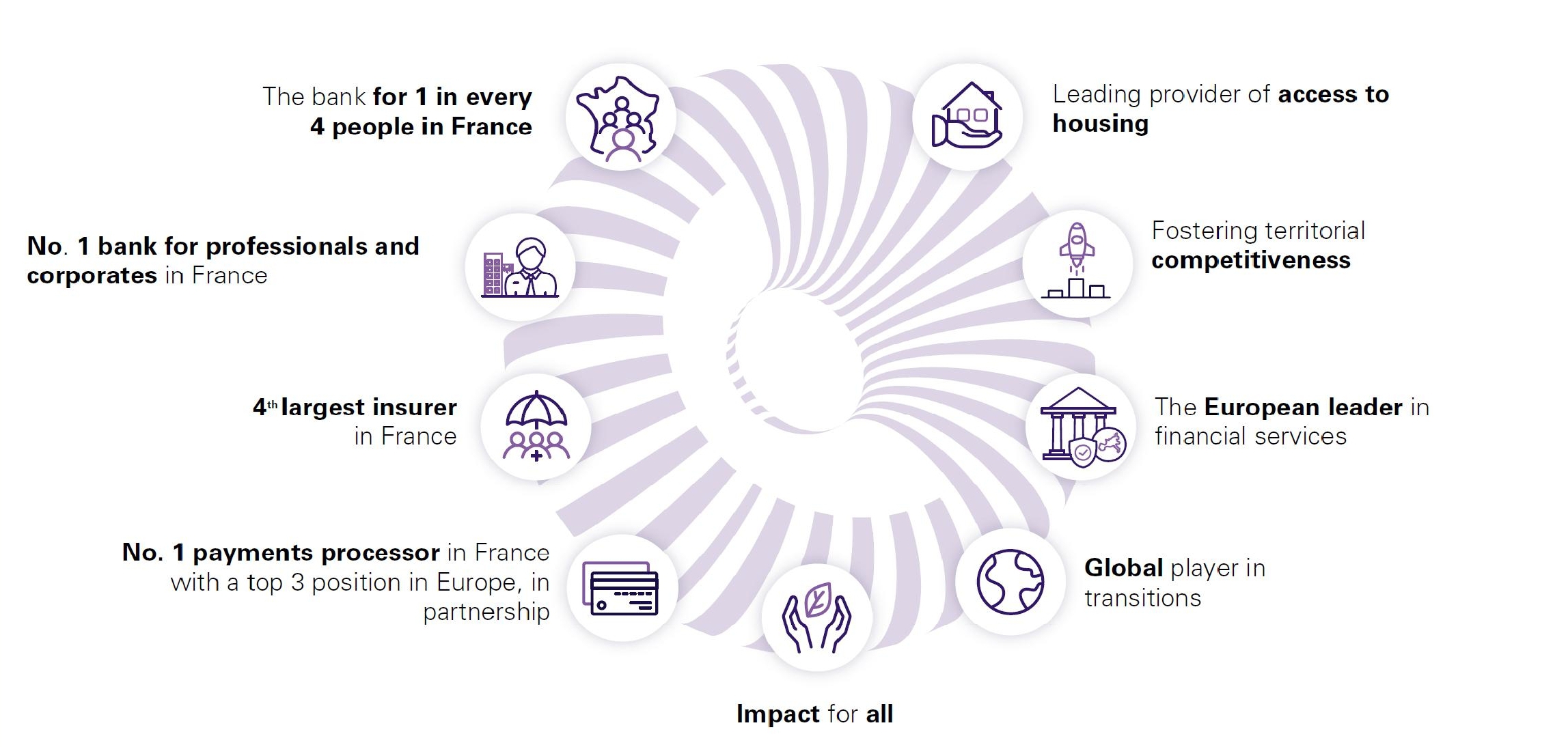
In France, many initiatives are serving our ambition to become the bank of one in four French people and the leading bank for entrepreneurs, in particular through the project to create a common technological platform for the Banques Populaires and the Caisses d’Epargne. We also confirmed our position as the 5th largest insurer.
In Europe, we are affirming the Group’s development in the service of the continent’s economic and financial sovereignty. We are now deploying our expertise in capital goods financing with BPCE Equipment Solutions, continuing the development of a new payments processor with Estreem and preparing for the integration of novobanco, Portugal’s 4th bank – a transaction that is the largest cross-border banking acquisition in the Eurozone in over a decade.
Worldwide, the banking license obtained by Natixis CIB in Japan opens up new growth prospects in the APAC region, while Natixis IM is strengthening its distribution, thanks in particular to a wealth management partnership in the United States.
Other projects that have been successfully completed demonstrate the momentum at work in the Group: the launch of a new Housing & Real Estate business line designed to better coordinate our strengths and meet the different needs of all our clients; the creation of a defense sector, which demonstrates our desire to strengthen our support for DTIB companies and contribute to territories’ sovereignty and competitiveness. In line with our objective of making impact accessible to all, we have also undertaken more than twenty projects to protect local natural ecosystems linked to water and forests and we have set up the unprecedented “Achats 2030” consortium, to accelerate the decarbonization of the bancassurance sector.
Conquest of new business and acceleration of our development in Europe, but also capacity for financial innovation, management of our financial balances and credibility of our signature: our cooperative group has established itself as a leading European banking player. These results have been achieved thanks to the commitment of our 100,000 employees, who work every day to meet our clients’ expectations and strengthen our presence in all regions. I would like to warmly thank them for this collective success.
A cooperative full-service banking and insurance group serving its clients, cooperative shareholders, regions and the economy
Groupe BPCE is the No. 2 banking group(1) in France and finances over 21%(2) of the French economy. All our customers, be they individuals, professionals, associations, corporate customers of all sizes or institutional customers, have constantly evolving expectations, with increasing demands in terms of availability, feedback, advice and service.
Our business lines, in France and internationally, offer solutions tailored to meet these needs, in retail banking and insurance, financial solutions & expertise, payments, corporate & investment banking and asset & wealth management.
In the regions and internationally, our brands support our clients in all their projects, through all distribution channels, by offering them a complete range of financial services and offers.
Thanks to its unlisted cooperative nature, which enables it to invest to meet the challenges of tomorrow, Groupe BPCE is committed to long-term action and provides local and concrete responses to economic and societal transformations. Its cooperative model is a performance factor, in line with society’s expectations.
- (1) Market shares: 22.06% in customer savings and 21.19% in customer loans (Banque de France Q3 2025 all non-financial customer categories).
- (2) 21.19% market share in outstanding loans, all non-financial sector customers (Banque de France Q3 2025).
- (1) 2025 Kantar SME SMI survey.
- (2) Observatoire de la dette Finance Active des Collectivités Locales at the end of 2024 and Observatoire Finance Active de la dette des bailleurs sociaux.
- (3) 37.9% penetration rate among professional customers and individual entrepreneurs (Pépites CSA 2023-2024 survey).
- (4) Athling #laminutecreditconso study (2024).
- (5) L’Argus de l’assurance 2024.
- (6) IPE Top 500 Asset Managers 2025 Report.
- (7) Dealogic.
- (8) Dealogic.
Strategic project

and objectives for 2026
Enabling our customers, cooperative shareholders and employees to approach the future with confidence
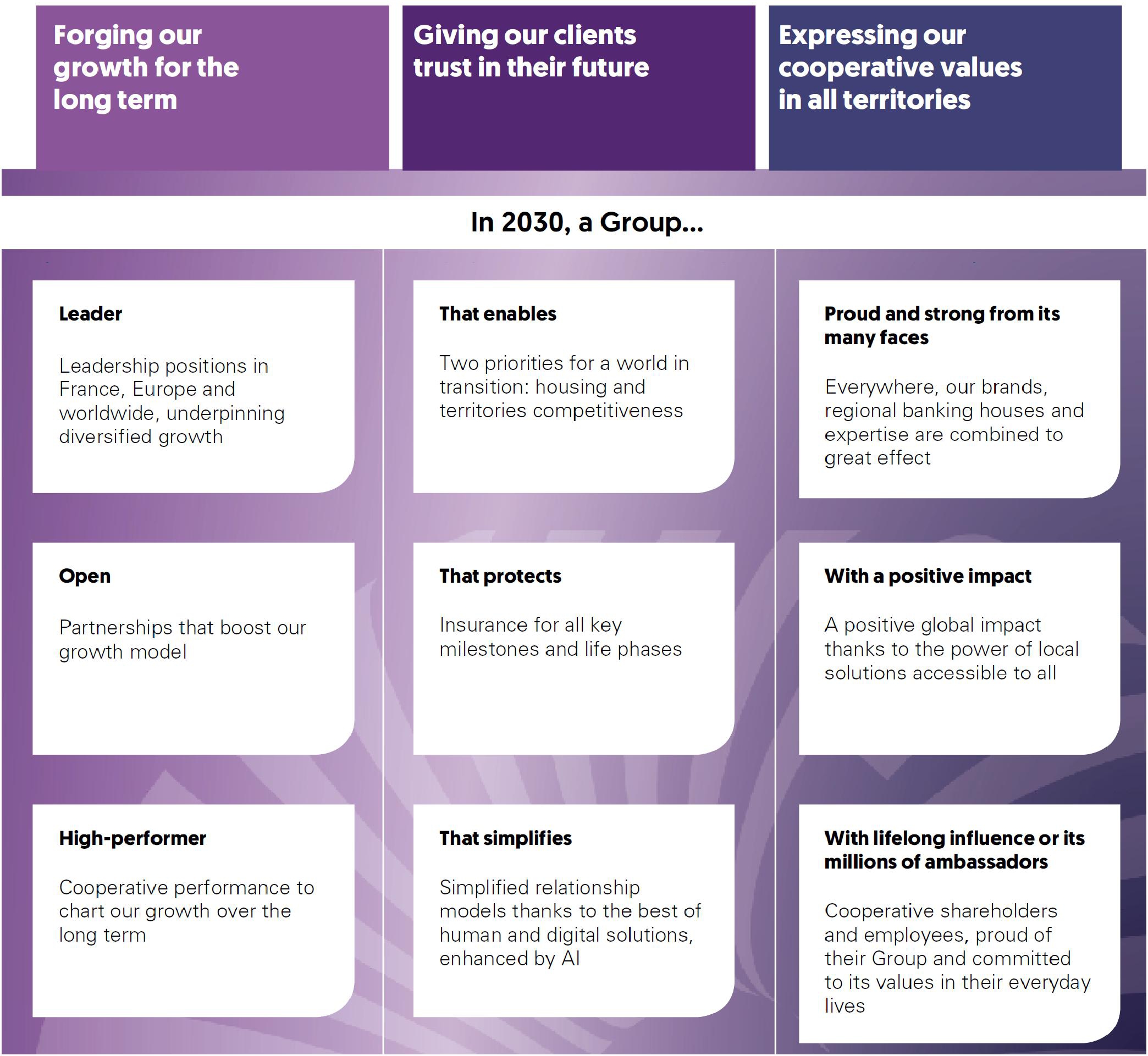
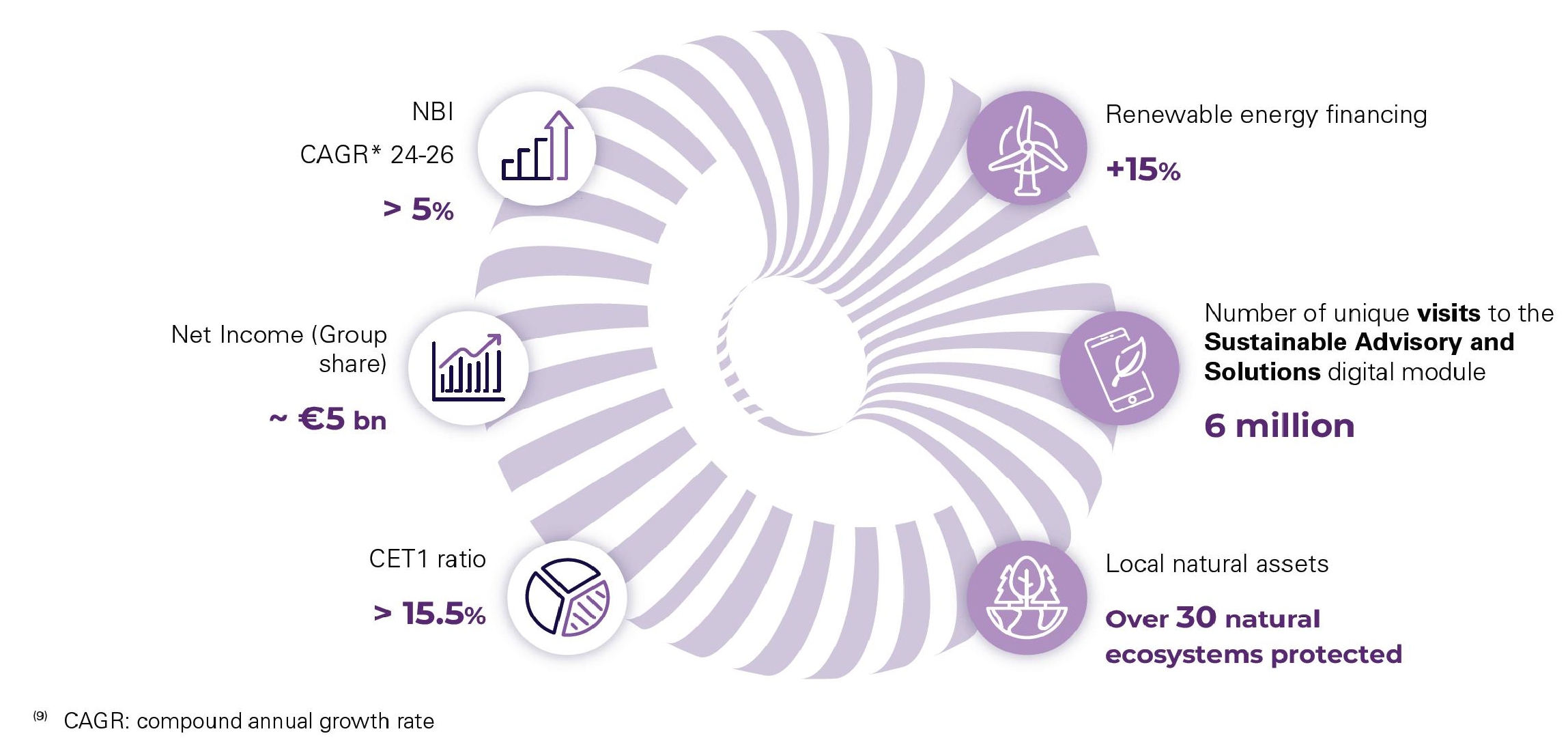
Groupe BPCE has opened a new chapter in its history with the launch of its VISION 2030 strategic project. Outlining the main strategic priorities of the Group and its business lines between now and 2030, this project is resolutely focused on the growth and diversification of its activities. It has commercial, financial and non-financial objectives for 2026 that already capitalize on several ambitious projects announced from 2024.
True to its cooperative nature, Groupe BPCE has mobilized the 14 Banques Populaires, the 15 Caisses d’Epargne and BPCE’s business lines, in order to build a growth project to serve its clients in a society marked by four major transitions: environmental, demographic, technological and geopolitical. The acceleration and mutual reinforcement of these transitions may generate uncertainty. Faced with this situation, Groupe BPCE is mobilizing its local and regional presence, its business lines and expertise, to enable its customers, cooperative shareholders and employees to assert their power to act and to trust in the future.
Committed movement Our achievements in 2025
A growth momentum is already at work across all the Group’s institutions, business lines and functions. 2025 was also marked by the announcement of transformative projects for the Group, which illustrate the movement initiated:
- Launch of a joint technological platform project for the Banques Populaires and the Caisses d’Epargne. This project provides an ambitious response to new technological challenges and makes it possible to take full advantage of economies of scale. It will accelerate investments, optimize the service offered to 35 million customers, and enrich the day-to-day lives of the Group’s employees, thus supporting the development of retail banking in France. This project will respect the identity of the two banking networks, Banque Populaire and Caisse d’Epargne.
- After announcing their strategic partnership project in the payments sector in June 2024, BNP Paribas and BPCE finalized their agreement in February 2025, in line with the schedule, creating Estreem, the new French leader in payment processing. The ambition is to place Estreem among the Top 3 processors in Europe.
- With the creation in March 2025 of BPCE Equipment Solutions, as a result of the acquisition of Société Générale Equipment Finance (SGEF), BPCE became the European leader in capital goods leasing and a leading global player with operations in 24 countries.
- The launch in March 2025 of a new Housing & Real Estate business line. This initiative aims to make BPCE the leading banking group in the entire real estate value chain, for everyone and for all needs. The business line will develop three strategic priorities:
- – “Offer more housing in all regions”;
- – “Promote access to housing for the French people and the enhancement of their assets”;
- – and “Support households in renovating and adapting their homes”.
- The proposed acquisition of novobanco with the signing on August 1, 2025 of a Sale and Purchase Agreement to acquire 75% of novobanco’s share capital from Lone Star Funds, and on October 29, 2025 of an agreement with the Portuguese State and the Portuguese Banks Resolution Fund to acquire their minority stakes (11.5% and 13.5%, respectively). With this project, BPCE would become the sole shareholder of Portugal’s fourth largest bank and make Portugal the Group’s second largest domestic retail banking market.
- In 2025, the Group increased the number of initiatives to support the competitiveness and sovereignty of its regions:
- – In February 2025, the Group announced the plan to create BPCE Partenaires conseil, a new advisory structure dedicated to SMEs, mid-sized companies and institutions to support them in their development, adaptation and transformation challenges;
- – In June 2025, Banque Populaire and Caisse d’Epargne were the first French banks to sign an agreement with the European Investment Bank to support small and medium-sized defense companies through a €300 million loan;
- – Lastly, on August 28, 2025, BPCE successfully finalized the first “European Defence bond” issued by a financial institution in Europe. The funds raised through this pioneering initiative – €750 million –will be used to finance and refinance assets in the defense sector.
These projects, combined with a global development dynamic, contribute to the growth of the Group and its business lines.
Groupe BPCE, a Group with a positive impact committed to making impact accessible to all
A Group with positive impact
The cooperative nature of the Banques Populaires and the Caisses d’Epargne combined with their strong local presence have made Groupe BPCE a financial player with a positive societal impact since its inception, particularly committed to the decarbonization of the economy in recent years. Groupe BPCE’s global business lines – Natixis Corporate & Investment Banking and Natixis Investment Managers – are positioning themselves as key global players in a world in transition.
Making impact accessible to all By 2030, the impact revolution will depend on our ability to ensure that the greatest possible number of people benefit from it; this is the essence of ‘impact for all’.
Local solutions, global impact Our local roots allow us to focus our actions on the local level, inspired by the idea that this is where it is possible to begin building a desirable and sustainable world. Both in France and abroad, our companies contribute to a more sustainable economic and social development within the local region or part of the world in which they are located.

All customers whether they are individuals, corporates or local authorities, by supporting and making their transition possible. All territories and all the society, because the Group’s cooperative nature ensures its ability to bring together local players and undertake regional initiatives. 

All employees and boards of directors, by mobilizing 100% of Groupe BPCE’s employees, companies and governance bodies around ESG issues. In response to the climate emergency, our approach sets out to ensure the rapid implementation and rollout of measures designed to mitigate and adapt to the already tangible environmental and socio-economic impacts of climate change.
Making the impact accessible to all means raising awareness and providing extensive support to our customers in the environmental transition by providing them with expertise, advisory services, and comprehensive solutions:
- Supporting energy renovation and the adaptation of housing to aging and loss of autonomy by offering financing solutions and by mobilizing our role as an operator, trusted third party as well as our partnerships;
- Supporting the transition of business models from SMEs to the largest international companies with a dedicated local dialog and a contribution of sector expertise to integrate ESG issues according to their size and economic sector;
- Offering sustainable savings and investment solutions through a range of responsible investments;
- Supporting the evolution of the energy mix, particularly in the development of renewable and low-carbon energies;
- Aligning our financing and insurance portfolios with trajectories based on scientific scenarios compatible with the objectives of the Paris Agreement;
- Working to reduce the pressure on nature and gradually integrate the protection of biodiversity into our activities.

Stemming from century-old brands in close contact to territories and the needs of both customers and society, our companies have played a societal role since their origins:
- 1st bank for SMEs, we are also a leading financer of the Social and Solidarity Economy;
- A key player in solidarity finance and social entrepreneurship;
- A long-standing partner in social housing;
- Support for the most vulnerable populations with adapted products and services, and economic empowerment of everyone through action and acculturation programs.
In the regions, the Banques Populaires and the Caisses d’Epargne are key players in the dynamic development of our territories by financing the construction or renovation of infrastructure and facilities necessary for education, health or mobility. They are the leading private financer of local authorities and the hospital sector. Globally, Natixis Investment Managers and Natixis Corporate & Investment Banking are developing their Asset & Wealth Management and Corporate & Investment Banking business lines in more than 40 countries in compliance with international commitments, in terms of investment and financing.
The sponsorship of the 14 Banques Populaires is measured each year via their Cooperative and Societal Footprint, which identifies and values in euros the CSR and cooperative actions implemented within each bank.
Created by philanthropists, the Caisses d’Epargne have been working to promote social cohesion and the fight against exclusion since their inception. They support structures of general interest in various fields: housing, solidarity, biodiversity, financial inclusion, financial education, heritage.
Innovative in Sustainable Finance, the Group has set a target of issuing more than five green, social or health financing instruments per year, using all the debt instruments at its disposal.
In order to support our clients’ transitions, with in-depth expertise and taking into account new market methodologies, we have launched an internal transformation plan for all Group companies at every level.
This pragmatic, shared and managed impact approach enables Groupe BPCE to operate as a banker, insurer and investor in the service of all its customers, bringing economic, societal and environmental performance to the heart of the territories and regions of the world where it is present.

Marie Pic-Pâris Allavena

Vice-Chairwoman of the Supervisory Board of BPCE, Chairwoman of the Board of Directors of Banque Populaire Rives de Paris

François Brun

Chairman of the Board of Directors of CASDEN Banque Populaire

Benoît Catel

Chief Executive Officer of Banque Populaire Grand Ouest

Philippe Henri

Chairman of the Board of Directors of Banque Populaire Méditerranée

Daniel Karyotis

Chief Executive Officer of Banque Populaire Auvergne Rhône Alpes

Catherine Mallet

Chairwoman of the Board of Directors of Banque Populaire Occitane

Jérôme Saddier
Chairman of the Board of Directors of Crédit Coopératif

Eric Fougère
Chairman of the Supervisory Board of BPCE, Chairman of the SSB of Caisse d’Epargne Bourgogne Franche-Comté

Christine Fabresse
Chairwoman of the Management Board of Caisse d’Epargne CEPAC

Françoise Lemalle

Chairwoman of the SSB of Caisse d’Epargne Côte d’Azur

Didier Patault
Chairman of the Management Board of Caisse d’Epargne Ile-de-France

Benoît Pellerin

Chairman of the SSB of Caisse d’Epargne Normandie

Philippe Rougeot
Chairman of the SSB of Caisse d’Epargne Languedoc-Roussillon

Valérie Savani
Chairwoman of the SSB of Caisse d’Epargne Loire-Centre

Bruno Deletré
Chairman of the Management Board of Caisse d’Epargne Grand Est Europe

Philippe Hourdain
Chairman of FNBP, Chairman of the Board of Directors of Banque Populaire du Nord

Frédérique Destailleur
Chairwoman of the Management Board of Caisse d’Epargne Aquitaine Poitou-Charentes

Jean-Paul Julia
Chief Executive Officer of BRED Banque Populaire

Alain Di Crescenzo
Chairman of FNCE, Chairman of the SSB of Caisse d’Epargne Midi-Pyrénées

Mathieu Réquillart
Chief Executive Officer of Banque Populaire Val de France
- – Banking and financial markets
- – Accounting and audit
- – Assessment of the effectiveness of the systems
- – Strategic planning
- – Legal requirements and regulatory framework
- – AML-CTF
- – Risk management
- – Social and solidarity economy
- – Cooperative banking experience
- – The Group’s business lines
- – Regional specificities
- – Economic and regional environment
- – Human Resources
- – Interpretation of the financial information of a credit institution, identification of the main issues on the basis of this information and appropriate controls and measures
- – Knowledge and experience of climate and environmental risks
- – International
- – Information systems and digital
- * The average skill levels of Board members are detailed in the Supervisory Board’s collective skills matrix, Section 4.4.2 of this Universal Registration Document.
€1.2bn €5.3bn €4.2bn x 2 92/100 in energy renovation financing (Individual clients - Retail banking) in transition and decarbonization financing (Corporate clients - Retail banking) in green and social public issues in 2025 growth in green revenues equal to 2 X the growth in total revenues (Natixis CIB) index on gender equality 2025 -
1 Presentation of Groupe BPCE
-
1.1 Group history
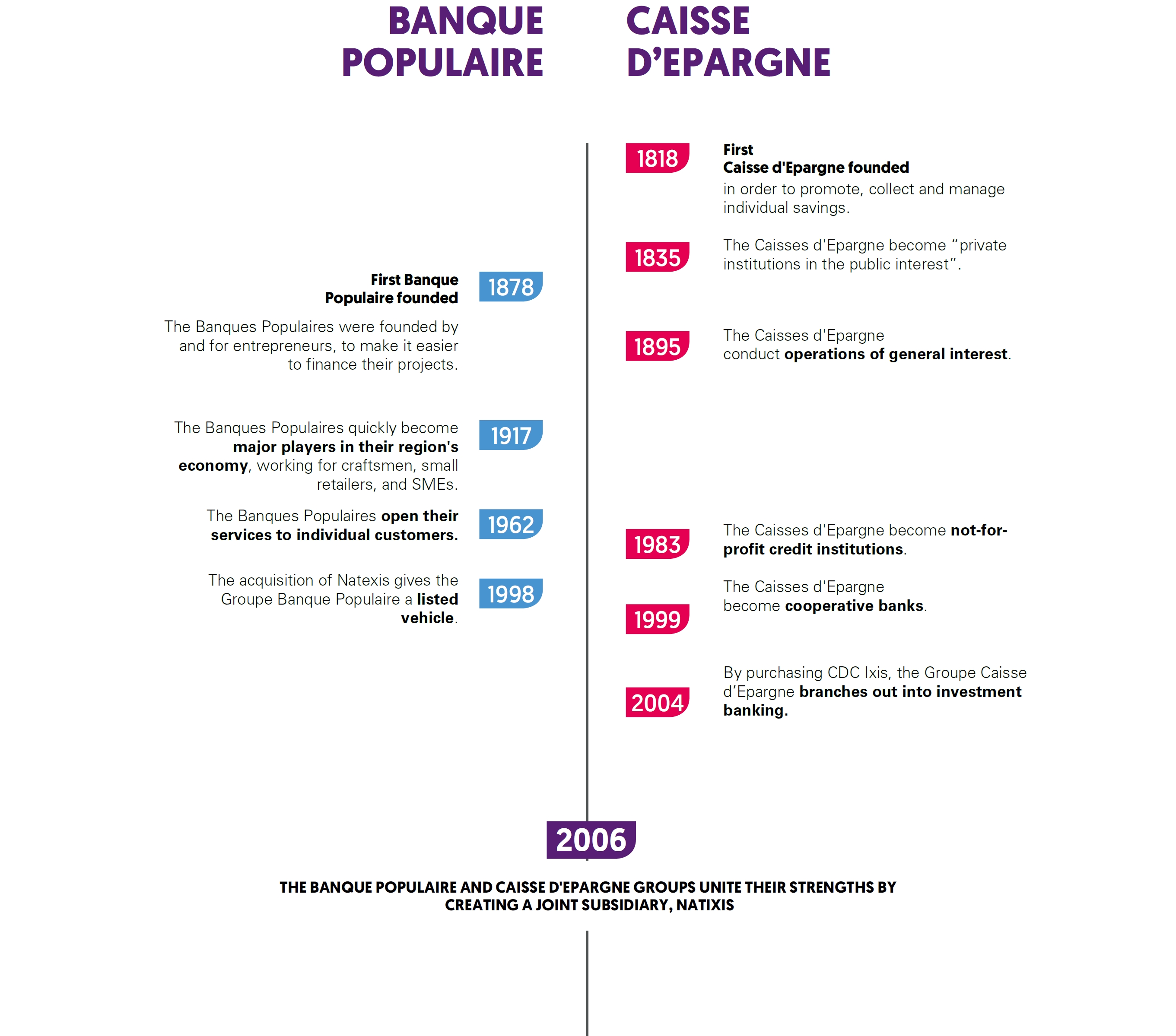
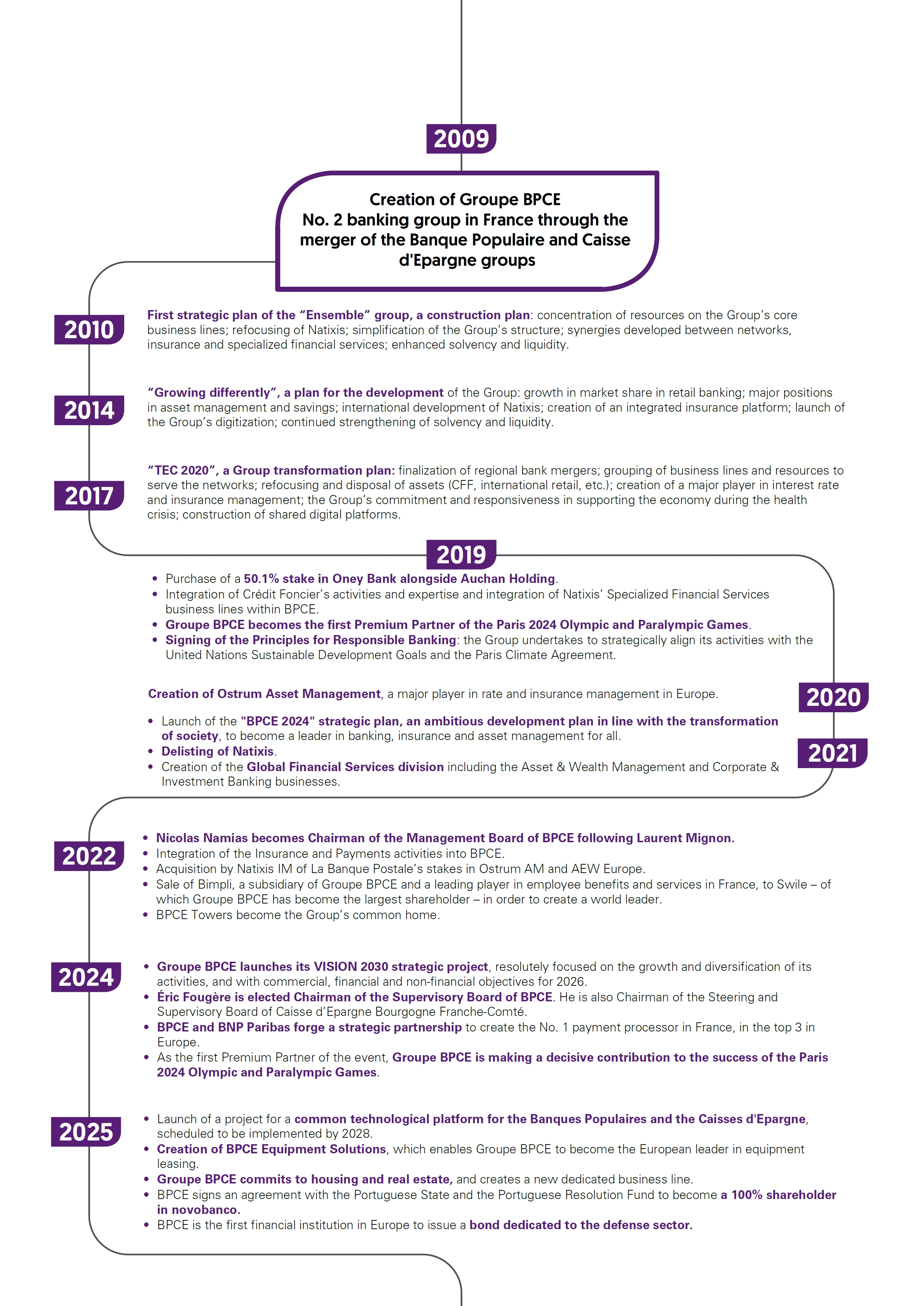
Groupe BPCE was established in 2009 through the merger of the Banque Populaire and Caisse d’Epargne groups. This marked the combination of two leading cooperative banks, created in 1878 and 1818, respectively, sharing common values rooted in solidarity, a local presence, democratic governance and a long-term vision.
The first step took place in 2006, with the creation of Natixis from the merger of Ixis and Natexis Banques Populaires.
In 2021, Natixis shares were delisted and the Group simplified its organization. It thereby strengthens its universal cooperative banking model.
-
1.2 Understanding the Group’s organization
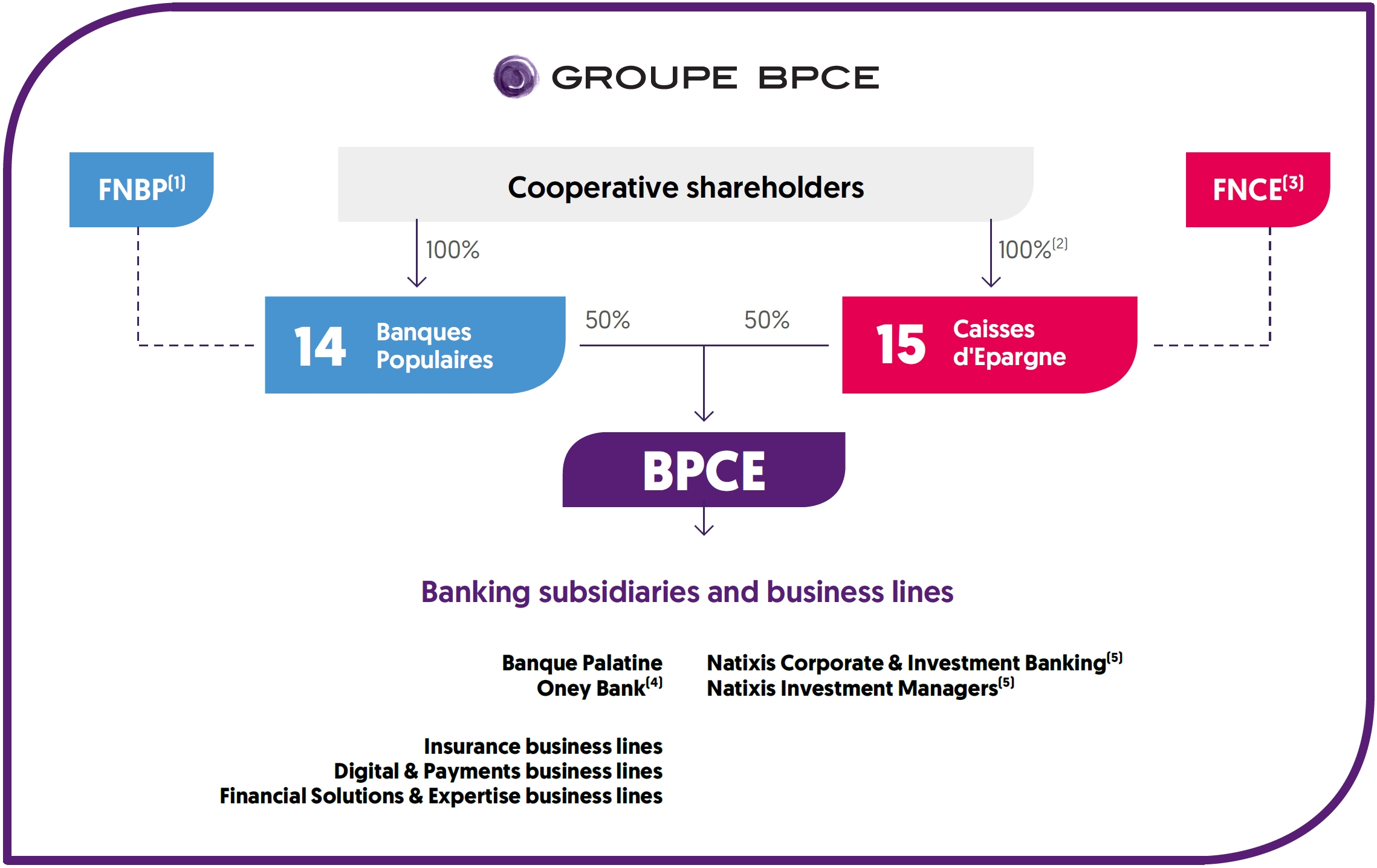
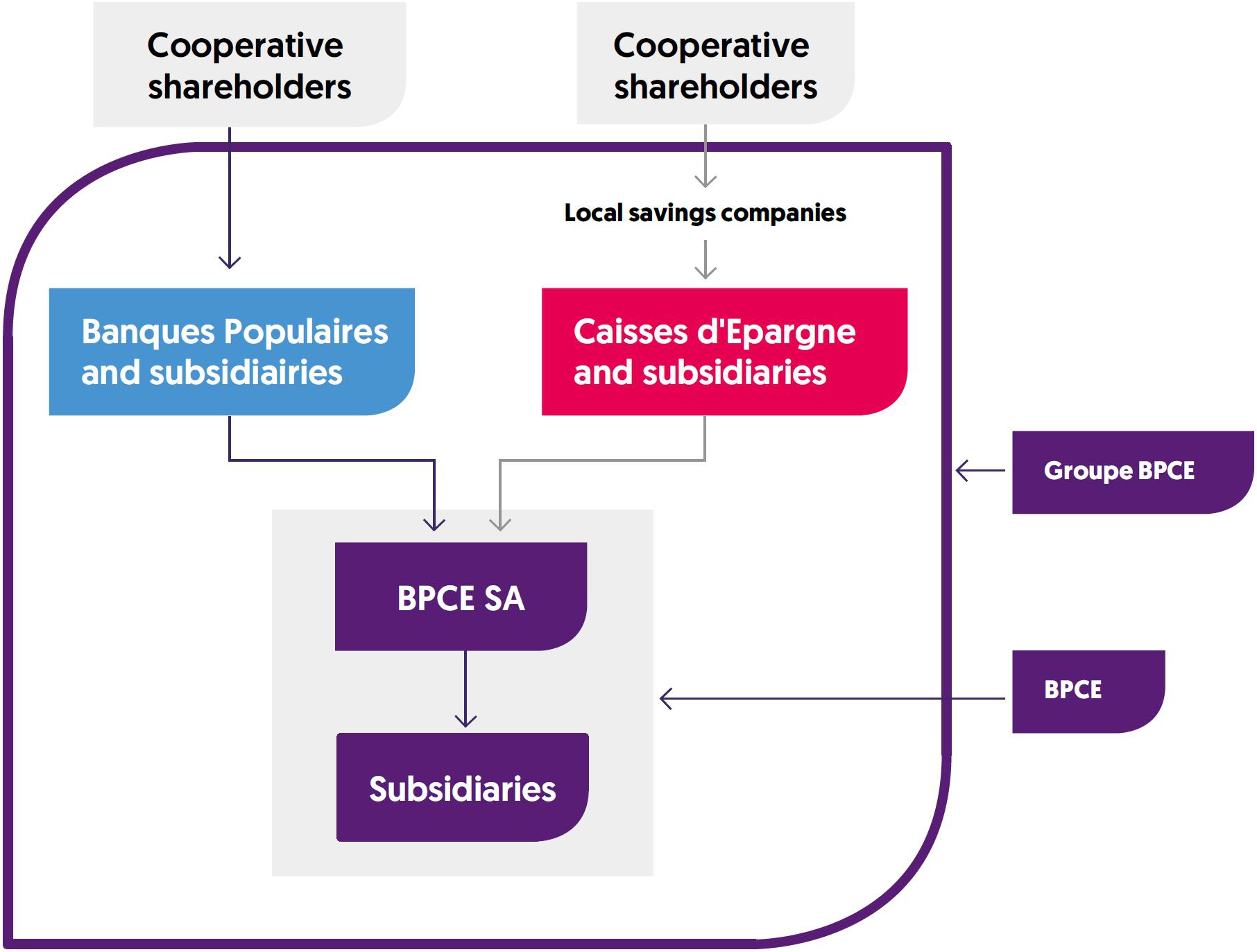
The Banques Populaires and the Caisses d’Epargne are owned by 9.6 million cooperative shareholders. This highly stable shareholding structure is imbued with a strong cooperative spirit.
The 14 Banques Populaires and the 15 Caisses d’Epargne hold an equal 100% stake in BPCE, which is responsible for defining the Group’s policy and strategic orientations, and coordinating the commercial policies of each network.
The Banques Populaires and Caisses d’Epargne are banks in their own right. They collect deposits and savings, distribute loans and define their priorities locally.
The Fédération Nationale des Banques Populaires (FNBP) and the Fédération Nationale des Caisses d’Epargne (FNCE), the bodies that provide deliberation, communication and representation for the two networks and their cooperative shareholders, play an essential role in defining, coordinating and promoting the banks’ cooperative spirit and social responsibility initiatives, in accordance with Groupe BPCE’s commercial and financial objectives. Persons representative of their regional economies sit on the Board of Directors of the Banques Populaires and on the Steering and Supervisory Board of the Caisses d’Epargne. Their resources are first and foremost allocated to meet the needs of local areas and regional customers.
- (1) Fédération Nationale des Banques Populaires
- (2) Indirectly through local savings companies (LSCs)
- (3) Fédération Nationale des Caisses D’Epargne
- (4) 50.1% owned
- (5) Indirectly through Natixis SA
Under the cooperative banking model, the cooperative shareholders are the focal point of the Group’s governance.
The Banques Populaires and Caisses d’Epargne are credit institutions wholly-owned by their cooperative shareholders (via LSCs – Local Savings Companies – for the Caisses d’Epargne).
Cooperative shareholding customers – both individuals and legal entities – play an active part in the life, ambitions and development of their bank.
Being a cooperative shareholder means owning a cooperative share (a percentage of the share capital not quoted on the stock exchange), representing a portion of the share capital in a Banque Populaire or an LSC for a Caisse d’Epargne, and playing a role in the bank’s operation by taking part in General Meetings and voting to approve the financial statements and resolutions, validating management decisions and electing directors.
Each institution is governed by a Board of Directors and a Chief Executive Officer for the Banques Populaires, or a Steering and Supervisory Board (COS) and a Management Board for the Caisses d’Epargne.
BPCE brings together the central institution of Groupe BPCE, the retail and global business lines, as well as the resource pools. To support the Group’s performance, development and strategic ambitions, BPCE ensures the coordination, consistency and synergies between its various brands and companies.
- The central institution, BPCE SA, is responsible for defining the policy and strategic orientations of the Group and each of the two networks.
- – coordinate trade policies;
- – represent the Group and its networks, and negotiate national/international agreements on their behalf;
- – represent the Group and its networks as an employer;
- – take all necessary measures to ensure the Group’s liquidity and solvency, risk management and internal control.
All banks affiliated with the central institution are covered by a guarantee and solidarity mechanism.
- Beyond the central institution, BPCE brings together the following business lines, to serve the Group’s development:
- – Insurance
- – Digital & Payments
- – Financial Solutions & Expertise
- – BPCE Technologies & Opérations
- – Corporate & Investment Banking
- – Asset & Wealth Management
-
1.3 Highlights in 2025
January
Banques Populaires and Caisses d’Epargne encourage the improvement of energy performance of dwellings by integrating impact into their home loans. This offering proposes a reduction in the interest rate to homeowners with an Energy Performance Diagnosis between E and G who carry out work to improve it by two letters.
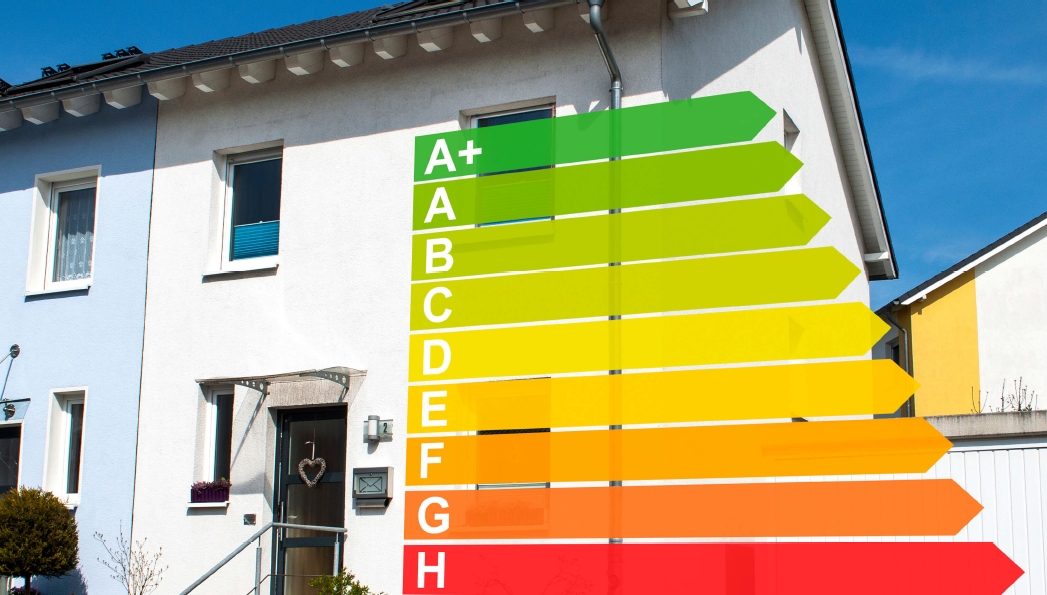
The Banques Populaires and Caisses d’Epargne are the first banks in France to offer the online subscription of an individual retirement savings plan (PER).
February
Groupe BPCE and Eurogroup Consulting announce the creation of BPCE Partenaire Conseil, a new structure that supports clients of the Banques Populaires, Caisses d’Epargne and other Group institutions in their development, adaptation and transformation projects.
Groupe BPCE launches a project for a common technological platform for the Banques Populaires and the Caisses d’Epargne. Within four years, the Banques Populaires and Caisses d’Epargne will be able to use the same information system instead of two, which will be a source of greater efficiency.

Groupe BPCE strengthens its commitment to the energy transition by signing an electricity purchase agreement with Opale, a regional SME that is a pioneer in the development of green energy projects. Energy production will cover around 11% of the Group’s annual consumption.
BPCE and BNP Paribas create Estreem, the French leader and major European player in payment processing. Estreem will process all card payments in Europe for Groupe BPCE and BNP Paribas, i.e. 17 billion transactions per year, and will process 30% of the volume of card payments in France. The company’s ambition is also to be among the Top 3 processors in Europe.
Banque Populaire launches its “Nouvel Installé en Agriculture” loan, at a preferential rate and with a budget of €100 million, to support the installation of farmers and winegrowers and meet the growing needs of the agricultural sector.
March
With the acquisition of Société Générale Equipment Finance, renamed BPCE Equipment Solutions, BPCE becomes the European leader in capital goods leasing and a leading global player. Present in 24 countries, BPCE Equipment Solutions manages a portfolio of €15 billion in outstandings.

Caisse d’Epargne Hauts de France (CEHDF) finalizes the acquisition of Nagelmackers, a Belgian banking institution founded in the 18th century and a benchmark in the Personal and Private Banking market. This operation accelerates CEHDF’s expansion in Belgium, where it has been active for ten years via its Caisse d’Epargne Belgium branch, dedicated to large corporates and real estate operators.
Groupe BPCE strengthens its commitment to housing and real estate by creating a new business line based on three strategic priorities: “Offering more housing in all regions”; “Promoting access to housing for the French people and the enhancement of their assets”; “Supporting households in the renovation and adaptation of their homes”.

As part of the European CSRD directive, Groupe BPCE publishes its first sustainability report and reaffirms its ambition to make impact accessible to all, thanks to the power of local solutions, as close as possible to the needs of its clients and the regions.
Natixis Interépargne and HSBC Global Asset Management enter into a contract for the marketing of employee and pension savings schemes and services, following the acquisition of HSBC Epargne Entreprise by Natixis Interépargne.
April
Caisse d’Epargne strengthens its commitment to sport by signing a partnership with Piscine de Demain. This partnership aims to modernize aquatic facilities managed by local authorities, promote the environmental transition and make quality sports facilities accessible to as many people as possible.
Faced with the rising cost of living in France, Banque Populaire and Caisse d’Epargne launch a student loan without a personal guarantee or means testing. Their goal is to support more than 50,000 students in France by 2025.

The Banques Populaires and Caisses d’Epargne are the first banks to launch the Climate Future Savings Plan (PEAC), drawing on the expertise of BPCE Assurances. This new savings solution is aimed at young people under the age of 21 living in France to finance their future projects, such as a first property purchase, and invest in the ecological transition.
May

Banque Populaire and Caisse d’Epargne are the first banks in France to set up €200 million in loans with the European Investment Bank for the agricultural sector. The operation will support the acquisition and modernization of farms, as well as investment in sustainable technologies. In addition, 30% of the funds will be dedicated to projects helping to promote action in favor of the climate, the efficient use of water resources and biodiversity protection
Groupe BPCE commits to helping Banque Populaire and Caisse d’Epargne clients who have overcome male cancer. They will now be able to take out a loan insurance policy for a personal or professional real estate project co-insured by BPCE Assurances and CNP Assurances, with no additional premiums or exclusions, even partial ones. This initiative goes far beyond the provisions of the AERAS convention governing the right to be forgotten.

Already available to its corporate clients, Banque Populaire extends its Impact Loan to professionals and farmers in order to highlight their commitment to social and environmental responsibility, while offering them advantageous financing conditions.
Natixis Investment Managers (IM) announces a plan to merge its affiliated asset management companies Mirova and Thematics AM. By combining the complementary strengths of the two companies and their respective commitments to sustainable investment, Natixis IM would create a new global benchmark in thematic management with a unique offering that combines innovation and a positive impact.
June
Groupe BPCE signs a Memorandum of Understanding to acquire novobanco, Portugal’s fourth-largest bank. This transaction would be the largest cross-border banking acquisition in the Eurozone in more than 10 years. On completion of the transaction, Portugal would become the Group’s second-largest domestic retail market.
Banque Populaire and Caisse d’Epargne are the first French banks to sign an agreement with the European Investment Bank to support defense SMEs. Through this €300 million financing package, Groupe BPCE will play a key role in strengthening the competitiveness and innovation of French companies, while meeting the challenges of our country’s sovereignty.
Banque Populaire and Caisse d’Epargne create impact home insurance to reward their policyholders’ eco-responsible commitment, thanks to the energy and climate transition discount, a progressive pricing system applied to multi-risk home (MRH) insurance contracts.

July
Banque Populaire launches EXTRA +X, its new exclusive loyalty program for its 5.1 million client-cooperative shareholders, who contribute locally to its collective success.

Natixis IM announces the acquisition by its affiliated asset management company Gateway Investment Advisers of the activities of Belmont Capital Group, based in Los Angeles. This acquisition will contribute, in particular, to strengthening its presence in the fast-growing options strategies in dedicated accounts segment in the United States.

Natixis CIB obtains a banking license in Japan, allowing it to offer comprehensive support in the Japanese market to its clients.
August
BPCE successfully finalizes the first “European Defence bond” issued by a financial institution in Europe. The placement of this €750 million preferred senior security issue, with a five-year maturity, was secured by Natixis Corporate & Investment Banking. The funds raised will be used to finance and refinance assets in the defense sector.
September
Banque Populaire and Caisse d’Epargne offer clients over 60 the Reverse Mortgage (Prêt Viager Hypothécaire). This is guaranteed by a mortgage taken out on a property belonging to the borrower. The amount of the reverse mortgage is determined according to the value of the property appraised and the borrower’s personal situation.


Banque Populaire and Caisse d’Epargne expand their energy renovation offering with Cozynergy, Groupe BPCE’s energy renovation subsidiary. Among the new features: the AI-enriched renovation simulator.
October
BPCE Assurances successfully launches its first public issue of subordinated debt, with nearly 58% from international investors and an order book oversubscribed 14 times for a total of €9.5 billion. This transaction is a major milestone in the development of BPCE Assurances, marking its inaugural access to the capital markets
November
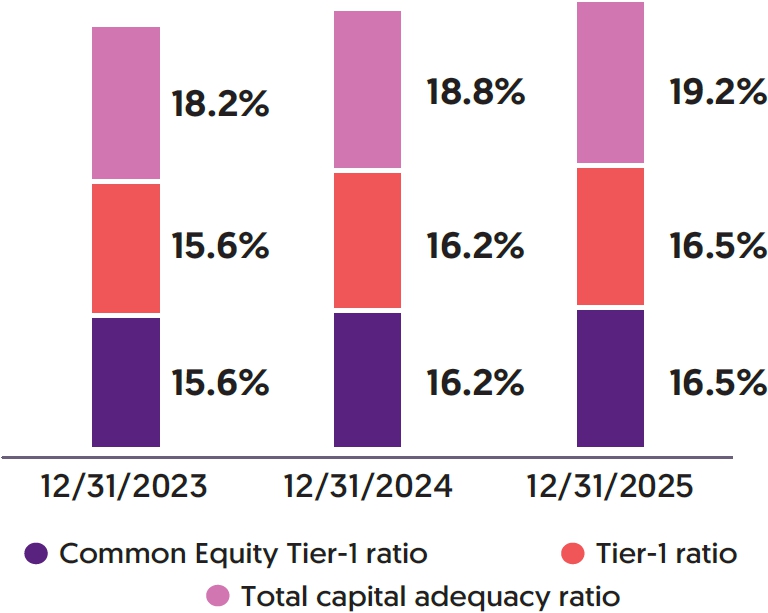
With ratios at June 30, 2025 of 16.3% for the CET1 ratio and 19.1% for the total capital adequacy ratio, Groupe BPCE is well above the prudential capital requirements applicable as of January 1, 2026.
With the Cooperative shareholders’ club, the 15 regional Caisses d’Epargne offer a new community space and new benefits to their 4.5 million cooperative shareholder clients, making their commitment to the regions even more tangible.

Caisse d’Epargne and BPCE Partenaire Conseil launch a strategic consulting offer dedicated to local authorities. The objective is to enable them to improve their performance and strengthen their investment capacities through three key services: the “360° Performance Diagnostic”, the “Satellite Audit” and the “HR Diagnosis”.


Groupe BPCE accelerates the adoption of generative Artificial Intelligence for clients, advisors and all employees, and crosses the threshold of one in two employees using AI on a daily basis.
Banque Populaire and Caisse d’Epargne offer their professional and corporate clients the new “Invoice Management” service operated by iPaidThat, a French platform approved by the French Directorate General of Public Finances (DGFiP) and a subsidiary of Groupe BPCE. They can now, in this same interface, better manage their accounting, steer their cash flow and collaborate with their chartered accountants.
-
1.4 The Group’s business lines
The 14 Banques Populaires are shareholders in BPCE on an equal footing with the Caisses d’Epargne, and are fully-fledged banks owned by their cooperative shareholders. They form a first-rate banking network made up of 12 regional Banques Populaires and two national affinity banks: CASDEN Banque Populaire, the benchmark bank for the French public sector, and Crédit Coopératif, the bank for the social and solidarity economy.
The Banques Populaires are actively involved in local communities and remain true to their entrepreneurial roots, providing their individual, professional, agricultural/wine growing, association, corporate and institutional clients with a full range of financing, savings, insurance, payment and specialized financial solutions (such as private management, leasing, factoring and social engineering).
The Banques Populaires are wholly-owned by their cooperative shareholders. The strength and durability of their cooperative model is based on balanced governance. Members are cooperative shareholders, co-owners of their bank’s capital, through the purchase of shares. They elect the directors, who are committed local personalities, at the General Meeting, reinforcing the local character of Banque Populaire institutions.
Each year, the Banques Populaires measure the cooperative and responsible actions they carry out in their regions, mainly in three areas: local proximity, entrepreneurial culture, and cooperative and sustainable commitment. These actions are listed in the cooperative and societal footprint, a tool based on ISO 26000 (the international standard for CSR) which references all the voluntary, non-regulatory and non-commercial actions carried out by the 14 Banques Populaires.
In 2025
- Launch of the Impact Home Loan, enabling clients to obtain a reduction in interest rates if they improve the energy performance of their homes. More than 5,000 contracts implemented for a total of €870 million in 2025.
- Deployment of numerous initiatives aimed at young people, in terms of education, entrepreneurship or financial accessibility.
- Support for the agricultural sector with the Farmers’ Impact Loan (already available for Professionals and Corporate clients), the “Nouvel Installé en Agriculture” Loan and the Initiative for French Agriculture (INAF) program.
- Signing of an agreement with the European Investment Bank (EIB) to support SMEs in the defense sector, with a €300 million loan to facilitate access to finance for security and defense-related projects.
2025 was marked by a significant recovery in the real estate market, with a +55% increase in new home loans at the end of December compared to the previous year for the entire Banque Populaire network. This surge in activity led to a +1% increase in new relationships. In consumer loans, sustained growth of +4.4% in commitments was observed at the end of December 2025. The number of principal active clients also continued to grow, reaching 4.8 million at the end of December 2025, with more than 2 million clients equipped with the Cristal agreement, a bundled offer of products and services for day-to-day current account management launched in 2019.
In terms of digital tools, 3.7 million clients are equipped with remote banking and enrolled in Sécur’Pass. Over the last three months, 93% of clients who made online payments were equipped with Sécur’Pass, demonstrating their commitment to digital services.
However, despite the recovery in real estate loans, the non-life insurance (IARD) and personal protection insurance sector recorded a 2% decline in gross sales at the end of December.
In 2025, several initiatives were launched to strengthen the commitment of the Banques Populaires to the energy transition and sustainability. The launch of the Impact Home Loan allows clients to obtain an interest rate reduction if they improve the energy performance of their homes. The Banques Populaires have supported nearly 18,500 clients in their energy renovation projects, with an amount of financing of €332 million, up 19% compared to 2024.
In collaboration with Cozynergy, a free energy renovation diagnosis is now available, facilitating clients’ access to grants and subsidies.
The Zero Interest Plus Loan (PTZ+X) was renewed to support home ownership for young first-time buyers, while an innovative financing solution, the reverse mortgage, was offered to clients over 60.
Lastly, numerous initiatives aimed at young people, in terms of education, entrepreneurship or financial accessibility were carried out.
- – As part of its partnership with the Cnam, Banque Populaire has developed a program specifically designed to support young entrepreneurs.
- – To support students with the rising cost of living, Banque Populaire launched a student loan with no personal guarantee or means testing. This scheme aims to help more than 50,000 students in France.
- – Banque Populaire has also reinvented its mobile application for teenagers, allowing young people to manage their money independently while reassuring their parents thanks to a supervision interface.
In November, Banque Populaire launched a comprehensive and attractive banking offer aimed at 18-25 year-olds for just €2 a month.
Finally, the “EXTRA +X” loyalty program, which is free and non-binding, rewards the loyalty of cooperative shareholders and clients by enabling them to save money throughout the year.
Private banking
The private banking market enjoyed strong performance in 2025, with all Banques Populaires increasing both in terms of outstandings and the number of clients.
Business assets thus grew by 3.8%, reflecting good development trend in this buoyant market. Outstandings also increased by +4.2% over the same period. Gross insurance inflows grew by 7.5% in private banking, in line with market trends. There was also a strong momentum in structured funds, with inflows of €467 million at the end of December 2025, for a target of €300 million by 2025.
In 2025, the Banques Populaires’ activity was sustained in private banking, with an increase in total customer outstandings of +4.2% to reach €105.5 billion under management.
In an uncertain economic and political environment, the Banques Populaires have reaffirmed their commitment to all professionals: craftspeople, retailers, liberal professions and farmers, throughout their career: creation, development, transfer and transmission. They recorded a positive development in terms of winning new clients:
- Agriculture and wine growing: +5.6% (excluding BRED and Crédit Coopératif)
- Healthcare: +4.4% (excluding BRED and Crédit Coopératif)
- Franchising: +3.4% (excluding BRED and Crédit Coopératif)
This momentum is accompanied by an increase in bank and financial savings inflows, thus strengthening the strength of the Banques Populaires’ balance sheets. In addition, sales of electronic payment solutions for merchants also increased, as did the stock of business cards.
Medium- and long-term loan financing grew by +13.8%, as well as leasing at +22%, underlining the commitment of the Banques Populaires to supporting professionals in their projects, even in a context of uncertainty.
In addition, demand for insurance (multi-risk and automotive) maintained a sustained pace, with strong growth in the number of new employee savings contracts (+11%), meeting the needs of preparing for retirement and retaining company employees in a context of labor shortage.
Client satisfaction also improved, with an NPS reaching +22, reflecting the daily support of the Banques Populaires’ Pro advisors.
In 2025, the Banques Populaires demonstrated an ongoing commitment to professionals, through various initiatives tailored to their specific needs.
A new invoice management service was launched via the online platform, operated by iPaidThat. This service, accessible free of charge, enables professional clients to anticipate the regulations on electronic invoicing coming into force in September 2026. Professionals can thus optimize their cash flow, shorten payment times and simplify the collection of accounting documents.
- – Impact loan to professionals and farmers: expansion to enhance their CSR commitments. This loan promotes their transition to sustainable practices and offers advantageous financing conditions.
- – “Nouvel Installé en Agriculture” loan: preferential rate of 1.90% with a budget of €100 million to finance the installation of new farmers and winegrowers.
- – White Paper: a practical guide on wealth building in agriculture, co-produced with La France Agricole.
- – French Agriculture Initiative Program (INAF): free guarantee instrument to support the creation of added value and generational renewal in the sector.
Already a long-standing partner of many professional health organizations (Fédération Nationale des Infirmiers, Fédération Française des Masseurs Kinésithérapeutes Rééducateurs), in 2025, Banque Populaire formed a partnership with the Union des Syndicats de Pharmaciens d’Officine and launched the “Forfait Monétique Santé” to facilitate the collection of credit card fees. In addition, through its NextSanté network, it helps to boost healthcare innovation, fight against medical deserts and improve access to local care for all.
Corporate clients
In 2025, the momentum of client acquisition was maintained with the acquisition of more than 11,800 corporate clients, up by 3.3%, and a particularly marked development in mid-sized company segment with growth of 7%, in line with its strategic mid-sized company program. Nevertheless, the goodwill remains impacted by the high level of business insolvencies, with a decrease in the intensity of relationships and a slight decrease of 0.2% in the stock of active and active equipped clients. The increase in credit flows from corporate clients was above inflation, at +1.8%.
Banque Populaire continued to support its clients with a +7.3% increase in its investment loan outstandings for corporate clients (at the end of December 2025), while continuing to meet their working capital needs with nearly €10 billion (€9.2 billion up 1.5%) in short-term financing. This momentum was accompanied by an increase in client satisfaction, which gained ground with an NPS of +20, one point higher than last year.
In line with the Climate priority of Groupe BPCE’s VISION 2030 strategic project, the Banques Populaires accelerated the ESG transition of their clients in 2025. Following the roll-out of the “BP impact” loan nationwide in 2023, nearly 700 companies were supported with nearly €633 million in impact financing, in addition to around 100 that had subscribed to an incentive contract incorporating ESG criteria. As part of the challenges of business transition, the Banques Populaires continue to offer tools that promote the digital transition and meet regulatory needs such as digital invoicing.
Banque Populaire also responds to the HR challenges of companies within the framework of the law on value sharing. The number of clients supported in employee savings increased by 44%.
Banque Populaire signed an agreement with the EIB to support SMEs in the defense sector, with a €300 million loan to facilitate access to finance for security and defense-related projects. This operation is the first signed by the EIB with a French banking group, and the second in Europe, as part of the new €3 billion package dedicated to European SMEs active in security and defense. The aim is to facilitate access to finance for SMEs investing in strategic areas such as cybersecurity, surveillance, resilience and defense technologies.
This day-to-day support for corporate clients has resulted in the best of awards: for the sixteenth consecutive year, Banque Populaire was recognized as the leading bank for businesses (Source: Kantar).
2025 was marked by active communication among professionals and companies, notably through a powerful radio communication system, the presence at more than 17 events and a notable acceleration on social networks with, for example, the successful launch of a TikTok account to target young entrepreneurs. Unveiled in December 2024, the new Banque Populaire brand film, based on a vision of success that radiates with a positive impact on our regions, was broadcast throughout the year on television, in VOL and in cinemas. The year was also marked by the first institutional communication for Banque Populaire. Through a campaign in the national daily press, Banque Populaire illustrated its role as a source of vitality for the regions. In November and December, Banque Populaire communicated with young people about its new offer dedicated to 18-25 year olds, with a large-scale display, social network and influence system. In addition, the brand has reaffirmed its commitment until 2029 as a shipowner, partner and patron in the world of sailing and surfing, notably with the announcement of the construction of an IMOCA to take part in the 2028 Vendée Globe. Banque Populaire has also signed up alongside Armel Le Cléach’ and Sébastien Josse in the Transat Café l’Or. Lastly, Banque Populaire also launched its Act for Water initiative and raised awareness of its preservation through various communication actions with the general public.
CASDEN Banque Populaire
In 2025, CASDEN Banque Populaire, the cooperative bank for members of the French civil service, launched its strategic plan “Resolutely CASDEN”. An ambitious project in which the bank aims to become, by 2030, the bank of one in four civil servants. With this strategic plan, it is asserting itself as a cooperative, affinity bank with a positive impact, committed to public officials and attentive to its social responsibility.
In 2025, CASDEN Banque Populaire continued its development with 91,778 new cooperative shareholders. It now has 2,093,235 cooperative shareholders, 85% of whom are also Banque Populaire clients.
In 2025, Parnasse Garanties, CASDEN’s guarantee insurance subsidiary, developed its own strategic plan in line with the bank’s objectives and those of its secondary shareholder, MGEN. This plan focuses on two main areas: strengthening the existing model, by capitalizing on its strengths, and exploiting the potential for additional development.
2025 was marked by the celebration of 50 years of partnership between CASDEN and the Banques Populaires. Twelve regional events took place, bringing together institutional partners, clients, cooperative shareholders and employees.
For International Public Service Day, CASDEN initiated the “Défi des Pas” (step challenge), which raised €30,000 for the Hospitals Foundation thanks to the participation of 11,639 agents who accumulated 875 million steps. CASDEN has also launched several initiatives in terms of awareness and education, including an educational exhibition in partnership with the Foundation for the Memory of Slavery, and a campaign to raise awareness of psychiatry, in collaboration with the French Hospital Federation, incorporating communication actions on mental health.
Finally, CASDEN invested in digital innovation by launching a new personal space on its casden.fr site, offering cooperative shareholders a smooth and intuitive digital experience. The implementation of a virtual assistant on the site was a major step forward in answering cooperative shareholders’ questions independently.
As a reference bank for the social and solidarity economy, real economy companies and committed individual customers, Crédit Coopératif is committed alongside its client-cooperative shareholders to build a fairer, more inclusive, more local economy that is respectful of the environment.
In 2025, Crédit Coopératif recorded an increase in the number of its clients, particularly individual customers (+3.7% excluding protected adults).This momentum is reflected in a significant increase in the number of its cooperative shareholders, both legal entities (+3.0%) and individual customers (+9.8%), as well as in the granting of loans (+5.7%) and fees and commissions (+6.6%).
The year was marked by the launch of its strategic plan entitled “100% committed”, a development plan aimed at strengthening its different banking model, serving societal and environmental transitions. Key metrics such as the share of green loans, the cooperative shareholder base, and the number and type of clients were established. The first targets of this plan have been achieved: such as the share of green loans for individual customers (6.3% for a target of 5%) and legal entities (15.8% for a target of 15%).
Crédit Coopératif is also preparing the acquisition of Anytime from Orange Bank to enhance its digital offering for associations. Private impact banking and impact investment banking were launched, responding to a growing demand for banking services that combine financial performance and social utility. Finally, the legal bank Avenir Crédit Coopératif was created to safeguard the business of corporate clients.
- Ecofi, the listed asset management company of the Groupe Crédit Coopératif, maintained dynamic net inflows exceeding €1 billion for the second consecutive year, demonstrating the confidence of investors. The historic monetary mutual fund (SICAV), Ecofi Trésorerie, has exceeded the €6 billion threshold in outstandings, consolidating its position in the market. In addition, Ecofi Smart Transition, a mutual fund of European equities aligned with the Paris Agreement, crossed the €250 million threshold, representing inflows of around €200 million in just a few months, illustrating clients’ interest in the search of meaning and Ecofi’s commitment to sustainable finance.
- ESFIN Gestion, an asset management company subsidiary of Crédit Coopératif that manages more than €300 million, saw strong growth in its fundraising activity on behalf of third parties, with four rounds in progress, including the InvESS Ile de France Développement Fund, dedicated to the SSE and impact. Disposals also reached a historic amount of more than €47 million, demonstrating ESFIN Gestion’s ability to deliver returns and liquidity for its subscribers. By strengthening its partnership with Banque des Territoires and France 2030, ESFIN Gestion has supported more than 60 structures with equity, for an amount deployed of more than €27 million, illustrating ESFIN Gestion’s commitment in the sector.
- Lastly, BTP Banque, which finances SMEs and mid-sized companies in the Building and Public Works sector, enjoyed dynamic conquest with the acquisition of more than 1,000 new clients, in a context of a declining market. The bank made more than €1 billion in guarantees on the markets, with 20% of its medium-term loans labelled “green”. The launch of the legal bank, Avenir BTP Banque, also marks an important step in preserving the business of clients.
The 15 Caisses d’Epargne are equal shareholders of BPCE with the Banques Populaires, and are fully-fledged regional cooperative banks. Committed to local community life, they offer their individual, professional, association, corporate, institutional and local authority customers a comprehensive range of financing, savings, private management, insurance, payment and specialized financial services (such as leasing and factoring). They make decisions and act locally, in a short circuit, and reinvest their customers’ savings where they live to finance useful projects close to home (schools, hospitals, associations, etc.).
As cooperative banks, the Caisse d’Epargne belong solely to their 4.4 million cooperative shareholders, who participate in the decisions of their bank, voting on resolutions at the General Meeting and electing their representatives, the 2,500 directors, from among their peers. Cooperative shareholders and directors are brought together in the local savings companies (LSC), which hold part of the capital of their Caisse d’Epargne and constitute a local tier, reinforcing the regional anchoring, proximity and expression of the cooperative shareholders.
The Caisses d’Epargne are the only banks to provide long-term support to all players in a given region: individual customers, businesses, professionals, social housing and social and solidarity economy players, institutions, local authorities and associations. As such, they have the capacity to create the synergies required for local development.
In 2023, the 15 Caisses d’Epargne launched their Utility Contract to strengthen their commitment to the regions, for the benefit of those who live there.
- 100% useful to economic development: as banks serving all their customers and their territory, but also as local businesses and major employers in the region;
- 100% useful to the environmental transition: by building solutions to enable everyone to become a player in this transition, and by financing projects that will help accelerate it in local areas;
- 100% useful to social progress: as cooperative banks, having always been committed to the principles of solidarity and the fight against exclusion.
In 2025
- Launch of the innovative VEGActive Protégé savings solution, designed by Vega Investment Solutions for individual customers
- Supporting professional and corporate clients in their compliance with regulations thanks to the integration into the client space of a dedicated invoice management solution (iPaidThat and Pulcéo)
- Generalization of the Multi-Risk Pro Complex Risks offer, which covers the comprehensive insurance needs of professional clients
- Confirmation of the historic commitment to social housing players, both in the traditional social component and in intermediate housing, with €1.3 billion in commitments
In home loans, production was boosted by a market recovery in 2025 and amounts to €24.4 billion. The household market share of home loans stood at 14.06% in the third quarter of 2025. The Caisses d’Epargne have deployed several innovative solutions, in particular the impact home loan, for which outstandings already amount to €2 billion. Caisse d’Epargne is also continuing to support household housing and energy renovation through its dedicated offers and services and partnerships with players and professionals in the sector, including Cozynergy, Leroy Merlin and Vérisure.
In terms of inflows, the household market share stood at 9.24% in the third quarter of 2025. It remained at 13.93% on bank savings. The life insurance business was particularly buoyant, with gross inflows reaching €14 billion on a cumulative basis and generating an overall surplus of €4.7 billion. This activity was boosted by the marketing of Natixis loans, support for clients through retirement and the launch of innovative offers such as VEGActive Protégée, which combines the advantages of a structured fund with those of active management.
The Caisses d’Epargne developed their clients’ insurance equipment thanks to the development of a global strategy on protection, property insurance, personal risk insurance and remote monitoring, etc.
In the end, the Caisses d’Epargne maintained their strong growth in client satisfaction in the retail market with an NPS of 26, i.e. +2 points compared to 2024 (data at November 2025).
Supporting young people and families has been a common thread in the strategy of the retail market, with a strong challenge to win new clients and provide access to banking services. New everyday banking services are being launched for single parents and young people. Caisse d’Epargne thus reaffirmed its presence with young people by launching the Ados (teens) app, which includes services adapted to their needs, particularly in terms of secure management of their cards and also advice and tutorials to familiarize them with how to manage their budget.
The year was marked by the launch of the innovative savings solution VEGActive Protégée, designed by VEGA Investment Solutions, a management company affiliated with Natixis Investment Managers. Thanks to this mutual fund, savers benefit from active management on the international markets and protection, at maturity, of 90% of the initial capital.
Finally, the Cooperative shareholders’ Club, a new community space, gives the 4.4 million cooperative shareholders the opportunity to make their voices heard, support useful projects, have a positive impact and act locally within a community united by cooperative values.
High-net-worth clients
3.5 million Premium clients trust the Caisse d’Epargne to help them manage their assets. €324 billion in savings entrusted testify to this solid confidence.
In 2025, the business was enriched by 100,000 new high-net-worth clients.
In a context where the French aspiration to save more is still confirmed, the momentum around life insurance and individual retirement savings plans (PERI) was particularly noteworthy, with inflows of €10.5 billion and €3.5 billion in surpluses.
To better meet the expectations of high-net-worth clients, Caisse d’Epargne has enhanced its range of solutions, notably with the launch of the E-PER, enabling clients to prepare for retirement and reduce their taxes independently thanks to a smooth, digital process. It also launched new structured products, such as VEGActive Protégée, to offer innovative and protective responses, as well as an ETF fund offering. Access to its delegated management offer has been facilitated, now possible from €500 in life insurance. To provide long-term diversification value, Caisse d’Epargne is also developing access to unlisted assets, long reserved for institutional investors.
The satisfaction of high net-worth clients is constantly increasing, with a net promoter score (NPS) of +31.
Its commitment and excellence in the field of management to offer sustainable performance to its clients were once again rewarded with the Corbeille d’honneur Mieux Vivre Votre Argent, which recognizes the establishment with the highest number of awards in the history of the Corbeille d’Or since 1986.
The Caisses d’Epargne remain the leading bank for protected persons, persons under guardianship, trusteeship and dependent adults living at home in France. On the ground, over 220 specialized advisors are on-hand to assist family representatives and legal guardians.
Between 2009 and 2024, the share of protective measures opened, by age population, increased sharply for young adults and those over 60 years old. Family authority has replaced certain guardianship measures, but it has also made it possible to meet an unmet need by simplifying the procedures to be carried out. The number of beneficiaries of family authority is estimated at around 105,000 people at the end of 2025.
Professional clients
At end 2025, the Caisses d’Epargne had won over 41,000 new clients, which represents an increase of +1.9% in business assets.
The loan momentum picked up again with €4.3 billion in new loan commitments, an increase of +8% compared with 2024. The use of specialized financing also showed positive momentum: on the one hand, new equipment leasing rents were up +4%, and on the other, new factoring contracts were up +18%.
The Caisses d’Epargne were active with their clients to boost inflows, which resulted in €1 billion in surpluses, thanks to strong activity in on- and off-balance sheet savings.
In insurance, the widespread offering of complex risks increased production in non-life insurance policies (IARD) by +15% with over 19,000 contracts subscribed. In personal protection insurance, activity was slightly down (-5%) with nearly 33,000 new contracts.
The Caisses d’Epargne supported the transformation of the employee and pension savings market by signing a record year marked by more than 12,800 new professional contracts (+43%).
In addition to this sustained activity, the year was punctuated by several innovations:
- The opening of the invoice management functionality that allows clients to benefit from electronic invoicing and pre-accounting services via their remote banking. They can collect, issue, pay and collect their invoices from their Caisse d’Epargne account.
- The generalization of the Multi-Risk Pro Complex Risks offer, which makes it possible to cover all clients’ insurance needs.
- Finally, several projects have been carried out in the fields of electronic payment and flows: provision for professional advisors of Diag Solutions Paiements and Argu Solution Paiements, allowing a complete diagnosis of their clients’ flow needs and access to all sales pitches via a single interface; launch of a Selfcare collection platform enabling clients to manage their electronic payment contracts.
With 40,509 clients (VSEs, SMEs and mid-sized companies), the Caisses d’Epargne continued their commitment to business development in 2025.
Through its utility contract, Caisse d’Epargne supports its corporate clients in adapting their activities to climate change and confirms the acceleration of its support for decarbonization through deployment of the ESG strategic dialog, increase in the production of sustainable financing, the range of Impact Loans dedicated to SMEs and mid-sized companies as well as the collaboration of renewable energy expertise and Natixis CIB’s Green & Sustainable Hub. In tangible terms, Caisse d’Epargne encourages companies to incorporate more non-financial criteria into their business models and offers a complete range of solutions to highlight their ESG approaches to stakeholders.
In particular, through systems dedicated to e-invoicing, it supported its clients in their implementation of regulatory compliance, which will become mandatory for all companies subject to VAT in France, between July 1, 2024 and January 1, 2026. Cybersecurity remains a priority because it is no longer a question of knowing “IF” a company is at risk of malicious cyber acts, but “WHEN” it will occur. In response to these challenges, Caisse d’Epargne has structured its offers and strengthened its awareness-raising process around these crucial themes.
Concerning the agricultural sector, the member cooperatives of the UFG (Union Finances Grains), a union of 34 cooperatives whose objective is to facilitate the provision of funds to finance their cereal stocks, were supported through the establishment of the NeuCP (Negotiable European Commercial Paper) Program. This issue of short-term negotiable securities represented a credit line of around €139 million for the Caisse d’Epargne network.
Caisse d’Epargne also confirmed its position as banker for industries, with an average penetration of 20%, including non-energy and energy.
Lastly, through its Néo Business program, the Caisses d’Epargne supported the development of innovative companies throughout France and in all business sectors. Today, 1,850 start-ups / scale-ups are supported in their growth with dedicated solutions, including 6 of the 26 French unicorns, 28 from the new French Tech 120 class in 2025.
Financial engineering
The financial engineering business reached €125 million in net fees and commissions generated, nearly twice as much compared to 2021 (€65 million). The level of performance achieved and its resilience, through economic cycles, validates the choice of organization, which is based on one pillar: the creation of financial engineering teams located locally as close as possible to operations and regions.
Several highlights marked the year.
Caisse d’Epargne Grand Est Europe (as arranger, ESG coordinator and agent), accompanied by Caisse d’Epargne Normandie (as co-arranger), set up sustainable financing to support the development of its client, Petit Forestier Group, the European leader in refrigerated vehicle rental. Totaling €120 million, this financing is intended to modernize the client’s fleet to support its transition to low-carbon vehicles. This operation, a success thanks to the support of the Caisse d’Epargne ETI fund, was carried out in collaboration with experts from Natixis CIB’s Green & Sustainable Hub.
On the Private Equity front, 2025 was marked by the creation, at the Caisse d’Epargne Midi Pyrénées, of a new regional investment structure called CEMP Capital Transmission, which completes the network of Caisse d’Epargne private equity structures anchored in their regions. At the national level, the financial resources of the venture capital company Caisse d’Epargne Développement were increased, from €220 million to more than €360 million, making it possible to multiply the strike force of the Caisses d’Epargne.
The regional public sector and social housing contracts are very heavily dedicated to the financing of regional equipment: networks, development, public infrastructure and housing. They are therefore in the first line for transition investments.
Regarding social housing, the target is to build 100,000 new social housing units per year while demand is exploding: at the end of June 2025, around 2.87 million households were waiting for social housing. In this context, the Caisses d’Epargne, along with Habitat en Région, confirm their long-standing commitment to social housing players, both in the traditional social component and in intermediate housing, with €2.1 billion in commitments in 2025.
They also remain the leading private banks for local authorities, with €2.9 billion in new financing loans in production over 2025; they are also present in the semi-public sector in development and services, with €691 million in new MLT loans and €2.4 billion in outstanding MLT loans.
At end-December 2025, outstanding deposits excluding DAV (LS and SEMAS) amounted to €7.4 billion, down 3%. In 2025, three EIB envelopes remain in the process of being marketed: Water and Sanitation, Energy Efficiency and Sustainable Mobility, and Renovation or Extension of Existing Sports Facilities. This last package, which expired at the beginning of August 2024, has been extended by one year, which has made it possible to accelerate its marketing.
For the public sector, in a tense context, medium and long-term commitments are up compared to 2024 but differ structurally. Production via the CE balance sheet increased to represent 47% of the total. Compagnie de Financement Foncier (SCF)’s share of 53% of production was down compared to 2024 (73% in 2024). The SCF activity was affected by a decrease in the competitiveness of the internal transfer rate compared to the competition in the first eight months of the year, which resulted in the loss of a number of significant calls for tenders.
Finally, on the professional real estate market, after two years of crisis, the new property market is showing signs of stabilization; credit rates fell slightly and the PTZ (zero-interest loan), extended until 2027, supports home ownership. However, construction costs and environmental standards keep prices high. New home sales remained down (-10% year-on-year) and the stock to be sold reached nearly 22 months, an historically high level. In this context, new MLT loans amounted to €1.3 billion, i.e. 92% of the target. In the short-term, production, although down, remains relatively solid at €1.9 billion (excluding renewals), or 91% of the target. The continued increase in the production of impact loans, which doubled between 2024 and 2025 to reach €92 million can be noted.
Social economy
Expert bank in the Social and Solidarity Economy (SSE), Caisse d’Epargne holds 21.2% of the market. In 2025, it remained a major financier with €1 billion in short-, medium- and long-term loans
The Caisses d’Epargne support more than 20,000 clients, including associations and other SSE companies, and are a leading financier of the SSE sector, with loan outstandings of €6.6 billion in 2025. Locally in all regions, 130 account managers, dedicated to this private non-profit clientele, master all the legal, tax, governance and economic models specific to these associations, foundations, mutual companies or impact companies.
Over 1,100 new relationships were entered into in 2025. This development is based on a long-standing partnership with the entire SSE ecosystem and social innovation support networks (ESS France, France Active, Mouvement Impact France, Le Kiif, etc.), as well as the main sectoral federations, including Nexem (a major federation of management associations in the medico-social sector) with which Caisse d’Epargne co-organized a national webinar on the topic “Supporting the short-term financing needs of managing organizations” in 2025.
2025 was a year rich in communication actions for Caisse d’Epargne, which reaffirmed its positioning as a bank for families while committing itself to young people, professionals and businesses.
In the media, a campaign was rolled out to promote the “family formula”, and in particular the option dedicated to single-parent families, demonstrating the brand’s commitment to all families. Another highlight of the year was the launch of a Cooperative shareholders’ Club offering exclusive benefits: a campaign that strengthened its image as a cooperative bank and a bank of utility among its cooperative shareholders.
The brand, which has long been very involved with young people, has also launched innovative initiatives, such as the live show “Réponse Cash” on Twitch, an educational game on money matters. It also has an educational TikTok account that already has more than 60,000 subscribers, making the Caisse d’Epargne one of the most followed bank accounts on this network.
On the corporate side, a targeted four-month press and digital campaign highlighted the brand’s expertise, supplemented by a radio campaign on e-invoicing, illustrating its support for professionals.
Caisse d’Epargne also pursued its commitments, notably by rolling out a campaign to mark the 60th anniversary of the law on the financial independence of women. This commitment is also reflected in numerous sponsorship initiatives. The brand renewed its partnership with the French Handball Federation for four years and announced that it has renovated more than 120 sports fields across the country as part of the Pacte Utile. This year ended on a high note with the bronze medal won by the French team at the Women’s Handball World Championships.
Lastly, Caisse d’Epargne received several professional awards, including an Effie award, in recognition of the performance of its communication initiatives.
Banque Palatine, a 100% subsidiary of BPCE, is mainly dedicated to mid-sized companies, executives and private banking. For more than 240 years, Banque Palatine has been working alongside entrepreneurs on both a professional and personal level. It provides them with a range of banking products (current accounts, real estate and personal loans, financial investments, financing solutions to meet environmental challenges) and insurance products. Its network is made up of 38 sites, including 26 business centers and private banking and four Premium branches offering all remote banking services.
Banque Palatine offers value-added expertise dedicated to supporting its customers’ growth and performance: wealth, legal and tax engineering, investment advice, global approach to managers’ assets, corporate finance, specialized approach to real estate, trade finance, customer desk, etc.
In the regulated real estate market, where the Bank is the market leader, and in the audiovisual market, where it is a key player, it deploys a dedicated national organization.
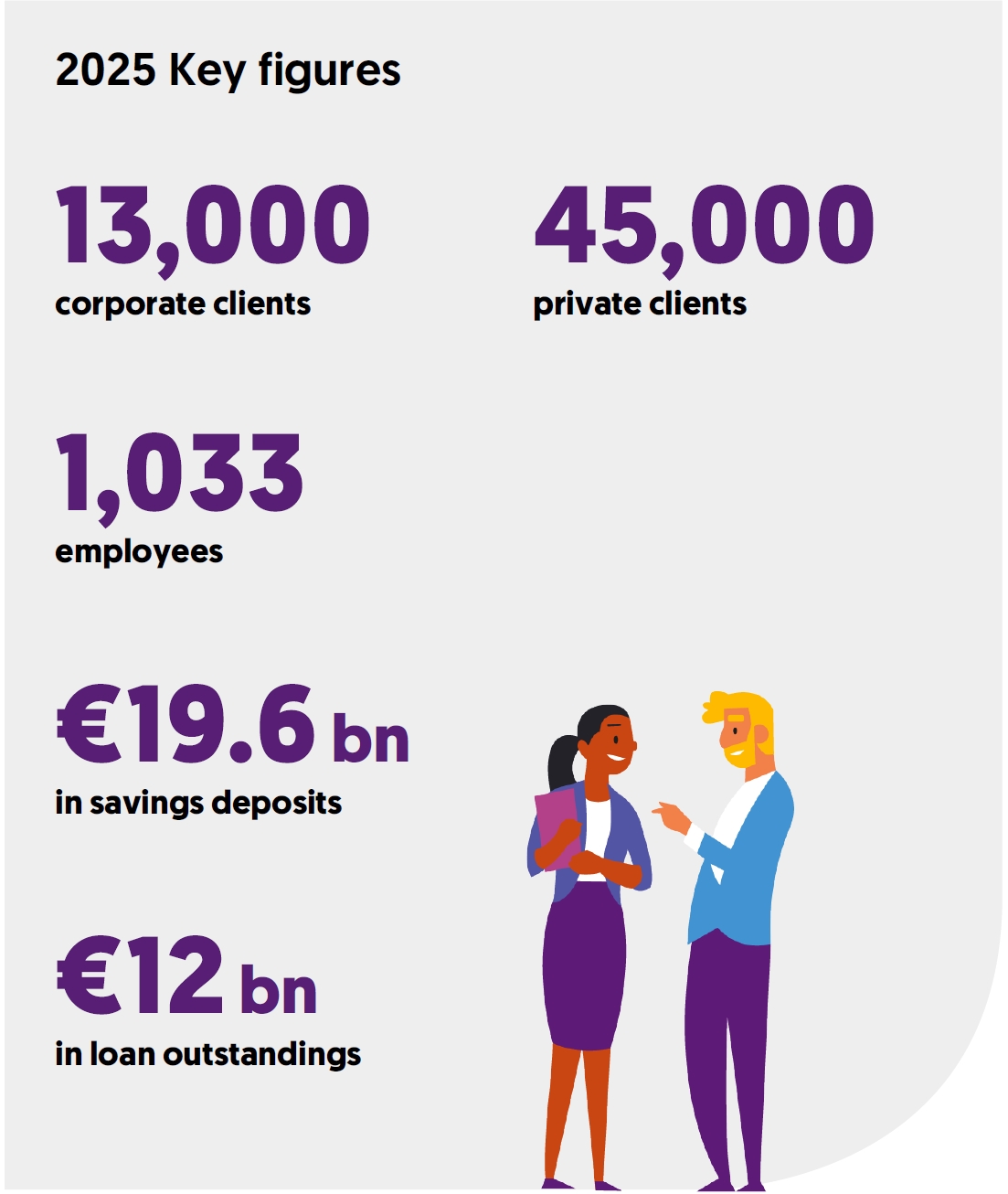
Its signature “The art of being a banker” illustrates Banque Palatine’s determination to develop a model of close relationships based on excellent support for its 13,000 corporate and 45,000 private clients.
The corporate market had a particularly dynamic year in 2025, in synergy with the network of business centers, investment bankers, large corporates and institutions, specialized financing, the creative and audiovisual industries division, and the regulated real estate professions. The drive to win over companies with revenues exceeding €15 million continued, with 288 new clients active in this segment. The “corporate” teams also helped win over 304 new private banking, executives and senior managers among its corporate clients.
Despite an economic situation calling for the revision of corporate investment plans, the financing activity remained dynamic and the corporate finance activity was strong with an annual fee and commission performance of €14.1 million. The network of business centers and the specialized business lines recorded new loans to companies of €2.8 billion in 2025, including €0.7 billion in structured financing. 29% of the financing granted is “green”.
In Private Banking, client acquisition remained at a good level, with the 1,000 new client mark reached in early October 2025. Inflows in financial savings, equipment of clients with savings products, the performance of wealth audits and life insurance inflows also showed a very good trend.
- Banque Palatine rolled out its Sustainable Finance system, aimed at stepping up support for its clients in the environmental transition. The year was marked by numerous launches: implementation of the SAMI, Naldéo, Opéra Energie, EDE and Cozynergy group partnerships; launch of the impact real estate loan for private clients; launch of the first green EMTN, Palatine GreenCap 2032; extension of the impact financing offer for companies, etc. Banque Palatine published its first sustainability report and was awarded the CSR Committed labels at the confirmed and Cancer@Work stage. Finally, through sponsorship, it supports a mangrove planting project in Madagascar in order to sustainably restore this ecosystem, which is essential for biodiversity, the climate and local communities.
- Next, the audiovisual media division was transformed to become the hub for the creative and audiovisual industries, thus opening up its strategy of conquest in the cultural field beyond the cinema and audiovisual sector, where Banque Palatine is now one of the leading banks in France.
As a fully-fledged insurer, Groupe BPCE designs, distributes and manages a comprehensive range of personal and non-life insurance products for clients of its banking networks through BPCE Assurances1, as well as sureties and financial guarantees through Compagnie Européenne de Garanties et Cautions (CEGC).
In 2025, the personal insurance business was dynamic and helped to consolidate our ambition to become the 4th largest insurer in France by 2030. Gross inflows reached €16.3 billion in savings at the end of December 2025, up 7% compared to the previous year. The year was also marked by the launch of numerous offers and changes to paths to better meet the needs of policyholders: marketing of the Climate Future Savings Plan (PEAC), which Groupe BPCE is the first major French player to have launched, implementation of the self-care subscription of the Individual Retirement Savings Plan, and opening of the offer of BPCE Life, a company incorporated under Luxembourg law in the Insurance division, to Banque Palatine clients.
In payment protection insurance (ADE), after a difficult year in 2024, contract production was up steadily during the year in a context of a recovery in new home loans. In 2025, the ADE offer has evolved twice. First, BPCE Vie and CNP Assurances launched and generalized marketing of the new ADE offer for professionals and corporates with all Banques Populaires and Caisses d’Epargne. Then, the end of exclusions for people in remission from male cancer was announced.
In 2025, the non-life insurance (IARD) business was marked by the increase in the premium allocated to the financing of the natural disaster plan. According to France Assureurs, by the end of September 2025, the revenues of the Property & Casualty Insurance market was up by nearly 8%.
At the same time, difficulties in the automotive sector and the decline in registrations are intensifying competition. The recovery in home loans, although still limited, is on the other hand a more positive element.
Despite the unfavorable dynamics for bancassurers, BPCE’s non-life insurance (IARD) business line proved to be resilient, with a portfolio for individual clients up by 1% (at end-September 2025 compared with end-September 2024), and by 6% for professionals. Several highlights marked the year including: the launch of impact home insurance, to encourage and reward policyholders’ eco-responsible commitment to environmental challenges; production launch of a first use case based on the use of generative AI, to accelerate the processing of client complaints; a pilot with the company FlowStop to offer clients cofferdams at special pricing. Lastly, BPCE Assurances IARD was awarded the “Great Place to Work for Women” label, reflecting its commitment to building a respectful, inclusive and caring work environment.
In 2025, the need for sureties and financial guarantees was sustained. Compagnie Européenne de Garanties et Cautions (CEGC) guaranteed 197,167 home loans for individual clients, produced by Groupe BPCE networks, for a total of €27.4 billion, up 32% compared to 2024 and in line with market growth1 of 35%. In the construction sectors, CEGC covered the delivery “at the agreed price and deadline” of 9,358 single-family houses and issued financial guarantees for the completion of 614 real estate development projects. Finally, in the building, construction, company and industry sectors, 120,116 market guarantees were issued, mainly via the www.cautiondemarche.com solution, which is particularly popular, with a “Net promoter score” of +622.
In an economic environment that is not very favorable to real estate, CEGC’s role takes on its full meaning. Its robust risk profile enables it to meet its commitments and facilitate the implementation of its clients’ projects. Its proven expertise in risk assessment and very good knowledge of the real estate ecosystem make it possible to support professionals in the sector and accompany the recovery.
The year was marked by the deployment of the Subcontractor Payment Guarantee (GPST), which enables its single-family home builder clients to build trust with their subcontractors and meet regulatory requirements. DBRS and Moody’s renewed CEGC’s ratings, A High and A1, respectively, demonstrating the quality of its credit rating and its robust credit profile. Finally, CEGC obtained a score of 80/100 in the EcoVadis assessment, which places it in the top 2 French companies, all sectors combined.
- 1 Banque de France. Published on January 9, 2026. Change in new home loans excluding renegotiations, first 11 months of 2025 compared to the first 11 months of 2024.
- 2 Source: CEGC listening runs carried out by the Enov institute, cumulative 4 quarterly waves carried out in 2025, with 295 corporate market guarantee end clients. Telephone-administered quantitative questionnaire.
The Digital & Payments division brings together all of Groupe BPCE’s business lines and expertise in the fields of innovation, digital, data and artificial intelligence, payments, and trade finance with Oney.
Oney is a different, unique bank born from a commercial background. A partner in the transformation of retail for over 40 years, Oney designs solutions for payment, consumer financing, insurance and anti-fraud solutions. Creator of split payment in 2008, Oney is the leader in the BNPL (Buy Now Pay Later) market in France. A strategic ally of more than 37,000 retailers, Oney supports the purchasing and project completion of nearly 7 million clients in Europe by offering them quick and simple digital shopping experiences. Every day, its 1,900 talents in 10 countries drive the ambition to be a more human and responsible bank, a major player in Europe in retail consumer finance. With the support of its two shareholders, BPCE (50.1%) and ELO (formerly Auchan Holding at 49.9%), Oney brings together the best of banking and commerce. Within Groupe BPCE, Oney operates within BPCE Digital & Payments, a division bringing together payment, digital and data expertise.
BPCE Payment Services, with its recognized expertise in the field of electronic payment processing and payment flows, supports Groupe BPCE’s banks and subsidiaries as well as external customers consisting of financial institutions and payment service providers. The subsidiary now manages more than 30 million payment cards, 11 billion transactions per year, and more than 500,000 merchant contracts for their needs in payment terminals and associated services. Its pioneering culture in terms of innovation has enabled the Group’s institutions to position themselves as pioneers in a number of payment market standards, such as Apple Pay, instant transfers and more recently, Tap to Pay.
Payplug, an omnichannel payment solution, is a specialist in payment cards and payment acceptance and acquisition services. This fintech is aimed at retailers and e-merchants of all sizes for whom the European market and its various local payment methods represent a priority issue.
Xpollens, Groupe BPCE’s Banking as a Service platform, optimizes all incoming and outgoing payment flows and offers payment methods, IBANs and virtual accounts that can be integrated via API without changing banks.
- The Digital client department, composed of digital experts who design remote banking for the Group’s institutions, and ensure its continuous improvement by developing the best applications thanks to AI and Data.
- The AI & Data department designs and deploys services and tools that exploit the potential of data, for the benefit of the competitiveness of each of the Group’s business lines. By placing artificial intelligence at the service of performance and simplicity, they enrich the client experience, optimize processes for advisors, and facilitate the daily lives of all Group employees.
- The Innovation department whose mission is to build new sources of revenue, incubate internal and external strategic projects and participate in the capital of technology companies. Its work focuses on open finance, blockchain, new payment methods and the energy transition.
In 2025
2025 was marked by the founding of Estreem, a new French leader and major European player in payment processing. This new company, a joint venture between BPCE and BNP Paribas, combines the expertise and best technologies of both groups in terms of payment processing, for the benefit of their individual and professional clients with physical and digital cards, and merchants. Aiming to process all of BNP Paribas and Groupe BPCE’s card payments in Europe, i.e. 17 billion transactions per year, Estreem intends to become the French leader in processing with 30% of the volume of card payments in France and aims to become one of the top 3 processors in Europe.
In 2025, the Wero service saw growing adoption among Banques Populaires and Caisses d’Epargne clients, with a record of 7.5 million monthly transactions in December, with 4.2 million client users and continued growth with 200,000 new clients using it each month. Groupe BPCE is now preparing to roll out the e-commerce functionality for 2026 for its clients, including retailer clients by leveraging the know-how of its fintech Payplug.
In 2025, the digital client teams also redesigned the banking application for teenagers, clients of the Banques Populaires and Caisses d’Epargne, to meet their specific uses and expectations.
Groupe BPCE integrated the new “Invoice Management” service operated by iPaidThat, a French platform approved by the French Directorate General of Public Finances (DGFiP) and a subsidiary of Groupe BPCE, in the banking areas of professional clients.
Finally, the teams enhanced the Banque Populaire and Caisse d’Epargne mobile applications with new features, confirmed their performance and are now the 2nd best retail banking applications in France.
The year was marked by the massive adoption of AI within the Group. Thanks to the MAiA internal portal, launched in 2023, 50,000 employees had adopted generative AI tools by the end of 2025. This is in line with the target set for 2026. It has been made possible by numerous training and acculturation initiatives, always with the aim of placing people at the center of major technological transformations.
The use of AI has also become widespread across all business lines, across the Banque Populaire and Caisse d’Epargne networks, in the BPCE Solutions Expertises Financières, BPCE Assurances and BPCE Digital & Payments retail business lines, as well as in Natixis’ global business lines. In line with its VISION 2030 strategic project, Groupe BPCE focuses its efforts on a few priority areas:
- Assistance for branch advisors, more than 80% of whom used AI at the end of 2025,
- Improvement of the digital experience for clients using the Group’s banking apps,
- Transformation of specialized client relations centers,
- Support for IT professions.
All these advances are recognized and have enabled the Group to move up 15 places in the Evident AI Index 2025 ranking to 25th among the world’s 50 largest banks in terms of AI adoption.
In 2025, Oney continued its transformation and achieved its financial trajectory by combining digital modernization, evolution of the offering and increased integration of AI. Client recruitment and loyalty remain at the heart of the “Carte First” strategy, a key lever for strengthening Oney’s relationship with retailers. Two major new solutions were finalized: financing dedicated to energy renovation and the Forward Trade In offer, allowing a trade-in of the product at a guaranteed price. These advances, supported by the modernization of paths, the intensive use of data and a renewed technological base, strengthen operational performance and enable Oney to position itself as a major player in consumer financing in Europe.
The Financial Solutions & Expertise (FSE) division brings together, within BPCE, expertise in financing, services and advice, for the Group’s corporate clients.
BPCE Financement develops offers and complete solutions for the management of revolving loans and personal loans for Groupe BPCE’s networks.
BPCE Lease offers a complete range of rental solutions: equipment and real estate leasing, trust, long-term vehicle leasing, leasing with purchase option, boating or automotive leasing, IT operational leasing, and renewable energy financing.
BPCE Equipment Solutions is a major player in the financing of equipment leasing internationally. Created in March 2025, this subsidiary is the result of the acquisition of Société Générale Equipment Finance (SGEF).
BPCE Factor develops factoring solutions for companies of all sizes, at any stage of their growth process (creation, development, external growth, international development, etc.).
SOCFIM specializes in financing real estate professionals (developers and investors). Its activity covers the whole of France and all asset classes: new and existing housing, managed housing (students and seniors), offices, retail and logistics warehouses.
BPCE Solutions immobilières is a major player in real estate consulting in France. It comprises three business line divisions: Expertise & Consulting, Residential, Investment & Rental.
EuroTitres develops a comprehensive range of services for the custody of securities accounts and the management of transactions carried out by individual customers: stock market, mutual funds, securities transactions, portfolio statements, tax forms, etc.
Pramex International specializes in advising French start-ups, SMEs and mid-sized companies on international expansion, either through internal growth (creating and overseeing foreign subsidiaries) or external growth (international acquisitions).
In 2025
With €38 billion in assets under management and an 18% market share in the third quarter of 2025, BPCE Financement confirms and strengthens its position as France’s leading consumer loan bank in a non-leasing market that is up +1% year-on-year (source: ASF at the end of September 2025). The year was marked by the finalization of the overhaul of the personal loan subscription processes for Groupe BPCE networks, after having revised those of revolving loans in 2024. An initial experiment was carried out on the ability of networks to distribute personal loans to prospects without the need to open a bank account, an experiment that will continue next year. Significant investments in artificial intelligence continue to be made, in particular for our client relations centers, with a natural language document assistant and the orchestration of contacts using amicable debt collection. Finally, 2025 was the year of recognition of all our investments and the results obtained on ESG topics, with us being awarded the EcoVadis gold medal in the first year.
BPCE Lease, which celebrated its 35th anniversary this year, recorded dynamic activity in all its segments, with total production of €7.2 billion. In equipment leasing, BPCE Lease maintained a slightly higher level of production than last year, enabling it to achieve a record market share of 18% in France in a declining market (source: ASF). In terms of long-term leasing, BPCE Car Lease’s fleet has reached 52,000 vehicles and is becoming increasingly electrified. BPCE Lease recorded a record level in financing for renewable energy projects in France and internationally (Italy and Spain), with more than €1 billion in new financing of arranged projects for the second consecutive year. In Real Estate, financing in the form of trusts confirmed its momentum and BPCE Lease was particularly active in real estate leasing in the second half of 2025. The year was also marked by the resumption of Banque Populaire Alsace Lorraine Champagne’s new equipment leasing production under the commission method, and by excellent client satisfaction metrics: 91% in long-term leasing – NPS: +51; 79% in CBI – NPS: +24; 96% in CBM – NPS: +62. Finally, BPCE Lease received a gold medal from EcoVadis for its CSR performance, ranking among the top 5 companies assessed in its sector.
BPCE Equipment Solutions develops its expertise in four main sectors: transportation, industrial equipment, technologies, and the medical & environmental sector. Its relationship model is expressed through prescribing partners (manufacturers and distributors of professional capital goods, third-party partner banks), or directly with end clients. The year was marked by the finalization of the acquisition of the activity by Groupe BPCE, and its integration into the FSE division, in accordance with the planned schedule. On the business side, activity is up by 11% compared to 2024, and the quality of service is recognized with a high level with an NPS of 61. In 2025, the French vendor activity of BPCE Lease was integrated into BPCE Equipment Solutions, which is dedicated to supporting this type of business model for the Group for equipment financing in France and abroad. Lastly, 100% of entities obtained a minimum score of “Silver”, including 6 “Gold” or better in the EcoVadis assessment in terms of sustainable development, proof of BPCE Equipment Solutions’ commitment and attention to this subject, which remains at the heart of its strategy.
BPCE Factor handled nearly 12 million invoices, supporting the changing working capital requirements of companies in France and abroad, both in their day-to-day business and as they grow. With a 25% market share in France, BPCE Factor is one of the leaders in the factoring market in terms of number of contracts (source ASF - 2024). Its international assets under management represent 41% of total assets under management. Its factoring revenues amounted to €57 billion in 2025. The year 2025 was marked by the continuation of the transformation program, Pro’Pulse 2025, initiated in 2023. This program was designed to modernize the management of professional clients, enrich the client and employee experience, and enhance operational efficiency. The client Net Promoter Score reached 38, up 9 points year-on-year.
SOCFIM maintained a good level of activity with a production of €3 billion, in a tense context where the real estate market remains severely affected by a supply deficit and demand penalized by a crisis of confidence in an uncertain political and geopolitical environment. The decline in production in the development market segment was partially offset by the Value Added and Long-Term Investor segments. The correction in values and the need for liquidity among operators have enabled the dynamism of these market segments in more resilient asset classes. The office market remains depressed with a rise in vacancies and a drop in values. SOCFIM continues to strongly support its clients in this complicated context, with a Net Promoter Score (NPS) of +50, up two points year-on-year.
BPCE Solutions immobilières continued its development with the Group’s institutions in the residential sector. However, the crisis in the real estate market penalized a more marked development. 745 units were sold to individual clients in 2025 (848 in 2024), and SCPI inflows totaled €22 million. The Expertise division continued to grow and diversify, working primarily with major institutions and Group institutions, generating €15 million in net revenues. During the first quarter, an offer for a proxy in accordance with the Elan Law was launched in partnership with ICF Novedis.
In 2025, EuroTitres supported the strong increase in the activity of the Group’s individual investor clients, both on the domestic stock exchange and in international transactions, with orders increasing by 21% and 62%, respectively, compared to the previous year. EuroTitres keeps more than 2 million securities accounts. The year was also marked by significant growth in the opening of securities accounts with the Banques Populaires and the Caisses d’Epargne. This trend reflects the enthusiasm of individual clients to explore investment opportunities in an unstable political and economic context and the commercial momentum deployed by some of the Group’s institutions. At the same time, EuroTitres has also broadened and diversified its services, thus strengthening the support provided to advisors and clients in the management of financial savings.
Pramex International developed its activities in the creation and management of subsidiaries abroad and M&A operations in France and abroad. It recorded an increase in the number of contract signings compared to last year in an unfavorable market context leading to strong attrition following abandoned projects and longer decision-making times. For the third consecutive year, the company conducted a client satisfaction survey with continuously improving results: 92% of satisfied clients and an NPS of +30.
Groupe BPCE’s global business lines, namely Corporate & Investment Banking and Asset & Wealth Management, support corporates, investors, financial institutions, financial sponsors, as well as customers of the Banque Populaire and Caisse d’Epargne networks in the realization of their projects around the world. They offer them innovative and sustainable financing and investment solutions that contribute to the implementation of their environmental, technological and societal transitions. Natixis Corporate & Investment Banking (CIB) supports its corporate clients, financial institutions, institutional investors, financial sponsors, public sector entities and the Groupe BPCE networks. It advises them and designs innovative, tailor-made solutions to support their strategy, drawing on the full range of its expertise in advisory services, investments, financing, commercial banking and capital markets, as well as its global presence in nearly 30 countries across three geographic areas: North & South America, Asia-Pacific & Middle East.
Natixis CIB is organized around six main business lines (Global Markets, Investment Banking, Real Assets, Global Trade, M&A, Credit Portfolio & Resources Management):
- The Global Markets business line offers a wide range of hedging, financing and investment solutions on the fixed-income, credit, foreign exchange, commodities and equity markets, combined with recognized economic research.
- The Investment Banking teams support their clients in their strategic decisions: acquisitions, asset sales or purchases and, more generally, any growth project. Offering high value-added solutions, Investment Banking encompasses strategic and acquisition financing, financing on the primary bond and equity markets, and financial engineering for listed holdings.
- The Real Assets business line combines the origination and structuring of structured finance in the sectors of aviation, infrastructure & natural resources and real estate & hospitality. Real Assets is recognized as one of the market’s major players in these sectors.
- The Global Trade business line includes the international trade financing activities, structured financing solutions for export transactions and cash management for its corporate clients, commodity traders and for customers of the Banques Populaire and Caisse d’Epargne networks. This business line, at the heart of the Group’s strategy, aims to support and finance the commercial development of its clients in a sustainable manner.
- The Portfolio management teams (CPRM) intervene in support of all financing activities. They are at the heart of the Originate-to-Distribute (O2D) model and ensure the strategic optimization and allocation of resources.
- Finally, the teams specialized in mergers and acquisitions (M&A) support large- and medium-sized commercial and industrial companies, institutional investors and investment funds in the preparation and implementation of divestments, mergers, fundraising, restructuring or capital protection. This expertise is based on a network of nine boutiques in nine countries: Natixis Partners, Solomon Partners, Fenchurch, Natixis Partners Iberia, Natixis Partners Belgium, Emendo Capital, Vermilion, Azure Capital and Clipperton.
Around these major business lines, the Advisory & Coverage division dedicated to client coverage, brings together bankers, sector experts and teams in charge of supporting its clients’ environmental and technological transitions. To ensure a close relationship with clients , this division has a strong regional presence in France, and draws on all the bank’s teams of experts abroad.
Lastly, in addition to its six main business lines, Natixis CIB is positioned, via its subsidiary Coficiné, as a leader in specialized financing for the media, entertainment and cultural industries.
Highlights in 2025
- Global Markets: Natixis CIB continued to expand its activities in a context where all its asset classes recorded solid year-on-year performance. This growth was achieved on all platforms, accompanied by an increase in the client base and volumes processed. The expertise of the Global Markets teams was recognized at the Global Derivatives Awards 2025, receiving the “Equity Derivatives House of the Year: Europe & Asia” and “Commodity Derivatives Bank of the Year: Europe & Asia” awards1.
- Investment Banking: Natixis CIB announced the first closing of the Universe Direct Lending Partners I fund. The fund has received strong backing from a diverse group of investors, including BPCE Assurances and CEGC (Compagnie Européenne de Garanties et Cautions), as well as leading institutional insurers. Alongside Natixis CIB, the fund will invest in direct lending opportunities to support mid-sized companies supported by financial sponsors, mainly in Europe.
- In August 2025, Natixis CIB structured and placed for Groupe BPCE the first European defense bond issued by a financial institution in Europe. The funds raised through this €750 million senior preferred bond issue, maturing in five years, will be used to finance and refinance assets in the defense sector. Natixis CIB also supported BPI France in the issue of its first “European Defence Bond” for an amount of €1 billion.
- Natixis continues to expand its ECM expertise in Europe and is positioned as the 4th largest European player in the Equity Linked market, mainly concerned by convertible and exchangeable bond issues.
- Real Assets: In 2025, Natixis CIB launched its new “Transportation Finance” business line to provide its clients with tailor-made financing solutions and extend its asset-based financing offering. Natixis CIB arranged several notable transactions in the aviation sector, including the first French Optimized Lease in Latin America with Viva Aerobus.
- Global Trade has expanded its range of investment solutions to meet the needs of its clients across new currencies and geographies, including Japan. Since 2025, Natixis CIB has offered its clients the possibility of monitoring their import and export Trade Finance transactions in real time thanks to the Trade tracker tool.
- M&A: In January 2025, the subsidiary Natixis Partners announced a strategic merger with Financière de Courcelles, strengthening its expertise in the small and mid-cap segments and making it possible to better serve the clients of the Banques Populaires and Caisses d’Epargne.
Natixis CIB continued to strengthen its O2D model through the review of its Significant Risk Transfer (SRT) program, including an inaugural SRT CLN (Credit Linked Note) in October 2025, the first since 2022.
Natixis CIB also pursued its strategic objectives in terms of sustainable finance. Its expertise has been recognized worldwide. Natixis CIB was named “Bank for Sustainability”1, World’s Best Bank Transition Strategy2, ESG Lender of the Year.3 Natixis CIB continues to provide innovative sustainable finance solutions. In 2025, Natixis CIB was particularly active in financing carbon capture projects. Natixis CIB also participated in the development of Blue Finance, notably through the issue of the first “Blue Repo” by Banco do Brasil.
Natixis CIB has extended its core industries4. In 2025, Natixis CIB structured its “Food, Agriculture and Natural Capital” expertise around a team of dedicated industry bankers within the Advisory & Coverage division.
Natixis CIB continued to strengthen its international presence:
- To better serve its clients and adapt to global dynamics, Natixis CIB has changed its organization and governance. Since January 2026, the Middle East and Asia-Pacific regions have been united under a single platform.
- In July 2025, Natixis CIB obtained a banking license in Japan, enabling its Tokyo branch to offer a wider range of financial services to clients.
- The Americas platform continued to develop and its expertise was recognized several times. Numerous infrastructure and aviation financing operations were recognized and Natixis CIB was named “MLA of the Year, Latin America”5. Natixis CIB was also recognized as “Private Credit CLO Arranger of the Year”6.
- 1 IFR Awards 2025
- 2 Euromoney
- 3 IJ Global – EMEA 2025
- 4 Expertise on nine key sectors: Energy security and decarbonization; Low-carbon energy; Critical Metals & Minerals; Food, agriculture & natural capital; Health; Telecom & Tech; Mobility; Environment; Residential
- 5 IJ Global
- 6 Deal Catalyst US CLO Awards 2025
Asset & Wealth Management develops solutions to meet the deposits and savings, investment, risk management and advisory needs of the various private banking and institutional customers of Groupe BPCE.
One of the world’s leading asset managers with €1,323 billion in assets under management at December 31, 2025, Natixis Investment Managers (Natixis IM) supports investors on every continent in building their portfolios, offering them a wide range of diversified, responsible solutions.
With its decentralized and entrepreneurial multi-affiliate model, Natixis IM brings together the expertise of more than 15 specialized asset management companies and offers its investor clients a range of over 200 strategies to help them achieve their investment objectives, whatever the market conditions.
Managed from its headquarters in Boston and Paris, the company develops its offer around three key areas of expertise:
– conviction management (fundamental active),
– management under liability constraints (insurance and retirement/pensions),
– private assets.
It deploys its offer through an integrated distribution network established in over 20 countries, in addition to the sales teams of the Banques Populaires and Caisses d’Epargne.
Highlights in 2025
Thanks to the commitment of all its teams, Natixis Investment Managers (IM) recorded strong sales momentum in 2025, with net inflows of €40 billion for the second consecutive year, mainly in bond products carried by Loomis Sayles and DNCA and in diversified products (Solutions).
77% of funds are rated by Morningstar in the 1st and 2nd quartiles for their three-year performance at the end of December 2025, compared with 68% a year earlier.
The company continued to streamline its organization and actively manage its investments, with the merger of Thematics and Mirova, which created a leading player in thematic equity management combining innovation and positive impact, and the acquisition of Belmont Capital’s activities to capitalize on Gateway’s expertise in option-based investment solutions and better meet client needs.
In the United States, Natixis IM has formed a strategic partnership with Edward Jones, one of the largest market players with more than $2,000 billion in assets under management, which opens up promising development prospects in this key market.
Alongside its affiliates, Natixis IM continued its efforts to develop responsible and impact investing, and ESG assets (SFDR Art. 8/9) represented more than €540 billion at the end of 2025. They also continued to make their voices heard through individual and collective engagement, active voting policies and participation in key marketplace initiatives to advance responsible investment.
Natixis Interépargne, France’s leader in responsible corporate savings, is the trusted partner of over 115,000 companies1 of all sizes, helping them set up and manage their employee and pension savings schemes, serving nearly 4 million French savers1.
Drawing on the wealth and diversity of Natixis Investment Managers’ best expertise, it provides its clients with a high-performance and sustainable management offering that is among the most recognized on the market2, with more than €44 billion in assets under management1.
Fully committed to its societal role, Natixis Interépargne supports the development of useful savings, in the belief that value sharing is the best solution to align the interests of shareholders, managers and their employees, to serve the company’s performance.
- 1 Source: Natixis Interépargne at June 30, 2025
- 2 Since 2015, Natixis Interépargne has been regularly recognized by the Corbeilles Mieux Vivre Votre Argent
Highlights in 2025
2025 saw the completion of the acquisition of HSBC Epargne Entreprise (HEE), a subsidiary of HSBC Continental Europe (HBCE), and the transfer of its activity to Natixis Interépargne, which thus took over 3,300 companies and 193,000 new savers on its platform. This is the first consolidation operation in the account-keeping market and a strong signal from Natixis Interépargne about its leadership.
Fully committed to the development of useful savings, Natixis Interépargne has adopted a purpose and an impact strategy integrated into its strategy to promote the democratization of employee savings.
In association with VEGA Investment Solutions (VEGA IS) and the Reconstruire Collective, it launched the “Sélection VEGA Industrie France” mutual fund, a fund invested in companies in the manufacturing industry in France, which combines listed and unlisted equities.
True to its strong culture of innovation, after a successful period of acculturation among its teams, Natixis Interépargne tested and initiated the deployment of numerous AI use cases, improving the fluidity of operations and the efficiency of its processes.
For the 2nd consecutive year, Natixis Interépargne was awarded the EcoVadis 2025 silver medal, confirming its performance in terms of sustainable development.
Lastly, the commercial momentum was confirmed with significant successes with major corporate clients, particularly in the CAC40. Gross inflows are up by 15%1 in 2025 compared to the previous year.
In terms of distribution networks, driven by its actions in favor of companies with 11 to 49 employees within the framework of the law on value sharing, all distribution networks saw strong growth, with sales growth of new contracts over the year of +31%1.
Established in France and Luxembourg, Natixis Wealth Management designs and implements tailor-made wealth management and financial solutions to structure and manage the assets of business leaders, senior executives, large private investors and holders of a family capital.
It supports them in their initiatives to enterprise, invest and transmit, and mobilizes a wide range of expertise that covers all their needs, whatever the size or maturity of their projects: corporate advisory, origination, vanilla and complex financing, investment, portfolio engineering, asset management and diversification solutions, particularly in private equity. The entire value proposition is tailored to the degree of personalization desired by the customers and is distributed via two channels: BtoC and BtoB. To expand its range of listed and unlisted asset management products and services, Natixis Wealth Management draws on the complementary expertise of its four subsidiaries: Massena Partners, dedicated to advising private family groups and family offices, mainly in private equity; Dorval Asset Management, expert in flexible and responsible asset management; Teora by Natixis Wealth Management, specializing in high-end life insurance brokerage in open architecture; as well as VEGA Investment Solutions.
Highlights in 2025
- In a market environment still marked by interest rate volatility and an uncertain geopolitical context, Natixis Wealth Management and its subsidiaries continued their momentum of development and innovation. At the end of December 2025, Natixis Wealth Management managed €26 billion in assets.
- The acquisition of Dorval Asset Management, completed on July 1, 2025, strengthens the Group’s expertise in flexible and responsible asset management, thus enriching the investment solutions offered to its clients.
- In addition, Natixis Wealth Management consolidated its reputation for excellence by receiving the “Best Affiliated Private Bank” award at the seventh edition of the Sommet du Patrimoine et de la Performance, organized by Décideurs Patrimoine.
- This progress demonstrates the Bank’s ongoing commitment to supporting its clients with exemplary quality of service, while asserting its position as a benchmark in the wealth management market.
This period was also marked by an intensification of the collaboration with the Banque Populaire and Caisse d’Epargne networks, making it possible to strengthen the development synergies and broaden the scope of the solutions offered to an increasingly diversified customer base.
-
1.5 Agenda
May 5, 2026 After market close – Publication of first-quarter 2026 results May 21, 2026 BPCE General Meeting August 4, 2026 After market close – Publication of second-quarter and first-half 2026 results November 3, 2026 After market close – Publication of third-quarter results for 2026 Calendar subject to change -
1.6 Contacts
-
2 Sustainability report
- 2.1 Groupe BPCE sustainability report
- 2.2 BPCE Statutory Auditors’ report on the Groupe BPCE Sustainability report
- 2.3 BPCE’s sustainability report
- 2.4 Statutory Auditors’ report on the BPCE sustainability report
The scope of consolidation of both groups, organized around the central institution, is presented in the diagram below.
In addition to BPCE, Groupe BPCE includes the Banques Populaires, the Caisses d’Epargne and their respective subsidiaries.
-
2.1 Groupe BPCE sustainability report
Groupe BPCE has established its sustainability report in accordance with the European Sustainability Reporting Standards (ESRS), as mandated by Article 29b of Directive 2013/34 of the European Parliament and of the Council from December 14, 2022. These standards provide a comprehensive framework for the disclosure of non-financial information on environmental, social and governance issues.
The group’s sustainability report is based on a double materiality assessment, which takes into account both the impact of Groupe BPCE on the environment and society, and the influence of changes in the environment and society on the company’s performance. This approach takes into account the expectations of stakeholders, in particular employees, investors, clients, cooperative shareholders and the communities in which the group operates. It results in a list of impacts caused by Groupe BPCE’s activity, and of risks and opportunities (IROs) related to environmental and societal changes.
To prepare this report, Groupe BPCE has collected data on a consolidated basis and across its value chain. This sustainability report is audited as required by the regulations with a limited level of assurance.
The scope of consolidation used for this sustainability report is identical to that of Groupe BPCE’s consolidated financial statements. All entities included in Groupe BPCE’s IFRS (International Financial Reporting Standards) scope of consolidation are also included in this sustainability report.
The institutions included in Groupe BPCE’s consolidation, permanently affiliated with BPCE in accordance with Article 10 of Regulation (EU) 575/ 2013 (CRR) and exempted from the individual and consolidated disclosure obligation in terms of sustainability are the following:
Banques Populaires Caisses d’Epargne Banque Populaire Alsace Lorraine Champagne Caisse d’Epargne Aquitaine Poitou-Charentes Banque Populaire Aquitaine Centre Atlantique Caisse d’Epargne d’Auvergne et du Limousin Banque Populaire Auvergne Rhône Alpes Caisse d’Epargne de Bourgogne Franche-Comté Banque Populaire Bourgogne Franche-Comté Caisse d’Epargne Bretagne Pays de Loire Banque Populaire Grand Ouest Caisse d’Epargne Côte d’Azur Banque Populaire Méditerranée Caisse d’Epargne Grand Est Europe Banque Populaire du Nord Caisse d’Epargne Hauts de France Banque Populaire Occitane Caisse d’Epargne Ile-de-France Banque Populaire Rives de Paris Caisse d’Epargne Languedoc-Roussillon Banque Populaire du Sud Caisse d’Epargne Loire-Centre Banque Populaire Val de France Caisse d’Epargne Loire Drôme Ardèche CASDEN Banque Populaire Caisse d’Epargne de Midi-Pyrénées Crédit Coopératif Caisse d’Epargne Normandie Caisse d’Epargne Provence Alpes Corse Caisse d’Epargne Rhône Alpes Certain subsidiaries included in Groupe BPCE’s scope of consolidation are exempt from the obligation to provide individual and consolidated sustainability disclosures. This is partly due to the fact that they do not issue securities on a regulated EU market:
Exclusions from the reporting scope by family of indicators are indicated in the description of each indicator.
Groupe BPCE has not made use of the option that allows it to omit certain disclosures relating to intellectual property, know-how or the results of innovations. This option is provided for in Section 7.7 of ESRS 1: Classified and sensitive information, and information on intellectual property, know-how or results of innovation.
Nor has Groupe BPCE made use of the exemption from reporting disclosures on imminent developments or deals under negotiation, in accordance with Articles 19a(3) and 29a(3) of Directive 2013/34/EU.
Material impacts, risks and opportunities have been assessed in the short, medium and long term, or using a constant timeframe (when materiality remains identical across short, medium, and long term periods). The forward-looking information in Groupe BPCE’s sustainability statements relies on the general principles outlined in Section 6.4 of ESRS 1 Definition of the terms “short-”, “medium-”, and “long-term” horizons for reporting purposes:
- 1 year is defined as “short term” (period covered by the annual financial statement);
- Between 1 year and 5 years is defined as “medium term”;
- More than 5 years is defined as “long term”.
When the time horizons deviate from these general guidelines, this information is indicated at the same time as the relevant information concerning the specific material subject. During the preparation of this sustainability report, forward-looking estimates and assumptions were made. The results observed may differ from these estimates and assumptions.
The indicators must cover the entire scope of consolidation. However, for the calculation of greenhouse gas emissions under ESRS E1-6 (greenhouse gas emissions), the indicator is calculated over an extended scope. Scope 3, category 15, emissions relate to the value chain, in particular to financed emissions.
For the calculation of Scope 3, category 15, emissions, greenhouse gas data come from several sources:
- Data purchased from suppliers (Carbone4, Trucost, CDP, MSCI);
- Data collected from the group’s customers (DPE); and
- Public databases (Centre Scientifique et Technique du Bâtiment).
When data is not available, the group uses sectoral intensity estimates: either through extrapolation or using a proxy defined through PCAF1.
This report, known as the “Groupe BPCE sustainability report”, was prepared in accordance with the legal and regulatory requirements resulting from the transposition of the European Directive on the disclosure of information on companies’ sustainability (Corporate Sustainability Reporting Directive or “CSRD”). During this second year of application, the absence of sectoral standards specific to banking and insurance activities remained, generating uncertainties on the methodological approaches to be used and the availability of data, particularly those relating to the value chain.
In this context, Groupe BPCE has endeavored to apply the normative requirements set by the ESRS, as applicable at the date of the sustainability report, based on the information available within the timeframe for its preparation, by doing its best to reflect its role as a universal bank-insurer, as well as its various business models.
For the double materiality asses and, in particular, that relating to its value chain, Groupe BPCE encountered limitations relating to the maturity of its valuation methodologies and the availability of data. As presented in Part 1.5.2 List of material IROs, we considered that for the Environment (E) topic, only the issue of climate change mitigation and adaptation is material within the meaning of the standard. Limitations on the amount of information available at this stage prevented the group from assessing the materiality of the ESRS Nature topics as defined by the standard, leading it to evaluate these environment-related issues as non-material. This assessment was based on the definitions of the standard, and the methodologies available to assess and carry out the rating exercises. This assessment can be explained, in particular, by the absence of a consensus on robust methodologies developed on the topics in question and of relevant and appropriate data which would make it possible to establish a link between the impact or risks for Groupe BPCE regarding these topics through its value chain. In view of Groupe BPCE’s continuous improvement approach to these environmental issues, the work and ongoing changes in international methodologies, the standards that are being put in place, the best market practices that are emerging and information and data from its customers, which should gradually become available, this double materiality assessment may change in the coming years. The results of which are presented in this report, aims to qualify the impacts, risks and opportunities as described in the CSRD standard: this analysis only meets the needs of sustainability reporting and not the analysis of risk factors presented in the chapter on risk management.
For the data points presented in this report, Groupe BPCE used methodological options that it deemed relevant and made estimates for many data points, particularly concerning the various activities of its value chain. The data, analyses, and studies carried out do not guarantee that expectations and targets will be achieved: they are based on objectives, commitments, estimates, assumptions, standards, and methodologies under development and currently available data, which continue to evolve and develop. Some of the information contained in this document has been obtained from public sources or from sources that appear to be reliable or from market references: Groupe BPCE has not independently verified them. In addition, Groupe BPCE notes that the information expected in terms of sustainability is based on so-called “agnostic” European standards (ESRS) - i,e., general standards - that do not reflect the specificities of the financial sector. As a result, certain data items deemed irrelevant or not applicable, given Groupe BPCE’s business models and value chain, have not been produced.
Regarding the climate change mitigation and adaptation transition plan : in its transition plan, Groupe BPCE distinguishes between actions relating to its own operations and the targets and actions that it has set itself in order to contribute to the decarbonization of the economy by supporting its clients. The actions described present, in particular, the achievements and roadmap for the initiatives that seem to produce an impact via the downstream value chain. The group’s transition plan accordingly describes its past, current and future efforts to align its financing, investment and insurance portfolios with scientifically established trajectories toward global carbon neutrality in 2050, there by supporting its clients in their environmental transition. This report does not quantify the effects of decarbonization levers or future estimates of total financed emissions. Indeed, the actions undertaken by the group cannot replace those of individual clients, companies or States that it supports in their transition, and the transition of the economy to a low-carbon economy depends on many parameters external to Groupe BPCE.
As regards the assessment of greenhouse gas (GHG) emissions, as a service company, the group emits a limited level of CO2e in terms of its own operations, including by integrating the upstream value chain (purchases, including those related to IT and technological investments, mobility including business trips, etc.), and the travel of its clients to its branches or business centers. Most of Groupe BPCE’s GHG emissions come from financed emissions and are subject to a normative calculation for category 15 of the emissions of the downstream “investment” value chain, otherwise known as “financed emissions”, aimed at attributing to the financial institution a portion of the CO2e emissions of its financed clients or securities in which it invests. This calculation takes into account clients’ scopes 1, 2 and 3, which therefore also include emissions from their value chain, and leads to a maximalist calculation. It is estimated that the emissions financed can be, on average, three times the same greenhouse gas emissions for portfolios of exposure to companies in the same value chain. For this sustainability report, the group considered the mandatory material categories of financial assets provided for in the Greenhouse Gas (GHG) protocol for calculating financed emissions. The scopes, methodologies used and the main assumptions and data sources are detailed in section 2.2.7.1 (E1-6) Gross Scopes 1, 2 and 3 and Total GHG emissions.
Regarding Taxonomy, the assumptions used and limitations imposed are detailed in Chapter 2.1 Indicators of the European taxonomy on sustainable activities.
Groupe BPCE believes that the expectations reflected in these forward-looking statements are reasonable; however, they are subject to numerous risks and uncertainties, are difficult to predict, generally lie beyond the control of Groupe BPCE, are sometimes unknown, and may lead to results or cause events to unfold significantly differently from those expressed, implied, or anticipated by the aforementioned information and forward-looking statements.
No material change in the definition or calculation of metrics, including those used to set targets and monitor progress towards their achievement, is to be reported.
1.1.2.6 Disclosures stemming from other legislation or generally accepted sustainability reporting pronouncements
With regard to risk management, Groupe BPCE has defined sustainability risk as a risk factor. The chapter on environmental, social and governance risks under Pillar III ESG describes how the group defines and manages these risks. This chapter also contains an overview of the impact of climate and environmental risks on other types of risks. Further details on the methodologies and management used for traditional types of risks, such as credit risk, market risk, operational risk and liquidity risk, are provided in Chapter 7 - Risk factors and risk management in the Universal Registration Document.
In addition, the elements relating to the eligibility and alignment of the group’s portfolios as defined in Regulation (EU) 2020/852 and supplemented by Delegated Regulations (EU) 2021/2178, 2021/2139 and 2023/2486 are included in section 2.1. Indicators of the European taxonomy on sustainable activities.
In order to avoid duplication, ESRS 1 allows the incorporation of parts prepared in other documents, such as the management report or the Universal Registration Document, by means of a simple mention, provided that this information has equivalent characteristics, particularly in terms of reliability. This generally concerns the parts relating to the description of the company’s activities and strategy, its governance, remuneration policies, risk factors and the duty of care.
Where the topics covered by the ESRS have material consequences for the consolidated financial statements, information is provided in the notes. In particular, Notes 2.3 “Use of estimates and judgments” and 7.1.2 “Change in gross carrying amounts and expected credit losses on financial assets and commitments” describe how credit and environmental risks are taken into account in the financial statements.
Name of the disclosure
requirementData point Reference document Section of the reference document Disclosures in relation to specific circumstances ESRS BP-2 Para. 15 Universal Registration Document Chapter 7 - Risk factors and Risk management - 7.16 Environmental, social and governance risks The role of the administrative, management and supervisory bodies ESRS 2 GOV-1 Para. 19 & 21 Universal Registration Document Chapter 4 - Report on corporate governance - 4.3 Composition of the management and supervisory bodies Information provided to and sustainability matters addressed by the undertaking’s administrative, management and supervisory bodies ESRS GOV-2,
Para. 26 (a) & (b)Universal Registration Document Chapter 4 - Report on corporate governance - 4.3 Composition of the management and supervisory bodies and 4.4 Roleand operating rules of governing bodies Risk management and internal controls over sustainability reporting ESRS 2 GOV-5 Para. 36 (a) Universal Registration Document Chapter 6 - Financial report - 6.8 Quality control of accounting and financial information - § 6.8.1 Roles and responsibilities in the preparation of accounting and financial information and § 6.8.3 Accounting and financial data control process Material impacts, risks and opportunities and their interaction with the strategy and business model ESRS 2 SBM-3 para. 48 (d) Universal Registration Document Chapter 6 - Financial report - 6.1 IFRS consolidated financial statements of Groupe BPCE - Notes 2.3 and 7.1.2 Groupe BPCE is a cooperative full-service bank and insurance group serving its clients, cooperative shareholders, territories and the economy. Its territorial model is inseparable from the history of its two longstanding retail banking networks, Banque Populaire and Caisse d’Epargne. These roots, which define the group’s identity, also condition its financial and non-financiel performance.
Since its origin, Groupe BPCE has been rooted in a humanist aspiration: making people a core priority, giving everyone the means to save money and finance their projects, and playing a pioneering role in regional development. This DNA, supported by century-old brands, has been embodied at every stage of its history:
- 1818: creation of the first Caisse d’Epargne et de Prévoyance to promote, collect, and manage the general public’s savings;
- 1878: creation of the first Banque Populaire, founded by and for entrepreneurs to help finance their projects;
- 1919: creation of Crédit National, from which Natixis originated, to finance the reconstruction of the French economy;
- 2009: creation of Groupe BPCE through the combination of the Banque Populaire and Caisse d’Epargne groups, sharing common values of solidarity and proximity.
Strong and proud of its many facets, Groupe BPCE has built itself around solid and complementary brands: Banque Populaire, Caisse d’Epargne, Natixis CIB, Natixis IM, Oney, Banque Palatine with full-service regional institutions with differentiating expertise.
Thanks to its unlisted cooperative status, which enables it to invest to meet the challenges of the futur, the group’s action is geared to the long term and provides local and concrete responses to the transformations of the economy and society at large. Its sustainable business model is based on a positive financial trajectory and economic footprint contributing to both an environmental and societal impact. After fifteen years of transformation and simplification, Groupe BPCE is today a unique and solid group, 100% cooperative and bringing together 9.6 million cooperative shareholders.
By holding the company’s capital through cooperative shares, customers become cooperative shareholders and actively participate in the life, ambitions and sustainable development of their bank, with the aim of implementing a fairer and more inclusive company that is more democratic and guided by the public interest.
- The 9.6 million cooperative shareholders of the Banque Populaire and Caisse d’Epargne networks hold 100% of the capital of the Banques Populaires and the Caisses d’Epargne ( via local savings companies, for the Caisses d’Epargne). Their representatives sit on the Boards of Directors of the Banques Populaires and on the Steering and Supervisory Boards of the Caisses d’Epargne.
- The 14 Banques Populaires and the 15 Caisses d’Epargne, closely connected to their regions, hold 100% of the capital of BPCE, the group’s central institution.
A fundamental characteristic of its identity, the local presence of the Banques Populaires and Caisses d’Epargne enables the group to be attentive to everyone and understand the expectations of society. The group transforms this proximity into a capacity for innovation serving the vitality of territories. By acting alongside local players (local authorities, associations, business networks, educational and university communities, etc.), Groupe BPCE brings this proximity to life:
- By making use of a short funding circuits. Local savings and results finance projects at local level, purchases are promoted from local suppliers, and the group creates jobs as close as possible to the local and regional level;
- By promoting local ecosystems and dialogue with its stakeholders such as chambers of commerce and industry, professional associations, players in the social and solidarity-based economy, entrepreneurial ecosystems, educational structures, associations, foundations, mutual organizations. Recognizing that addressing social and environmental issues calls for united action, the group stands alongside all those who join forces to take action.
With its VISION 2030 strategic project, the group reaffirms the societal ambition of its activities by placing the cooperative dimension at the heart of its growth. It is now guided by a financial and non-financial “cooperative performance” model and embraces a long-term perspective that reconciles robustness, subsidiarity, and impact.
The group’s status as an unlisted company protects it against all forms of speculation; its reserves are indivisible and the value it creates is distributed fairly among stakeholders. A portion of the surpluses is reinvested in the future of the group’s companies to develop them and pass them on to future generations, and a portion is paid to the cooperative shareholders as well as being devoted to regional development.
This model results in regular and low-volatility profitability, a moderate risk appetite and high solvency. The group thus distinguished itself in Europe, where it maintains some of the highest solvency requirements.
Groupe BPCE’s decentralization and regional presence are real assets for supporting transitions and the lasting transformation of society; they ensure that decisions are made rapidly and as close as possible to the regions concerned.
With its VISION 2030 strategic project, the group aims to “make impact accessible to all”: this is the positive impact1 for all whose general implementation is based on three main principles:
- Impact for all clients: individual clients for their energy renovation projects, corporate clients for their transition plans, local authorities in support of their policies;
- Impact for all territories and the society as a whole: by enabling local players to join forces, with the help of the group’s cooperative shareholders and developing regional initiatives;
- Impact for all employees and all directors: by deploying an Impact Inside operation and by mobilizing 100% of Groupe BPCE’s employees, companies and governing bodies around ESG challenges.
- 1 VISION 2030 strategic project terminology:https://www.groupebpce.com/en/the-group/strategic-plan/
In 2024, Groupe BPCE rolled out its strategic project VISION 2030, a growth project at the service of its clients and their support in the face of the challenges of environmental, demographic, technological and geopolitical transitions.
The priority given to the climate in its latest strategic project has been renewed and integrated into the Impact strategy, with non-financial comprised of fifteen key impact indicators. This prioritizes the expansion of impact solutions to all clients of the group, accelerating across all the dimensions of ESG.
In this way, both environmental and societal sustainability lies at the very heart of the group’s strategy.
VISION 2030 outlines the main priorities that Groupe BPCE has set itself in order to build a growth project at the service of its clients.
Groupe BPCE is mobilizing its local and regional presence, its business lines and expertise, to enable its clients, cooperative shareholders and employees to reassert their agency and trust in their future.
Faced with the climate emergency, Groupe BPCE’s approach sets out to ensure the rapid implementation and rollout of measures designed to mitigate and adapt to the already tangible environmental and socio-economic impacts. Making “impact accessible to all”2 means raising awareness and massively supporting all its clients in the environmental transition through expertise, ranges of advisory services and the provision of global solutions.
By drawing on science-defined scenarios, Groupe BPCE and its business lines are positioning themselves as facilitators of transition efforts. The group’s approach is based on its cooperative business model, which combines a strong presence in local communities with societal engagement geared to financing the real economy. The measures implemented focus on the following areas:
– For individual clients: supporting energy renovation and the adaptation of housing to the advancing years of residents and their loss of autonomy by offering financing solutions and by mobilizing the group’s role as a housing operator and trusted third party, along with its network of partnerships,
– For BtoB clients: supporting the transition of its clients’ business models ranging from SMEs to the largest international companies, and offering sustainable solutions for investor customers with a range of responsible investments,
- Support for the evolution of the energy mix, particularly in the development of renewable and low-carbon energies,
- Support for the evolution of the energy mix, particularly in the development of renewable and low-carbon energies;
- Alignment of its financing and insurance portfolios with trajectories based on scientific scenarios compatible with the objectives of the Paris Agreement3;
- Decarbonization trajectories offered by European asset management companies to their investor customers;
- Innovative approach in sustainable finance, by being an active issuer, with the aim of carrying out more than five issues of green, social or health financing instruments per year, using all the debt instruments at its disposal.
The group is a leading financier in the Social and Solidarity Economy sector, local authorities and a major player in social housing, social entrepreneurship and microcredit.
- A player in the territories and regions of the world where it operates: Groupe BPCE plays a major role in local ecosystems promoting territorial cohesion, supporting numerous initiatives in favor of social inclusion and the reduction of inequalities:
– The Banques Populaires and the Caisses d’Epargne are key players in the dynamics of the regions, notably by financing the construction or renovation of infrastructure and equipment necessary for education, health and mobility. They are the leading private financier of local authorities and the hospital sector;4
– Globally, Natixis Investment Managers and Natixis Corporate & Investment Banking are developing their Asset & Wealth Management and Corporate & Investment Banking business lines in more than 40 countries in compliance with international commitments, in terms of investment and financing.
– the impact of the sponsorship of the 14 Banques Populaires is measured every year via their Cooperative and Societal Footprint. This footprint identifies and values in euros the CSR and cooperative actions implemented within each bank;
– the 15 Caisses d’Epargne have rolled out their Utility Contract in all regions of France: 100% cooperative, 100% regional and 100% useful for the economic, social and environmental development of the territories.
To extend its impact solutions to its clients and accelerate each aspect of ESG, Groupe BPCE has undertaken a transformation of all its companies at all level, “Impact Inside”. On the one hand, it mobilizes its governance and its employees, whom it trains in ESG issues. On the other hand, it is also taking action on its own activities by reducing its carbon footprint.
- 1 VISION 2030 strategic project: https://www.groupebpce.com/en/the-group/strategic-plan/
- 2 VISION 2030 strategic project terminology: https://www.groupebpce.com/en/the-group/strategic-plan/
- 3 The objectives of the Paris Agreement are to limit global warming to +2°C, and if possible to +1.5°C, by 2100 compared to pre-industrial levels.
- 4 Observatoire Finance Active “Établissements publics de santé” (published in March 2025).
This strategy is accompanied by quantified objectives to implement and steer the group’s concrete through 2026.
Topics Metrics Business lines Clients Geographic
areas2024 2025 2026 target Energy renovation with solutions designed to preserve the value of households’ real estate assets Amount of energy renovation financing for individuals1 Retail Banking Individual customers France €698 m €1.2 bn > €1bn Number of unique visits to the Sustainable Advisory and Solutions digital module2 Retail Banking Individual customers France 5.2 million 6.6 million 6 million Local advisory for the transition of our corporate customers’ business models via dialogue devoted to this subject and by providing expertise to incorporate ESG issues according to their size and business sector Amount of transition and decarbonization financing3 Retail Banking Corporate customers France €3.2 bn €5.3 bn €5bn Percentage of active corporate clients having participated in an ESG dialogue4 Retail Banking Corporate customers France 55% 80% 100% Support for changes in the energy mix Renewable energy financing (new financing between 2024 and 2026)5 Group Corporate customers World N/A +15.2% +15% Action plans and/or decarbonization trajectories for the highest carbon-emitting sectors Number of sectors Group N/A World 11 sectors 11 sectors 11 sectors Savings offering focused on sustainable instruments, thereby reducing the carbon impact of portfolios. Reducing the carbon intensity of portfolios6 Insurance All clients France 34.3% 49% 40% reduction to achieve 50 tCO2e/€M Supporting our clients in their allocations on sustainable investment solutions Growth in AuM (Assets Under Management) in transitions7 Asset & Wealth Management All clients World +11.7% +9% CAGR +5% Positioning of Corporate & Investment Banking at the heart of transitions Green revenues Corporate & Investment Banking All clients World x 2.1 x 2 x 1.5 rate of CIB growth8 Natural Heritage Preservation Initiative Number of natural ecosystems protected9 Group World N/A 38 30 - 1 Scope: Banque Populaire and Caisse d’Epargne networks. Annual production.
- 2 Scope: Banque Populaire and Caisse d’Epargne networks. Cumulative number of unique visitors since the launch in 2023 of the Sustainable Advice and Solutions module.
- 3 Scope: Banque Populaire and Caisse d’Epargne networks. Annual production of financing for SMEs and mid-sized companies for transition and decarbonization (in the form of green loans, impact loans, rolling equipment leasing (CBM), green lease with option to buy/long-term leasing (LOA/LDD)) + financing of renewable energy projects in the regions. Pro forma figure for 2024 (including data on production of renewable energy financing for 2024 in the regions).
- 4 Scope: Banque Populaire and Caisse d’Epargne networks. As a % of active corporate clients’ outstandings (on and off balance sheet).
- 5 Scope: Banque Populaire and Caisse d’Epargne networks, Energeco and Natixis CIB; Cumulative annual production over the 2024 - 2025 period compared to cumulative production over the 2021 - 2023 period.
- 6 Scope: BPCE Assurances. all corporate debt securities and shares held directly or through dedicated funds (Euro funds or similar). Reduction measured on the Scope 1 and 2 carbon emissions of portfolio companies.
- 7 Scope: Natixis IM. Assets under Management: sustainable bonds (Green Social Sustainability Bonds), impact funds and private assets classified under Article 8 and 9 SFDR.
- 8 Scope: Natixis CIB (sustainable finance, renewable franchises & new energies, activities with clients/Dark & Medium Green colored assets according to the Green Weighting Factor). Average annual growth rate of “Green” income (2023-2026), with a target set at 1.5 times the average annual growth of Natixis CIB’s total income over the same period.
- 9 Number of projects in line with the Ecosystem Services Method impact framework and validated by the Scientific Committee.
Topics Metrics Business lines Clients Geographic areas 2024 2025 2026 target A key player in the territories Financing for the social and solidarity economy (SSE), social housing and public actors1 Retail Banking SSE, social housing, public sector players France +3.7% +8.5% +8% Social entrepreneurship: number of local projects supported / year2 Retail Banking Professionnals France 10,589 10,3563 11,000 per year A pioneering and ambitious approach in sustainable finance Number of Green, Social, Healthcare bond issuances per year Group Investors World 5 8 5 per year Topics Metrics Business lines 2024 2025 2026 target A transformation of Groupe BPCE and its companies at all levels Proportion of employees and board members having taken training on ESG issues Group Employees having completed training on ESG issues
N/A
12%4
100%
Group directors having completed training on ESG issues
N/A
79%5
100%
Reduction of the carbon footprint (own footprint 2023-2026) Group N/A (5.5%) (6%) As part of its strategic development, Groupe BPCE mobilizes various assets (or resources) to create value for its various stakeholders both internal (employees) or external (clients, regions, civil society, investors, etc.) :
– Its human capital, made up of employees and cooperative shareholders,
– Its well-established and complementary brands,
– Relationship models offering the best of human and digital capabilities, enhanced by artificial intelligence (AI),
– Its financial strength, with a high level of capital, significant liquidity reserves and a guarantee and solidarity system between the group’s institutions.
Groupe BPCE considers the intangible resources indicated to be essential, as defined by regulations6.
- 1 Scope: Banque Populaire and Caisse d’Epargne networks; Annual production. Target calculated in relation to the 2023 reference year.
- 2 Scope: Banque Populaire and Caisse d’Epargne networks; Number of professional projects financed through microcredits.
- 3 Scope: Banque Populaire (Adie, France Active) and Caisse d’Epargne (France Active, IMC - formerly Créa-SOL) networks.
- 4 The “Impact Fundamentals” training module was delivered in September 2025. It was rolled out at BPCE boundaries (SA+ entities) and the training rate was 51% at December 31, 2025. For the Banques Populaires and Caisses d’Epargne, the launch is scheduled for the first quarter of 2026. For Natixis CIB and Natixis IM, specific modules will be rolled out in the first quarter of 2026.
- 5 Excluding FSE (in the process of being defined).
- 6 Essential intangible resources are defined as those that are “devoid of the physical substance on which the company’s business model fundamentally depends and which constitute a source of value creation for the company” French Commercial Code Art. L 232-1, II-7° and L 22-10-35 amended by ord. 2023-1142
Our DNA
A universal cooperative banking model
serving its 35 million clients
Participatory governance
The 9.6 million cooperative shareholding customers elect their representatives to sit on the boards of the regional banks
Cooperative performance
To ensure sustainable long-term growth
A “global positive impact”*
The strength of local solutions accessible to all
Our strengths
Millions of ambassadors
- In the form of proud and cooperative shareholders and employees committed on a daily basis
- More than 105,000 employees, including 88% in France
A group proud and strong from its many faces
- Combining strong brands, regional banking houses and expertise
- Banque Populaire, Caisse d’Epargne, CASDEN Banque Populaire, Crédit Coopératif, Oney, Banque Palatine, Natixis Corporate & Investment Banking, Natixis Investment Managers
Simplified relationship models
- Thanks to the best of human and digital capabilities, enhanced by AI
- 100% of decisions made at a local and regional level for individual and professional clients
- 68% of the Top 20 operations available in self-care
- 49,000 employees using generative AI
One of Europe’s strongest financial structures
- With a high level of capital (CET1 ratio of 16.5%) and significant liquidity reserves (€305 bn)
- 76% of the results of the Banques Populaires and Caisses d’Epargne held in reserves
- A guarantee and solidarity system between the group’s institutions
- Among the best financial ratings in Europe: A+/A1/A+/A+

Environmental transition
+1.45°C in 2023 vs. pre-industrial era

Geopolitical transition
Intensified protectionism and industrial relocations

Demographic transition
45% increase of the EU population aged over 80 by the end of 2030s

Technological transition
800 million weekly ChatGPT users after 3 years (source: openAI)
- 1) Forging our growth for the long term
- 2) Giving our clients trust in their future
- 3) Expressing our cooperative values in all territories
- * VISION 2030 strategic project terminology: https://www.groupebpce.com/en/the-group/strategic-plan/
Retail Banking & Insurance Groupe BPCE’s global business lines 67%
in NBI
Banques Populaires and Caisses d’Epargne
Supporting our customers on a daily basis, with a relationship of trust over time
54%
Payments
Solutions covering the entire payments and employee benefits value chain
3%
Insurance
A comprehensive insurance and guarantee offer for the customers of the group’s retail banking networks
4%
Financial Solutions & Expertise
Consulting in the financing business lines
6%
33%
in NBI
Corporate & Investment Banking
Recognized panoply of expertise for corporate clients and investors: strategic consulting, financing, capital markets, green & sustainable solutions
19%
Asset & Wealth Management
A wide range of solutions meeting the savings, responsible investment and insurance management needs of private and institutional customers
14%
A player in regional economic development
- Financing of more than 21% of the French economy(1)
- No. 2 retail bank(2)
- No. 1 bank for corporate clients(3)
- No. 1 private financier of local authorities(4)
- Top 5 bancassurers(5)
- Among the major asset managers worldwide(6)
A group mobilized to decarbonize the economy by making impact accessible to all
- For individual customers:
– Number of unique visits to the Sustainable Advisory and Solutions digital module: 6.6 million
– Amount of financing for energy renovation: €1.2 billion in 2025
- For corporate customers:
– ESG dialogues: 80% of active corporate clients at the end 2025
– Amount of transition and decarbonization financing for corporate clients: €5.3 billion granted in 2025
- Action plans and/or decarbonization trajectories for 11 of the highest carbon-emitting sectors
- New renewable energy financing: +15.2% (2024/2025 compared to the 2021/2023 period)
A group in transformation, “Impact Inside”
- Reduction of Groupe BPCE’s own footprint by 5.5% in 2025 relative to the 2023 baseline period
- Gradual deployment of the training plan on ESG issues for employees and board members
A group with a positive societal impact
- Leading financier of the Social and Solidarity Economy
- A long-standing partner in social housing
- No. 1 bank for protected persons(7)
- Number of Green, Social, Healthcare bond issuances: 8
A responsible group
- 48% of managers are women
- Balance between generations: rate of junior under 30: 18.2% and rate for seniors over 50 years old 34%
- 33% of purchases made with SMEs
- (1) 21.19% market share in outstanding loans, all non-financial sector customers (Groupe BPCE, Banque de France Q3 2025).
- (2) Market share: 21.77% in household deposits/savings and 26.20% in home loans (Groupe BPCE, Banque de France Q3 2025). Overall penetration rate of 23.9% among retail clients (SOFIA Kantar study, 2025).
- (3) 2025 Kantar SME-SMI survey.
- (4) Observatoire Finance Active des Collectivités Locales (published in March 2025).
- (5) L’Argus de l’Assurance “Bancassurers’ Classification, 2025 edition”.
- (6) Investment & Pensions Europe Media (IPE) - Top 500 Asset Management 2025 Report – Natixis IM assets under management at 12/31/2025: €1,323 billion.
- (7) Population of adults under professional mandate estimated at more than 820,000 (source: Ministry of Justice) – Caisse d’Epargne network: nearly 356,000 protected customers at September 30, 2025.
As a universal, cooperative and regional bank, Groupe BPCE is a major player in retail banking and insurance in France, in specialized business lines in Europe, and in Corporate & Investment Banking and Asset Management activities internationally.
Groupe BPCE’s various business models, business lines and main markets/clients are detailed in section 1.4 The group’s business lines in chapter 1 Presentation of Groupe BPCE in the URD.
ESG sector policies govern Groupe BPCE’s activities in sectors deemed sensitive from an environmental, social and governance (ESG) point of view.
- Thermal coal: in October 2015, Natixis Corporate & Investment Banking (CIB) committed to no longer finance coal-fired power plants and thermal coal mines worldwide. This policy has been gradually reinforced and in 2021, Groupe BPCE extended its policy to all of its banking activities and committed to a strategy aimed at gradually reducing its banking activities’ exposure to thermal coal to zero by 2030 (for European Union and OECD countries) and 2040 (for the rest of the world).
- Oil and gas industry: published for the first time in 2017, this ESG policy applicable to the oil and gas industry, initially applicable to Natixis CIB’s activities, was extended in 2023 to all of Groupe BPCE’s banking activities and was strengthened with new criteria.
- Defense and security: initially published in 2017, then updated in 2020, and covering the activities of Natixis CIB, the ESG policy applicable to the defense and security industry was extended in July 2025 to all Groupe BPCE’s banking activities and strengthened to reflect new sector-related issues.
- Tobacco industry: Natixis CIB has undertaken to cease all dedicated financing related to tobacco activities, as well as all non-dedicated financing in favor of a company whose business is 25% or more tobacco-based.
European asset management companies affiliated with Natixis Investment Managers have developed responsible investment policies that explain their overall ESG approach, provide detailed guidance on the integration of environmental factors, and explain their sectoral and/or exclusion policies. All European direct asset management companies ban controversial weapons from their investments, and have exclusion policies in the coal, non-conventional oil and gas, and tobacco sectors. The majority of asset management companies offering investment products in non-listed assets completely exclude fossil fuels in favor of transition and renewable energies.
As part of its investments, BPCE Assurances has implemented sectoral and normative ESG policies covering, in particular, the tobacco, defense and security, thermal coal, oil and gas, pesticides and palm oil sectors.
Since 2003, the group has been a participating member of the Global Compact (United Nations Global Compact), which defines ten principles relating to respect for human rights, labor standards, environmental protection and the fight against corruption.
Since 2008, through Natixis, the group has adhered to the PRI, which supports institutional investors in incorporating environmental, social and corporate governance considerations into the investment decision-making process.
Since 2010, through Natixis, the group has been a signatory of the Equator Principles. They aim to take into account social and environmental risks in the context of project financing.
Groupe BPCE and Natixis have signed the Principles for Responsible Banking and are committed to strategically aligning their activities with the United Nations Sustainable Development Goals (SDGs) and the Paris Climate Agreement.
Since 2021, Groupe BPCE has relied on the work of the Net Zero Banking Alliance (NZBA), an initiative of UNEP-FI that established a methodological framework for aligning banking books with the objectives of the Paris Agreement. This science-based methodological framework has already been used by more than 100 banks internationally, enabling unprecedented collective mobilization. This alliance has since modified its bylaws and no longer has any members, but retains the reference framework that it has build up. Thus, Groupe BPCE has published its positions on the eleven sectors of the economy with the highest carbon emissions (electricity production, oil and gas, automotive, steel, cement, aluminum, aviation, commercial real estate, residential real estate, maritime transport and agriculture).
BPCE Assurances (since 2022) and CEGC (since 2023) are members of the Net Zero Asset Owner Alliance (NZAOA), an international group of investors committed to transitioning their investment portfolios with the aim of contributing to carbon neutrality by 2050.
Groupe BPCE strengthened its commitment to the environment by renewing the partnership supported by Natixis since 2018.
By joining act4nature international, a coalition that mobilizes companies, public authorities, scientists and environmental associations in favor of the protection, enhancement and restoration of biodiversity in 2024, the group set itself 24 proactive objectives as part of its banking, insurance and investing activities.
- (1) Certain affiliates of Natixis Investment Managers (Natixis IM) scope, BPCE Assurances joining the PRI in 2016.
- (2) Commitment made by Natixis in 2018, extended to include Groupe BPCE in 2024.
As a financial institution, Groupe BPCE receives funds in the form of customer deposits or the purchase of financial instruments by investors and grants loans to its customers (banking transformation function).
The downstream value chain includes customers who benefit from Groupe BPCE’s products or services, particularly loans.
- Rating strategy (financial and non-financial)
- Portfolio management (assets)
- Balance sheet management (assets / liabilities)
- Risk management
- Compliance
Accounting for stakeholder expectations is an essential exercise to better identify and assess the group’s sustainability impacts. Groupe BPCE’s stakeholder consultation process is based on a large number of frameworks that aims to involve its stakeholders in its process of identifying and assessing impacts, risks and opportunities, as well as levers for improving both environmental and societal topics. These frameworks are detailed in the table below.
The group’s cooperative model places dialogue with stakeholders at the heart of its actions. The strong local presence of the Banques Populaires and the Caisses d’Epargne enables the group to be attentive to everyone and understand society’s expectations, by promoting local ecosystems and dialogue with its stakeholders such as chambers of commerce, professional associations, players in the social and solidarity economy (SSE), entrepreneurial ecosystems, educational structures, associations, foundations, mutuals societes to which the group has given long-standing support, given its role as a major financier of the social and solidarity economy.
By holding the company’s capital through cooperative shares, customers become cooperative shareholders and actively participate in the life strategy and more particularly, in the sustainable development of their bank. The members of the Board represent the cooperative shareholding customers, the regions and civil society within the governance of their bank.
Everywhere in the territories in France and in the regions of the world where the group operates, stakeholder expectations are identified and taken into account through regular relations with the executives of the group’s companies, the Fédération Nationale des Banques Populaires, the Fédération Nationale des Caisses d’Epargne, the employee representative bodies, investors roadshows, meetings with rating agencies and NGOs (nongovernmental organizations). Lastly, discussions with regulators, and image or forward-looking surveys are all sources of identification of changes in stakeholder expectations.
Stakeholders dialogue methods Purpose and results AFFECTED STAKEHOLDERS 
Cooperative shareholders (Banques Populaires and Caisses d’Epargne) [S4]
- Participation in General Meetings
- Election of representatives
- Dedicated meetings and newsletters
- Cooperative shareholders club
- Coordination by the Fédération Nationale des Caisses d’Epargne and the Fédération Nationale des Banques Populaires
- Promotion of the cooperative business model
- Participation in the life of the bank
- Access to inside information on the bank’s life and its impact on the region
- Measurement of satisfaction

Board members (Banques Populaires and Caisses d’Epargne)
- Participation in the Boards of Directors (Banques Populaires) or Steering and Supervisory Boards (Caisses d’Epargne)
- Participation in specialized committees
- Focus groups
- Training programs and seminars
- Dedicated directors website
- Representation of the cooperative shareholders’ interests in governance
- Participation in the definition of strategic orientations
- Monitoring function, in particular risk management and reliability of internal control

Employees [S1]
- Social barometer (internal survey measuring the social climate in the group’s companies) and business line satisfaction survey
- Annual interviews
- Training
- Internal communication
- Non-profit networks (women, intergenerational, LGBT+)
- Employee whistleblowing rights
- Consultation of employee representatives and representative trade unions
- Improving quality of life at work, health and safety at work
- Employee loyalty and commitment (career and talent management, skills and expertise development)
- Participation of employee representatives in major strategic and transformation issues and negotiation of agreements

Clients [E1, S3, S4]
- Interviews
- Strategic dialogue to integrate ESG issues
- Customer events
- Net Promotor Score (NPS) satisfaction surveys
- Institutional and commercial partnerships
- Voting policies (available on the websites of the asset management subsidiaries)
- Definition of offers and customer support
- ESG dialogue: customer acculturation on ESG issues, support for transformation initiatives, risk assessment for better prevention and management by the customer and for incorporation of ESG criteria in the granting of loans
- Improving customer satisfaction
- Development of a committed shareholder base to encourage companies to transform their strategy and reduce their ESG risks
- Monitoring of the respect for compliance and ethics rules in commercial policies, procedures and sales
- Complaint management
- Mediation

Suppliers and sub-contractors [G1]
- Responsible purchasing policy
- Commitment to government initiatives (e.g. “I choose French Tech”)
- Regular meetings with strategic suppliers
- “Supplier voices” survey
- Preparation of certifications
- Feedback mechanism and satisfaction surveys
- Supplier whistleblowing rights and establishment of an independent mediator
- Audit
- Responsible Supplier Relations Charter, involving suppliers in the implementation of Duty of Care measures
- Compliance with ESG clauses included in contracts
- Identification of progress plans to better understand supplier expectations
- Improve the level of satisfaction and relationship quality
- Consultations and calls for tenders
- Measurement of satisfaction
USERS OF THE SUSTAINABILITY REPORT 
Institutions, federations, regulators
- Regular dialogue (public authorities, regulators, chambers of commerce and industry, etc.)
- Contribution to marketplace work (in particular within the FBF - Fédération Bancaire Française), participation in sectoral working groups
- Responses to public consultations
- Transmission of information and documents
- Board seats (EPL, LS, ESS, etc.)
- Constructively contributing to public debate and participating in collective, fair and informed decision-making
- Taking account of sector specificities
- Regulatory compliance

Rating agencies, investors and independent third parties
- Regular dialogue, participation in meetings (technical meetings, roadshows, conferences, etc.)
- Transfer of information and documents for ratings/audits
- Publication of official documents: Universal Registration Document, quarterly earnings statements, press releases, investor website
- Improving transparency
- Diversification of the group’s refinancing, in particular by promoting the issuance of green / social / sustainable bonds
- Improving financial and non-financial ratings
- Meeting the expectations and questions of investors and rating agencies
- Reports publication (CDP, act4nature international, PRB, etc.)

NGOs and non-profits
- Calls for projects
- Sponsorship
- Employee volunteering, skills sponsorship
- Regular dialogue
- Contributions to market questionnaires
- Seats on the boards of foundations or associations
- Positive impacts through numerous cultural and solidarity initiatives in various fields: business creation, integration, solidarity, young people, sport, environmental protection, etc.
- Improving transparency
- Contribution of cross-expertise: banking / financial and better understanding of local players

Academic and research sector
- Relations and partnerships with business schools and universities
- Partnership with research chairs
- Participation in forums and events
- Discussions and consultations with scientific experts
- Welcome and recruitment of work-study students and interns
- Improving the employer brand
- Contribution to the group’s research, working groups and strategies
Information on stakeholder consultation as part of the double materiality assessment is available in section 1.5.1.3 - Stakeholder consultation.
The Supervisory Board of Groupe BPCE has 19 members1: 7 representatives of the Banques Populaires, 7 representatives of the Caisses d’Epargne, 3 independent members2 and 2 employee representatives. The Supervisory Board includes six non-voting directors acting in an advisory capacity.
As of December 31, 2025, with eight women on its Supervisory Board out of a total of seventeen members, Groupe BPCE had a proportion of women of:
- 47.05%3 (in accordance with Article L. 225-79 of the French Commercial Code, members representing employees are not taken into account in this calculation);
- 42.11%, in accordance with ESRS 2 (European Sustainability Reporting Standards 2) of the CSRD (Corporate Sustainability Reporting Directive).
The Management Board of Groupe BPCE is composed of four members4, including a Chairman. The gender diversity rate is 50%.5
The modalities and details of the composition of the Supervisory Board and Management Board (as well as the Executive Management Committee) are provided in Chapter 4 Report on corporate governance in the Universal Registration Document.
Thus, the members of the Supervisory Board and the Management Board are appointed in accordance with the appointment and succession policy (adopted by the Supervisory Board at its meeting of February 7, 2024), which specifies the diversity policy applicable to them.
The Appointments Committee - responsible for formulating proposals concerning the choice of Board members, non-voting directors and external independent members (in compliance with legal and statutory rules and in accordance with the Supervisory Board’s internal rules) - thus verifies the suitability of candidates to join the Board in view of their good repute, skills and independence while pursuing an objective of diversity within the Board, i.e. a situation where the characteristics of the members of the Board differ to a degree ensuring a variety of views within the Board. The group’s cooperative nature contributes to this diversity.
When assessing a candidate for the Supervisory Board, the Appointments Committee strives to maintain or achieve a balance and have a skill set appropriate for the group’s activities and strategic project, as well as the technical responsibilities assigned to the various Supervisory Board committees.
The Supervisory Board is mainly composed of representatives from the Banques Populaires and the Caisses d’Epargne, and in particular of the directors and Chairmen of the Boards from both networks. The board chairmen are first and foremost cooperative shareholders of their respective banks and have in-depth knowledge of the cooperative business model, their region and regional specificities.
The skills of the members are reported in the collective skills matrix of the Supervisory Board in Chapter 4 Report on corporate governance in the Universal Registration Document6. This matrix notably mentions all the regulatory skills expected by the supervisor (including banking skills such as: banking and financial markets, accounting and auditing, interpretation of a credit institution’s financial information, risk management, etc.). In addition, these elements are supplemented by the information appearing in each member’s terms of office sheet,7 which describes his or her experience in detail.
- 1 The Supervisory Board of BPCE exercises permanent control over the management carried out by the Management Board and must include, according to the group’s articles of association, between 10 and 19 members (non-executive company directors) as well as 6 non-voting directors chosen in accordance with the procedures provided for in the diversity policy adopted on February 7, 2024.
- 2 i.e. a proportion of 15.79% of independent members on BPCE’s Supervisory Board. The proportion of independent members on the board committees is specified in Chapter 4 Report on corporate governance in the Universal Registration Document.
- 3 The Supervisory Board aims for a minimum of 40% representation of the under-represented gender, a ratio calculated by the ratio of the number of female members of the Supervisory Board to the total number of Supervisory Board members, it being specified that the members representing the employees are not included in the calculation.
- 4 The Management Board has the broadest powers and must include between two and five members according to Groupe BPCE’s articles of association (executive company directors).
- 5 The Management Board of BPCE, which is not subject to any regulatory or statutory obligations, calculates this ratio by dividing the number of female members of the Management Board by the total number of members of the Management Board.
- 6 The matrix presents the average of the collective skills of all of the members. It is based on skill levels (between 1 and 5) as declared by the members. During the assessments, the Appointments Committee checks the consistency of the declared skill levels with the CVs and training completed.
- 7 Refer to section 4.3.5 Directorships and offices held by corporate officers in Chapter 4 “Report on corporate governance” in the URD.
In view of the Supervisory Board’s collective skills matrix, the Supervisory Board’s average skill level, particularly with regard to ESG skills, is as follows:
This expertise covers the understanding of climate and environmental risk and its challenges for a banking group, the general regulatory context as regards the environment, the specific expectations on the banking sector, and the measurement of this risk and its main indicators. It also covers knowledge of the action plans implemented by the group.
This expertise covers the understanding of the various areas of intervention of the social and solidarity economy (fair trade, responsible consumption, short supply chains, solidarity-based finance, integration through economic activity, confiscation of criminal assets for uses of socially beneficial nature, social currencies and non-monetary exchange systems, etc.) and its specific challenges, knowledge of social innovations, the role of the various players, and interactions with public authorities.
This expertise covers the specificities of the Banque Populaire and Caisse d’Epargne networks, banks and cooperative companies, which are owned by their cooperative shareholders. As cooperative banking institutions, the operations and missions of the Banques Populaires and the Caisses d’Epargne are governed by law (as is BPCE as the central institution of these institutions): participatory governance, regional proximity, legal duties to implement the principles of solidarity and fight against exclusion, promotion and collection of savings, development of provident insurance, contribution to the protection of popular savings, financing of social housing, improvement of local and regional economic development, and fight against the banking and financial exclusion of all players in economic, social and environmental life. Knowledge of these specificities, the very essence of the group’s business model, is the basis of this “cooperative banking experience”.
This competence involves understanding and the ability to take account of taking into account the economic and social strengths and weaknesses of the territories.
This expertise covers knowledge of the strategies for the development, revitalization and optimization of a region as well as the ability to understand the role of the various players and partners and the legal and financial constraints.
In order to strengthen the skills available to the Supervisory Board, training provided by internal and/or external providers is offered to Board members, particularly on sustainability issues. The training program takes account of the diversity of experiences and the needs of the Board members, as well as the proposals made as part of the Board’s annual assessment.
Details of the training program offered to Supervisory Board members are provided in Chapter 4 Report on corporate governance in the Universal Registration Document.
The training offered in 2025 in terms of sustainability, both as part of the regulatory initial training and continuing training, were as follows:
- Climate and environmental risks: training delivered by internal and external providers with the aim of understanding climate risk, the general regulatory context regarding the environment, the scientific context, climatic and environmental risks, the resulting challenges for the bank and the regulatory context and its implications for the bank;
- Sustainable finance updates: training with an external provider aimed at presenting sustainable finance regulations and their impacts for the group;
- Non-financial management - The sustainability report and the voluntary impact report (BP and CE): internal training aimed at reiterating the vision of the Impact of Groupe BPCE and its companies, presenting Groupe BPCE’s sustainability report, and specifying the relationship with the voluntary impact reports published by the Banques Populaires and Caisse d’Epargne institutions for their scopes;
- ESG risks and impact strategy: internal training aimed at updating the presentation on the sustainability report based on new information published as part of Groupe BPCE’s sustainability report.
1.4.2 (GOV-2) Information provided to and sustainability matters addressed by the undertaking’s administrative, management and supervisory bodies
The Supervisory Board supervises and provides perspective on,the group’s ESG strategy. The Executive Management Committee of Groupe BPCE validates the ESG strategy, ensures its implementation and oversees the group’s risk management (the composition and diversity of the management and supervisory bodies, the roles and responsibilities of the bodies are detailed in Chapter 4 Report on corporate governance in the URD).
Impact department
This department proposes and carries out the group’s impact strategy across all E, S and G dimensions, manages the implementation of this strategy and coordinates the ESG actions and objectives of the group’s various business lines
ESG
Risk
CommitteeExecutive
Management
CommitteeEnvironmental
Transition Strategy
CommitteeESG Data Strategy
CommitteeGroup Regulatory
Monitoring
CommitteeInternal stakeholders co-construct the group’s ESG strategy with the Impact department and ensure its implementation within their scope
Business
line CSR
departmentsFunctional departments
(Risk, Finance, HR…)FNBP
and
FNCE federationsBanques
Populaires and
Caisses
d’EpargneSubsidiaries The Banques Populaires and Caisses d’Epargne place ESG at the heart of their business model, and ESG issues have historically been an integral part of the governance of each institution.
The Supervisory Board meets as often as required by the company’s interests and legal and regulatory provisions. The frequency is at least once per quarter. Several specialized committees have been set up by the Supervisory Board and carry out their activities under its responsibility. Their duties are defined in the Supervisory Board’s internal rules. The Chairman of each of these committees reports on the committee’s work to the Supervisory Board.
In addition to the subjects regularly addressed during Board meetings, such as the quarterly reports of the Management Board, regulated related-party agreements, executive approvals, current events and other matters for information, sustainability subjects are also examined mainly in the context of committee minutes.
Governing body Chairman Frequency
in 2025Missions Main ESG topics addressed in 2025 Audit and Investment Committee Kadidja Sinz - Independent member of the Supervisory Board 12 meetings per year (including one joint session with the Cooperative and CSR Committee and 2 joint meetings with the Risk Committee) The principal missions of the Audit and Investment Committee are:
• To monitor the process of preparing the sustainability information and the process implemented to determine the information to be published in accordance with the sustainability reporting standards;
• To monitor the effectiveness of the internal control and risk management systems, and where applicable the internal audit, regarding the procedures relating to the preparation and processing of accounting and financial information used for sustainability reporting;
• To monitor the performance of the statutory audit by the Statutory Auditors and certification of sustainability information and ensures compliance with the independence conditions required of the parties involved in the audit and certification of sustainability information;
• To report regularly to the collegiate body in charge of administration or to the supervisory body on the performance of its duties. It also reports on the results of the certification of the financial statements and the sustainability information, as well as on the way in which these missions have contributed to the integrity of the financial and sustainability information. It reports on the role it has played in this process.
• Review of the Groupe BPCE and BPCE 2024 sustainability reports (joint meeting with the Cooperative and CSR Committee)
• Presentation of the double materiality assessment approach followed, results of the exercise and guidelines adopted by Groupe BPCE for the rating, overall view of the group’s materiality positions
• Presentation by the sustainability auditor of their strategy and approach to verifying the sustainability report
Cooperative and CSR Committee The Chairmen of Fédération Nationale des Banques Populaires and Fédération Nationale des Caisses d’Epargne alternately 5 meetings per year (including 2 joint meetings with the Audit and Investment Committee) The principal missions of the Cooperative and CSR Committee are:
• To develop proposals and recommendations aimed at promoting and translating the cooperative and social values of long-term engagement, as well as professional and interpersonal ethics, within the activities of the group and networks, thereby strengthening the cooperative and CSR dimension of the group and each of the networks;
• To develop proposals on strategy and institutional communication related to ESG issues;
• To review the sustainability report, as well as any other document or report relating to current or future legal obligations (taxonomy, etc.);
• To monitor the communication plan and the indicators used to measure the actions of the group’s strategic plan around the actions falling within the scope of the Cooperative and CSR Committee;
• More generally, to make any proposal it deems useful regarding CSR actions that could be carried out.
• Group Impact Program: decarbonization trajectories, ESG policies, 2024 sustainability report, monitoring of key indicators
• ESG risk focus: materiality analysis of climate and environmental risks
• “Impact Fundamentals” training
• “Protection of the local nature heritage” initiative
• Own footprint: deliverables Responsible procurement
• Presentation of the double materiality assessment (sustainability report)
• BP and CE Voluntary Impact Report: audit methods
• News from the national federations of the Banques Populaires and the Caisses d’Epargne
• Conduct and Ethics Reporting
Risk Committee Independent member of the Supervisory Board of BPCE 12 meetings per year (including 2 joint meetings with the Audit and Investment Committee) The principal missions of the Risk Committee are:
• To assess the effectiveness of the internal control and risk management systems;
• To support risk management;
• To assess and review the implementation of the operational strategy for managing the climate and environmental risks of BPCE and the group and to issue proposals, opinions or recommendations in this area to the Supervisory Board;
• To examine the overall exposure of the group’s activities to current and future climate and environmental risks (based on the work of the ESG Risk Committee).
• Review and monitoring of the implementation of the ESG risk action plan
• Monitoring of regulatory news and interactions with supervisors
• Materiality assessment of climate and environmental risks for Groupe BPCE
• Integration of ESG issues into clients’ non-financial analysis
• Climate and Environmental Risk Management (RAF)
Governing body Chairman Frequency Missions Main ESG topics addressed in 2025 ESG Risk Committee Chief Risk Officer 6 sessions per year The principal missions of the ESG Risk Committee are:
• To perform the consolidated monitoring of the ESG risks to which Groupe BPCE is exposed and ensure the implementation of the organization and operational strategy in terms of ESG risk management,
• To valiate the main methodological choices and scenarios used within the group in the context of ESG risk management,
• To review and validate the assessment of the materiality of ESG risks and expresses its opinion on the group’s ESG risk appetite.
• Materiality assessment of climate and environmental risks for Groupe BPCE
• Climate scenarios and stress test approach
• ESG risk dashboard
• Monitoring of regulatory news and interactions with supervisors
• Review and monitoring of the ESG risk action plan
• ESG data approach
• Integration of ESG issues into clients’ non-financial analysis (example: ESG policy, dialogues)
• ESG risk rating work
• Climate and environmental risk management (incl. RAF)
Executive Management Committee Chairman of the Management Board Quarterly as part of the follow-up of the VISION 2030 strategic project The principal missions of the Executive Management Committee are:
• To validate the strategic priorities in terms of social and environmental responsibility;
• To supervise their implementation.
• Presentation of the Groupe BPCE 2024 Sustainability Report
• As part of the follow-up to the VISION 2030 strategic project, follow-up of the “Impact accessible to all” program and the “Cooperative shareholders: recognized players” program
• 2025 results of the double materiality assessment
• Quarterly report on climate and environmental management metrics
Environmental Transition Strategy Committee Chairman of the Management Board 4 sessions per year The principal missions of the Strategic Environmental Transition Committee are:
• To define the group’s Impact strategy in terms of environmental transition and manages its implementation: action plans, indicators by business line, measurement of the group’s ambitions;
• To define the group’s positions in terms of environmental transition;
• To manage the group’s non-financial communication plan on ESG issues and monitors its impact (non-financial ratings, etc.).
• Presentation of the 2024 Sustainability Report
• Group Impact Program: decarbonization target, ESG policies, ESG training, group ESG metrics
• Voluntary commitments
• “Protection of the local natural heritage” initiative
• 2025 results of the double materiality assessment
• Quarterly report on climate and environmental management metrics
ESG Data Strategy Committee Chief Technology & Operations Officer
Chief Digital & Payments Officer4 sessions per year The principal missions of the ESG Data & Technologies Committee are:
• To ensure the implementation of the framework for distributing the ESG data required for the various uses in all of the group’s information systems.
• ESG Data governance
• 2025 ESG Data roadmap and monitoring
• ESG risk information system
Group Regulatory Committee General Secretary 4 sessions per year The principal missions of the group’s Regulatory Monitoring Committee are:
• To monitor regulatory changes, from the genesis of texts to their daily implementation;
• To carry out a regulatory watch, with a cross-functional and global vision of current/ recent regulatory changes;
• To decides and monitors implementation.
• Duty of Care
• CSRD
• Omnibus Directive
• EBA Guideline on ESG risk management
• Data Hub Pillar III
• SFDR review consultation
The double materiality assessment was presented to the Cooperative and CSR Committee on November 27, 2025 and to the Audit and Investment Committee on December 9, 2025. These two committees communicated their report at the Supervisory Board meeting held on February 3, 2026.
The material impacts, risks and opportunities (IROs) focus on: climate change, own workers, affected communities, consumers and end-users and business conduct. The skills1 of the members of the management and supervisory bodies in connection with these IROs are available in Chapter 4 Report on corporate governance in the Universal Registration Document.
These diverse topics are the responsibility of various specialized committees and the material matters are dealt with within the ordinary framework of the existing bodies. For example, the material matters related to the climate are dealt with by the Environmental Transition Strategy Committee (CTSE), which is notably tasked with defining the group’s Impact strategy as regards the environmental transition and overseeing its implementation, through action plans, business line metrics and measurement of ambitions. It is in this body that the decarbonization action plans and/or trajectories of the eleven highest-emitting sectors published by Groupe BPCE were validated, before being presented to the Executive Management Committee (CDG).
The sustainability strategy outlined in the VISION 2030 project covers the impacts, risks and opportunities identified on environmental and societal issues. The strategic ambitions for 2026 are broken down into action plans, piloted within the program framework. These programs, under the direct responsibility of a member of Executive Management Committee or the Executive Committee, are presented quarterly to the Executive Management Committee.
The Impact department, which reports directly to the Chairman of the Management Board, proposes, validates and implements the group’s ESG strategy. It plays a cross-functional role within the group and ensures the smooth operational execution of projects to implement the ambitions of the Impact VISION 2030 on the Environmental, Social and Governance (ESG) dimensions, ensuring overall coordination and support for each function.
The Executive Management Committee oversees projects related to the implementation of the Impact VISION 2030 for the group, with a regular review of the portfolio of structuring projects;
The Environmental Transition Strategy Committee validates the main operational guidelines and monitors the deployment of environmental projects;
An Impact Committee, bringing together ten executives from the Banques Populaires (BP) and Caisses d’Epargne (CE), co-constructed Groupe BPCE’s Impact strategy for the BP and CE and now oversees it, validating the orientations, priority projects and operational work plan.
An Impact function, coordinated and supported by the Impact department, manages and supports the sustainable transformation of the group’s business models and business lines to integrate ESG issues. Composed of all the group’s entities and business lines, it guarantees the co-construction, implementation of common guidelines and specific application to the specificities of each business model. It ensures the operational execution of the Impact strategic project.
Each group institution and business line has appointed an Impact sponsor, a function member, who drives and coordinates the Impact action plan at their company level and participates in the co-construction momentum.
Finally, the Federations play a specific role in structuring the Impact. The two retail banking and their cooperative shareholders are represented respectively by the Fédération Nationale des Banques Populaires (FNBP) and the Fédération Nationale des Caisses d’Epargne (FNCE), bodies that provide deliberation, communication and representation for the group’s institutions and their managers.
With the exception of the Chairman, who receives a fixed annual fee, the members of the Supervisory Board receive remuneration on the basis of their activities. The Chairman and Vice-Chairman of the Supervisory Board do not receive any additional remuneration for their participation in committees.
Each payment relates to the corporate officer’s presence at Board meetings and is calculated on the basis of the total budget for attendance at meetings set by each company’s General Meeting.
On February 6, 2025, on the proposal of the Remuneration Committee, BPCE’s Supervisory Board decided to set the Management Board’s variable pay targets for the 2025 fiscal year by incorporating a specific criterion related to the environment, climate and decarbonization trajectories with a weighting of 5%. The other qualitative criteria are assessed without any specific weighting.
For the 2026 fiscal year, the portion of qualitative objectives in the annual variable pay of the Chairman of the Management Board is 40%.
These “common objectives” reflect the 2026 KPIs of the VISION 2030 strategic project, and in particular those related to supporting the environmental transition and steering decarbonization trajectories, with a weight of 5% within the 40% (share of qualitative criteria).
For the 2026 fiscal year, the portion of qualitative criteria in the annual variable pay of the members of the Management Board is 40%. They consist for 30% to the “common objectives” of the Chairman of the Management Board and 10% to individual objectives.
1.4.4.1 Main features of the risk management and permanent control system related to the sustainability reporting procedure
In its capacity as the central institution, BPCE also monitors the correct application of group rules by required entities and validates their compliance with these rules. Within the group, the entities subject to the requirement to publish a sustainability report in 2025 are Natixis SA, BRED Banque Populaire and Banque Palatine.
- – A harmonized permanent control framework whose organization presented below in §1.4.4.2 is based on an approach similar to that one that prevails for financial information;
- – An ad hoc system for producing and handling sustainability data, including a dedicated organizational framework for sustainability reporting shared by all group entities, a process to aggregate all content to be published in the sustainability report, along with full supporting documentation. This ad hoc system is mainly driven by the Impact and group Finance departments.
In the context of preparing the sustainability report, the Impact department makes a more specific contribution to the following areas :
- CSRD acculturation: the Impact department has designed and rolled out acculturation sessions For different business lines’ employees (Purchasing, Governance, Compliance, etc.) and the management bodies of the group, subsidiaries and establishements. The educational objective of these sessions is to put CSRD and sustainability reporting issues into perspective, explain regulatory requirements and new structural concepts, and present their application at group level ;
- Double materiality assessment the Impact department shares responsibility with the ESG Risk department for identifying and rating Impacts, Risks, and Opportunities. All work, to which the group’s business lines (Retail Banking & Insurance, Natixis CIB, Natixis IM, BPCE Assurances) and central departments (in particular Human Resources, Finance, Purchasing, Compliance, Technology, and Operations) contribute, is coordinated by these two departments. Sustainability Office establishes the methodology for rating Impacts and Opportunities, with the ESG Risk department being responsible for risks
- Communication strategy and editorial content: the Impact department ensures that the editorial content of the sustainability report is relevant and consistent with the group’s strategy on sustainability issues, for which it is responsible;
- Drafting of the transition plan;
- Coordination of the Banques Populaires and Caisses d’Epargne: the Impact department supports the institutions and defines a framework, guidelines and some content for the preparation of their voluntary Impact reports (non-regulatory report produced by certain institutions).
In 2024, the group Finance department (whose main missions are described in section 6.8 Quality control of accounting and financial information in chapter 6 Financial report of the URD) created a unit dedicated to managing non-financial issues closely related to the financial balance sheet. The Responsible Finance Steering (PFR) structure is part of the new “Impact Inside” model and plays a key role in coordinating the work of institutions on the Groupe BPCE sustainability report:
- Coordinating internal committee work and project governance, including interaction with other group entities that prepare their own sustainability report;
- Enhanced coordination around the data strategy and processes for producing the regulatory indicators required by ESRS, including the implementation of a testing system involving all producing entities ;
- Active monitoring of best practices in force in the market (methodologies for producing indicators, transition plan);
- Acculturation of the Finance function of the group’s companies on the new CSRD challenges, in particular via the existing CNF (National Finance Committee) bodies;
- Interaction with the Board of Auditors.
The internal control framework defined by the group contributes to the control of risks of all kinds and is governed by an umbrella charter – the group Internal Control Charter – which stipulates that this framework is designed, in particular, to ensure “[…] the reliability of financial and non-financial information reported both inside and outside the group.”
For the sustainability report, the internal control framework ensures compliance with the requirements defined by the Corporate Sustainability Reporting Directive (CSRD) and by the group in the context of the preparation and publication of reports and management metrics , which aims to harmonize reporting practices within the group.
To ensure strict independence in the implementation of controls, the permanent control framework is structured, as for all reports subject to permanent control, around two levels of controls.
First-level controls are carried out by all parties involved in the production and publication of the sustainability report. They consist of self-checking and control procedures put in place by each unit or entity participating in the processes, which formalizes its control results by identifying, where applicable, anomalies identified and the remediation plans to be implemented.
- The drafting of a documentary corpus dedicated to the production of the sustainability report, describing the planned production process and first-level controls envisaged;
- The monitoring of compliance with regulations on the data to be published, which notably includes:
- – Reconciliations with the financial statements, if applicable,
- – Variation analysis,
- – A review of the quality of the data collected from external suppliers, where applicable,
- – A validation report associated with each metric.
In addition, and in accordance with the requirements of the CSRD (MDR-M1) regulations, the methods and main assumptions underlying the metrics, as well as the associated limitations, have been documented internally and reproduced in the sustainability report to provide the reader with all the background information necessary to understand the published metrics.
To ensure that the main reports published within the group comply with all the requirements defined by the group or by regulations, the group has defined a method for assessing reports called the independent review of reports based on the implementation of strict criteria and carried out by independent functions. For more details, see sub-section 6.8.3 “Accounting and financial data control process” of section 6.8 Controls of accounting and financial information quality in chapter 6 Financial Report of the Universal Registration Document.
With regard to the sustainability report, second-level controls are coordinated by group Financial Control (group Corporate Secretary’s Office) in conjunction with the group risk department and with the support of the Legal department. This review is based on a framework that mainly takes place in 4 main phases:
- 1) A risk assessment phase to identify the information and metrics to be monitored. This assessment is carried out mainly based on the results of the IRO (Impacts, Risks and Opportunities) rating carried out by the business lines on the metrics included in the sustainability report and by analyzing the internal control framework put in place for the various production processes for these metrics;
- 2) A phase of implementing - Second level controls based on six analysis axes focusing on the quality of documentation (including the double materiality assessment - DMA), the robustness of the organization regarding the production and publication of the report, the quality of the audit trail of the data and/or the metrics included in the reporting, the effectiveness of the Level 1 control framework, the accuracy of the data and/ or metrics published and their consistency with the information contained in other publications, and the clarity of the information;
- 3) A control feedback phase: the results of the controls are formalized and reported to the joint Cooperative & CSR Committee and the Audit Committee, in a summary that presents the work carried out and their conclusions, notably specifying the anomalies identified and, where applicable, the recommendations issued (or action plans or corrective measures);
- 4) A phase of monitoring corrective actions (recommendations issued) and/or areas for improvement identified: this monitoring is carried out in conjunction with the business lines and after the publication of the group’s sustainability report in order to strengthen the framework for subsequent publications.
- Physical risks arising from the impacts of extreme or chronic climatic or environmental events (biodiversity, pollution, water, natural resources) on the activities of Groupe BPCE or its counterparties;
- Transition risks arising from the impacts of the transition to a low-carbon economy, or one with a lower environmental impact, on Groupe BPCE or its counterparties, including regulatory changes, technological developments, and the behavior of stakeholders (including consumers).
Social risks arise from the impacts of social factors on Groupe BPCE’s counterparties, including issues related to the rights, well-being and interests of individuals and stakeholders (the company’s workforce, employees of the company’s value chain, communities concerned, end users and final consumers).
Governance risks arise from the impacts of governance factors on Groupe BPCE’s counterparties, notably including issues related to ethics and corporate culture (governance structure, business integrity and transparency, etc.), managing supplier relationships and influencing and business practices.
The ESG Risk department coordinates the implementation of the ESG risk management frameworks at Groupe BPCE level through a dedicated program. This program is part of the VISION 2030 strategic project and defines a multi-year action plan (2024-2026) aimed at covering all regulatory requirements relating to ESG risk management. It is directly linked to the strategy and actions implemented by the Impact program. This program is monitored quarterly by the ESG Risk Committee and by the Groupe BPCE Supervisory Board.
- Governance: committee procedures, roles and responsibilities, remuneration;
- Understanding of ESG risks: regulatory, sectoral and scientific watch framework, sector analyses and assessments, risk inventory, risk analysis methodologies and processes, data ;
- Strategy and risk management framework: in coordination with the other functions of the Risk department, consideration of ESG risk factors in their respective management frameworks and decision-making processes;
- Monitoring / communication : dashboards, contributions to RAF / ICAAP / ILAAP, training and acculturation plan for directors, managers and employees, contribution to non-financial communication.
In 2025, this program was subject to occasional adjustments to take account of the gradual framing of some projects and the regulatory expectations resulting from the EBA guidelines on ESG risk management.
The execution of this program mobilizes the main internal stakeholders in relation to ESG risks, in particular the Impact department, the other departments of the Risk department, the Finance department, the Compliance department, the Technologies and Operations department, the Digital & Payment department as well as Groupe BPCE business lines, in particular the departments in charge of developing sustainable finance activities.
Based on specific ESG risk assessment methodologies, Groupe BPCE is gradually integrating ESG risk factors into its operational decisions through existing frameworks in the bank’s main risk functions.
The climate risk identification and assessment process is described in paragraph 1.5.1.1 Methodology for identifying impacts, risks and opportunities (IRO) in section 1.5 - Management of impacts, risks and opportunities of section 1 - General information.
Non-financial risks notably cover business continuity risks, reputational risks and legal risks. Reputational risk has been identified as material in the sections on Climate change, Own workers, Consumers and end-users, and Business conduct. These various risks are covered in the following sections:
Groupe BPCE’s incident tracking and operational risk monitoring tool makes it possible to specifically identify incidents related to climate and environmental risks, thus facilitating the continuous monitoring of their number and their financial repercussions.
As a preventive measure, as part of its business continuity framework, Groupe BPCE assesses the climate and environmental risks to which its main operating sites (head offices and administrative buildings) are exposed. These risks are taken into account as part of the business continuity plans defined at the level of Groupe BPCE and its entities. These define the procedures and resources to be implemented in the event of natural disasters in order to protect employees, assets and key activities and ensure the continuity of essential services.
Groupe BPCE’s essential, critical or important service providers (PECI) are also subject to an assessment of their business continuity plan, which must take into account the climate and environmental risks to which they are exposed.
The management of reputational risk arising from ESG issues is fully integrated into the overall reputational risk management framework described in the dedicated section of the Pillar III report.
ESG issues are the subject of particular attention in Groupe BPCE’s main operational decision-making processes, such as credit granting or purchasing processes, in order to ensure compliance with its voluntary commitments (ESG sector policies in particular) and to identify controversies liable to involve the group. Specific crisis management mechanisms are also in place.
Reputation events related to ESG issues are subject to specific monitoring at Groupe BPCE level, carried out jointly by the Corporate Communications department and the ESG Risk department.
The legal risk management framework relating to ESG issues is part of Groupe BPCE’s overall legal risk management framework as well as the operational risk management framework, which includes the management of litigation and reputation risks. These frameworks define the governance mechanisms and procedures for escalating identified or actual litigation risks within Groupe BPCE.
The management of litigation risks in connection with ESG issues, and in particular climate and environmental issues, is notably based on a monitoring framework implemented by the Legal department on litigation affecting large corporations and in particular financial institutions. Based on this monitoring, a quantification of the risk, through the definition of fictitious standard disputes to which the group could be exposed, is carried out and integrated into the overall quantification of Groupe BPCE’s legal risk.
The risk prevention and control framework is based on existing decision-making processes to limit exposure to the risk of greenwashing and the risk of non-compliance with voluntary commitments as well as failures in the exercise of the duty of care.
The table below maps the information concerning the due diligence procedure included in Groupe BPCE’s sustainability report.
Core elements of due diligence Sections in the statement relating to sustainability a) Embedding due diligence in governance, strategy and business model. 1.3.1.1 / 1.3.1.2 / 1.4.2 b) Engaging with affected stakeholders in all key steps of the reasonable due diligence. 1.3.2 c) Identifying and assessing adverse impacts. 1.5.1 / 2.2.2.1 d) Taking actions to address those adverse impacts. 2.2.3.1 / 2.2.3.4 / 3.2.3.3 / 3.2.3.4 / 3.4.3.3 / 3.4.3.4 e) Tracking the effectiveness of these efforts and communicating. 2.2.3.10 / 2.2.4.1 / 3.2.4.1 / 3.4.4.1 The double materiality exercise is the starting point for the preparation of the sustainability report.
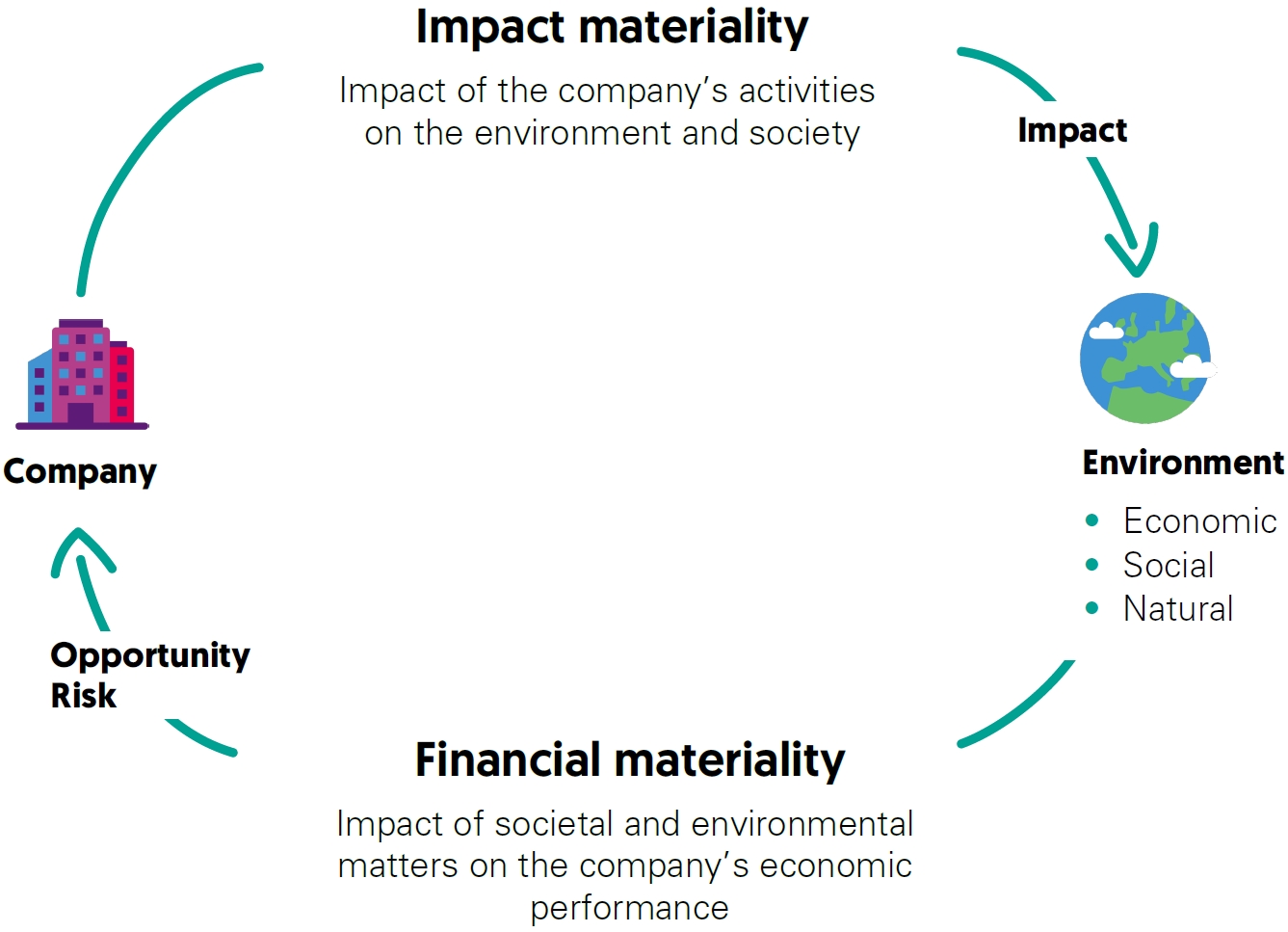
The concept of double materiality aims at taking account of both:
•
Impact materiality: assesses the impact of the company’s activities on people or the environment in the value chain and through business relationships;
•
Financial materiality: assesses the financial impact of the risks and/or the opportunities. This is about the impact of the external environment on Groupe BPCE, which has or may have an impact on the company’s financial situation, the cost of capital, its financial performance.
The impacts, risks and opportunities identified as “material” represent the issues on which the content of the sustainability report is based.
- From ESRS 1 (AR 16.): identification has been carried out for topics, sub-topics and sub-sub-topics as defined in ESRS 1 (AR 16.). This work was carried out by mobilizing internal sources, such as the ESG issues identified in Groupe BPCE’s 2022 and 2023 NFPS reports and the 2024 sustainability report, the reasonable due diligence process put in place by the group as part of the Duty of Care plan and the existing risks mapping, supplemented by external sources, such as the analysis of a business sectors benchmark, with a focus on the most relevant issues for banking players;
- Entity-specific: Groupe BPCE’s analysis is not limited to the sub-sub-topics of ESRS 1 (AR 16.); the use of internal and external sources also led to the identification of issues specific to the group’s banking and insurance activities. The following items have been identified as specific to Groupe BPCE and the resulting material IROs are included in the list of IROs (refer to Section 1.5.2 List of material IROs):
- – ESRS S1: the specific sub-topic: attractiveness, employee loyalty and engagement (including the specific sub-sub-topics: Listening to employees and strengthening their commitment, Integration of new recruits and employee loyalty, Recruitment strategy and employer brand),
- – ESRS S3: the specific sub-topic: Financing the economy and regional players,
- – ESRS G1: the specific sub-topic: fight against money laundering and the financing of terrorism and compliance with sanctions measures (national, European or international), embargoes and asset freezes.
In 2025, the relevance of the list of the group’s topics, sub-topics and sub-sub-topics was questioned. In view of the challenges facing the group and market practices, this list has not changed.
- 2) Formulation of Impacts, Risks and Opportunities (IROs): work to identify the IROs within each topic was carried out in order to cover both impact materiality and financial materiality. Several internal and external sources were used to identify the IROs. For the purposes of double materiality assessment, risks and opportunities generally arise from a positive or negative impact, or from the group’s dependence on resources and people.
- 3) Relevance of the IROs: the relevance of each IRO was verified with the business lines concerned to ensure that the listed IRO truly reflect a Risk, Opportunity or Impact for Groupe BPCE, to classify the Impacts as positive or negative within the same sub-topic and to avoid duplication between similar IROs. In 2025, the relevance of the IROs identified in 2024 was reviewed and work was carried out to group the IROs together to avoid the same subject being dealt with by several IROs of the same type.
- 4) Characteristics of the IROs: for each IRO identified, preaqualification was performed prior to their rating. This prequalification consisted of:
- a) Positioning each IRO in Groupe BPCE’s value chain, i.e. upstream, within its own activities, or downstream;
- b) Defining the potential or actual nature of the negative and positive impacts.
Account was taken of the activities of Groupe BPCE and its entire upstream and downstream value chain in the framework of double materiality assessment. In light of the specific nature of Groupe BPCE’s business sector, the following guidelines have been adopted:
- Mapping of the group’s activities and the stakeholders in the value chain to identify which stakeholders are in at-risk areas;
- Completion of an analysis by major stakeholders families: clients, suppliers, subcontractors, etc.;
- Extension of this analysis beyond first-level and direct business relationships: the business lines took into consideration, in addition to the major families of direct stakeholders in the value chain, the entire environment surrounding them, in particular through the completion of sectors analyses. Most of the group’s activities are focused on financing and investment activities (see presentation of the value chain in section 1.3.1.7 Value chain in section 1.3 Strategy).
The identification of IROs was coordinated by and under the joint responsibility of Groupe BPCE’s Corporate ESG Risk and Corporate Impact departments. The Purchasing, Public Affairs, Retail Banking & Insurance, Compliance, Finance, Human Resources, Risk and Security teams of Groupe BPCE, Natixis and BPCE Assurances helped to formalize these IROs and assess them. This collaborative work makes it possible to assess the IROs of each scope and to assess the impact on the group scope of the IROs specific to a given business model.
The material IROs specific to the Natixis and BPCE Assurances business models have were rated at group level.
The identification, assessment and management of ESG opportunities have been integrated into Groupe BPCE’s overall process through the development and execution of the VISION 2030 strategic project.
Groupe BPCE has implemented a process to identify and assess the materiality of ESG risks in order to structure its understanding of the risks to which it is exposed in the short, medium and long term and to identify priority areas for strengthening the risk management framework.
This process is coordinated by the ESG Risk department, under the supervision of the Groupe BPCE ESG Risk Committee and Supervisory Board. It is subject to an annual review to update Groupe BPCE’s portfolios, scientific knowledge and underlying methodologies.
- Creation of the risk inventory;
- Documentation of ESG risk transmission channels to other risk categories;
- Assessment of the materiality of ESG risks in relation to other risk categories;
- Input into cross-functional risk management exercises (risk appetite framework, ICAAP, ILAAP).
Groupe BPCE has set up an environmental risk inventory, which makes it possible to define the contingencies covered. This inventory is based on current scientific knowledge and baseline regulatory texts (e.g. European taxonomy) and aims for the most exhaustive possible representation of risks.
The climate and environmental risks included in the risk inventory currently defined by the group are presented below:
ESG risks are risk factors underlying the other risk categories to which Groupe BPCE is exposed, namely credit and counterparty risks, market and valuation risks, insurance risks, structural balance sheet risks, strategic and business risks and non-financial risks (operational risks, reputational risks, non-compliance risks, insurance risks, etc.), as identified in Groupe BPCE’s risk taxonomy.
These transmission channels involve the impacts of climate risks on activities and business models, which are reflected in financial variables at the macroeconomic or microeconomic level and ultimately modify Groupe BPCE’s risk exposure. They may materialize directly, in connection with Groupe BPCE’s own activities, or indirectly, through the counterparties to which Groupe BPCE is exposed as part of its financing or investment activities. They are summarized in the following diagram.
The identification process for impacts of environmental risks, beyond climate change, at Groupe BPCE level has been carried out across the entire value chain. Impacts have been identified on own operations as well as financing and asset management operations. The rating of the scale of these impacts was carried out using the resources presented in section 1.5.1.2.2 Rating. With regard to risks, the rating was based, in particular, on a sectoral analysis of Groupe BPCE’s exposures as part of the assessment of the scale of impacts. The group has not, however, conducted specific direct consultations with potential affected communities.
The environmental risk identification and assessment process, beyond climate risks, is part of the same materiality assessment framework set up by Groupe BPCE as for climate-related environmental risks.
With regard to opportunities, the identification and assessment process was carried out by experts taking account of economic changes related to non-climate environmental issues, and Groupe BPCE’s outlook to adapt its banking, insurer and investor business models.
After this initial identification step, the rating of impacts, risks, and opportunities – among all those identified as relevant – designates those that are material from an impact or financial perspective, and which are disclosed in this sustainability report.
The ESRS impose criteria for assessing the materiality of IROs. These criteria may be different depending on whether one is related to an impact (negative or positive), a risk or an opportunity. Rating scales are not prescribed by the ESRS. They have been defined by and for Groupe BPCE. Each rating criterion has been assessed on a scale from 1 to 4.
The impacts are rated by the contributors identified for each topic and the review is carried out cross-functionally by the Corporate Impact department.
- For the rating of climate impacts via financing and investments, the group used the 2024 amount of GHG emissions and the group’s renewable energy exposures to assess the scale of impacts (E1);
- For the rating of Nature impacts (covering ESRS E2 to E5) via financing and investments, in 2025, the rating of these impacts was based on quantitative analyses using the ENCORE and MSCI databases and supplemented by an expert analysis. This work made it possible to quantify the extent of the group’s impact on nature by making the link between the sectors of activity in which the companies financed by the group operate and the intensity of the pressure exerted by each sector on the environment. These analyses cover exposures to the non-financial corporations in the FINREP scope (Banques Populaires, Caisses d’Epargne and Natixis CIB) supplemented by similar analyses carried out in the scope of BPCE Assurances (with ENCORE) and Natixis (with MSCI);
- To rate the negative impacts concerning ESRS S2, the group relied on a geographical analysis of its exposures (EU and non-EU) as well as a sectoral analysis of its exposures (sensitive sectors according to the OECD);
- To assess a positive impact on ESRS S3, Groupe BPCE relied on an external study that analyses the social and economic effects of the purchases made in 2024 from its French suppliers;
- For the rating of a positive impact concerning ESRS G1, the group relied on a questionnaire sent to its suppliers to measure their level of satisfaction with payment terms.
Risk rating is carried out by the identified contributors for each subject and reviewed cross-functionally by the ESG Risk department. In 2025, the risk scoring methodology for the double materiality assessment changed compared to 2024. The rating of risks is consistent with the risk materiality assessment exercises carried out within Groupe BPCE, in particular, as part of Groupe BPCE’s risk appetite framework. It relies in particular on:
- The materiality analysis of climate and environmental risks (ESRS E1 to E5);
- The Human Resources risk mapping (ESRS S1);
- The monitoring of media events affecting Groupe BPCE (ESRS E1 to E5, S1 to S4 and G1 – IRO in connection with reputational and legal risks);
- The Compliance Risk Assessment System (ESRS G1).
This reference work is supplemented by expert opinion as part of the double materiality assessment in order to specifically qualify the risks selected (according to the scales of probability and scale defined above).
Based on the transmission channels identified, Groupe BPCE assesses the materiality of climate and environmental risks in relation to the main risk categories to which it is exposed. This assessment distinguishes between physical risks and transition risks. It is carried out according to three time horizons: short-term (1 to 3 years, financial planning horizon), medium-term (strategic planning horizon, 3 to 7 years), and long-term (~ 2050).
This assessment is based on quantitative or qualitative indicators, which, when available, allow us to assess exposure to risks from a sectoral and geographical point of view, as well as on expert assessments. The internal experts involved in these assessments include the ESG Risk department,other unites within the Corporate Risk departement, as well as representatives from other departments (Impact, Compliance, Legal) and the business lines concerned.
In 2025, the materiality analysis was carried out at the Groupe BPCE level, simultaneously covering both climate and environmental risks. It was also applied at the level of the main operating entities, based on assumptions and a common analytical framework.
The work to identify ESG risks and assess their materiality feeds into the main components of Groupe BPCE’s risk appetite as part of this frameworks’s annual review process.
Groupe BPCE’s overarching risk cartography includes an “Ecosystem risk” category encompassing environmental risks (differentiating between physical and transition risks), social risks and governance risks.
The assessment of the materiality of these risk categories within the risk appetite framework is determined by cross-referencing the materiality of Groupe BPCE’s principal risk categories (assessed through the annual risk appetite definition process) with the materiality of climate and environmental risks relative to those categories. For social and governance risks, the assessment is carried out on an expert basis within the risk appetite definition process only.
These assessments make it possible to prioritize the issues related to each risk category, including those related to ESG risks. In 2025, the materiality of physical and transition environmental risks was assessed at level 1 out of 3 (“significant”) for Groupe BPCE, while the materiality of social and governance risks was assessed at a level of 0 out of 3 (“low”).
Within the framework of its planning and strategic steering processes for its business lines and risk management. Groupe BPCE uses climate scenarios to assess the challenges associated with short, medium and long-term climate risks.
These scenarios come from leading institutions in scientific research on the climate, such as the Intergovernmental Panel on Climate Change (IPCC), the Network for Greening the Financial System (NGFS) or the International Energy Agency (IEA).
The selection of the scenarios adopted by the group is based on cross-disciplinary work between the main departments involved in strategic planning and risk management. They are validated at the executive management level within the relevant bodies overseeing each of the various exercises in which these scenarios are used.
Groupe BPCE mainly relies on the SSP2-4.5 scenario (IPCC) and Nationally Determined Contributions scenario (NGFS) to define a median trend for risk monitoring purposes.
For its risk assessment purposes in a deteriorated context, in stress test exercises for example, Groupe BPCE also relies on alternative, more extreme scenarios: SSP5-8.5 scenario (IPCC) on physical risk and Net Zero 2050 and Delayed Transition scenarios (IPCC scenarios) on transition risk.
In order to strengthen its ESG risk assessment capabilities, Groupe BPCE has developed specific methodologies that enable the systemactic and consitant evaluation of ESG risks associated with its exposure portfolios. These methodologies are based on internal and external expertise, and reflect the state of scientific knowledge, technologies and the current regulatory environment, as well as market practices. They are regularly reviewed, supplemented and enhanced to gradually improve the accuracy of ESG risk assessment and take account of changes in the overall context.
Groupe BPCE’s physical and transition risk assessment methodologies are based on quantitative data supplemented by qualitative analysis where appropriate. They are described in the paragraphs below.
In order to strengthen the granularity and robustness of its assessments of the physical risk associated with its professional and corporate financing exposures, Groupe BPCE developed in 2024 a methodology to assess the vulnerability of these exposures to physical risks.
This internal methodology allows to take account of a sector’s intrinsic vulnerability to physical risks and the exposure of a given geographic area to these same hazards. It is currently based on a fine-granular sectoral level (NACE2) and a national or regional geographic grid covering countries in which Groupe BPCE has a particular concentration of exposures (France, United States). it currently covers six physical climate risks, which are among the most representative for Groupe BPCE, and can be simulated under different scenarios and time horizons.
Given its high exposure to residential real estate portfolio, Groupe BPCE has developed a simulation tool for the physical risks to wich its financed assets are exposed. This tool uses the precise coordinates of each asset to assess its climate risk exposure, together with certain characteristics used to estimate its vulnerability, in order to determine estimated damages under different scenarios and time horizons. To date, this tool covers mainland France and Corsica and enables the assessment of exposure to the two main physical risks affecting this portfolio (drought – shrink–swell phenomenon observed with clay soils, and flooding).
In order to enhance the granularity and robustness of its transition risk assessment associated with its professional and corporate financing exposures, Groupe BPCE developed in 2024 a methodology for the granular analysis of the sensitivity of different economic sectors to this risk.
This internal methodology allows to assign a sectoral score reflecting the transition risk associated with a given economic sector, taking account of the carbon emissions and the main environmental impacts of the companies in the sector in question. It has been developed in consistently with the Green Weighting Factor methodology (described below), which applies at the level of the company or financed project. Given the predominant share of French companies in Groupe BPCE’s portfolio of exposures (excluding Natixis), this methodology is focused on the parameters corresponding to the French economy.
To assess the transition risk on its residential real estate portfolio, the Groupe BPCE relies on the Energy Performance Certificate (EPC) of the financed real estate assets. The EPC of financed assets in France is collected systematically, allowing to capture both the risk on the repayment capacity of the loan in the event of an increase in energy expenditure or expenses related to the financing of energy performance improvement, and the risk of loss of value of the asset due to a deteriorated EPC, making it potentially unfit for rent under current regulations.
Groupe BPCE notably uses the Green Weighting Factor (GWF) methodology, developed by Natixis CIB, to assess the transition risk related to its counterparties and financed projects.
Using a seven-color rating scale ranging from dark brown to dark green, the GWF assesses the climate impact of transactions, while taking account of the risk of the most material non-climate-related environmental externalities (water, waste, biodiversity, pollution). For the scope of Natixis CIB, this assessment is carried out on a granular basis for each of the financing exposures on the balance sheet for all banking products (loans, guarantees, sureties, documentary credits) regardless of their maturity, in all geographies and for all sectors of activity except the financial sector and administration. The GWF methodology is also adapted to Corporate or dedicated financing.
- The measure of induced decarbonization (CO2e Scopes 1, 2 and 3);
- The contribution to the transition made by certain customers or active projects, with the notion of avoided emissions;
- The exposure to the most material non-climate environmental risks;
- A forward-looking view of the customers’ performance, making it possible to assess their transition potential;
- A set of new metrics useful for steering the decarbonization strategy of the Corporate & Investment Banking business unit and for regulatory reporting;
- The non-financial reporting needs of investor clients.
- Positive impacts: When the impact is positive, the irremediable character is not assessed and is therefore not taken into account in the calculation;
- Actual and potential impacts: The likelihood of occurrence is calculated when the impact is potential. In nearly all impacts identified by Groupe BPCE, the impacts materialized during the past fiscal year although not systematically at the upper threshold level (rated level 4);
- Final Rating: The final impact rating is within a range of 1 to 16, with 16 as the maximum score. The final impact score is divided by 4 to align it with the criteria rating scale, which stands at a maximum of 4. This is then called the final rating.
Risk ratings are determined by the combination of two axes evaluated from 1 to 4 (probability, scale). Consistent with the risk appetite framework, final risk ratings are set on a scale of 0 to 3 according to the matrix below, defined by the combination of the two axes (likelihood, scale). Thus, each rating combination (example: probability = 1 = rare, scale = 2 = significant) is associated with a result from 0 to 3 in the matrix (for the example cited above, the result = 0 = non-material). All possible combinations are detailed in the matrix, section 1.5.1.2.5 Determination of materiality thresholds – Materiality threshold for risks.
- Final rating: The final opportunity rating is within a range of 1 to 16, with 16 as the maximum score. The final impact score is divided by 4 to align it with the criteria rating scale, which stands at a maximum of 4. This is then called the final rating.
An impact or opportunity is material when the rating level is greater than or equal to 3, corresponding to a high or very high level.
In 2025, the risk materiality threshold was modified to align with the group’s risk appetite framework.
In the double materiality assessment, any risk with a score of 1, 2 or 3 in the matrix (presented below) is considered material.
ESRS Standard Sub-topic Financial
materialityImpact
materialityE1: Climate change Climate change mitigation – own footprint Climate change mitigation and adaptation – financing and investments S1: Own workforce Attractiveness, retention and engagement of employees Working conditions Equal treatment and equal opportunities S3: Affected communities Communities’ economic, social and cultural rights S4: Consumers and end-users Impacts related to consumer and end-user information Financial inclusion and accessibility of the offer G1: Business conduct Ethics and corporate culture Management of relationships with suppliers including payment practices Between 2024 and 2025, ESRS S2 (Value Chain Workers) became non-material for the group: given its activity strongly rooted in the territories and its value chain, the impacts mainly concern working conditions rather than human rights. This understanding has led business line experts to reassess the probability of these impacts downwards for the group.
For the 2025 ass, as mentioned in the IRO identification section, Groupe BPCE has grouped together, where relevant, the IRO identified in 2024 which concerned the same sub-topics or sub-sub-topics, in order to avoid potential redundancies.
Although stakeholder consultation is not mandatory within the double materiality exercise, Groupe BPCE deemed it important to specifically seek input from certain stakeholders, in addition to the existing permanent listening frameworks. The ad hoc analysis frameworks deployed in 2025 concern responses to the NPS (Net Promoter Score) questionnaires intended for clients and questionnaires intended for the group’s suppliers.
- The Impact department has established the methodology for rating impacts and opportunities on behalf of the group.
- The ESG Risk department has established the risk rating methodology on behalf of the group.
The Impact and ESG Risk departments have coordinated and supervised the IRO rating project on behalf of the group.
Groupe BPCE’s Impact and ESG Risk departments proposed the methodological approach for rating IROs within the “CSRD Project”.
Several functional department were called upon within the rating the IRO rating process. These notably include the following corporate departments:
- Purchasing;
- Retail Banking and Insurance;
- Compliance;
- Impact;
- Legal;
- Human Resources;
- ESG Risk;
- Operational Risk;
- Technology and Operations;
Workshops have been held with the business lines of the various entities (Groupe BPCE, Natixis, BPCE Assurances) to discuss the structuring options for IRO rating and to co-construct a common approach. In this context, they were sent a group operating procedure.
The validation of IROs is first carried out through workshops bringing together representatives of the business lines concerned by each topic and sub-topic, then by the Management Board and finally by the CSR Cooperative Committee.
In 2025, an internal control framework was rolled out for the double materiality assessment. This framework relies on the implementation of a number of first-level controls, notably:
- Hierarchical control: each business line contributor must ensure that all expected information in the IRO rating file is entered correctly and must have the list of relevant and material IROs validated by their line manager.
- An analysis of changes between fiscal years: each business line contributor must justify changes in IROs between N-1 and N, by highlighting: new IROs (inputs), IROs considered irrelevant/immaterial in N (outputs) and justify these changes.
In addition, second level 2 controls are performed on the double materiality assessment in line with the approach implemented as part of the independent review of the sustainability report (see section GOV-5 Risk Management and Internal Controls on Sustainability Information).
The sustainability report is prepared on an annual basis. If Groupe BPCE concludes, on the basis of substantive evidence, that the results of the double materiality exercise for the previous year are still relevant at the reporting date, it may use the conclusions obtained previously for the preparation of the sustainability report.
Each year, Groupe BPCE verifies the elements that may trigger a revision of the list of material IROs, for example, a major merger and acquisition transaction leading to the creation of a new activity, an entry into a new sector or a significant change in operations, a global event (pandemic, natural disaster, etc.), or a change in scientific evidence liable to affect the severity criteria.
Environment
Climate change (ESRS E1)
Sub-sub-topic Type of IRO IRO wording Value
chainTime
horizonClimate change mitigation and adaptation - Climate change mitigation – own footprint Negative impact Negative impact on the climate due to greenhouse gas emissions from the group’s own operations Own operations Long term Climate change mitigation and adaptation - financing and investments Negative impact Negative impact on the climate due to the group’s financing and investments in greenhouse gas emitting sectors Downstream Invariable Opportunity Business opportunities related to solutions for financing, insurance, offering and support for clients in their transition and adaptation to climate change, as well as sustainable savings products invested in companies to support their transition Downstream Long term Physical risk Risk of financial losses arising from credit or market risk related to financing or investment transactions in counterparties, activities or projects sensitive to physical climate risk factors Downstream Long term Transition risk Risk of financial losses arising from credit or market risk related to financing or investment transactions in counterparties, activities or projects sensitive to transition climate risk factors Downstream Medium term Transition risk Risk of financial losses arising from a reputational risk or a legal/sanction risk related to financing or investment transactions in greenhouse gas intensive counterparties, activities or projects Downstream Short-term Transition risk Risk of financial losses resulting from a revenue risk related to a change in the financing portfolio sector mix and an increase in competition, and resulting from interest rate risk from the general evolution of interest rates and inflation in the event of an acceleration in the transition Downstream Medium term Positive impact Positive impact on the deployment of renewable energies thanks to financing/investments Downstream Long term Social
Own workforce (ESRS S1)
Sub-sub-topic Type of IRO IRO wording Value
chainTime
horizonAttractiveness, retention and engagement of employees (IROs specific to Groupe BPCE) Listening to employees and strengthening their commitment Risk Financial risk of deviation from employees’ expectations due to the absence and/or inadequacy of listening frameworks and action plans to strengthen their commitment Own operations Invariable Integration of new hires and strengthening employee loyalty Positive impact Positive impact of the employee experience contributing to a welcoming environment for the group’s employees (pre-boarding, onboarding, induction program and individualized training course) Own operations Invariable Recruitment strategy and employer brand Opportunity Financial opportunity for the group to strengthen its employer brand image and its attractiveness on the job market with a digital and inclusive recruitment strategy Own operations Medium term Working conditions Social dialogue Positive impact Positive impact on employee commitment and performance via sustained and constructive social dialogue at group, branch and company level (regular meetings with the staff representative bodies and conclusion of collective agreements) Own operations Invariable Protection of privacy Risk Risks of financial losses arising from a legal and/or reputational risk in the event of failure of measures to protect employees’ personal data Own operations Invariable Quality of life at work and risk prevention and safety at work Risk Financial risks arising from an operational risk related to employee turnover, absenteeism and disengagement (recruitment and training costs, decline in performance, lost talent) Own operations Invariable Risk Financial risks arising from an operational risk for the group in the event of a danger to the health and safety of employees Own operations Invariable Positive impact Positive impact on employees’ quality of life at work of secure working conditions and work environment adapted to the well-being of employees (working time, remote working, reorganization of premises, work/life balance, etc.) Own operations Invariable Decent pay and social protection Positive impact Positive impact for employees of clear, fair, well-understood compensation exceeding legal minimums, and solid protection exceeding legal obligations Own operations Invariable Equal treatment and opportunities Training and skills development Positive impact Positive impact on employees thanks to a skills management,career management and professional mobility framework Own operations Invariable Opportunity Financial opportunity for the group to promote the development of skills already existing within the organization and to capitalize on expertise and knowledge in order to strengthen employee commitment (reduction in the turnover rate, reduction of operational risk, etc.) Own operations Invariable Diversity & inclusion (diversity, disability, discrimination & harassment) Positive impact Positive impact in terms of diversity, inclusion, professional equality and support for people with disabilities Own operations Invariable Affected communities (ESRS S3)
Sub-sub-topic Type of IRO IRO wording Value
chainTime
horizonCommunities’ economic, social and cultural rights (specific IROs for Groupe BPCE) Financing the economy and regional players Positive impact Positive impact on communities through financing/investments in projects that meet societal needs and enhance accessibility to facilities (education, health, sport, etc.) Downstream Invariable Positive impact Positive impact on local economic development and regional attractiveness by creating jobs, supporting local businesses, local collectivities and social housing operators, and by promoting economic growth, including improving the living conditions of stakeholders impacted by the group’s local presence policies Downstream Invariable Consumers and end-users (ESRS S4)
Sub-sub-topic Type of IRO IRO heading Value
chainTime
horizonImpacts related to consumer and end-user information Protection of privacy Risk Risk of financial losses arising from legal and/or reputational risk in the event of failure in the implementation of measures to protect clients’ personal data Downstream Medium term Financial inclusion and accessibility of the offer Access to products and services and responsible Opportunity Financial opportunity related to the development of new innovative products and services opening up new markets and client segments Downstream Long term marketing practices Positive impact Positive impact on clients by offering products and services adapted to the needs of all clients and economic players, including those in financial difficulty, and by ensuring global geographical coverage and adapted digital solutions Downstream Invariable Non-discrimination Negative impact Potential negative impact on clients in the event of Groupe BPCE’s failure to apply anti-discrimination measures (client choice, access to finance or essential services) Downstream Invariable Governance
Business conduct (ESRS G1)
Sub-sub-theme Type of IRO IRO heading Value
chainTime
horizonEthics and corporate culture Fight against corruption and bribery Risk Risk of financial losses arising from a reputational risk or a legal/ sanction risk related to a failure to implement anti-corruption obligations Own operations Invariable Anti-money laundering and the financing of terrorism and compliance with national, European or international sanctions, embargoes and asset freezes Risk (specific to Groupe BPCE) Risk of financial losses resulting from a legal risk/sanction related to a failure to implement obligations to combat money laundering and the financing of terrorism and, more broadly, to prevent and detect criminal financial behavior by clients, and in terms of the implementation of sanctions (embargoes, sectoral sanctions, asset freezes) Own operations Invariable Management of relationships with suppliers including payment practices Management of rela tionships with suppli ers including payment practices Positive impact Positive impact on suppliers via the group’s responsible purchasing commitment policies, in particular on the management of payment terms Upstream Invariable 1.5.3 (SBM-3) Material impacts, risks and opportunities and their interaction with the group’s strategy and business model
The material impacts, risks and opportunities (IROs) resulting from the double materiality assessment are listed in section 1.5.1 (IRO-1) Management of impacts, risks and opportunities. This description makes it possible to identify where these material IROs are concentrated in its business model, its own activities or its value chain.
The business model, value chain and integration of sustainability issues into Groupe BPCE’s strategy are detailed in section 1.3.1.2 Objectives in terms of sustainability.
The interactions between these material impacts, risks and opportunities, the group’s business model and its strategy embodied by the VISION 2030 strategic project, as well as the way in which positive or negative material impacts affect the company (customers, regional players or employees) or the environment are presented within each topical ESRS.
The current financial effects of material risks are recognized in Groupe BPCE’s financial statements as impairments related to the effects of physical and transition risks on credit risk. These impairments have been defined by the institutions according to the specific characteristics of their credit exposure portfolio, from a geographical and sectoral point of view, when the risk was assessed locally as a material risk. Expected credit losses on climate risks have also been recognized. These provisions anticipate direct losses, by sector or by geographic area, caused by extreme or chronic weather events resulting in an increased risk of default following a cessation or reduction in activity. Account may also be taken of transition risks in these expected credit losses. The methods used to determine these impairments are detailed in Groupe BPCE’s consolidated financial statements: Note 2.3 Use of estimates and judgments and Note 7.1.2. Change in gross carrying amounts and expected credit losses on financial assets and commitments.
With respect to climate risks, Groupe BPCE analyses the resilience of its business model across its three activities (financing, insurance, asset management) through climate stress tests as part of the self-assessment process of its capital (ICAAP) and liquidity (ILAAP) with regard to the risks it may face. This analysis is presented in Chapter E1 - Climate change in section 2.2.6.2 (ESRS SBM-3) Resilience of the strategy and business model.
To encourage sustainable investment, EU Regulation 2020/852 of June 18, 2020 (Taxonomy Regulation) established a common EU classification system to identify economic activities considered environmentally sustainable.
The Taxonomy Regulation (Article 8) includes, for companies subject to the CSRD (Corporate Sustainability Reporting Directive published on December 16, 2022), a reporting obligation, outlined in the sustainability report, regarding how and to what extent the company’s activities are associated with economic activities that can be considered environmentally sustainable.
An activity is considered “eligible” under the Taxonomy if it is included in the European Commission’s regularly updated list. These are activities likely to make a substantial contribution to at least one of the following six environmental objectives:
- Climate change mitigation;
- Climate change adaptation;
- Sustainable use and conservation of aquatic and marine resources;
- The transition to a circular economy;
- Pollution prevention and control;
- Protection and restoration of biodiversity and ecosystems.
To be effectively considered environmentally sustainable, an eligible activity must be “aligned” with the Taxonomy, i.e. it must meet the following three cumulative conditions:
- Demonstrate its substantial contribution to one of the six environmental objectives in accordance with the technical review criteria defined in the delegated acts;
- Demonstrate that it does not cause significant harm to any of the other environmental objectives (Do No Significant Harm or DNSH) in accordance with the technical review criteria defined in the delegated acts;
- Be carried out in compliance with the minimum social guarantees set out in the regulations (i.e. in compliance with the social rights guaranteed by international law).
The technical requirements for doucmenting an activity’s environmental sustainability were initially defined in the Green Taxonomy regulatory framework (EU) 2020/852 and subsequently modified by delegated acts:
- The Climate Delegated Regulation of June 4, 2021 (2021/2139), including technical review criteria for economic activities that make a substantial contribution to the first two environmental objectives: adaptation to climate change and mitigation of its effects. It has been effective since January 1, 2022.
This was amended for the first time on March 9, 2022, by Delegated Regulation 2022/1214, which included, under strict conditions, specific activities linked to nuclear energy and gas on the list of economic activities covered by the Union’s taxonomy. It has been effective since January 1, 2023.
A second amendment was published on June 27, 2023 (Delegated Regulation 2023/2485) completing the technical examination criteria for certain activities that were initially not listed as eligible (in particular, the manufacture of essential equipment for low-carbon transport or electrical equipment). It has been in force since January 1, 2024:
- The Environment Delegated Regulation of June 27, 2023 (2023/ 2486) sets the criteria for the technical examination of economic activities deemed to make a substantial contribution to one or more of the four other environmental objectives (other than climate): Sustainable use and conservation of aquatic and marine resources, transition to a circular economy, pollution prevention and control, protection and restoration of biodiversity and ecosystems. It has been in force since January 1, 2024.
The content of sustainability metrics (Key Performance Indicators or KPIs) and the information to be published by non-financial and financial corporations (asset managers, credit institutions, investment firms and insurance and reinsurance companies) subject to these transparency obligations, are specified, for each of these economic actors, in the Delegated Regulation Article 8 of July 6, 2021 (2021/2178). The format of publishable tables is governed by Environment Delegated Regulation 2023/2486.
Additional information is required for companies engaged in, financing or exposed to specific activities related to nuclear energy and fossil gas (Delegated Regulation 2022/1214).
In addition, European Commission communications published in the Official Journal on October 20, 2023 aim to interpret certain provisions relating to the implementation of Article 8 of the Taxonomy Regulation (C/2023/305) and the delegated act relating to the climate component of the taxonomy (C/2023/267).
On December 21, 2023, the Commission published a communication on the interpretation and implementation of Article 8 of the Taxonomy, which further specifies the information to be provided. It was published in the Official Journal of the European Union on November 8, 2024 under the reference C/2024/6691. On November 29, 2024, the Commission published a new draft communication. Given its late publication and the implementation work involved, this text is currently being analyzed, and some of its provisions will be applied in the coming period.
The Taxonomy Regulation provides for a gradual implementation of information transparency requirements according to economic players. As a company in the financial sector, Groupe BPCE is notably subject to disclosure requirements that are deferred by one year compared to non-financial corporations. This principle allows financial corporations to use the eligibility and alignment data provided by the counterparties themselves subject to these disclosure requirements (counterparties subject to the CSRD) in order to weight their investments, financing and other exposures.
Groupe BPCE publishes disclosures applicable to financial companies – credit institutions. Groupe BPCE publishes the tables required by the regulation in the tabular formats presented in Annex VI of Delegated Regulation 2023/2486.
This year, Groupe BPCE has not applied the new delegated act of July 4, 2025 amending the Taxonomy Regulation in accordance with the provisions of the applicable text.
Consideration of the taxonomy within the framework of the group’s activities (requirement of Annex XI of Delegated Regulation 2021/2178)
The taxonomy criteria are used to identify a portion of the financial assets allocated to green bonds issued by Groupe BPCE. Groupe BPCE also takes account of the European Taxonomy in the design of some of its “green” offers and services and in its project financing (renewable energy financing).
The group’s material non-banking activities are insurance activities, of which BPCE Assurances is the main entity. The KPI relating to asset management activities is also published via the GAR AuM in the section “Off-balance sheet indicators: financial guarantees given and assets under management” below.
Non-life insurance has been defined as eligible for Objective No. 2 “Climate change adaptation”. The underwriting ratio, indicates the share proportion of premiums that meet the technical criteria relating to climate change adaptation, (expressed as a percentage of total premiums).
The calculations of investment eligibility and alignment ratios are carried out by weighting the investments according to the proportion of economic activities that are eligible and aligned with the taxonomy, based on two financial indicators of the invested companies: revenue and capital expenditure (CapEx).
For BPCE Assurances’ euro and similar funds (excluding unit-linked funds), the proportion of eligible investments aligned with the taxonomy is presented in the table below:
The “financial conglomerate” KPI has not been published. BPCE considers that it is not subject to this indicator, which is not defined by the Delegated Regulation.
The main exempt entities are the Banques Populaires and the Caisses d’Epargne. As the activity profiles of the BPs and CEs are homogeneous with those of the group, the summary of the GARs of the BPs and CEs is not disclosed.
The flow information on the KPIs of off-balance sheet exposures has not been published due to the absence of a dedicated table in Annex 6 of the Delegated Regulation.
The main assumptions used to determine the alignment of eligible assets under the Green Asset Ratio (GAR) are as follows:
- 1) Analysis of the energy performance of assets through the EPC or compliance with thermal regulations for new assets (RT2012 and RE2020) in order to measure the substantial contribution;
- 2) An analysis of the physical risks, including only the “flooding” risk in order to verify that the criteria of the DNSH adaptation are respected: any loan relating to an asset exposed to a significant physical risk is thus considered to be unaligned with the taxonomy;
- 3) Minimum social guarantees are deemed to be met for all assets built in France and Europe, taking account of the laws and regulations in force in these countries.
The alignment of the following eligible assets has not been analyzed: loans for the renovation or financing of motor vehicles with individual customers as well as financing allocated with CSRD counterparties. These assets are therefore de facto considered as not taxonomy-aligned.
Given their immaterial impact on the GAR, no account has been taken of eligibility and alignment aspects related to the fair value of the insurance subsidiaries’ equity method investments.
Given the immaterial nature of the exposures relating to gas and nuclear energy only the information on the main KPI (Green Asset Ratio) has been disclosed. Information on other KPIs (flows, off-balance sheet exposures) has not been disclosed.
The table relating to the alignment of fees and commissions and the trading book has also not been published.
Groupe BPCE’s GAR at December 31, 2025 includes taxonomy alignment data. It is presented in the tabular format required by the regulations of the version currently in force. This requires that it be disclosed once on fusing the “Revenue” KPI (key performance indicator) and once using the “CapEx” (capital expenditure) KPI for counterparties subject to the CSRD.
Groupe BPCE’s GAR established on December 31, 2024 listed information on alignment with two environmental climate objectives (Mitigation and Adaptation). For 2025, the group has included information on alignments with the other four objectives (sustainable use and protection of water and marine resources; transition to a circular economy; pollution prevention and control; protection and restoration of biodiversity and ecosystems) in the GAR calculation. Data on aligned assets is published as soon as it is available on Bloomberg.
Information on eligibility for the four non-climate objectives (sustainable use and protection of water and marine resources, transition to a circular economy, pollution prevention and control, protection and restoration of biodiversity and ecosystems) is based on data published by non-financial corporations. As a result, on December 31, 2025, Groupe BPCE provides this information along with a presentation of the columns in the regulatory tables relating to this information.
The GAR Flows KPI shows the portion of assets aligned over the portion of assets covered by the GAR only for new outstanding loans and advances and debt securities recognized on the balance sheet since the beginning of the period (in our case, January 1, 2025). Outstandings are recorded at gross carrying amount (before impairment, provisions and amortization) and without deduction of repayments or sales of assets during the period. Given their immaterial nature, the GAR Flows KPI is not calculated on equity instruments (e.g. equities). Likewise, the “flows” KPIs for financial guarantees and assets under management are not published for operational reasons. The other calculation principles remain identical to those applied for the calculation of outstandings.
The main indicator applicable to credit institutions is the Green Asset Ratio (GAR). Expressed as a percentage, it indicates the proportion of assets used to finance or invested in, economic activities aligned with the taxonomy compared with the total assets covered.
On the basis of the prudential perimeter established in accordance with FINREP regulations (investments in insurance companies controlled by Groupe BPCE are consolidated using the equity method), and assets are presented at their gross carrying amount, i.e. before depreciation, provisions and amortization.
The eligibility and alignment analysis applies to a scope of assets determined following a series of exclusions specified by the regulations:
Assets subject to taxonomy eligibility and alignment analysis (A)
Exposures to:
- Financial undertakings subject to the CSRD
- Non-financial undertakings subject to the CSRD
- Households – home loans, renovation loans and motor vehicle loans
- Local governments financing
- Collateral obtained by taking possession: residential and commercia real estate
Assets not subject to taxonomy eligibility / alignment analysis but included in the denominator (B)
Assets excluded from the numerator for GAR calculation (but included in the denominator):
- Financial and non-financial undertakings not subject to the CSRD
- Derivatives
- On demand interbank loans
- Cash and cash-related assets
- Other categories of assets (goodwill, commodities, etc.)
Assets excluded from the denominator and numerator (C)
- Exposures to central governments, central banks and supranational organizations
- Financial assets held for trading including derivatives in this portfolio
The exposures presented above subject to eligibility and alignment analysis thus include balance sheet assets in the following accounting categories:
- Financial assets at amortized cost, financial assets at fair value through other comprehensive income, financial assets designated as measured at fair value through profit or loss and non-trading financial assets measured at fair value through profit or loss;
- Investments in subsidiaries, joint ventures and associates (controlled insurance companies are accounted for using the equity method for the presentation of the regulatory perimeter);
- Fixed assets, with regard to collateral obtained by taking possession.
In accordance with the principles of the regulations, the eligibility and alignment of the outstanding amounts of assets subject to eligibility and alignment analysis are determined:
- For financial and non-financial counterparties subject to the CSRD regulations, as identified from the database provided by Bloomberg:
- – for unallocated financing, taxonomy alignment and eligibility rates (Revenue KPI and CapEx KPI) available in Bloomberg are applied to the gross amount outstanding. These data correspond to the indicators published by these counterparties in the previous year (determined in accordance with the criteria of the Climate and Environment Delegated Regulations). BPCE relies solely on Bloomberg’s exact counterparty data and excludes all estimated figures. Conversely, BPCE does not use Bloomberg estimates. Finally, in the absence of available data distinguishing eligibility and alignment rates by environmental objective, they have been allocated to the climate change mitigation objective,
- – for allocated financing, the taxonomy criteria defined by the European Commission should be analyzed on the basis of the information provided by the counterparties. For the 2025 fiscal year, Groupe BPCE did not conduct these ad hoc analyses.
Eligibility and alignment were only measured using data available in Bloomberg. These data are not always exhaustive, in particular for data relating to the alignment of financial companies. The group’s alignment ratio is penalized by this lack of data;
- – The exposures subject to analysis are: Loans guaranteed by residential real estate (including secured loans); renovation loans and loans for motor vehicles granted from January 1, 2022,
- – The alignment of loans guaranteed by residential real estate (or secured) is determined in the light of criteria laid down by regulations and interpretations accepted by the marketplace. The substantial contribution to the first taxonomy objective of climate change mitigation is documented with regard to the following criteria:
- – Financed properties with a primary energy consumption of less than 135kWh/m2 per year (corresponding to properties with an Energy Performance Diagnosis - EPC - rated A, B or, in some cases, C). Groupe BPCE has adopted a methodological approach in which the collection of EPD data for loans secured by real estate is based on the EPDs collected from customers, supplemented by the EPDs supplied by the CSTB (Centre Scientifique et Technique du Bâtiment) and collected in the ADEME database for single-family homes for which the group is certain of the address of the property financed. For collective housing, in the absence of customer EPDs issued after 2021, Groupe BPCE uses EPDs calculated by the CSTB, in accordance with the 2021 reform, based on the characteristics of the buildings concerned and the rating of its various lots,
- – In the absence of available DPE for the financing of buildings yet to be contructed, Groupe BPCE determines primary energy consumption using the applicable construction standards (RT 2012 regulations applicable to constructions between January 1, 2013 and December 31, 2020 and RE 2020 regulations applicable to constructions from January 1, 2022). In the absence of information on the date on which the building permit for the property financed was filed, Groupe BPCE identifies it from the date on which the financing was granted, applying a margin of two years. For the 2021 construction year, in the absence of information, no exposure has been considered as aligned.
The analysis of alignment with the taxonomy’s criteria must then be supplemented by technical criteria demonstrating that the activity does not cause significant harm to the taxonomy’s other objectives (DNSH criterion):
- – For retail customer real estate loans, this analysis is based on the analysis of physical risk. The valuation method for physical risk is based on an external model that takes account of the individual location of the properties (when available) and covers the flood hazard and the RGA hazard (shrinkage-swelling of clay soils). For example, if a financed property has been identified as being at high risk, the corresponding outstanding amount will not be deemed to aligned, even though it complies with the energy performance criteria described above;
The alignment analysis must also verify compliance with minimum social guarantees. For real estate loans to households, this criterion has not been verified for each of the loans.
Groupe BPCE considers that compliance with the minimum social guarantees is implicitly verified for real estate loans when the assets financed are located in France or in the European Economic Area (EEA). This position is based on a legal framework in which European directives and national laws guarantee fundamental social rights, particularly in terms of working conditions and social protection. In France, the French Labor Code establishes clear standards that provide protection to workers and households.
The alignment analysis for renovation loans has not been carried out in the absence of data available to document compliance with the taxonomy criteria.
The alignment analysis for motor vehicle loans has not been performed in the absence of available data (CO2e emissions/km);
- – housing financing is considered eligible. As this is not a real estate development activity, the alignment analysis must be carried out, where it is possible to establish a link between the financing and the property financed, in the same way as indicated above for retail customer real estate financing. However, due to operational constraints, it proved impossible to measure the alignment this year,
- – for other financing, in the absence of available analysis data, no outstandings were considered eligible or aligned;
Insurance activities are included through the equity-accounted investments in subsidiaries, presented on the “equity instruments” line. The eligibility and alignment of insurance activities are determined respectively by applying to non-life insurance entities the underwriting ratio (share of gross written premiums received corresponding to taxonomy-aligned insurance or reinsurance activities) and to life or mixed insurance activities the investment ratio (share of investments devoted to financing economic activities aligned with the taxonomy). Given their immaterial impact on the GAR ratio, the eligibility and alignment of the equity-accounted value of the insurance subsidiaries were not taken into account as of December 31, 2025.
As part of Groupe BPCE’s commitment to transparency and compliance with sustainability standards, we want to keep our stakeholders informed of recent changes to the EU Taxonomy. On July 4, 2025, an amendment was adopted to simplify the application of this taxonomy. Pending publication in the Official Journal, the group has decided to retain the old regulations for the publication of its results for 2025.
The calculation of the Green Asset Ratio (GAR) for 2025 will be carried out according to the methodology in force for the publication of the 2024 report. This decision was made given the uncertainty surrounding the regulatory timing and is intended to ensure data continuity and comparability. At the same time, Groupe BPCE has already begun adaptation work to comply with the new requirements introduced by the Taxonomy Delegated Regulation of July 2025 for the publication of results for the 2026 fiscal year.
In accordance with the requirements of the amended taxonomy, the scope of assets taken into account for the calculation of GAR will be revised. In this new approach, GAR will include the same asset categories in both the numerator and the denominator, i.e. assets subject to taxonomy eligibility or alignment criteria. This change in the calculation method will necessarily lead to an increase in GAR.
In millions of euros, at 12.31.2025 Current method New method* GAR (percentage of Taxonomy-aligned assets) 3.74% 7.60% Numerator: Denominator: Numerator: Denominator: Aligned assets Assets covered by the
GARAligned assets Assets covered by the
GARLoans and advances, debt securities and equity instruments held for purposes other than sale and eligible for the GAR calculation 37,988 601,149 37,911 498,676 Financial companies 88 48,602 88 48,602 Non-financial companies 1,857 37,893 1,780 25,191 Households** 36,043 459,608 36,043 369,836 Local government financing - 55,042 - 55,042 Collateral obtained by taking possession: residential and commercial real estate - 4 0 4 Assets included in the denominator for the GAR calculation (old method): 415,096 Financial and non-financial companies (other than SMEs) not subject to CSRD disclosure obligations 353,602 Hedging derivatives 6,398 On demand interbank loans 6,427 Cash and cash equivalents 2,832 Other assets (goodwill, property, plant and equipment, etc.) 45,836 TOTAL DENOMINATOR 1,016,244 498,676 - * The new method presents data from a simulation based on the criteria of the new delegated act of July 4, 2025.
- ** Under the new GAR calculation method, only eligible outstandings, i.e. loans secured by residential real estate, renovation loans and motor vehicle loans, are retained as household outstandings.
BPCE applies the old calculation method for the 2025 report in accordance with Taxonomy Regulation 2020/8520.
Total
environmentally
sustainable
activitiesKPI*** KPI**** % coverage (over
total assets)*****% of asset
excluded from the
GAR (Article 7 (2)
and (3) and
Section 1.1.2 of
Annex V)% of assets
excluded from the
denominator of the
GAR (Article 7 (1)
and Section 1.2.4
of Annex V)MAIN KPI GREEN ASSET RATIO (GAR) OUTSTANDINGS 37,988 3.74% 3.84% 66.01% 26.96% 33.99% Total
environmentally
sustainable
activitiesKPI*** KPI**** % coverage (over
total
assets)*****% of asset
excluded from
the GAR (Article
7 (2) and (3) and
Section 1.1.2 of
Annex V)% of assets
excluded from
the denominator
of the GAR
(Article 7 (1) and
Section 1.2.4 of
Annex V)ADDITIONAL KPIS GAR (FLOW) 3,993 2.39% 2.59% 90.86% 44.47% 9.14% Trading book* - - - Financial guarantees 2,953 5.24% 6.40% Assets under management 17,922 1.63% 2.28% Fees and commissions received** - - - - * For credit institutions not fulfilling the conditions of Article 94 (1) or Article 325a (1) of the CRR.
- ** Fees and commissions on services other than loans and asset management.
- *** Based on the KPI of the counterparty’s revenue.
- **** Based on the KPI of the counterparty’s CapEx, except for general lending activities, for which the revenue KPI is used.
- ***** Percentage of assets covered by the KPI, compared to total banking assets.
Institutions shall provide forward-looking information for these KPIs, in particular on the targets concerned, and relevant explanations of the method applied.
12.31.2025 12.31.2024 in millions of
euros% of total
assets% of total GAR
assets (denominator)in millions of
euros% of total
assets% of total GAR assets
(denominator)Change since
12.31.2024Total assets 1,539,621 100.00% 1,489,889 100.00% 0.00% Assets not covered for GAR calculation 523,377 33.99% 503,906 33.82% 0.17% Total GAR assets 1,016,244 66.01% 100% 985,983 66.18% 100% (0.17%) Assets excluded from the numerator for GAR calculation (covered in the denominator) 415,096 26.96% 40.85% 406,655 27.29% 41.24% (0.33%) GAR – Covered assets in both numerator and denominator: Assets subject to eligibility and alignment analysis 601,144 39.04% 59.15% 579,323 38.88% 58.76% 0.16% (Revenue basis for CSRD counterparties) Of which to taxonomy-relevant sectors (taxonomy-eligible) 378,413 37.24% 371,631 37.69% (0.46%) Of which environmentally sustainable (taxonomy-aligned) 37,988 3.74% 40,324 4.09% (0.35%) (CapEx basis for CSRD counterparties) Of which to taxonomy-relevant sectors (taxonomy-eligible) 380,719 37.46% 373,489 37.88% (0.42%) Of which environmentally sustainable (taxonomy-aligned) 39,064 3.84% 41,602 4.22% (0.38%) 12.31.2025 12.31.2024 in millions of euros As a % of total
exposuresin millions of euros As a % of total
exposuresChange in
aligned
exposures
(since
12.31.2024)Outstandings of which
eligibleof which
alignedof which
eligibleof which
alignedOutstandings of which
eligibleof which
alignedof which
eligibleof which
alignedGAR – Covered assets in both numerator and denominator: Assets subject to eligibility and alignment analysis 601,144 378,413 37,988 37.24% 3.74% 579,323 371,631 40,324 37.69% 4.09% (0.35%) Of which exposures to: Financial companies subject to CSRD 48,602 129 88 0.01% 0.01% 39,436 170 89 0.02% 0.01% (0.00%) Non-financial companies subject to CSRD 37,893 5,585 1,857 0.55% 0.18% 35,983 6,416 2,113 0.65% 0.21% (0.03%) Households 459,608 369,339 36,043 36.34% 3.55% 448,909 361,709 38,122 36.69% 3.87% (0.32%) Local governments financing 55,042 3,359 0 0.33% 0.00% 54,994 3,336 0 0.34% 0.00% 0.00% Collateral obtained by taking possession: Residential and commercial real estate 4 0 0 0.00% 0.00% 5 0 0 0.00% 0.00% 0.00% 12.31.2025 12.31.2024 in millions of euros As a % of total
exposuresin millions of euros As a % of total
exposuresChange in
aligned
exposures
(since
12.31.2024)Outstandings of which
eligibleof which
alignedof which
eligibleof which
alignedOutstandings of which
eligibleof which
alignedof which
eligibleof which
alignedGAR – Covered assets in both numerator and denominator: Assets subject to eligibility and alignment analysis 601,144 380,719 39,064 37.46% 3.84% 579,323 373,489 41,602 37.88% 4.22% (0.38%) Of which exposures to: • Financial companies subject to CSRD 48,602 242 119 0.02% 0.01% 39,436 231 154 0.02% 0.02% (0.00%) • Non-financial companies subject to CSRD 37,893 7,778 2,903 0.77% 0.29% 35,983 8,213 3,326 0.83% 0.34% (0.05%) • Households 459,608 369,339 36,043 36.34% 3.55% 448,909 361,709 38,122 36.69% 3.87% (0.32%) • Local governments financing 55,042 3,359 0 0.33% 0.00% 54,994 3,336 0 0.34% 0.00% 0.00% • Collateral obtained by taking possession: Residential and commercial real estate 4 0 0 0.00% 0.00% 5 0 0 0.00% 0.00% 0.00% From December 31, 2023, in accordance with Section 1.2.2. of Annex V of the Delegated Regulation 2021/2178, credit institutions must publish additional indicators on exposures not recognized as assets on the balance sheet relating to:
The method used to calculate KPIs for financial guarantees and KPIs for assets under management consists in applying to exposures the eligibility and alignment rates of counterparties subject to the CSRD.
12.31.2025 12.31.2024 Change in
aligned
exposures
(since
12.31.2024)in millions of euros As a % of total assets in millions of euros As a % of total assets Outstandings of which
eligibleof which
alignedof which
eligibleof which
alignedOutstandings of which
eligibleof which
alignedof which
eligibleof which
alignedFinancial guarantees 56,383 9,125 2,953 16.18% 5.24% 56,205 8,447 2,752 15.03% 4.90% 0.34% Assets under management 1,100,992 62,193 17,922 5.65% 1.63% 1,132,162 94,004 9,934 8.30% 0.88% 0.75% 12.31.2025 12.31.2024 Change in
aligned
exposures
(since
12.31.2024)in millions of euros As a % of total assets in millions of euros As a % of total assets Outstandings of which
eligibleof which
alignedof which
eligibleof which
alignedOutstandings of which
eligibleof which
alignedof which
eligibleof which
alignedFinancial guarantees 56,383 8,728 3,609 15.48% 6.40% 56,205 8,413 3,265 14.97% 5.81% 0.59% Assets under management 1,100,992 70,125 25,102 6.37% 2.28% 1,132,162 26,043 8,038 2.30% 0.71% 1.57% Additional information is required for companies engaged in, financing or exposed to specific activities related to nuclear energy and fossil gas (Delegated Regulation 2022/1214). The tabular format is required by the regulations. This requires the publication of these tables for each applicable KPI.
At December 31, 2025, Groupe BPCE presents this information for the main KPI – the GAR established in stock, once on the counterparties’ Revenue-based KPI and once on counterparties’ CapEx-based KPI. Five tables must be communicated.
However, this information is neither presented for the GAR in a flow view, nor for the off-balance sheet KPIs: financial guarantees given and assets under management.
The publication of template 1 is mandatory. This template is used to identify the specific activities in the gas and nuclear sectors covered by delegated act 2022/1214 of the Taxonomy Regulation.
Templates 2 to 5 are presented by weighting the exposure to the counterparties concerned by the data communicated by them in their reference document for the previous year, collected from the Bloomberg database.
All the tables required by the Taxonomy Regulation in accordance with the template tables applicable to credit institutions in Annex VI of the Regulation are presented in section 5.2 Indicators of the European taxonomy on sustainable activities.
2.2.1 Material impacts, risks and opportunities and their interaction with strategy and business model
2.2.1.1 Overview of material impacts, risks and opportunities related to climate change, and of policies and actions implemented
As part of the double materiality exercise, detailed in section 1.5.1 Double materiality assessment, the group has assessed various material climate-related impacts, risks and opportunities (IROs) that can be linked to the business model and the implementation of the VISION 2030 strategic project. These impacts, risks and opportunities are:
Impact relating to climate change mitigation and adaptation for Groupe BPCE’s financing and investment activities:
- Negative impact on the climate due to the group’s financing and investments in greenhouse gas emitting sectors.
Impact relating to the deployment of renewable energy for Groupe BPCE’s financing and investment activities:
- Risk of financial losses arising from a credit or market risk related to financing or investment transactions in counterparties, activities or projects that are sensitive to physical climate risk factors. This risk is comparable to a physical risk;
- Risk of financial losses arising from a credit or market risk related to financing or investment transactions in counterparties, activities or projects that are sensitive to transition climate risk factors. This risk is similar to transition risk;
- Risk of financial losses resulting from a reputational risk or a legal/sanction risk related to financing or investment transactions in counterparties, activities or projects with high greenhouse gas emissions. This risk is similar to transition risk;
- Risk of financial losses resulting from a turnover risk related to a change in financing portfolio sector mix and an increase in competition, and interest rate risk from the general evolution of interest rates and inflation in the event of an acceleration in the transition. This risk is similar to transition risk.
Material opportunity relating to climate change mitigation and adaptation efforts for Groupe BPCE’s financing and investment activities:
- Business opportunities related to financing solutions to support clients in their transition and adaptation to climate change, as well as sustainable savings products invested in companies to support their transition.
IRO Category Material issues Policies / Strategic
ambitionsActions Metrics Targets Impacts Risks Opportunities Climate change mitigation and adaptation - Financing and investments • VISION 2030 strategic project – Ambition to “make impact accessible to all”
• ESG sector policies-Thermal coal, oil and gas industry
• Credit Policies including documentation of sector-specific ESG issues
• Support for individual clients (renovation / mobility / disaster remediation / savings products)
• Support for legal entity clients (analysis of transition plans / products and solutions for companies, investors, etc.)
• Developing strategic dialogue with companies on ESG issues
• Portfolio decarbonization
• Continuous development of sector expertise
• Fund Development and Transition Services
• Cumulative new production over three years of renewable energy financing
• Sectoral metrics aligning with the objectives of the Paris Agreement
• Change in Natixis CIB’s “color mix” with the Green Weighting Factor metric
• Amount of new financing (individual and corporate clients)
• “Green revenues” from Natixis CIB
• Scopes 1 and 2 carbon footprint of insurance investment portfolios
• Number of ESG dialogues
• Increase in renewable energy financing by 15% over the 2024-2026 period compared to the 2021-2023 period
• Trajectories and/or action plans defined on 11 sectors with decarbonization targets by 2030 in order to contribute to the decarbonization of the economy by 2050
• €1 billion for energy renovation of individual clients by 2026
• €5 billion of transition and decarbonization financing for corporate clients by 2026
• 50% reduction by 2030 (vs. 2020) in the financed carbon footprint (Scopes 1 and 2) of BPCE Assurances’ investments, with a checkpoint of -40% by the end of 2026
• “ESG dialogues” covering 100% of active corporate clients
Negative impact Climate change mitigation – Own footprint • Responsible Purchasing Policy (see G1-2, section 4.2)
• Reduction in the own footprint of real estate, mobility, digital and purchasing
• Scope 1, 2 and 3 own footprint
• Reduce the own footprint by 20% by 2030 (vs. 2023) with an intermediate reduction step of 6% in 2026
Groupe BPCE formalized a climate change ambition in its 2021-2024 strategic plan and initiated the adaptation of its activities in order to contribute to the decarbonization of the economy. In 2024, with the VISION 2030 strategic project, Groupe BPCE committed to long-term action.
In the execution of its strategic project, the group is accelerating the transformation of its activities and extending its range of solutions with an impact on the challenges of the transition and adaptation to climate change and, more broadly, on sustainability issues. This transformation is enlightened by regular discussions with the group’s stakeholders, who are informed through various communication channels, including in particular the BPCE website and communications relating to the VISON 2030 strategic projects, and consulted through the various methods described in section 1 General information. Groupe BPCE’s “Impact Inside” internal transformation plan strengthens its ability to support its clients’ environmental and societal transitions. It is reflected in the mobilization of the full strength of the group’s regional and international economic footprint to support all players in the economy in their transitions and thus strengthen their positive impact on society and on the environment.

Impact accessible to all • Support for all customers in their environmental transition
• Alignment of its financing and insurance portfolios with trajectories based on scientific scenarios compatible with the objectives of the Paris Agreement
• Decarbonization trajectories offered by European asset management companies to their investor customers
• Extension of the sustainable refinancing strategy in order to have the resources necessary to achieve the targets defined in VISION 2030’s
• Continued reduction of its own footprint

Adaptation of the business strategy Supporting individual customers
• In energy renovation
• In soft mobility
• In restoration to original condition following damage
• Via dedicated savings products
Supporting legal entity customers in the evolution of their business models
• Based on the analysis of transition plans (ambition, past and present performance, levers and actions, operational management)
• With a range of products and solutions adapted to corporate clients
• With a range of products adapted to investor clients
• Through the strengthening of expertise in the financing of the energy transition, the financing of renewable energies, M&A and intermediary services on the capital markets
Portfolio decarbonization management

Levers • Support for individual customers with a complete range of energy renovation solutions for housing which also preserve their property value
• Support for individual and corporate customers in low-carbon mobility
• ESG dialogue enabling consulting, in close proximity to companies, with the analysis of business models according to their size and economic sector
• Support for changes in the energy mix and support for the reduction of the use of carbon-based energies
• Management of decarbonization trajectories of the highest carbon-emitting sectors
• Continued approach to reducing the own footprint of real estate, mobility, digital and purchasing

Targets and action plans
Quantitative, science-based decarbonization targets for…
• Financing of carbon-intensive sectors in financing portfolios
• Investment portfolios of the insurance activities
• The portfolios and mandates of the asset management activity
…supplemented by dedicated action plans that capitalize on the group’s local roots and its understanding of territorial challenges:
• Financing dedicated to energy efficiency renovation for individual customers
• Financing dedicated to the decarbonization and the transition of companies
• Increase in renewable energy financing by 15% by 2026
• ESG dialogues with companies
• Constant development of sectoral expertise (energy infrastructure, transport, etc.)
• Development of a selective range of transition funds and services by offering products with a transition theme, or with decarbonization ambitions
• ctivities concerning our own footprint perimeter
When defining the decarbonization trajectories for the financing and insurance portfolios, as well as the decarbonization trajectories proposed to investor clients, the group relies on science1 and the standards generally used by the financial sector to measure its action with regard to the objectives of the Paris Agreement to limit global warming of the planet to +2°C, and if possible +1.5°C, by 2100 compared to pre-industrial levels.
- 1 See Section 2.2.4.1 (E1-1-16 (b)) Description of decarbonization levers and key actions, paragraph Targets for aligning portfolios with the objectives of the Paris Agreement.
2.2.2.1 (E1-1-16 (i)) Approval of the transition plan by the administrative, management and supervisory bodies of the company
In accordance with the governance framework described in section 1.4.2.1 Sustainability topics addressed by the administration, management and supervisory bodies, and as part of the overall process for approval of the sustainability report, Groupe BPCE’s transition plan comprising the guidelines presented in 2.2.1.2 (E1-1) Transition plan for climate change mitigation was approved on March 3, 2026 by the Management Board, then by the Supervisory Board, which took note of it.
Prior to validating the components of the transition plan, the Environmental Transition Strategy Committee plays a central role in defining the group’s impact guidelines. Chaired by the Chairman of Groupe BPCE’s Management Board, this body brings together the members of the Executive Management Committee of Groupe BPCE, including the business lines concerned by the implementation of the action plans relating to the proposed trajectories and action plans, members of the Executive Committee and group experts. Moreover, and in the context of its cooperative model, the Impact Committee supports the work of defining and implementing the Impact strategy by liaising with the senior managers of Groupe BPCE’s institutions. The Impact Committee manages the Impact dimension of the strategic plan, including the elements of the group’s transition plan. It makes it possible to focus Groupe BPCE’s Impact program on all its dimensions and to share with the executive managers of Groupe BPCE’s retail banking activity an overall vision of the projects and deliverables for all business lines.
This disclosure requirement is addressed in section 1.4.3 (GOV-3) Integration of sustainability performance in incentive mechanisms.
Policies / Strategic
ambitionsContent Scope of application Body responsible for
implementationStakeholder interaction and
disseminationVISION 2030 Strategic Project - Ambition to “make impact accessible to all” • Groupe BPCE mobilizes its cooperative nature, its regional presence, its business lines and its expertise to enable its individual, corporate and local authority clients to assert their power to act and thus face their future with confidence
• Groupe BPCE
• Group governance body presented in Section 2.2.2 Governance of this report
• BPCE website - VISION 20301
ESG sector policies - Thermal coal, oil and gas industry • ESG policies applicable in sensitive sectors in relation to climate change mitigation issues
• Groupe BPCE
• Groupe BPCE Risk department
• BPCE website2
The ESG sector policies govern Groupe BPCE’s activities in sectors deemed the most sensitive from an environmental, social and governance (ESG) point of view. The definition of these policies is coordinated by the Impact department within Groupe BPCE, taking account of the expectations of civil society, regulatory requirements and ESG best practices. They are regularly updated to reflect the new challenges of the sectors concerned and are validated at the level of Groupe BPCE’s Executive Management.
The Corporate Risk department is responsible for the operational integration of these policies into Groupe BPCE’s processes. At the end of 2025, the ESG sector policies published by Groupe BPCE, which contain items specific to climate issues, concern the thermal coal industry and the oil and gas industry. These sectoral ESG policies are accessible on the Groupe BPCE website.
- 1 VISION 2030 strategic project terminology: https://www.groupebpce.com/en/the-group/strategic-plan/
- 2 For more details, see the document at the following address: https://www.groupebpce.com/en/csr/ratings-international-standards
The ESG sector policies apply to Groupe BPCE’s activities worldwide. They concern the banking and financial activities of the Banque Populaire and Caisse d’Epargne networks, BPCE SA and Natixis SA, as well as their direct subsidiaries over which they exercise exclusive control.
The policies apply to credit activities, capital markets activities (in debt and capital), guarantees and advisory services (including merger & acquisition activities), as well as to investments in respect of liquidity reserves.
However, they do not apply to the management of portfolio assets on behalf of third parties and collective management. For these activities, BPCE Assurances and the European asset management companies that are subsidiaries of Natixis Investment Managers have their own ESG sector policies, which are published on their respective websites. These are aimed at, but not limited to, high climate-impact sectors such as coal or non-conventional fossil fuels.
In 2021, Groupe BPCE committed to reducing its financial exposure to thermal coal to zero by 2030 for the European Union and OECD countries, and by 2040 for the rest of the world. This commitment supports the objectives of reducing the carbon footprint financed for the electricity production sector. This policy was updated in March 2025 and strengthens the criteria relating to financing dedicated to low-carbon transition issues.
The ESG sector policy applicable to the thermal coal industry covers the extraction, storage, transport, trading and processing activities of thermal coal, as well as the production and distribution of electricity produced from thermal coal.
This policy includes exclusion and assessment criteria for companies and projects in this sector. For example, Groupe BPCE does not finance a company that develops new coal capacities, or for which 25% or more of its revenues are linked to power generation from coal. Exceptions may be granted for transactions aimed at supporting the low-carbon transition.
Similarly, Groupe BPCE does not finance coal-related projects, such as coal-fired power plants or thermal coal mines.
The policy also includes criteria to assess the environmental and social performance of companies, covering in particular pollution issues, working conditions and the adoption of ESG best practices.
Groupe BPCE has committed to reducing its financed carbon emissions related to the end-use of oil and gas extraction and production between 2020 and 2030, in view of the International Energy Agency’s Net Zero Emissions by 2050 scenario.
The ESG sector policy applicable to the oil and gas industry covers the following activities in the industry value chain: exploration and production, transportation (pipelines), processing (refineries, liquefaction terminals, etc.), storage and other related activities. The policy covers both conventional and unconventional oil and gas resources.
This policy also includes exclusion criteria for companies and projects in this sector. For example, Groupe BPCE does not participate in any non-earmarked financing (i.e. when the funds are used for general corporate purposes) for a company whose business is 25% or more exploration - production of shale oil and gas, oil from tar sands or extra-heavy oil.
In addition, Groupe BPCE does not finance oil and gas facilities whose environmental and social risks and impacts are deemed too high, such as new shale oil and gas fields, projects dedicated solely to the commissioning of a new oil field, as well as projects located in the Arctic region.
For companies and projects, the policy details assessment criteria to assess their environmental and social performance, covering in particular pollution issues, working conditions and the adoption of ESG best practices.
Groupe BPCE is mobilized to reinforce access to impact solutions for its clients and in its main areas of expertise, while continuing to transform its own activities. Groupe BPCE is committed to strengthening access to impact-driven solutions for its clients and in its key areas of expertise, while continuing the transformation of its own activities.Each business line is gradually integrating sustainability issues into its business model and is rolling out decarbonization levers to support its clients and offer them key actions via local and adapted solutions, in all regions, nationally and internationally. Taking a pragmatic approach, the group:
- Supports individual clients with a complete range of energy renovation solutions for homes, also aimed at preserving the real estate asset value;
- Supports individual and corporate clients in low carbon and soft mobility;
- Supports for changes in the energy mix and provides support for the reduction of the use of carbon-based energies;
- Carries out “ESG dialogues” with its corporate clients to support the transformation of business models by integrating climate change mitigation issues and the understanding of their transition plans;
- Adapts its support to the various economic sectors thanks to cutting-edge sectoral expertise, particularly in energy and transport infrastructure and business transition;
- Offers customers:
– a range of responsible savings and investments solutions: sustainable development savings accounts, funds with a sustainable investment objective,
– a range of sustainable financing products such as green loans, social loans or by integrating quantitative sustainability objectives (sustainability-linked) into their financial structures,
– sustainable investment solutions, which integrate sustainability criteria into investment processes and can mobilize levers of commitment including, for example, the promotion of transparency on climate issues, the definition of climate strategy, the management of energy transition issues and climate risks.
- Capitalizes on its local roots and in-depth understanding of the specificities of the regions, stakeholders and their challenges;
- Manage the decarbonization trajectories of the sectors with the highest carbon emissions, both for financing activities and investment activities in the insurance sector and for asset management activities;
- Reduce carbon emissions and, more generally, greenhouse gas (GHG) emissions from its own footprint.
The identified decarbonization levers fed into Impact’s VISION 2030, co-developed with all Groupe BPCE business lines and companies. It takes the form of the Impact 2026 Program, which consists of concrete commitments in terms of offerings, financing policies, reduction of its own footprint, consideration of ESG issues in its risk management and financial processes but also within the framework of its renewed responsible employer policy. The Impact program allows each business line to fully integrate ESG issues into the pursuit of its activities.
In order to support the transformation of its activities and strengthen the support offered to its clients on their transition challenges, Groupe BPCE has launched an internal transformation plan entitled “Impact Inside”, rolled out within the group’s entities at all levels.
Groupe BPCE’s Impact department is responsible for the Impact VISION 2030 on the E, S and G dimensions and manages the Impact program in a pragmatic approach shared with the group’s different institutions.
Groupe BPCE has achieved the target of reducing the GHG emissions related to its own footprint by 15%1 over the 2019-2024 period. With the VISION 2030 strategic project, a new target has been defined to reduce the own footprint by 20% by 2030 (vs. 541 ktCO2e in 20232), with an intermediate reduction step of 6% in 2026. The definition of this target is based on a scientific approach of an annual reduction of Scopes 1, 2 and 3 emissions for this scope of the own footprint, corresponding to a “well below 2°C” scenario over the period 2023-2030.
- Real estate: energy renovation work, widespread adoption of smart building technology in offices and branches, reduction of occupied space;
- Purchasing: Transformation of the group’s energy strategy initiated by the signature of some PPA (Power Purchase Agreement), Achats 2030 consortium to accelerate the decarbonization of purchasing in the bancassurance sector;
- Mobility: reduction in employee travel, notably by the development of remote working, transformation of the vehicle fleet;
- Digital: development of more energy-efficient applications, extension of equipment life time, improvement of the energy efficiency of data centers, training in eco-responsible practices.
Significant investments have been made as part of the Real Estate Master Plan launched in 2024, which provides for a new phase of adjustment, rationalization and modernization of the group’s portfolio of central buildings in the Ile de France region. This plan provides for the reduction of surface areas by 17,000 m². More modern and more efficient, the building stock will emit around 8% less carbon by the end of 2026 compared to 2023. For the buildings that have been retained, the group works with landlords to improve the performance of the buildings when leases are renewed. There have already been work commitments from landlords and several projects are being studied. In cooperation with landlords, our ambition is to achieve the 2030 milestones of the Tertiary Decree as soon as possible.
The Agence Responsable (“Responsible Branch”) project has identified 26 “responsible” practices, all of which are implemented by at least one Banque Populaire or Caisse d’Epargne within their branch networks. The inventory of these practices, each one precisely documented, aims to promote collective emulation. Examples include reducing the frequency of mail shuttles, eliminating automatic doors and hot air curtains, and optimizing cleaning.
Groupe BPCE’s energy supply strategy is at the heart of the Responsible Company Program. It aims to ensure stability in the energy supply, price predictability and accelerate the use of renewable energy within a mainly decarbonized supply mix (nuclear and renewable electricity), specific to France.
- The first with Opale, a pioneering SME specializing in green energies, concerns the production of the Trois Cantons wind farm in Bourgogne Franche-Comté;
- The second with H2air, an independent French producer in the Somme region.
Effective as of January 1, 2026, these two 20-year contracts will cover 30% of the group’s annual consumption, supplying our data centers, office buildings and bank branches.
The signature of these two contracts constitutes a new step in Groupe BPCE’s energy strategy, by safeguarding part of its supply of electricity from renewable sources and supporting the development of renewable energy in the regions. In addition, in 2025, 85% of the supply resulting from the group contract will be associated with Guarantees of Origin from France which certify the renewable origin of the electricity consumed (including 100% of the supply of its data centers). At the same time, the group’s institutions are developing self-consumption projects through the installation of photovoltaic panels on their sites.
- 1 The scope covers all Scopes 1 and 2 and part of upstream Scope 3 related to the day-to-day operations of all Groupe BPCE institutions (see scope specified in MDR-M E1-3 section). Greenhouse gases includes in the calculation of the own footprint are notably carbon dioxide (CO2), methane (CH4), nitrous oxide (N2O), and fluorinated gases. Measurements in carbon equivalent (e.g. tCO2e) enable the accounting for the various emissions in relation to the CO2 global warming potential.
- 2 This 2023 location-based carbon footprint has been recalculated relative to the 2024 publication (539 ktCO2e) in order to take into account, when measuring the targets achievement, the change in the purchasing measurement method carried out in 2024 (+27 ktCO2e), the extension of the scope of consolidation of Groupe BPCE’s own carbon footprint to include BPCE Equipment Solutions and BRED Madagascar, which joined Groupe BPCE in 2025, the recently created Achats et Services department (+16 ktCO2e), as well as the change in emission factors in the ADEME footprint database (-26 ktCO2e) and indicator corrections (-15 kt CO2e).
Achats 2030: an unprecedented consortium to accelerate the decarbonization of the bancassurance sector
In 2025, Groupe BPCE initiated the Achats 2030 project, a major industry initiative aimed at accelerating the decarbonization of purchases in the bancassurance sector.
This consortium, comprised of around 30 players, including seven French banks and insurance companies, twelve suppliers and four independent experts, and working in partnership with ADEME and the Climate House, aims to address the issue of the decarbonization of purchases, the leading contributor to the carbon footprint, excluding financed emissions.
In a collaborative approach, Groupe BPCE has organized three workshops to identify decarbonization levers and establish common calculation methodologies.
Four working groups have been set up around key themes:
- Payment services;
- Intellectual services;
- Networks and telephony;
- Freight and cash-in-transit.
Each of these groups has focused on concrete solutions to reduce the environmental impact of their respective activities.
The results, accessible to all in the Climate House Paris –Reinventing the economy for the transition deliverable,1 contribute to the sharing of best practices identified for the sector.
A working group made up of 10 representatives from the Banques Populaires and Caisses d’Epargne has been carrying out work on the electrification of the vehicle fleet since the end of 2024, with the aim of supporting the group’s institutions in transforming their vehicle fleets.
In particular, the project provided an inventory of the group’s fleets, summaries of regulatory and tax changes, analyses of the various charging solutions, a catalog of vehicles adapted to these new challenges, as well as recommendations on change management.
Institutions have actively taken up this issue: twelve of them are committed to the full electrification of their fleet by 2030 at the latest, and half of the orders they have placed with our specialized group automotive entity are for electric vehicles.
From 2026, changes in the group’s vehicle fleets will be monitored using two metrics relating to renewal and inventory.
The group also encourages soft mobility, particularly for commuting and between Paris sites. As a result, two of the group’s main locations in the Ile-de-France region, Liberté2 and Les Tours BPCE, were awarded the Employer Pro Vélo label (gold and silver) in 2025. A fleet of electric bicycles is also available to employees to travel between buildings in Paris.
Several actions are underway to implement a more responsible digital ecosystem by relying on more efficient application development techniques, extending the lifespan of equipment, improving the energy efficiency of data centers and raising the awareness of all group employees about eco-responsible actions.
The control of employees’ individual equipment has led to a reduction in GHG emissions of 2,549 tCO2e over the period 2023-2025, i.e. 9%, reflecting notably the efforts to extend equipment life cycles. Over the same period, controlling the growth of IT equipment generated carbon savings estimated at 486 tCO2e and a 3.34% reduction in average annual Power Usage Effectiveness.
In addition, since 2021, the carbon footprint of the construction of the equipment purchased is referenced when purchasing new equipment ranges, which contributes to the quality of the calculation of the carbon footprint of Groupe BPCE’s Information System.
The group has developed tools to monitor and optimize the GHG emissions of its IT equipment: a first tool, deployed at the end of 2023, makes it possible to break down the carbon footprint of infrastructures on hosted applications. A second, initiated at the end of 2024, labels the weight of applications and automatically proposes quantified optimizations labeled by level of gain. Finally, a new feature, deployed at the end of 2025, makes it possible to estimate the carbon footprint of an application infrastructure from the design phase.
Progress since the 2023 baseline 2025 Achieved reduction of Scope 1 and 2 tCO2 emissions (4,840) Expected reduction of Scope 1 and 2 tCO2 emissions (3,282) Achieved reduction of absolute Scope 3 tCO2 emissions (categories 1 to 14 as defined by the GHG Protocol) (25,138) Expected reduction of Scope 3 tCO2 emissions (categories 1 to 14 as defined by the GHG Protocol) (18,779) Groupe BPCE has defined decarbonization targets or action plans applied to its financing activities in the sectors of activity that are the most carbon-intensive or the most difficult to decarbonize. Given the volume of emissions from these sectors, they require priority action to reduce emissions either in absolute terms or in intensity. Setting targets for reducing GHG emissions in absolute value consists of setting a target that combines the volumes of financing granted to clients (companies, individuals, etc.) and the GHG emissions associated with this financing. Groupe BPCE calculates these GHG emissions according to the PCAF financed emissions approach (Scope 3 category 15 emissions) and considers that it is not relevant to set an absolute target for all financed emissions. First of all, projecting financing volumes is a complex exercise, which depends on multiple assumptions related to the macroeconomic, microeconomic and climatic environment, and therefore on numerous assumptions that limit the use of this metric. Above all, Groupe BPCE has included in its VISION 2030 strategic project the ambition to make impact accessible to all, including sectors in transition, which are increasingly seeking financing. In this way, the group favors a science-based approach targeted on the transition levers that can be mobilized by its clients.
The targets have been determined in absolute value for the fossil fuel sector (coal, oil and gas) and in intensity for the other sectors. These sectoral decarbonization trajectories have been defined with regard to scientific scenarios compatible with the objectives of the Paris Agreement and in particular the objective of limiting global warming to +1.5°C above the pre-industrial era.
The reference year used to determine the trajectory is the one corresponding to the most recent year for which data were available.
In this context, Groupe BPCE refers to the transitional provisions provided for in paragraph 133 (a) of ESRS 1, as well as to the response given in December 2024 by EFRAG to follow up on the request for interpretation of point 34 a). This response allows, when only intensity value targets are available, a financial institution to limit the information on the value chain targets to the information available internally during the first three years of reporting.
Note: “Value 2030 in the benchmark scenario”: for the cement, steel and aluminum sectors, the value of the benchmark scenario includes a Scope 1 trajectory specific to the sector and for Scope 2, an extrapolation based on the trajectory of the electricity generation sector. For the commercial real estate sector, the value of the benchmark scenario takes into account the breakdown of the portfolio by geographical area and type of asset. For oil and gas, the level of 5.4 MtCO2e corresponds to the application of the -30% GHG rate of the scenario to the group’s 2020 benchmark.
Groupe BPCE maintained its decarbonization targets in 2025, presented in the graph above, against the benchmark scenarios aiming for global carbon neutrality by 2050.
In 2025, Groupe BPCE carried out a project to collect information on commercial real estate properties and strengthened its approach to supporting the decarbonization of this sector. For the exposures of the Banques Populaires, Caisses d’Epargne, SOCFIM, BPCE Lease and Natixis, the group has set itself the ambition of reducing the carbon intensity of commercial real estate by 25% to 35% by 2030, compared to the 2023 benchmark year, i.e. an intensity of around 17; 19] kgCO2e/m² by 2030 vs. 26 kgCO2e/m² in 2023.
To achieve the 2030 target of reducing greenhouse gases related to its financed clients, the portfolio’s financing outstandings related to oil & gas production and extraction have been significantly reduced since 2020, in particular for the exposures of counterparties with the highest emissions.
With the energy transition proving to be slower than that anticipated in carbon neutrality scenarios by 2050, and in order to adapt to the constraints of increased energy demand, energy security and accessibility, some players in this sector are postponing their decarbonization objectives. Groupe BPCE supports players who integrate the challenges related to the sector’s transition into their strategy, in particular by relying, for Natixis CIB’s portfolios, on its Green Weighting Factor assessment tool. Considering that in certain geographic areas, gas remains a relevant vector for limiting greenhouse gas emissions as well as an important element of energy security, the group adopts a case-by-case approach, aimed at ensuring that the projects financed comply with the highest industry standards, particularly in environmental matters.
Groupe BPCE also supports the development of technological initiatives for the replacement of fossil fuels (such as hydrogen or bioenergies), improving the efficiency of industrial emission processes, such as methane or CO2e capture (and storage) to reduce emission intensities, and storage technologies, for example for hydrogen.
Groupe BPCE reduced its financed carbon emissions by over 60% between 2020 and 2024, from 7.7 MtCO2e to 2.6 MtCO2e on the financing recognized in the balance sheet. When also including off-balance sheet financing, this corresponds to a reduction of 13.7 MtCO2e to 6.5 MtCO2e, i.e. a decrease of over 50%.
The sharp reduction in these exposures enables Groupe BPCE to move rapidly forward in its decarbonization trajectory in this sector and in achieving the target set in 2030. As the carbon footprint and exposures linked to fossil fuels can vary over time according to market conditions, the group has strengthened the management of this target.
Natixis CIB continued a selective approach in the sector, focusing its commercial efforts and exposures on players with the greatest transition potential, gradually reducing its exposure to oil and favoring positioning in the gas sector, within the limits of the sector policy in force.
The determination of the target set for this sector is based on the pursuit of a strategy structured around the following areas:
- Growth, in and the diversification of corporate financing for players with the most low-carbon energy mix and/or whose trajectory and transition plan are engaging, credible and convincing;
- The concentration of structured financing on renewable energies, taking account of a growth rate in the sector in line with that forecast by the supra-national scenarios (RePower EU, IEA, IRA, etc.).
In 2025, Groupe BPCE ranked third worldwide for the arrangement and financing of renewable energy projects1.
This ambition is part of a value chain approach in the electricity production sector, its storage and the flexibility of distribution networks. It takes account of the investment needs in the critical metals sector necessary for renewable energy and storage, and in carbon capture technologies (see CCUS), on the strengthening of electricity networks and business models linked to flexibility (interconnections, demand response, storage, etc.), and also downstream on the electrification of uses (transport, industrial).
At December 31, 2024, the carbon intensity of the electricity production financing portfolio amounted to 85 gCO2e/kWh, a decrease compared to 2022 (108 gCO2e/kWh).
The portfolio’s energy mix has little exposure to fossil fuels, coal, oil and gas compared to the global energy mix for electricity production due to strategic choices in terms of financing the energy sector, but also due to the group’s geographical footprint. Exposure to thermal coal is negligible, and Groupe BPCE is continuing the gradual reduction of its credit exposure to thermal coal, with an exit target by 2030 for the European Union and the OECD and by 2040 for the rest of the world.
Thus, at December 31, 2025, Groupe BPCE financed more than €17 billion in exposure to projects and companies whose main activity is in the renewable energy sector and positioned itself as an important global player in terms of financing renewable energy. This closely managed positioning has gradually made exposures related to low-carbon electricity generation projects and companies predominant in the electricity production sector.
The target and action plans defined by the group include the financing of automotive manufacturers and the exposures of BPCE Lease for car leasing activities:
The group aims to maintain, or even strengthen, support for customers in the implementation of their transition plan and the electrification of their range of vehicles. The group could, if necessary, reduce its exposure to clients with insufficient climate ambitions with regard to the provisions of the Paris Agreement, and finance clients that are new pure players or strongly committed to the electrification and decarbonization of their range.
BPCE Lease, in partnership with the European Investment Bank, offers professional, SME and mid-sized corporate customers of the Banques Populaires, Caisses d’Epargne, Crédit Coopératif and Banque Palatine its support in the financing of low-carbon mobility projects. This financing relates to new equipment leasing contracts and long-term leases, granted at advantageous financial terms. They promote the acquisition for professional use of light vehicles generating low emissions (≤50 gCO2e/km) as well as the installation of charging stations.
This strategy for the automotive sector is part of a value chain approach, account of the commitment of manufacturers in terms of innovation, in particular to electrify their vehicles, as well as battery production capacities.
In 2024, the average carbon intensity of the automotive portfolio was 159 gCO2e/km. Between 2022 and 2024, this carbon intensity trended downwards, driven by the improvement in the carbon intensity of leasing activities based on the evolution of the offer for light vehicles and on the impact of regulations on the vehicle fleet.
In fact, as part of the French law on mobility, companies and local authorities with a large fleet of light vehicles are required to integrate an increasing share of low-emission vehicles (CO2e rate ≤50 g/km) every year when all or part of their fleets are renewed. The consequence of this practice is to direct the choice of fleet managers towards electric or rechargeable hybrid models. In addition, there is a motor tax on vehicles for professional use held by companies, which is increasingly penalizing for internal combustion engines.
For the financed car manufacturers, the carbon intensities of vehicles put on the road between 2022 and 2024 decreased slightly.
The decarbonization objectives of the aviation financing activity are based on a commercial and capital allocation strategy based on two main areas:
- Supporting clients’ decarbonization levers by taking account in particular, of the improvement of their operational efficiency (fleet renewal, optimization of the occupancy rate, improvement of air traffic management) and their objectives regarding the use of Sustainable Aviation Fuel (SAF);
- Focusing the financing mix on:
- – actors with decarbonization plans aligned with the group’s ambitions (separating the plans for airlines from those of aircraft leasing companies),
- – the most efficient aircraft models from a carbon intensity point of view for asset financing.
It should be noted that the assumptions used in the group’s projections on the share of Sustainable Aviation Fuel (5% SAF in the fuel mix in 2030) are more conservative than those of the IEA and MPP scenarios. Nevertheless, Natixis CIB is exploring its first SAF financing projects and is co-leading an initiative on the feasibility of producing e-SAF in Europe.
The average carbon intensity of the aviation financing portfolio decreased from 920 gCO2e/RTK in 2022 to 859 gCO2e/RTK at December 31, 2024.
The group supports the sector’s decarbonization levers which depend in particular on improving the operational efficiency of its customers (fleet renewal, optimization of the load factor, improvement of air traffic management) and is exploring initial financing projects for sustainable aviation fuel. The positive change in the carbon intensity of the aviation portfolio is mainly due to the growing share of new generation aircraft in the sector’s overall financing portfolio.
It should be noted that the carbon metric used covers a scope known as Well to Wake which includes emissions from fuel production, transportation and combustion. In addition, in accordance with market practices and given the absence of scientific consensus on the consideration of an effect, contrails are not included in the emission calculation.
For this sector, the commercial approach is based on reinforced sectoral and technological monitoring, as well as on a strategic dialogue with targeted customers on the decarbonization challenges of the sector. The strategic orientation of this sector is resolutely focused on the financing of low-carbon steel production projects (in particular the use of hydrogen in blast furnaces, electric arc furnaces, iron reduction processes), aimed at transforming and decarbonizing the sector’s value chain.
In order to reach the level of emission intensity set for 2030, the action plan could result in a gradual reduction in exposure to the highest emitting clients who have failed to adopt a transition plan; in earmarked financing or dedicated to Green steel projects; and by an increase in financing to support companies in transition.
At December 31, 2024, the carbon intensity of Groupe BPCE’s steel producer portfolio remained stable compared to 2022 (1.9 tCO2e/t steel), consistent with the group’s forecasts.
Groupe BPCE has little exposure to the cement sector. However, the group places decarbonization issues, which are eminently material for this industry, at the heart of the strategic,expert dialogue it conducts at regular intervals with its cement manufacturer clients regarding their decarbonization trajectory and associated technologies, and proposes green or transition financing solutions whenever possible. The group aims to finance a larger share of low-carbon cement production projects in a context where the number of such projects remains limited and is often financed directly by clients’ own funds or through public subsidies or support, thus limiting the possibilities of bank financing and the traceability of investments made.
At December 31, 2024, the carbon intensity of Groupe BPCE’s financing portfolio for cement producers was 651 kgCO2e/t of cement. This slight decrease between 2022 and 2024 is in line with the technological transition levers whose implementation is expected only at the end of the decade in the reference scenario.
The action plan for this sector is to selectively develop the aluminum production activity by focusing mainly on low-carbon projects and on companies with a clear and credible decarbonization trajectory. As a result, any new customer or project is subject to strict emission intensity requirements. The business line is continuing its discussions with clients in the aluminum sector to help them identify their decarbonization levers, in particular to study the possibility of using low-carbon energy through Power Purchase Agreements (PPAs), and the financing of new processing methods under development.
At December 31, 2024, the carbon intensity of Groupe BPCE’s financing portfolio for aluminum smelters was 6.1 tCO2e/t aluminum. The average intensity is already lower than the global Net Zero 2030 target of the 1.5°C IAI scenario (9 tCO2e/t aluminum), given the geographical location of the portfolio (mainly the Middle East).
Compared to a reference value set in 2022 at 6.5 tCO2e/t of aluminum, the intensities declined slightly between 2022 and 2024 based on the available information.
- The energy renovation of existing buildings (it is anticipated that nearly 80% of the building stock in 2050 is already built today);
- Improving the energy performance of building heating and cooling systems (for example, by deploying heat pumps or connecting to efficient heating networks);
- New construction, respecting the most recent standards in terms of energy performance;
- The deployment of building management systems to improve comfort, energy efficiency and maintenance and thus reduce costs;
- Electricity self-production.
The decarbonization of real estate is also highly dependent on the decarbonization of the electricity distributed in the region where each building is located.
In 2025, Groupe BPCE carried out a project to collect information on commercial real estate with all the Banques Populaires, Caisses d’Epargne and experts from SOCFIM and BPCE Lease. This project now makes it possible to position a decarbonization target for the exposures of Banques Populaires, Caisses d’Epargne, SOCFIM, BPCE Lease and Natixis. The collection made it possible to enrich the description of the portfolio with energy performance (based on EPCs and thermal regulations, surface areas, types of property, value of properties for an outstanding amount of approximately €46 billion for the benchmark year 2023, representative of the entire business with real estate professionals and social housing financing.
The group has set itself the ambition of reducing the carbon intensity of retail real estate by between 25% and 35% by 2030, compared to the 2023 benchmark year, i.e. an intensity of around ]17; 19] kgCO2e/m² by 2030 vs. 26 kgCO2e/m² in 2023.
The group has acquired tools to improve the collection of environmental data on commercial real estate financing, in particular the information presented in the EPC (carbon and environmental performance data). This data is gradually making it possible to enrich the assessment of the performance of buildings and integrate this analysis into the operational and decision-making tools and processes for granting credit.
- Otimization of vessel design (hull profile, friction reduction technologies, secondary propulsion, etc.);
- Optimization of vessel operations (speed reduction, software to optimize the routes to be used, etc.);
- And from 2030, the assumption of an industrial-scale deployment of alternative fuels.
On the basis of these levers, the IMO (International Maritime Organization) has defined a strategy for the decarbonization of international maritime transport, with the ambition of achieving carbon neutrality by 2050 for the sector. This strategy provides for two scenarios:
- The “Minimum” scenario, which provides for a 20% reduction in carbon intensity in 2030 and 70% in 2040 compared to 2008;
- The “Striving” scenario, which forecasts a 30% reduction in carbon intensity in 2030 and an 80% reduction in 2040 compared to 2008.
Groupe BPCE has set up an annual monitoring framework for financed emissions in the maritime transport sector.
In 2025, Groupe BPCE calculated the carbon footprint of its 2024 portfolio of financing for freight and ferry vessels of over 5,000 gross tonnage, which represents an outstanding amount of around €400 million. This calculation considers emissions (known as “well to wake”) which include the production, transport and combustion of fuel, based on actual vessel operational data. A % of climate alignment is measured for each vessel by comparison with the benchmark decarbonization scenarios.
The 2024 “climate alignment” of Groupe BPCE’s shipping asset financing portfolio is -4.7% compared with the IMO Minimum scenario and +1.0% compared with the IMO Striving scenario. This reflects a portfolio made up mainly of vessels with carbon performances within their category (type and size) close to those targeted by the IMO for 2024. This is linked to an activity mainly oriented towards vessels that integrate the sector’s existing decarbonization levers, and the support of players with decarbonization plans.
Groupe BPCE is implementing an action plan to reduce the greenhouse gas emissions related to its financing by:
- Advising and raising awareness among its customers through the expertise of its advisors and use of the “Sustainable Advisory and Solutions” module available in the mobile banking application. This module enables customers to measure their carbon footprint and benefit from advice on how to optimize their energy consumption. Since its launch in 2023, it has recorded 6.6 million unique visitors;
- Supporting energy renovation projects for individual homes and condominiums: energy assessments, search for subsidies, guaranteeing the successful completion of work and its coordination, with tailored pathways and financing (eco PTZ loan, pre-financing of subsidies, dedicated collective loans, partnerships with Cozynergy, with Papernest, etc.).
Another illustration, the impact real estate loan allows the owner of a home with an EPC classified E, F or G to benefit from a reduction in their monthly loan payments if they undertakes to carry out work aimed at improving the EPC of their property by two letters.
The action plan implemented by all of the group’s institutions aims to increase the amount of financing for energy renovation work to €1 billion per year by 2026.
The reference value of this sector was established for the 2024 fiscal year according to the exposures at December 31, 2023. The average carbon intensity of the home loan book was around 25 kgCO2e/m2 at the end of 2023.
Due to the dependence on regulatory and governmental actions (uncertainty about the application of renovation policies and construction plans), Groupe BPCE has not set a specific carbon target for 2030. Nevertheless, action plans have been defined and implemented within the institutions.
In 2025, the group’s financing production for the energy renovation of residential real estate amounted to €1.2 billion.
Groupe BPCE has defined an action plan reconciling climate change issues and the sustainability of agriculture and viticulture by integrating them, along with other players in the value chain (agro-supply, processing, distribution...) into its approach.
This action plan encourages initiatives for food security in the French territories while preserving farmers’ and winegrowers’ incomes. Three levers are mobilized:
- Adapt financing and products to new challenges;
- Activate regional and sectoral synergies;
- Train bank advisors to support farmers’ projects in a sustainable manner.
In 2025, Groupe BPCE mobilized on the training of its bank advisors and is continuing its deployment in 2026 to deepen and strengthen its ESG dialogue and support the transition of its clients with differentiated solutions depending on the region and sector.
Managing the overall evolution of the portfolio of exposures to Natixis CIB’s Corporate & Investment clients
Over the period 2020-2025, Natixis CIB’s active management of exposures shows an increase in the proportion of assets rated “medium green/dark green” in the Green Weighting Factor (GWF) method.
The progress made thanks to the actions undertaken by Natixis CIB is based on the development of dedicated skills and expertise, as well as on continuous operational management in line with the company’s strategic ambition thanks to key resources and tools: GWF, Transition Plan Assessment, sustainable finance product offering and transition consulting. In this way, all the transition momentum drivers are activated and managed: client mix/sector mix, pace of client transition, sustainable finance product/service offering, active management of the financing portfolio.
Natixis CIB’s action plan is defined and measured using the proprietary Green Weighting Factor (GWF) tool, which makes it possible to implement the following operational levers:
- Refinancing of existing clients rated “medium green/dark green”;
- Financing of clients in transition (and whose GWF rating may improve as a result);
- High selectivity for new “brown” rated financing;
- Drastic reduction in financing for customers with very limited transition potential.
With regard to the progress made in the context of sector trajectories, the periodic publication of the decarbonization trajectories of the highest-emitting sectors makes it possible to note the effectiveness of the action plans and the gradual adaptation of the company’s business model. Groupe BPCE manages the decarbonization trajectories of the economic sectors that emit the most greenhouse gases, with targets expressed in terms of emission intensities or absolute values. From one year to the next, the actual CO2e emissions calculated in intensity or in absolute emissions make it possible to ensure the adequacy of the trajectories of the portfolios in relation to the targets and to initiate, if necessary, corrective actions. These actions can be of different kinds and include, among other things, an intensification of the dialogue with customers in the sectors concerned or a strengthening of the range of products and services aimed at supporting our customers’ transition.
With the VISION 2030 strategic project, BPCE Assurances is committed to reducing the financed carbon footprint of its investments by 50% by 2030, with a checkpoint of -40% by the end of 2026. This target concerns the scope of assets – equities and corporate bonds held directly, with robust Scopes 1 and 2 carbon data.
The choice of this scope of commitment is based on the Target Setting Protocol published by the Net Zero Asset Owner Alliance, which BPCE Assurances joined in 2022.
In addition, this new target follows the achievement of the commitments of the previous strategic plan (2021-2024), in which BPCE Assurances committed to:
- Reducing the carbon footprint (Scopes 1 and 2) of its corporate bond portfolios by 30% between December 31, 2020 and December 31, 2024;
- Reducing the carbon footprint (Scopes 1 and 2) of its portfolios of directly held equities by 50% between December 31, 2020 and December 31, 2029.
CEGC also joined this Alliance in 2023 and has set itself the target of reducing the carbon intensity (Scopes 1 and 2) of its equity and corporate bond portfolios by 50% by the end of 2029.
To achieve its 2030 target in terms of reducing the climate impacts of its investments, BPCE Assurances relies on a clear ESG framework combining the incorporation of ESG criteria in the analysis, selection and management of its investments, the implementation of sectoral policies and shareholder engagement.
- Measuring the Scopes 1 and 2 carbon footprint of investment portfolios;
- Holding a minimum of 25% of sustainable1 assets in its investment portfolios. At the end of 2025, sustainable assets represented 21% of outstandings in the portfolio.
The actions carried out by BPCE Assurances in 2025 enabled significant progress to be made in achieving its targets to decarbonize investments. A portion of these investments in sustainable assets supports key sectors for the ecological transition and the reduction of the impacts of climate change, including renewable energy, the energy renovation of buildings and sustainable mobility solutions.
- The Scope 1 and 2 carbon footprint of investments, the reduction of which is estimated at 49% at end 2025 (vs. 2020);
- The share of sustainable assets in the inventory, which amounts to 21%, i.e. €13.4 billion at December 31, 2025.
Due to its business model comprising various management companies, Natixis IM has not at this stage formalized a transition plan encompassing targets and ambitions of the asset management companies on a consolidated basis but it contributes to Groupe BPCE’s transition plan through the strategies implemented by some of its European affiliated companies. These are demonstrating an ambition in terms of climate transition with specific objectives adapted to their own challenges and those of their clients. Thus, the various ambitions of asset management companies in terms of transition can be reflected in decarbonization objectives or alignment with the objectives of the Paris Agreement, either at the level of funds and mandates, or at the level of the management company’s portfolio.
The following European asset management companies have defined targets for decarbonization or alignment with the Paris Agreement objectives of their portfolios: Mirova, DNCA Investments2, Ostrum AM, Vega IM3, Dorval AM, AEW and Vauban IP.
Other Natixis IM European asset management companies have defined approaches specific to their type of asset.
- – Investments in corporate securities, including bonds and green, social and sustainable bonds that are significantly aligned with the European taxonomy or have decarbonization targets validated by the Science Based Targets initiative (SBTi), subject to compliance with internal carbon intensity thresholds, environmental, social and governance standards, as well as sectoral policies;
- – Green, social and sustainable bonds that also respect internal thresholds in terms of carbon intensity, environmental, social and governance performance, as well as sector policies, and for which the use of funds is evaluated and validated by external managers;
- – Funds classified as Article 9 within the meaning of the SFDR regulation.
- 2 A DNCA Finance brand.
- 3 VEGA Investment Solutions (formerly VEGA IM) results, as of January 1, 2025, from the consolidation within a company of the main activities of management, distribution and coordination of the Natixis Investment Managers International offering, dedicated to the BPCE networks and to employee and pension savings schemes. VEGA’s transition plan has been under review since the consolidation of Natixis IM Solutions on January 1, 2025.
Natixis IM’s European asset management companies have set targets for decarbonizing or aligning their portfolios with the objectives of the Paris Agreement1, which are as follows at end December 20252:
- Asset management companies committed to contributing to the achievement of global carbon neutrality in line with the objectives of the Paris Agreement or that have adopted decarbonization objectives:
- – Since its creation in 2014, Mirova has set itself the objective of using the lever of investment to serve environmental issues. Its portfolio is managed by aiming for alignment with the objectives of the Paris Agreement through a demanding investment strategy for total assets of €33.3 billion at the end of September 2025,
- – DNCA Finance has been analyzing the climate trajectory of its investments since 2020 and made a commitment3 in 2021 to contribute to making its investments compatible with the objectives of the Paris Agreement. The scope covered by this commitment represents €22.8 billion in assets under management at the end of December 2025,
- – Ostrum AM had a total of €121 billion in assets under management with a decarbonization target at the end of 2025;
- – VEGA IM aimed to reduce the greenhouse gas emissions of its investments by 45% by 2030 (excluding Conseillée Premium management), compared to 2021, concerning €12.6 billion of its outstandings at the end of 2024. Following the absorption of the Natixis IM Solutions portfolios in 2025, the VEGA IS transition plan is being redefined;
- – Dorval AM aims to have at least 80% of fund outstandings by 2030 (i.e. a target of 1.1 billion outstandings by the end of 2025) aligned with a 2°C trajectory by 2100. At the end of December 2025, this objective was achieved, as all of the 9 open-ended funds, representing a total of €0.8 billion of Dorval AM, are compatible with the climate objective set by the Paris Agreement and record a temperature increase less than or equal to 2°C by 2100,
- – AEW follows the French National Low Carbon Strategy and the various French regulations in force relating to energy efficiency, in particular the Tertiary Decree. In 2024, AEW set a target of reducing greenhouse gas emissions (scopes 1, 2 and 3) of its institutional portfolio in Europe by at least 40% by 2030 compared to a reference year per building which cannot go beyond 2010 and aims to continue this reduction at 60% between now and 2050. The AEW France portfolio thus managed amounts to €20 billion (out of a total of €21.3 billion, i.e. 94% of assets in appraisal value of real estate assets under management in France in 20244),
- – Vauban Investment Partners (IP), since 2022, has committed to aligning its investment strategy with the goal of global carbon neutrality by 2050. This commitment covers the entire portfolio for a total of approximately €10 billion in assets at the end of 2025, 67% of outstandings are aligned with this objective.
Other Natixis IM European asset management companies have defined approaches specific to their type of asset.
For example, since 2023, Naxicap has included a specific sustainability clause in the shareholders’ agreements signed with the companies in which its funds make investments. This clause makes it possible to define targets for reducing the carbon footprint of its investments.
Ossiam offers a range of “PAB” (Paris-Aligned Benchmark) funds that apply strict exclusion criteria in carbon-intensive sectors and commit to an annual carbon intensity reduction of 7% on average. These funds aim to contribute to global carbon neutrality by 2050.
Faced with the challenges of the climate transition, its risks and opportunities for investors, most of Natixis IM’s European asset management companies include climate change in their products, policies and commitment process.
- Products: Offering of transition products and services relating to decarbonization objectives, transition themes or solutions to climate issues. Thus, sustainable bond outstandings (GSSS bonds) totaled €51.2 billion, labeled outstandings (SRI, Greenfin, Finansol, etc.) totaled €132.8 billion, and outstandings covered by Articles 8 and 9 of the SFDR regulation5 totaled €541.8 billion, i.e. 41% of total assets under management at the end of December 2025. Companies can also develop strategies dedicated to decarbonization, such as Ostrum AM, which in 2025 worked on the structuring and deployment of an entire range of products focused on transition, in particular by defining two Transition strategies for equity asset classes and bonds. Some products adopt a dual climate and social approach, such as the Ostrum Climate And Social Impact Bond fund, which aims to invest in a fair transition, i.e. a transition to a low-carbon world that respects the environment and biodiversity, while being socially and territorially inclusive.
- Minimum policies and standards: Natixis IM’s European asset management companies, specializing in listed6 and unlisted7 assets, have set minimum standards with the aim of reducing their exposure to sectors highly exposed to climate risks.
- Commitment processes: Topics for commitment may include:
- – Encouraging transparency through the publication of the company’s environmental performance and its exposure to climate risks,
- – Implementing a climate strategy and greenhouse gas emission reduction targets in line with the objectives of the Paris Agreement,
- – Improving climate risk management and encouraging commitment to the energy transition.
In addition, Natixis IM’s European asset management companies specializing in the management of unlisted assets are actively engaging with their portfolio companies.
- 1 Limit global warming to well below 2°C, preferably 1.5°C, above pre-industrial levels.
- 2 With the exception of Vauban IP and AEW, for which data is calculated at December 31, 2024 due to the typology of the asset class of these management companies, allowing this data for the year 2024 to be collected and calculated only in 2025.
- 3 Excluding exposures to public and sovereign issuers.
- 4 AEW is a property management company. The typology of this asset class only allows data to be recovered after a specific assessment. The next assessment will be carried out in 2026 on the basis of data at the end of 2025.
- 5 “Article 8” products of the Sustainable Finance Disclosures Regulation (SFDR) declare that social and/or environmental criteria are taken into account, “Article 9” products present a sustainable investment objective.
- 6 Exclusion of coal (Ostrum AM, DNCA Finance, Dorval AM, Mirova, Thematics AM, Ecofi and VEGA IS), unconventional oil and gas (Ostrum AM, DNCA Finance, Dorval AM, Mirova, Thematics AM and Ecofi) and conventional fossil fuels (Ecofi, Thematics AM and Mirova)
- 7 Exclusion of coal, unconventional oil and gas, and conventional fossil fuels (Flexstone, Naxicap, Seventure, Vauban IP and AEW). Faced with the challenges of the climate transition, its risks and opportunities for investors, most of Natixis IM’s European asset management companies are integrating climate issues into their products, policies and commitment processes.
Natixis IM’s asset management companies continued to implement their decarbonization policies in 2025, as shown relative to set targets.
Moreover, Natixis IM has set up a new operating model with affiliated asset management companies and has launched a working group on the transition, bringing together various experts within its management companies. The group’s objectives are to establish a common strategic vision for the transition and ranges of transition funds, share tools and resources to support local implementation actions, and define minimum standards for transition funds.
With regard to supporting individual customers in their energy renovation work, the action plan implemented by all of the group’s establishments aims to increase the annual amount of financing for energy renovation work to reach €1 billion per year by 2026.
To support corporate customers in their transition and decarbonization approach, the group aims to mobilize €5 billion in financing by 2026.
With regard to the group’s decarbonization trajectories, financial planning has been based on the following two elements:
- A methodology for calculating trajectories that establishes a link between the evolution of the outstanding financing in the value chain in question and the greenhouse gas emissions of the counterparties in the sector concerned;
- A change in the nature and amounts of the outstanding financing by sector, depending on their distribution between the assets or counterparties that promote the achievement of the objectives set for 2030 and those that deviate from them.
By way of illustration, in the oil and gas sector, the trajectory is based on a reduction of the outstanding financing, whereas in the electricity production sector the trajectory is based on a planned increase of the financing granted for renewable energy projects. This increase is managed thanks to the implementation of a new production growth indicator (+15% by 2026).
In addition, the increase in new financing production relating to assets or counterparties that have begun their transition makes it possible to promote the structuring of bond issues dedicated to the theme of sustainable development. The refinancing program provides liquidity, necessary for the financing resources provided for in the context of financial planning.
This financial planning is periodically reviewed by steering committees by business line or by theme. The achievements of the business lines according to the levers and actions identified are then analyzed. The effectiveness of these actions in relation to the ambition is subject to a gap analysis. The results of this analysis are presented to the Environmental Transition Strategy Committee, which will decide on any actions to be implemented so that the transition plan complies with the forecast made as part of the implementation of the above-mentioned commercial strategy.
Concerning more specifically the sectoral decarbonization trajectories, a summary of the progress achieved (as set out above in the context of the reporting requirement - section 2.2.4.2.2 Financing activities) has been presented to the Environmental Transition Strategy Committee.
Faced with the climate emergency, the group’s ambition is to rapidly implement and deploy measures to mitigate and adapt to the already tangible environmental and socioeconomic impacts of climate change. The “Impact Inside” approach enables the business lines to make levers and actions contributing to the transition plan an integral part of their commercial strategy. This transition plan is broken down by main customer segments, based on the group’s decentralized cooperative model.
Groupe BPCE is a major player in the housing market: in terms of residential real estate, it finances one in four housing units in France.1 Supporting the reduction of greenhouse gas emissions from individual clients is closely linked to improving the energy performance of homes, an essential lever for improving quality of life, purchasing power and preserving the value of the underlying assets.
To make Impact accessible to all, a massive customer awareness campaign has been organized. To promote energy efficiency renovation, Groupe BPCE offers financing solutions and mobilizes its role as an operator, and trusted third party, as well as drawing on its network of partnerships:
- By offering its customers the use of the “Sustainable Advisory and Solutions” application on the digital applications available to customers. It enables customers to calculate their own carbon footprint, benefit from advice and support for their energy renovation and transition to low-carbon mobility, and select green savings solutions. This application has recorded 6.6 million unique visitors since its launch;
- By supporting its customers with real estate projects, for individual housing and condominiums. Several services and pathways are offered:
- – Energy assessments,
- – Search for subsidies,
- – Works performance guarantee,
- – Financing adapted to each situation (dedicated eco PTZ loan, Impact loan, prefinancing of subsidies, dedicated collective loan), partnerships established or being tested with renovation specialists (including Cozynergy, Leroy Merlin, etc.);
- By increasing the annual amount of financing for the energy renovation of buildings for individual customers. The action plan implemented by all of the group’s institutions will increase the annual amount of financing for energy renovation work to €1 billion per year by 2026.
In addition, as part of the Multi-risk Home Insurance offering, in order to promote the climate transition in the housing sector by reducing greenhouse gas emissions from individual clients, BPCE Assurances provides insurance for sustainable construction and for renewable energy production equipment.
In 2025, BPCE Assurances rolled out a price discount on home insurance policies (Ecological and Climate Transition discount) aimed at encouraging and rewarding eco-responsible behavior around housing. In particular, this price discount applies for homes benefiting from an EPC A or B and also in the case of energy improvement work with a personal energy renovation loan or a zero-interest eco-loan (with a Groupe BPCE bank).
Groupe BPCE has adapted its commercial strategy and offers to support its individual customers when adapting to this new context:
- A “Clean vehicle” loan has been developed to identify and meet the financing needs of “clean” vehicles, i.e., according to the regulations, electric and plug-in hybrid vehicles emitting less than 50g CO2e/km;
- A consumer loan offering called “Green Loan” for the purchase of an electric vehicle is offered by BPCE Financement;
- Car insurance offers proposed by the Banque Populaire and Caisse d’Epargne networks, dedicated to “clean” vehicles (hybrid, electric, LPG) that emit less than 50g CO2e/km, with a specific rate advantage (up to -10%) and to short-distance drivers (up to -10% if they drive less than 8,000 kilometers) have been launched;
- Insurance offers have been rolled out to support the acquisition of “soft mobility” means of transport (scooters, electric bikes, gyropods, etc.) as part of the multi-risk home insurance contract;
- Lastly, the “Sustainable Advisory and Solutions” application offers comprehensive support: understanding regulatory changes, identifying Low Emission Zones, calculating the vehicle’s Crit’Air sticker, estimating the carbon impact of travel using the ADEME simulator, identifying grants and subsidies to encourage the adoption of lower-emission mobility, finding a clean vehicle for purchase or lease, financing and insuring these vehicles.
In the event of a car accident, this means priority implementation of repairs using re-used parts rather than new materials, thus allowing, thanks to the extension of the product life cycle, a reduction in greenhouse gas emissions. To this end, BPCE Assurances has been coordinating and involving its networks of service providers (garages and experts) for several years on the basis of detailed management indicators. The rate of repairs and the use of re-used parts for collision claims reached 32.1% at December 31, 2025 (vs. 29.7% at December 31, 2024) for a target exceeding 30% at the end of 2026.
For home claims, work is being carried out to implement “low-carbon” repair processes in order to promote the use of materials from the circular economy and products made from bio-sourced raw materials. In particular, BPCE Assurances has developed the use of bio-sourced paints with its networks of partner craftspeople.
By offering savings products whose resources will be 100% allocated to financing local loans for the ecological transition, the two Banque Populaire and Caisse d’Epargne retail banking networks are enabling all their individual clients to play an effective role in this common objective. The framework for earmarking “Green” bank savings products makes it possible to justify the allocation of funds collected to the CODEVair, CSL Vert, CATVair and CATVert products, as well as the 10% of funds collected on the Livret de Développement Durable et Solidaire (LDD) passbook savings accounts to funding sectors contributing to the energy and environmental transition: energy renovation, low-carbon mobility, business transition, renewable energies, property construction to the latest energy performance standards.
Groupe BPCE supports the transition of the business models of corporations, ranging from SMEs to large international companies, by measuring the greenhouse gas emissions footprint of its financing and by developing a non-financial analysis through the establishment of ongoing dialogue with its clients on environmental issues.
- Establishing a link between credit and greenhouse gas emissions, by assessing the possible climate impacts of the financing activities. To this end, tools and methods have been deployed as part of the benchmark methodological framework defined in work carried out by the Net Zero Banking Alliance and relating to the analysis of climate performance via the colorization of sectors and counterparties (Green Weighting Factor);
- Engaging in ongoing dialogue with customers on these issues in order to support them on environmental transition issues and integrate the risks and opportunities related to this transition into the analysis, according to their size and business sector. This action is based on “ESG dialogue”, the use of non-financial reports and data, as well as the acquisition of data.
The transition plan provides for support for corporate and investor clients by adapting the commercial strategy of the group’s various business lines in four areas: analysis of client transition plans, adaptation of the product offering for corporate clients, adaptation of the product offering for investor clients, and the transition to “low-carbon” solutions.
The reduction of Groupe BPCE’s financed emissions is essentially based on that of its clients. The commercial strategy is enhanced by the development of detailed analysis tools for the trajectories and transition plans of the group’s clients. To date, this analysis focuses on the trajectories implemented and published by the largest clients. Specific tools are gradually being rolled out for all customers, taking account of their size and business sector.
The actions of the group’s customers are assessed as part of regular discussions to identify risks related to climate change and support opportunities in terms of financing and investment solutions. Particular attention is paid to the action plans implemented, and their achievements, to reduce the intensity and absolute emissions of greenhouse gases in relation to the specific scientific decarbonization curve of the sector in question.
Natixis IM: Transition Potential Assessment Tool for companies and issuers
With regard to third-party asset management, as part of the roll-out of its 2030 strategic plan, Natixis IM and its affiliates1 have conducted extensive work on transition and have strengthened their internal methodology for analyzing the credibility of the transition plans of investee companies. At Natixis IM level, a working group on transition has been created jointly with the management companies to define the key principles relating to investment strategies on transition and transition themes, to disseminate the methodologies for analyzing transition plans as well as the forward-looking metrics to be considered when building a robust investment strategy. In this regard, several of Natixis IM’s European asset management companies have already adopted or are in the process of implementing an internal methodology for analyzing the business model transition plans of the companies in the portfolio, and are assessing transition potential, among other sustainability criteria integrated into their investment decision-making process.
For example, as part of the new missions of the Sustainable Transitions Department, Ostrum AM began an analysis of its portfolios at the end of 2024 based on the Net Zero Investment Framework (NZIF) developed by the Institutional Investors group on Climate Change (IIGCC). In this context, Ostrum AM has developed two proprietary methodologies aimed at demonstrating the consistency of issuers’ transition plans with the climate objectives of the Paris Agreement:
- A proprietary quantitative rating methodology enabling it to classify corporate issuers in one of the five categories of the climate maturity scale defined by the NZIF;
- A proprietary qualitative analysis methodology, the CSA (Climate Strategy Assessment) score for high-impact climate emitters. This methodology assesses a company’s ability and willingness to make the transition. It is based on three pillars: ambition, implementation and governance. By placing the company in its context, analysts assess the climate objectives it has set itself, the means it has given itself to achieve them and the way it organizes itself (alignment of interests).
A commercial strategy based on a range of products adapted to the transition context for corporate customers
To support its customers in the environmental transition, and in particular the climate transition, an organization has been set up within each institution of the Banque Populaire and Caisse d’Epargne networks to better embody the Green Business and lead a community of local Green Business advisors and experts. This organization makes it possible to concentrate expertise and thus better serve client companies by offering them adapted products such as energy renovation, sustainable mobility, business transition and renewable energy.
As part of supporting corporate clients in their transition and decarbonization approach, the group aims to mobilize €5 billion in financing by 2026. This support takes the form of various actions: deployment of the ESG strategic dialogue, acceleration dedicated financing production. It also relies on the deployment of global solutions bringing together partners including Naldéo for energy optimization work and hydraulic transition expertise, SAMI for the carbon audit and the development of a decarbonization plan, Économies d’énergies to facilitate the search for subsidies and Opera for the subscription and management of energy contracts.
The group mobilizes the financing and advisory expertise of the Financial Solutions & Expertise (FSE) business unit to support its customers in the realization of their projects contributing to the mitigation of global warming. This support is provided via a range of adapted products distributed by the retail banking networks.
- Several solutions enable corporate customers to reduce the environmental impact of their vehicle fleet by promoting green alternatives. The latter can be financed through equipment leasing or long-term leasing (including car policy advice, eco-driving services, connected fleet management and car-sharing);
- BPCE LEASE also supports the adoption of lower-emission heavy goods vehicles with leasing offers adapted to the wide variety of vehicles and uses (trucks, buses and coaches, public works machinery);
- BPCE Equipment Solutions is actively committed to low-emission transportation worldwide, financing electric forklifts, LNG trucks, e-buses and public transportation systems. BPCE ES also offers complete leasing solutions for electric vehicle charging stations, integrating equipment, services and maintenance.
- Companies are supported in their drive to enhance the energy performance of their buildings and professional equipment within the framework of a partnership with Altérea, an energy and building engineer, and a complete range of rental solutions for equipment and real estate assets (BPCE Lease);
- In addition, BPCE Solutions Immobilières offers tertiary expertise dedicated to offices based on a building’s environmental performance assessment grid;
- For the granting of financing or real estate leasing contracts, a group scoring methodology is used to assess the sustainability of the building, manage the activity and support clients in their renovation (SOCFIM & BPCE Lease). In addition, building renovation is one of the major areas of SOCFIM’s Vision 2030 strategic plan;
- By joining the Natixis GreenHub Networks, SOCFIM strengthens its ESG knowledge in order to offer financing that promotes its clients’ CSR policy and the sustainability approach of the real estate projects they undertake.
In order to coordinate the evolution of these product and service offering, the FSE business unit has structured the Lease Impact program of BPCE LEASE and the Care & Dare program of BPCE Equipment Solutions.
In a context of economic and regulatory paradigm shift and rising energy costs, leasing represents significant development potential in the service of the environmental transition by providing multiple financing solutions, adapted to the client’s needs (equipment leasing, real estate leasing, long-term leasing, IT operational leasing, project financing).
Natixis CIB supports its customers with financing, advisory and investment solutions in the various stages of their ecological and energy transition. It acts both as an advisor and as a preferred financial partner for:
- The withdrawal or divestment of activities that emit the most greenhouse gases;
- Diversification of their activities to increase the share of those that are sustainable and/or that contribute to the transition (avoided emissions);
- Intrinsic decarbonization of industrial supply and production processes;
- Carbon sequestration (nature-based solutions or technological storage solutions) after prioritizing the application of the previous decarbonization levers;
- Governance and consideration of transition issues in their management.
A commercial strategy based on a range of products adapted to the transition context for a clientele of investors
In order to support investor customers in their objectives of contributing to the transition to a low-carbon economy, Natixis IM’s management companies have developed products (funds and mandates) with decarbonization objectives or aligned with the objectives of the Paris Agreement. In addition, some of the products managed by Natixis IM’s asset management companies invest in solutions that make a positive contribution to climate mitigation or adaptation, both on the listed markets through green bonds for example, and on the private markets.
Various European asset management companies of Natixis IM have also developed analytical tools to support clients in the diagnosis of their portfolios and the calculation of climate or transition-related metrics.
With regard to Natixis CIB, the commercial strategy implemented is taking the form of a gradual reallocation of portfolios. The Green Weighting Factor shows the gradual transition of the financing portfolio initiated since 2018. Financing exposures on the highest-emitting counterparties are reduced in favor of exposures to the lowest-emitting counterparties in each sector. This strategy is also reflected in a significant and continuous increase in the exposures related to the financing of renewable and carbon-free energies in the balance sheet compared to the weight of the financing granted to assets or counterparties in the fossil fuel sector.
As a result, Natixis CIB has sharply reduced its exposure to fossil fuels since 2017 by (i) reducing its exposure to the sub-sectors that have the greatest impact on the environment (oil and gas production/exploration, exclusively oil projects, exclusion of the financing of shale gas), (ii) reallocating part of the exposures to gas assets considered necessary for the decarbonization of certain geographic areas and for short-term energy security and (iii) streamlining its energy trading financing portfolio (Commodity Trade Finance Energy) by financing fewer petroleum products and more gas and agricultural raw materials and/or transition metals. This strategy is based on a robust organization and dedicated, cross-functional teams of experts from all business lines, in particular the Green & Sustainable Hub (GSH) and the Energy Transition & Natural Resources (ETNR) team.
ETNR, symbol of the transition of Natixis CIB towards a low-carbon economy
Created in 2020, the Energy Transition & Natural Resources (ETNR) team supports the development of companies in new sectors essential to the energy transition, such as green hydrogen, bioenergies, sustainable aviation fuels, battery storage, new nuclear power and carbon capture and storage technologies, while continuing to support the entire energy sector (renewable and/or conventional electricity, electricity networks, oil and gas) and the mining and metals sector in their transition efforts or their direct contribution to the transition. The ETNR team – alongside Natixis CIB’s business line teams (advisory, M&A, financing, capital markets, coverage) and Groupe BPCE’s networks – supports its clients in their development by helping them to raise capital on the markets and finance projects to help decarbonization. In addition, the team is deploying dedicated strategies for batteries and critical metals, essential for the storage and production of renewable energy and carbon-free transport, and is extending its expertise to the entire low-carbon energy value chain (equipment manufacturers, manufacturers, operators, service providers, suppliers of electricity and green molecules, traders, etc.). For example, Natixis CIB supports the development of the midstream value chain and industry in Europe by financing gigafactories.
As part of Groupe BPCE’s VISION 2030 strategic project, and with the aim of supporting our clients in certain strategic sovereignty-related sectors, Natixis CIB created the Food, Agri & Natural Capital industry group within the ETNR team in early 2025. This industry group aims to develop our expertise in the sector and support our clients, including when dealing with the challenges of climate change, deforestation, food sovereignty and demography. The affiliation with ETNR reflects the complementarities with existing sectors around common themes and value chains: agri/bioenergies, carbon credits, or more generally transitions.
Groupe BPCE finances low-carbon energy production assets through the financing of renewable energy projects of all sizes and the financing of companies specialized in renewable energy. Groupe BPCE’s renewable energy asset outstandings amounted to €17 billion in 2025. The portfolio is focused on solar (51%) and wind (29%).
The VISION 2030 strategic project has set itself the target of increasing new production of renewable energy financing by around 15% over the 2024-2026 period compared to the 2021-2023 period. By implementing its objective of new financing, the group believes it is having a positive impact on the deployment of renewable energies. At the end of 2025, the cumulative new production for the two years, 2024 and 2025, exceeds that of the three reference years.
Groupe BPCE is positioned as the world’s third-largest arranger1. The complementarity between the group’s entities makes it possible to support companies of different sizes and projects at regional, national and international levels.
In 2025, Natixis CIB more than doubled its financing for renewable energy projects compared to 2021, and renewable energies accounted for 95% of new infrastructure financing in the power generation sector.
At the national level, for large-scale transactions, the combination of the expertise and resources of Natixis CIB, BPCE Energeco, the Caisses d’Epargne and the Caisse d’Epargne Energy Transition Debt Fund are key to arranging this type of financing.
For intermediate-sized projects at the regional level, Groupe BPCE also relies on the Banques Populaires, Caisses d’Epargne, Crédit Coopératif, Banque Palatine and the expertise of BPCE Energeco, a subsidiary of BPCE Lease, within BPCE’s Financial Solutions & Expertise business unit. Dedicated to the financing of renewable energies since 2003, this entity supports the group’s various institutions in the financing of renewable energy projects in their region.
The ESG Risk department is coordinating the gradual strengthening of the ESG risk management framework at Groupe BPCE level through a dedicated action plan in line with the Impact Inside program and the climate and environmental commitments of Groupe BPCE as part of the VISION 2030 strategic project. The execution of this action plan is monitored by the ESG Risk Committee and the Risk Committee of the Groupe BPCE Supervisory Board.
Groupe BPCE is gradually incorporating ESG risk factors into its operational decision-making processes and risk monitoring and oversight frameworks. This approach draws on the risk management frameworks in place in the bank’s main risk functions, as described in this section.
Groupe BPCE’s credit risk policies include eligibility criteria or points of vigilance relating to ESG issues and associated risks when they are relevant for a given sector. These criteria are used to guide the analysis of financing applications on these aspects. They are compiled and regularly updated from the ESG sectoral knowledge base developed by Groupe BPCE, in coordination with Groupe BPCE entities and institutions within the framework of the regular updating of credit policies.
As part of the local implementation of credit policies, Groupe BPCE entities and subsidiaries are able to reinforce their local policy through additional criteria to take account of ESG risks specific to their operational and commercial context.
When relevant, Groupe BPCE’s credit policies refer to Groupe BPCE’s voluntary commitments and in particular, to ESG sector policies. These policies require the consideration of exclusion criteria established in credit decisions process.
ESG sector policies are described in detail in Section 2.2.3 (E1-2) Policies related to climate change mitigation and adaptation.
Groupe BPCE incorporates ESG issues and related risks into its strategic dialogue with the corporate customers of its retail banking networks. An “ESG dialogue” tool has been built internally and rolled out to sales teams to address the main challenges and commitments of Corporate clients on environmental (climate and biodiversity), social and governance issues. The ESG issues addressed in this strategic dialogue are related to both climate change mitigation and adaptation. This tool allows to enrich client knowledge from the perspective of ESG issues and associated risks and to feed the analysis of the client’s risk profile, where applicable.
This approach was strengthened in 2025 to take more precise account of client issues and the risk mitigation approaches implemented. In addition, a sectoral dimension has been introduced to specifically cover ESG issues and associated risks for some priority sectors for Groupe BPCE.
Groupe BPCE has an ESG risk rating system deployed across the entire Corporate portfolio, covering SMEs/mid-sized companies and large companies. This ESG risk rating is independent of the credit rating and provides an indication of the counterparty’s sensitivity to ESG risks. It is made available to credit analysts and included in the files presented to the decision-making committees. For large corporate clients, the rating methodology is based on a detailed questionnaire covering clients’ physical and transition climate risks. The ESG risk rating of SME and mid-sized company clients is based on geo-sectoral ESG risk assessments.
In addition, the Green Weighting Factor score assigned to the counterparty and the transaction (in the case of dedicated financing) is also included in the granting file. This framework is now deployed within Natixis CIB, and also within CEGC and several subsidiaries of the FSE business unit.
Assets financed by retail banking networks are also subject to a sustainability qualification alongside the credit granting process. The approach makes it possible to assess the compliance of financed assets with the criteria of the European taxonomy and to provide clients with a certificate relating to the sustainability of the assets.
Groupe BPCE has implemented an analysis of non-financial risks that is integrated into the credit granting process and the annual review of counterparties. The conclusions of this analysis are reported to the decision-making bodies and taken into account when assessing the counterparty’s risk profile and the planned transaction.
Within the retail banking networks, the analysis of non-financial risks is integrated into all files presented to the main credit committee. It notably based, on the information collected within the framework of the ESG dialogue, on the ESG risk rating as well as on the sectoral knowledge of ESG issues made available to credit analysts. It also includes a review of controversies likely to affect the client and a review of compliance with ESG sector policies. The analysis aims to highlight material ESG risks that could have a significant impact on the counterparty’s financial statements so that they can be taken into account in the overall assessment of the credit profile and in the granting decision.
Within Natixis CIB, the non-financial risk analysis approach is gradually being rolled out across all of Natixis CIB’s main counterparties. This analysis is based on the customer on-boarding process, which includes a check on compliance with the applicable ESG sector policies and an assessment of controversies associated with the client. During the granting process or annual review, these elements are supplemented by the climate and environmental risk assessment, which is integrated into the detailed analysis of the ESG risks to which the client is exposed. All the elements are presented through an ESG risks opinion included in the file presented to the credit committee.
As part of the Equator Principles, Natixis CIB applies a market methodology that aims to assess the environmental and social risks of projects financed and the management of these risks by customers, regardless of their business sector. Since October 2020, Natixis CIB has applied the amended version of the Principles (EP Amendment IV), which includes more exhaustive criteria regarding respect for human rights (including the rights of indigenous communities) and requires the analysis of physical and transition climate risks.
The borrower is therefore required to: assess the physical risks associated with climate change for most projects, carry out an assessment of the climate transition risks and an analysis of less greenhouse gas intensive alternatives for projects with CO2e equivalent emissions of at least 100,000 metric tons per year in total. Depending on the risks identified and the nature of the associated impacts, mitigation measures are requested of the customer. They are covered by specific clauses in the financial documentation (“covenants”).
As part of the due diligence carried out when entering into a relationship with its Corporate & Investment banking customers and in monitoring its portfolio clients, Natixis CIB takes account of the potential controversies that its clients may encounter, in particular concerning ESG issues. In the event of significant risks Groupe BPCE analyses and manages the associated risks. In certain cases, Groupe BPCE may decide at its sole discretion not to enter into a relationship or not to renew its commitments with the customer.
Groupe BPCE has begun work to extend this approach to all Groupe BPCE entities in a manner adapted to their operating context and their customer portfolio.
Investments in bonds for Groupe BPCE’s liquidity reserve are subject to an ESG framework in order to mitigate ESG and reputational risks. This framework consists of:
- A minimum percentage of “sustainable” securities (Green, Social, or Sustainable) held in the liquidity reserve;
- Exclusion from the investment scope of issuers with a downgraded non-financial rating;
- Exclusion from the investment scope of issuers whose activity does not comply with the criteria of Groupe BPCE’s ESG sector policies.
In order to identify potential sources of ESG risks in the analysis of proprietary investments in Private Equity and Non-Operating Real Estate, an ESG data collection and risk analysis process is integrated into the due diligence carried out when preparing investment files.
Natixis CIB has set up a monitoring framework for its main market exposures by underlying asset, sector or geographic area. Exposures to market risk are monitored by a counterparty rating aimed at highlighting the potential concentration of risks. To date, no significant concentration related to ESG criteria has been identified in the context of short-, medium- or long-term market risks.
Additional work on stress scenarios is underway to enhance the assessment and monitoring of ESG risks in trading books.
By the very nature of its business activities and its management horizons, BPCE Assurances attaches importance to the integration of sustainability risks, particularly environmental risks, in its risk management framework.
In accordance with the regulations in force, BPCE Assurances incorporates environmental risks at each stage of the risk management process, from their identification to their assessment and then their mitigation.
Climate and non-climate environmental risks are integrated into a risk mapping exercise specific to insurance, distinguishing between physical and transition risks on the one hand and short-, medium- and long-term horizons on the other. Quantification of risks is an essential component of BPCE Assurances’ approach, which is gradually incorporating the concept of double materiality.
The financial risks arising from the exposure of the investment portfolio are assessed using several approaches.
BPCE Vie and BPCE Life, as part of the ORSA (Own Risk and Solvency Assessment) process, include climate stress tests carried out to measure the sensitivity of solvency ratios to transition risk.
- – Analysis of the resilience of the various sectors represented in the directly-held bond portfolio to various climate hazards (drought, flooding, etc.), in line with the trajectories defined by the IPCC,
- – Analysis of the bond portfolio’s exposure to transition risk based on the issuers’ ratings defined according to the Carbon4Finance/Mirova approach,
- – Analysis of the physical risk exposure of dedicated real estate vehicles and directly owned buildings.
For several years now, BPCE Assurances has defined objectives and implemented measures to limit its exposure to sustainability risks and its impact on climate change.
- Implementation of normative and sectoral policies: formalization of investment practices in several sensitive sectors (fossil fuels, pesticide production, etc.);
- Investment portfolio aligned with a trajectory compatible with the objectives of the Paris Agreement: setting targets for reducing the carbon footprint on the portfolio of equities and corporate bonds held directly;
- ESG integration: the ESG quality of issuers is apprehended through a proprietary sustainability matrix, implemented since January 1, 2025, based on two areas:
- – A global ESG focus to qualify the ESG quality of issuers based on the ESG rating provided by ISS ESG, and the CIA (Carbon Impact Analytics) method designed by Carbone 4,
- – A specific Climate focus, including the issuer’s carbon footprint and its CIA (Carbon Impact Analytics) rating provided by Carbon4 Finance. This metric measures companies’ carbon footprint and risk exposure, based on a bottom-up analysis of data published by companies, to ensure that investments comply with strict climate criteria.
This matrix is used to identify issuers not eligible for investment, i.e. those with a low ESG rating and high carbon footprint. It also makes it possible to identify issuers that are “at risk” from an ESG point of view and that require an in-depth ESG analysis before any investment.
Non-life insurance is particularly exposed to climate risks through the significant and regular increase in claims related to natural hazards.
With regard to non-life insurance products, climate risk management is an integral part of the underwriting, provisioning and reinsurance policies of the guarantees offered to customers.
The property and casualty insurance portfolio for individuals customers and professionals, through its home, car and professional multi-risk coverage, carries claims risks related to weather events.
Analysis of the contract portfolio is carried out on a regular basis to identify and measure risks, particularly those related to climate events, to qualify their geographical distribution, and to adapt the underwriting policy.
As part of the ORSA (Own Risk and Solvency Assessment) process, climate stress tests are also carried out to measure the sensitivity of the solvency ratios to the occurrence of major weather events.
To reduce the impact of climate-related claims on the balance sheet, BPCE Assurances transfers a portion of its risks, including climate-related risks, to global reinsurers through various reinsurance treaties.
For several years, BPCE Assurances has identified the challenges and action levers to improve the positive impact of its activities on the climate and the environment. This is reflected in its insurance offers, in the implementation of the management processes for automotive and home claims and in terms of risk prevention for policyholders.
To limit the consequences of climate events, work has been initiated to encourage policyholders to implement adaptation and prevention measures. This is reflected by:
- The application of a discount on the premium of the home insurance policy if the insured person implements a protection measure against climate events (such as the acquisition of cofferdams against the risk of flooding);
- Integration of prevention in client communication, on the institutional website of BPCE Assurances, on the websites of the Caisses d’Epargne and Banques Populaires, and in the social media strategy;
- Sending of text messages in advance of climate events to alert policyholders, enable them to take shelter and protect their property.
When receiving natural disaster claims, BPCE Assurances strengthens the teams dedicated to claims reporting and management and quickly mobilizes the networks of experts to maintain a good quality of service.
CEGC takes climate and ESG risks into account both in its underwriting policy and in the management of its investment portfolio. The overall risk management is also based on the ORSA (Own Risk and Solvency Assessment) process, in accordance with the Solvency II directive, which makes it possible to integrate the impact of climate risks into the company’s risk mapping.
CEGC’s investment strategy aims to favor funds with the best ESG ratings, in order to limit the risk of asset impairment. This is reinforced by CEGC’s engagement strategy (voting and engagement policy) to influence business and market practices, as well as its adherence to the United Nations Principles for Responsible Investment (UN PRI) and the NZAOA.
With regard to underwriting risks, one of the main climate risks to which CEGC is exposed results from the regulations on Energy Performance Certificates (EPCs), which induces a drop in the “green value”1 of the lowest-rated homes. With this risk in mind, CEGC has incorporated the EPC of borrowing clients’ homes into its risk policy for home loan guarantees.
Work is also being carried out to integrate prospective climate change scenarios into the modeling of physical climate risks (flooding and drought). At the same time,flood risk assessment work is carried out internally, based on public data from the BRGM (Bureau de Recherches Géologiques et Minières).
Natixis Investment Managers (Natixis IM) recognizes the importance of ESG risks, and notably climate risks, and their potential impact on investment portfolios.
Most affiliates have set up systems for measuring the ESG and climate risk exposure of assets under management, allowing for greater transparency in the management of these issues.
Each Natixis Investment Managers management company is responsible for its investment process and is ultimately responsible for integrating environmental, social and governance factors in compliance with their fiduciary duty. European asset management companies have developed responsible investment policies that explain their overall ESG approach, provide detailed guidance on the integration of environmental factors, and explain their sectoral and/or exclusion policies. The majority of non-European affiliates have developed a global responsible investment approach that formalizes their commitment to integrating material environmental, societal and governance factors into their investment processes. They implement specific restrictions at the request of customers.
Several affiliates have developed dedicated non-financial research capabilities and have integrated sustainability criteria into their investment decision-making models. They rely on proprietary systems and raw data to establish their own rating models and methodologies.
The most advanced affiliates are developing methodologies for quantitative measurement (Value at Risk type) of climate risks. In this context, some asset management companies use external data providers to access these metrics for a specific asset class (e.g. MSCI’s Real Estate Climate Value at Risk) or to access physical and transition scenarios to assess the potential impact of future events on portfolios.
In addition, an ESG risk management policy has been implemented by Natixis Investment Managers. This policy establishes the oversight of these risks by an independent second line of defense, in particular as part of the categorization of funds and investment processes, and the definition of escalation processes at the affiliates and the Natixis Investment Managers holding company.
Natixis Investment Managers also uses data from external suppliers to calculate and monitor ESG and climate risk metrics for its portfolios on a monthly basis.
With respect to climate risks, Groupe BPCE analyses the resilience of its business model across its three activities (financing, insurances, assets management) through climate stress tests as part of the self-assessment process of its capital (ICAAP) and liquidity (ILAAP) with regard to the risks it may face. This analysis is carried out every year between October and February, on the basis of assumptions defined upstream in the cycle (between June and November). Each year, the analysis is enriched in terms of coverage of the scope (increase in the number and/or modulation of the severity of hazards) as part of the continuous improvement process.
- A new acute physical risk hazard, heat wave, based on the 99th percentile of the NGFS scenario applied to France, the Eurozone and the United States, taking account of current and future intensity (2042);
- Transition risk still based on the NGFS Net Zero 2050 scenario (which assumes a rapid transition to a low-carbon economy, significantly impacting the functioning of the economy) and also including changes in chronic physical risk;
- Climate risk components are integrated into an adverse scenario.
Although the quantifications carried out in the ICAAP take place over the short-term horizon (three years), they result from the use of assumptions that are deemed to occur in some cases at the earliest in the medium term (transition risk, consistent with the central assumption used in materiality analysis) or even in the long term (acute physical risk of heat wave in year 3).
The other material risks identified as part of the double materiality assessment exercise are covered through the overall quantifications of operational risks (including in particular legal and reputational risks) carried out within the framework of the ICAAP.
From a liquidity perspective, the group’s resilience to climate risks has been assessed on physical and transition risks for the main components (client deposits, financing with investors, monetizable assets) under ILAAP. In addition, the impact of material ESG risks on the group’s reputation has also been assessed on the main components (client deposits, financing with investors) under the ILAAP.
-
1
The “green value” defines the increase in value
generated by a better energy and environmental performance of one property compared to another, all other things being equal and
according to the notarial bases.
Source: https://www.notaires.fr/fr/immobilier-fiscalite/etudes-et-analyses-immobilieres/performance-energetique-la-valeur-verte-des-logements.
- Although the quantifications carried out in the ILAAP take place over the short-term horizon (one year), they result from the use of assumptions that are deemed to occur in some cases at the earliest in the medium term (transition risk, consistent with the central assumption used in materiality analysis) or even in the long term (intensity of physical risk). The regulatory risk component (change in ECB eligibility rules) is assumed potentially to occur in the short term.
The material risks identified as part of the double materiality assessment and thus assessed do not call into question the resilience of Groupe BPCE’s business model over the time horizon of its strategic plan. They do not require dedicated strategic actions, beyond the actions already planned in response to a solvency or liquidity stress situation assessed in the ICAAP or ILAAP.
In addition to the contribution of the insurance activities within Groupe BPCE as a whole, a dedicated analysis is also carried out on the impact of climate risks on this scope.
BPCE Assurances uses a matrix approach to identify and assess the negative impacts of environmental risks, whether climate or non-climate, by classifying them according to the main risk categories in its mapping. These risks are assessed over three time horizons: short, medium and long term, in line with the national low-carbon strategy.
At the same time, BPCE Assurances is structuring its approach to assess the exposure of its investment portfolio to sustainability risks. The analyses of physical (drought, flooding, water stress, etc.) and transition risks are adapted to the different asset classes concerned (equities, bonds, sovereigns, real estate, infrastructure, etc.).
Non-life insurance is particularly exposed to climate risks through the significant and regular increase in claims related to natural hazards. Climate risk management is therefore an integral part of the underwriting, provisioning and reinsurance policies of the guarantees offered to clients. The property & casualty insurance portfolio for individuals clients and professionals, through its guarantees for home, car and professional multi-risk, carries the risk of claims related to weather events. Analysis of the contract portfolio is carried out on a regular basis to identify and measure these risks, qualify their geographical distribution and adapt the underwriting rules.
Work is underway on the scope of banking institutions, property and casualty insurance and loan guarantees (CEGC) to integrate prospective climate change scenarios into the risk modeling.
In addition, BPCE Assurances has participated in the prospective analyses through the climate scenarios set up by the ACPR. As part of the ORSA (Own Risk and Solvency Assessment) process, climate tests are also carried out to measure the sensitivity of the solvency ratios to the occurrence of major weather events.
Groupe BPCE takes account of economic developments related to climate change in order to adapt its business models as a banker, insurer and investor. The challenges of mitigating and adapting to climate change generate development opportunities by supporting the economic players concerned and deploying transformation levers for its business lines.
The VISION 2030 strategic project is based on the consideration of four transitions, all generating opportunities: environmental (with a clear priority given to the decarbonization of the economy) demographic, technological and geopolitical. In this context, issues related to climate change are fully integrated, taking account of their interactions with the other transitions. The group offers an approach that takes account of global limits and societal needs, offering concrete solutions to all to support the transitions towards a more sustainable and inclusive world. Combating climate change and bringing about a lower carbon society are major challenges for which the group has long been mobilized in order to limit the impact related to climate change of its financing, asset management and insurance activities. In this context, the group is becoming a player in these transitions by developing its activities and revenues while providing a real lever for the transformation of its business lines. The group translates this opportunity into its strategic plan with ambitions to achieve them.
In order to identify, assess and implement opportunities to support the environmental transition of its customers:
- Groupe BPCE has business line teams within the group’s various entities whose mission is to study market opportunities, develop business plans and launch useful offers. The New Products and Partnerships Validation Committee approves the marketing of these products after having assessed their appropriateness;
- An ESG dialogueue is conducted with the retail banking clients of the Banque Populaire and Caisse d’Epargne networks in order to propose comprehensive offers that bring together specialized partners to support the clients’ transformation initiatives, particularly in the area of energy renovation;
- Within Natixis CIB, the Energy Transition & Natural Resources (ETNR) team has been rolling out its expertise since 2020 across the entire energy sector, as well as the mining and metals sector. This expertise makes it possible to seize development opportunities to support the transition of the energy sector (e.g. green hydrogen, bioenergies, sustainable aviation fuels, battery storage, new nuclear or carbon capture and storage technologies, electricity networks) and to extend the support for clients’ transitions to the entire low-carbon energy value chain (equipment manufacturers, manufacturers, operators, service providers, suppliers of electricity and green molecules, traders, etc.);
- Also within Natixis CIB, the Green & Sustainable Hub (GSH), composed of around forty experts, contributes to the implementation of the commercial strategy in terms of green and sustainable finance. The GSH works with all of Natixis CIB’s business lines to develop sustainable “cross-asset” financing and investment solutions to serve customers’ transition objectives. The GSH is continually expanding its offering of sustainable finance solutions and services as well as its range of advisory and support services. Since 2023, the GSH has supported the Banque Populaire and Caisse d’Epargne networks, with the creation of a “GSH network” team to meet the sustainable financing needs of large SMEs. This team is made up of five dedicated experts and bankers “incubated” full-time for six months from the Banques Populaires and the Caisses d’Epargne, who develop their own expertise and participate in the creation of a wider network of sustainable financing experts within the group;
- With fifteen independent asset management companies, each adopting a specific approach to active management, Natixis NIM has developed sustainable and impact investment solutions since 1984, covering equities, bonds, diversified management, private assets and liquid alternatives. The sustainable investment framework enables Natixis IM to offer its clientele of investors a range of responsible, sustainable and impact investment strategies aligned with global standards.
Historical data Milestones and target years2 Reference
yearComparative
data (N-1)N % N/N-1 2026 2030 2050 Annual target in
%/Reference
yearSCOPE 1 GHG EMISSIONS Gross Scope 1 GHG emissions - Emissions [tCO2e] 12/31/2023 23,875 22,406 (6%) (10.5%) (30.5%) (7%) Percentage of Scope 1 GHG emissions resulting from regulated emission trading schemes (in %) - - SCOPE 2 GHG EMISSIONS Gross Scope 2 GHG emissions (location-based) [tCO2e] 12/31/2023 20,059 19,645 (2%) (10.5%) (30.5%) (7%) Gross Scope 2 GHG emissions (market-based) [tCO2e] 12/31/2023 8,051 4,260 (47%) (10.5%) (30.5%) (7%) SIGNIFICANT SCOPE 3 GHG EMISSIONS Total gross indirect Scope 3 GHG emissions [tCO2e] 12/31/2023 491,492 469,042 (5%) (5.7%) (19.3%) (3.8%) 1 Goods and services purchased 191,042 183,410 (4%) 2 Fixed assets 108,884 104,041 (4%) 3 Activities in the fuel and energy sectors (not included in Scopes 1 and 2) 14,402 13,207 (8%) 4 Upstream transport and distribution - - 5 Waste generated during operations 4,654 5,169 11% 6 Business travel 23,865 22,381 (6%) 7 Employee commuting 84,406 82,251 (3%) 8 Upstream leased assets - - 9 Forwarding 64,240 58,583 (9%) 10 Processing of products sold - - 11 Use of products sold - - 12 End-of-life treatment of products sold - - 13 Downstream leased assets - - 14 Franchises - - TOTAL OWN FOOTPRINT EMISSIONS Own footprint GHG emissions (location-based) (tCO2e) 12/31/2023 535,427 511,092 (5%) (6%) (20%) (4%) Own footprint GHG emissions (market-based) (tCO2e) 12/31/2023 523,419 495,707 (5%) PORTFOLIO EMISSIONS 15 Investments (Banking) 119,095,437 127,263,176 7% 15 Investments (Insurance) 18,625,537 20,557,083 10% TOTAL GHG EMISSIONS Total GHG emissions (location-based) (tCO2e) 138,256,401 148,331,351 7% Total GHG emissions (market-based) (tCO2e) 138,244,392 148,315,966 7% - 1 The data presented in the column (N-1) for the own footprint scope have been recalculated relative to the 2024 publication (576 ktCO2e) in order to take account of the extension of the scope of consolidation of Groupe BPCE’s own carbon footprint to include BPCE Equipment Solutions and BRED Madagascar, which joined Groupe BPCE in 2025, the recently created Achats & Services department (+16 ktCO2e), as well as the change in emission factors in the ADEME footprint database (-37.4ktCO2e) and indicator corrections (-19 ktCO2e). RIDER 4
- 2 The 2026 and 2030 milestones indicated for Scopes 1, 2 and 3 on the own footprint represent a modeled projection of the emission reductions for the scope in question, thus reflecting an estimate of their contribution to the overall objective of reducing the group’s carbon footprint. It should be noted that this projection does not constitute a formal commitment by Groupe BPCE to achieve the estimated reduction level.
The above table is intended to represent all of Groupe BPCE’s activities within the accounting scope of consolidation, with the limitations described in the MDR-M below.
The group considers that the format of this table “Scopes 1, 2 and 3 emissions for Groupe BPCE” (hereafter called Table AR 48 in reference to ESRS E1) does not make it possible to present the milestones it has set for itself in its transition plan because this format details many categories of insignificant emissions taken one by one, and also does not detail the most important emission items relating to financing and investments, which require sectoral transparency. For this reason, some “milestones and target years” columns are left blank in favor of a detailed presentation of these milestones and target years in section 2.2.4.2 (E1-3 and E1-4) Targets and progress achieved.
As part of the production of indicators related to the “own footprint” dimension, which corresponds to emissions related to everyday office life, Groupe BPCE includes the following scopes:
- Scope 1: direct company emissions;
- Scope 2: indirect emissions related to electricity production;
- Scope 3: categories 1 to 9, in accordance with the GHG Protocol classification.
- Total own footprint emissions (with Scope 2 emissions calculated using the location-based method);
- Total own footprint emissions (with Scope 2 emissions calculated using the market-based method).
The portfolio emissions (Scope 3 category 15 emissions), which separate exposures from banking activities and insurance activities, aggregate the Scope 1, 2 and 3 emissions of the companies financed.
With regard to the group’s activity, the following categories are not published as they are not significant at the group Scope 3 level:
- 3.4 - Upstream transport and distribution;
- 3.8 - Upstream leased assets;
- 3.10 - Processing of products sold;
- 3.11 - Use of products sold;
- 3.12 - End-of-life treatment of products sold;
- 3.13 - Downstream leased assets;
- 3.14 - Franchises.
It should be noted that, independently of the group’s Scope 1, 2 and 3 emissions, the following section presents, by way of illustration, information on the financed emissions that the investor customers of Natixis IM’s European asset management companies incur through their investments.
2.2.7.1.1 Technical elements clarifying the scopes and methodologies for calculating the metrics for monitoring the decarbonization of the group’s activities
The own footprint scope concerns Scope 1, 2 and 3 emissions for categories 1 to 9, in accordance with the GHG Protocol classification.
The emission factors used are revised annually. They are mainly provided by the Empreinte (“Footprin”) database administered by ADEME, a national database cited by Article L 229-25 of the French Environmental Code (BEGES decree). This database is managed by a governance committee bringing together various public and private players (Ministries, Technical bodies, Associations, MEDEF, etc.). With a view to continuously improving and strengthening the management of purchasing decarbonization, Groupe BPCE has calculated specific monetary emission factors for three categories: “Consulting”, “Strategy Consulting” and “IT Intellectual Services”. These emission factors are calculated on the basis of the actual carbon footprints of the group’s suppliers, compared to the revenue generated with Groupe BPCE in 2025. Specific emission factors have also been defined for cash-intransit, in collaboration with the suppliers concerned.
The methodology applied to property, plant and equipment is based on the principles of French regulations concerning the preparation of a greenhouse gas report (BEGES V5), which meets the regulatory requirements set out in Article L. 229-25 of the French Environment Code. This methodology is also consistent with ISO 14064-1:2018. More specifically, the calculation of emissions associated with fixed assets is based on the collection of data from the inventories of the various fleets (IT equipment, real estate, vehicles, etc.) and on the application of amortization coefficients making it possible to distribute the emissions over the useful life of the assets concerned.
Work has been carried out to enable Groupe BPCE to also calculate its carbon footprint according to the methodological principles of the GHG Protocol, i.e. by accounting for all emissions associated with the manufacture of capitalized assets during the year of acquisition.
Emission factors for the production and management of ATMs have been updated to take account of industrial progress and by distinguishing between emissions related to their production, measured in fixed assets, and their digital management, included in purchases.
A new metric has also been introduced to take account of the consumption in kWh of electric professional vehicles: mileage or monetary data are automatically converted into kWh depending on the country, tehreby ensuring that exhaustive account is taken of emissions related to electric mobility.
The collection of metrics for the calculation of the group’s consolidated carbon footprint is based on 58% physical metrics and 42% monetary metrics (expressed in metric tons of CO2e). The automation of information circuits accelerated in 2025 to make the collection of metrics used in the calculation of Scopes 1, 2 and 3 more reliable. Systematic controls for variations (+/-15%) between two years are integrated into the collection tool, requiring contributors to justify any discrepancies.
The scope of calculation of Groupe BPCE’s consolidated carbon footprint is being expanded each year, with a gradual opening to the international entities. In 2025, the measurement was carried out on a scope of 79 entities whose employees on permanent contracts represented 89% of the group’s permanent staff (French CDI contracts). With each extension of the scope, emissions for the reference year (2023) and those for subsequent years are recalculated, and a pro forma calculation is carried out in the event of a change in the metrics. In 2025, the calculation of the consolidated own footprint was extended to 16 entities of BPCE Equipment Solutions, BRED Madagascar and the newly created Achats & Services department as well as Banque du Léman.
With the VISION 2030 strategic project, Groupe BPCE defined a new target of 6% reduction between 2023 and 2026. This target was calculated in the light of the annual reduction step for the previous year. The scope of the entities included in the group’s own footprint reduction target is gradually being extended to include subsidiaries and international entities.
The own footprint GHG emission reduction trajectory between the base year 2023 and 2030 is as follows:
The group proposes to smooth the reduction target annually in order to build annual targets, i.e. -2% each year (from 2024 to 2026).
The reduction intensity for 2026/2030 is therefore estimated at -14% (2030 target - 2026 target). The group proposes to smooth the reduction target annually to build annual targets, i.e. -3.5% each year (from 2027 to 2030).
These targets are based on the implementation of the decarbonization levers described above in the section “Actions and Resources.” The quantitative contribution is observed retrospectively in the “Progress” section.
These reduction targets have been defined using a method similar to that applied by the SBTi, broken down between Scopes 1 and 2 and Scope 3.
In 2025, the group’s institutions rolled out these targets within their scope, relying in particular on decarbonization levers such as the electrification of car fleets, the reduction of space in branches and head offices or the reduction of their IT equipment.
On Scope 3, work has been carried out to refine emissions in order to highlight sub-categories with high impact and high decarbonization potential in order to reduce these items in a pragmatic and iterative approach.
The development of targets on the own footprint was based on a detailed analysis by Scope 1, 2 and 3 with modeled projections depending on their weight in the total own footprint.
Between 2024 and 2026, the breakdown is -3.5% on Scopes 1 and 2 and -1.9% on Scope 3, which amounts to a total annual average weighting of -2% (using the respective weights of 8% and 92%). Between 2019 and 2026, the total reduction is estimated at -22%, which corresponds to the theoretical SBTi objective to achieve carbon neutrality by 2050.
For 2027 to 2030, the breakdown is -5% on Scopes 1 and 2 and -3.4% on Scope 3, which amounts to a total annual average weighting of -3.5% (using the respective weights of 8% and 92%). Between 2026 and 2030, the total annual reduction of 3.4% corresponds to the theoretical SBTi objective to achieve carbon neutrality by 2050.
Note: it is important to understand that the reduction target is built on a cumulative basis over time as comparisons are always made with the reference year 2023 and not with year N-1.
- Modelized forecast of Scope 1 emissions reduction in 2024 = 3.5%;
- Modelized forecast of Scope 1 emissions reduction in 2025 = 2 * 3.5% = 7%;
- Modelized forecast of Scope 1 emissions reduction in 2026 = 3 * 3.5% = 10.5%.
The group’s annual modelized forecasts compared to the 2023 reference year are therefore as follows:
The scope of Greenhouse gases related to financing activities (Scope 3 category 15 Investments (Bank)) used in table AR48 includes corporate financing (in the form of loans and bonds held on the balance sheet, for a total of 123 MtCO2e), as well as home loan financing (4.3 MtCO2e). Home loan financing corresponds to home loans granted to individual and self-employed clients.
The table below details financing to companies in the form of loans, which make up the bulk of GHG emissions by business sector, in the regulatory format of the Pillar III.
12/31/2025 Sector Total gross carrying amount
(in millions of euros)GHG financed emissions
(Scope 1, Scope 2 and Scope
3 emissions of the
counterparty) (in metric tons
of CO2 equivalent)Of which Scope 3 financed
emissionsGHG emissions: gross
carrying amount percentage
of the portfolio derived from
company-specific reportingExposures towards sectors that highly contribute to climate change* 258,088 90,367,499 64,459,468 9.19% A - Agriculture, forestry and fishing 5,960 10,349,907 2,906,848 0.05% B - Mining and quarrying 2,767 3,925,966 2,192,541 0.39% C - Manufacturing 22,267 18,524,449 14,859,327 1.72% D - Electricity, gas, steam and air conditioning supply 13,416 7,956,265 3,416,046 1.29% E - Water supply; sewerage, waste management and remediation activities 2,337 1,132,555 513,933 0.05% F - Construction 17,468 5,543,183 4,944,900 0.35% G - Wholesale and retail trade; repair of motor vehicles and motorcycles 39,228 32,532,442 27,607,131 2.56% H - Transportation and storage 10,465 3,095,267 1,795,681 0.52% I - Accommodation and food service activities 11,789 2,589,148 2,019,324 0.14% L - Real estate activities 132,391 4,718,317 4,203,737 2.11% Exposures towards sectors other than those that highly contribute to climate change 102,968 K - Financial and insurance activities 36,296 Exposures to other sectors (NACE codes J, M to U) 66,672 TOTAL 361,056 90,367,499 64,459,468 9.19% - * In accordance with the Commission Delegated Regulation (EU) 2020/1818 supplementing Regulation (EU) 2016/1011 as regards minimum safeguards for EU Climate Transition Benchmarks and EU Paris Agreement-aligned Benchmarks – Climate Benchmark Standards Regulation – Recital 6: Sectors listed in Sections A to H and Section L of Annex I to Regulation (EC) No. 1893/2006.
The calculation of the carbon measures financed follows the Partnership for Carbon Accounting Financials (PCAF) methodology in accordance with the recommendations of the GHG Protocol for corporate credit (in its guide “The Global GHG Accounting and Reporting Standard Part A: Financed Emissions” published in 2022). These measures are based on currently known methodologies, identical to those used last year, but which may change in the future.
The calculation is carried out on the Scope 1, 2 and 3 emissions of financed customers, aligned with the regulatory requirements and scope materiality issues. The sources of carbon data used for corporate financing are mainly based on data suppliers (Carbone 4, CDP, Trucost): when the data is not available at the company level, their carbon data available for the group is used.
- - For companies or dedicated financing belonging to sectors with good supplier data coverage, the sectoral carbon data are extrapolated;
- - For companies related to other sectors, the sectoral proxies provided by PCAF are applied (by NACE sectoral code and geographic area). As the coverage by the PCAF proxy is significant (applied to more than 70% of outstandings) related in particular to exposures to small- and medium-sized companies, the estimated nature of the measures should be highlighted for this segment;
- - Greenhouse gases could not be allocated to some financing due to lack of information (less than 5% of the portfolio)
- - The carbon measurements used for home loan financing correspond to the carbon emissions related to the use of the building. The data sources are based on Energy Performance Certificates (EPCs) when these are available. Otherwise, proxies are used, relying in particular on data from the French Scientific and Technical Center for Building (Centre Scientifique et Technique du Bâtiment - CSTB).
It should be noted that the carbon data used may be one year behind the closing date of the outstandings. The data collected, the methods and measurements carried out have not been subject to external verification.
To date and for information purposes, the quality levels of the carbon data used to measure financed emissions at December 31, 2024 and December 31, 2025 are estimated at around four according to the PCAF score. As specified by the PCAF standard, the various carbon data sources used are associated with a level of quality ranging from one to five depending on whether they are based on data audited and communicated by the company (corresponding to the best score: 1), or based on industry proxies/ estimates (corresponding to the lowest score: 5).
The increase in financed emissions (Scope 3 category 15 Investments (Bank)) between 2024 and 2025 is mainly due to the increase in our financing outstandings and, to a lesser extent, to certain changes in the market valuation of certain clients (“enterprise value including cash” parameter in the PCAF method), and which are independent of their climate strategy.
The scope of greenhouse gases related to insurance activities (Scope 3 category 15 Investments (Insurance)) includes the activities of BPCE Assurances, CEGC and PREPAR-VIE. Note that CEGC has been included in the calculation of total emissions for this fiscal year.
The methodology used to calculate greenhouse gas emissions is aligned with that of the Principal Adverse Impacts indicator (PAI) 1.1 defined by the SFDR regulation. Thus, the gross GHG emissions attributed to investments take account of the Scopes 1, 2 and 3 emissions of the companies comprising the portfolios of assets held. The attribution coefficient for a given company corresponds to the value of the investment divided by the total value of this company (Enterprise Value Including Cash [EVIC]).
BPCE Assurances relies on Carbone 4 Finance for the collection of GHG emissions as well as the EVICs of companies in which it invests, insofar as this information is available. For assets not covered by external asset providers or managers, proxies do not currently cover all portfolios due to the lack of data availability for funds not held directly. Note that the portfolio emissions at December 31, 2024 have been recalculated using the most recent carbon data to take account of changes in the data provider’s methodology ( +10% effect compared with the figure published in 2025).
CEGC uses data calculated by its supplier Trucost S&P to collect the Scope 1, 2 and 3 GHG emissions of the companies in which it invests. The coverage rate of the ISS data used to measure the Scope 1 + 2 + 3 CO2 emissions of directly managed bonds and listed equities is 98%.
To be consistent with the scope of emissions financed by the banking activity, emissions relating to insurance activities relate exclusively to corporate investments.
PREPAR-VIE relies on ISS, using the Sequantis STM tool for all its calculations. The coverage rate of the ISS data used to measure the Scope 1 + 2 + 3 CO2 emissions of directly managed bonds (excluding UL) is 76%.
These asset classes covered by category 15 gross Scope 3 emissions calculations represented 44% of the portfolio of all entities (excluding UL for PREPAR-VIE and BPCE Life) at December 31, 2025.
To be consistent with the scope of emissions financed by the banking activity, emissions relating to insurance activities relate exclusively to corporate investments. The increase in financed emissions (Scope 3 category 15 Investments (Insurance)) between 2024 and 2025 is mainly due to growth in the entities’ outstandings.
The asset management companies of Natixis IM are subject to Article 29 of the Energy Climate Act reporting obligations and disclose information for their investor clients related to financed emissions incurred through investments.
As an illustration, Natixis IM has consolidated the GHG emissions for European portfolios of listed assets1 calculated using to the PCAF standard2 and relying on a single data source (MSCI). Natixis IM has undertaken work to improve and industrialize the production process, enabling it to significantly increase the coverage rate compared to the previous year (95% at the end of December 2025). Consequently, it was not deemed necessary to use of proxies on assets not covered by MSCI. In addition, Natixis IM consolidates the GHG emissions of private assets3 in this total.
Thus, on Natixis IM’s European portfolio (listed and private assets), GHG emissions amounted to 147.3 million tCO2e at December 31, 2025.
- 1 Corporates and financial institutions, excluding sovereigns.
- 2 This carbon footprint is consolidated by summing the GHG emissions “attributed” to each position in the portfolio, on companies. The emission allocated corresponds to the carbon emissions (Scope 1, 2 & 3) of the company multiplied by the actual outstanding amount of listed shares and corporate bonds held in the portfolio divided by the value of the company including cash (EVIC).
- 3 AEW Europe, Seventure, Naxicap Partners, Vauban IP.
Groupe BPCE has deemed it more relevant and operationally more judicious to set targets for reducing the greenhouse gas emissions from financing transactions (Scope 3 category 15) by business sector instead of setting a single target for all financing transactions. In fact, within its financing portfolio, Groupe BPCE has identified the sectors that emit the most greenhouse gas emissions. These sectors have been assigned absolute carbon emission or intensity targets and/or are the subject of action plans. Based on the methodological framework developed at the international level within the Net Zero Banking Alliance, the group has prioritized the following sectors: coal, oil and gas, electricity production, automotive transport, air transport, residential real estate, commercial real estate, steel, cement, aluminum, agriculture. The targets are expressed in absolute value for fossil fuel-related sectors, and in physical intensity for the GHG emissions of other sectors.
For financing activities, “financed emissions” consist in attributing a portion of the borrowers’ GHG emissions to the credit exposures. In the fossil fuel sector, the target expressed in absolute value aims to steer a reduction in the credit exposures over the long term, as well as a reduction in the financed emissions. The intensity targets are based on GHG emissions at the level of each physical unit produced by the corporate customer (e.g. metric tons of cement, metric tons of iron, kWh, km traveled, etc.). An intensity target aims to manage the decarbonization of the most carbon-intensive financed activities and to support the group’s customers in their efforts to improve energy efficiency and transition to less carbon-intensive energies.
To define its targets by sector, Groupe BPCE generally uses as a reference scenario the Net Zero Emissions by 2050 scenario (NZE 2050 scenario) published by the International Energy Agency in 2021. This scenario plots sector trajectories compatible with limiting global warming to +1.5°C, in accordance with the most ambitious objectives of the Paris Agreement. When this scenario is not sufficiently precise and granular to be reconciled with the composition of certain sector portfolios, the group may have to use alternative scenarios by ensuring the quality of the organizations that produce them and their compatibility with the +1.5°C target without or with limited overshoot of the global carbon budget.
The science-based decarbonization targets are used to identify the decarbonization levers relevant to each sector and to engage customers in a discussion on their transition. The group relies on its regional presence and cooperative model to offer its customers financing adapted to their transition needs and compatible with the targets that the group has set for itself.
The scientific scenarios are most often expressed in terms of emission intensity. They are also used by the vast majority of the customers that Groupe BPCE finances in these sectors. This shared use of the scientific reference base optimizes the dialogue between the bank and its customer.
For insurance activities, BPCE Assurances has set itself the ambition of aligning its investment policy on a trajectory compatible with the objectives of the Paris Agreement, an ambition materialized by its membership of the NZAOA in 2022. The members of this initiative commit to evolve their investment portfolios to zero net greenhouse gas emissions by 2050, in line with a maximum temperature increase of +1.5°C above pre-industrial temperatures, taking account of the best scientific knowledge. At the end of 2024, BPCE Assurances had reached its first checkpoint at +1.7°C, thus marking the achievement of the objective set in the 2021-2024 strategic plan. This metric remained stable throughout the 2025 fiscal year.
CEGC also applies a responsible investment strategy in its investment decisions, which covers all asset classes in the portfolio. In 2023, CEGC joined the NZAOA, illustrating its desire to make its portfolio of assets compatible with a temperature change trajectory of +1.5°C by the end of 2050.
The data collected, methods and measurements carried out have not been subject to external verification.
The data used regarding the customers are derived primarily from data providers or publications of companies funded by Groupe BPCE. Differences may exist in the measurements of greenhouse gases from data providers (for example, in terms of geography and scope) as well as inaccuracies or incompleteness of the activities covered by the clients in their publications. Estimates will evolve as the quality of available data improves. These measurements and targets are based on currently known methodologies, which may change in the future.
To date and for information purposes, the quality levels of the carbon data measured at December 31, 2024 are estimated, according to the PCAF score1, at 3.7 for oil and gas extraction and production, 2.6 for electricity production, 2.4 for the automotive sector, 3.7 for residential real estate, 2 for aviation and 3 for heavy industry (steel, cement and aluminum). It should be noted that with the exception of the aviation sector, for each of these sectors, more than 93% of the outstandings are covered by carbon data.
Furthermore, the objectives targeted by Groupe BPCE are conditioned by the commitments of its customers and their ability to meet them over time. These objectives also depend on current government policies and the development of low-carbon technologies, which are critical for long-term horizons.
For the residential real estate sector, due to the dependence on regulatory and governmental actions (uncertainty about the application of renovation policies and construction plans), Groupe BPCE has not set a specific carbon target for 2030.
For the agricultural sector, in the absence of precise non-financial data from clients as well as economic and social obstacles, Groupe BPCE has not published specific targets for 2030.
These measurements and targets are based on currently known methodologies, which may change in the future.
- 1 As specified by the PCAF standard, the various carbon data sources used are associated with a quality level ranging from one to five depending on whether they are based on data audited and communicated by the company (corresponding to the best score: 1), or based on industry proxies/estimates (corresponding to the lowest score: 5).
BPCE aims to gradually reduce its exposure to thermal coal to zero by 2030 for the activities of its companies in the European Union and OECD countries and by 2040 for their activities in the rest of the world.
Groupe BPCE’s objective is to reduce, between 2020 and 2030, the absolute carbon emissions related to the end use of oil and gas by at least 70%, for the scope of financing for oil and gas extraction and production recognized in the balance sheet.
When including the credit exposures recognized off-balance sheet (compared to 30% in the IEA NZE 2050 scenario published in 2021), this reduction is equivalent to -50%. The 2020 reference value, calculated on the basis of the assets in the balance sheet, is estimated at 7.7 MtCO2e.
The scope used is that of the financed emissions related to the end use of oil and gas extraction and production (the alignment parameter concerns the Scope 3 “use of products” emissions of the counterparties).
The calculation of the equivalent carbon footprint is carried out in accordance with the Partnership for Carbon Accounting Financials (PCAF) method.
Groupe BPCE’s target is to have an average carbon intensity related to the financing of electricity production of less than 90 gCO2e/kWh by 2030 (compared to a target of 138 gCO2e/kWh in the NZE 2050 scenario of the IEA published in 2021).
It should be noted that the geographical breakdown of Groupe BPCE’s portfolio is not directly comparable to the global scope of the IEA scenario. The IEA’s NZE 2050 scenario is adapted to a global portfolio (target of less than 138 gCO2e/kWh by 2030). Groupe BPCE’s portfolio is not exposed to all geographical areas of the world. It is mainly focused on France, Europe/Middle East and the Americas.
The scope used concerns the electricity producers financed by Groupe BPCE (the alignment parameter covers the Scopes 1 and 2 emissions of the counterparties).
Groupe BPCE’s carbon intensity reduction target for the automotive sector is 100 gCO2ee/km, i.e. -40% compared to 2022.
The IEA NZE 2050 scenario is a scenario for the global rolling stock. It does not fully correspond to the covered portfolios: the emissions are linked to the annual sales of car manufacturers’ vehicles, so they are not, or only slightly, comparable to an IEA Net Zero target adapted to a (global) fleet - flows vs. stock. The ambition of the targets was calibrated on an internal calculation aiming to derive from the trajectory of the IEA car fleet (stock) an assumption of a reference point for manufacturers’ vehicle sales (flow).
The scope of the outstandings used corresponds to all of the group’s exposures for financing granted to automotive manufacturers and BPCE Lease’s outstandings for leasing activities.
Groupe BPCE’s steel sector objective is to reach a threshold of 1.4 tCO2e/t of steel by 2030. It should be noted that the IEA revised the Scope 1 Net Zero target upwards in its last report published in 2023. A possible revision of this reduction target will depend on the progress of new steel production decarbonization technologies and public policies to support their deployment.
The scope used therefore concerns Groupe BPCE’s steel producers (the alignment parameter covers the Scopes 1 and 2 emissions of the counterparties).
The objective for the cement sector is to obtain an average carbon intensity of financing for cement producers of less than 525 kgCO2e/t of cement by 2030. It should be noted that the main decarbonization levers for the cement sector (e.g. CCUS) will not be fully operational or at scale by 2030, so the reduction target set is ambitious; it is higher than the 2030 metric of the IEA’s NZE 2050 scenario published in 2021.
The scope used thus concerns Groupe BPCE’s cement and clinker producers (the alignment parameter covers the Scopes 1 and 2 emissions of the counterparties).
Groupe BPCE aims to achieve a financed carbon intensity of 6 tCO2e/t of aluminum by 2030. The 2022 reference value is 6.5 tCO2e/t of aluminum. The scenario used is the International Aluminum Institute (IAI) 1.5°C scenario which is based on the IEA NZE 2050 scenario.
The scope used concerns the aluminum smelting activities (the alignment parameter covers the Scopes 1 and 2 emissions of the counterparties) for Groupe BPCE as a whole.
The group has set itself the ambition of reducing the carbon intensity of commercial real estate by 25% to 35% by 2030, compared to the 2023 base year, i.e. an intensity of around ]17; 19] kgCO2e/m2 by 2030 vs. 26 kgCO2e/m2 in 2023.
The Carbon Risk Real Estate Monitor (CRREM) scenarios were used as a scientific reference. They are compatible with the Net Zero 2050 scenario of the International Energy Agency. They specify the Real Estate carbon budget by country and by type of asset. This allocation is made by taking as a starting point the average carbon intensity of the portfolio in each country and each type of asset, to converge towards the same final carbon intensity by type of asset by 2050. This scenario was supplemented by the analysis of the energy-climate scenario known as “With Existing Measures” produced by the French Ministry for the Ecological Transition.
Target setting for Groupe BPCE takes account of the current and projected breakdown of the outstanding loans in the portfolio.
The carbon intensity measurements and targets cover dedicated exposures with real estate professionals for the Banques Populaires and Caisses d’Epargne, SOCFIM and BPCE Lease networks, dedicated exposures and non-dedicated exposures with social landlords and for the Natixis scope.
Groupe BPCE, through Natixis CIB, targets an average carbon intensity related to aviation financing of less than 750 gCO2e/RTK by 2030 (i.e. lower than the intensity level of 760 gCO2e/RTK of the IEA NZE 2050 scenario). The reference value in 2022 is 920 gCO2e/RTK.
The IEA NZE 2050 scenario (or that of Mission Possible Partnership) is adapted to a global portfolio.
The scope concerns airlines, aircraft leasing and asset financing (the alignment parameter covers the “Well-to-Wake” Scopes 1, 2 and 3 emissions of the counterparties).
Groupe BPCE has not set a target for the maritime transport sector due, firstly, to the low materiality of outstandings for the group and, secondly, to the high volatility of the carbon footprint of the group’s portfolio in this sector, linked to a limited number of assets and the characteristics of the calculation which depends on the annual conditions of use1 of the vessels. However, Groupe BPCE has set up an annual monitoring framework for financed emissions from the maritime transport sector.
The climate alignment of Groupe BPCE’s maritime asset financing portfolio is -4.7% compared with the IMO (International Maritime Organization) Minimum scenario and +1.0% compared with the IMO Striving scenario.
The scope concerns dedicated financing of maritime assets of gross tonnage above 5,000. This includes cargo vessels and ferries. The alignment percentage corresponds to the average of the differences observed between the carbon intensity of the vessels financed and their decarbonization targets defined by the IMO (depending on their type and size). The alignment parameter is calculated based on the 1 & 3.3 – WTW emissions of the assets financed.
Groupe BPCE has not set a target and is managing changes in the emission intensity of this sector. Setting a target for reducing absolute greenhouse gas emissions would have the effect of restricting the flow of financing to energy-efficient housing and of penalizing individual customers.
Groupe BPCE, as the main player in the financing of residential housing in France, has decided to focus its actions on reducing the emission intensity of the homes it has helped to finance. The greenhouse gas emissions related to its financing are estimated on average at 25 kgCO2e/m2 at the end of 2022. Levers and actions have been put in place to meet customer needs. They aim to facilitate access to ownership of low-energy homes, help finance the renovation of so-called energy-intensive homes, and preserve the value of customers’ assets. These actions will contribute to significantly lowering the average intensity of the residential real estate loan portfolio by 2030.
Given the significant need for the transition to more energy-efficient homes and the financial challenge faced by private owners, there is a strong dependence on public policies to achieve this carbon neutrality target. It is essential to take account of a private and public contribution when calculating a trajectory. While the share of the trajectory linked to private financing solutions put in place by Groupe BPCE is clearly identifiable, the public share, which is based on structural and sectoral actions, in particular to promote the marketing of new homes and the renovation of so-called energy-intensive housing needs to be adapted to the current economic context. Thus, the assumptions used to build the National Low Carbon Strategy need to be reassessed. Groupe BPCE contributed to the formulation of proposals for additional actions within the French Banking Federation (Fédération bancaire française) that could be implemented.
The quality of the data is correlated with the EPC coverage of all outstandings. If, to date, the inventory is not fully covered by the EPC provided by the advisors, Groupe BPCE is working on systematizing the recovery of the EPC implemented since 2022.
In accordance with the reporting requirements relating to actions and resources (E1-3), the table below shows the evolution of emissions and recalls the methodological elements used to calculate the metrics. Considering that Groupe BPCE measures its alignment for its financing activities through sector trajectories and in order to remain consistent with this approach (even if the calculation of the portfolio’s carbon footprint is carried out), the calculation of the expected reduction of the carbon footprint and that of the reduction achieved are replaced by the calculation of the reduction achieved using the sector metric. The theoretical calculation scope is the one on which the targets are defined.
Outstandings
€bnNZ methodology Baseline Update Trajectory 12/31/2024 Entities Scopes
coveredMetrics Calculation
methodScenario Reference
yearAbsolute
emissionsCarbon
intensityYear Footprint Year of
publication2030
targetOil & Gas 4.0 (balance sheet and off-balance sheet) 13.7 6.5 (50%) 1.6 (balance sheet) Group 3 MtCO2e PCAF IEA NZE 2050 2020 7.7 - 2024 2.6 2024 (70%) Electricity 26.2 Group 1 & 2 gCO2e/kWh Weighted average (balance sheet and off-balance sheet exposures) IEA NZE 2050 2020 - 156 2024 85 2024 < 90 Residential real estate 385 Group 1 & 2 kgCO2e/m2 PCAF CRREM 2022 - 25 2024 25 Narrative Commercial real estate 46 Group 1 & 2 kgCO2e/m2 PCAF CRREM 2023 - 26 2023 26 2025 (25%) to - 35% [17-19] Agriculture 9.7 Group Narrative Automotive 3 - manufacturers 1 - use IEA NZE 2050 4 Group TTW gCO2e/km PCAF 2022 - 166 2024 159 2023 (40%) Aviation 5 Natixis CIB 1, 2, 3 - WTW gCO2e/RTK Weighted average IEA NZE 2050 2022 - 920 2024 859 2024 750 Maritime transport 0.4 Group 1 & 3.3 – WTW % alignment Poseidon Principles IMO Striving 2024 - +1% 2024 +1% Steel 0.6 Group 1 & 2 tCO2e/t steel PCAF IEA NZE 2050 2022 - 1.9 2024 1.9 2023 1.4 Cement 0.4 Group 1 & 2 kgCO2e/t cement PCAF IEA NZE 2050 2022 - 669 2024 651 2023 < 525 Aluminum 0.3 Group 1 & 2 tCO2e/t aluminum PCAF IAI 1.5°C 2022 - 6.5 2024 6.1 2024 6 Groupe BPCE is in ongoing dialogue with its stakeholders. Groupe BPCE’s stakeholder consultation process is based on frameworks that involve its stakeholders in its process of identifying and assessing impacts, risks, opportunities and levers for improvement, both on environmental and societal topics. The summary of the dialogue by stakeholder category is presented in Section 1.3.2 - SBM-2 Interests and views of stakeholders.
3.1.2 (SBM-3) Material impacts, risks and opportunities and their interaction with the strategy and the business model
Among the three topics related to the own workforce “Attractiveness, employee loyalty and commitment”, “Working conditions” and “Equal treatment and opportunities” twelve issues have been identified as material.
With regard to the recruitment strategy and employer brand, the group sees an opportunity to strengthen its employer brand and its attractiveness on the job market through the implementation of a digital and inclusive recruitment strategy.
In terms of onboarding new hires and retaining employees, the group has identified a positive impact on the group’s employees through the implementation of preboarding, onboarding, and individualized integration and career paths, contributing to a welcoming environment.
However, with regard to listening to and engaging employees, there could be a risk of employee disengagement, which could lead to financial losses in the event of insufficient or no listening frameworks and associated action plans.
In terms of quality of life and risk prevention and safety at work, the group has identified two risks and one positive impact:
A positive impact has been identified on employees’ quality of life at work thanks to the implementation of a secure working environment adapted to the well-being of employees.
A financial risk arising from recruitment and training costs, declining performance and loss of talent, linked to employee turnover, absenteeism and disengagement.
Failures in the application of the occupational health and safety risk prevention frameworks, could generate operational risks and therefore financial consequences for the group.
With regard to protection of privacy, the group identifies a risk of financial losses arising from a legal or reputational risk in the event of failure in the application and implementation of measures to protect employees’ personal data.
The social dialogue, by being sustained, constructive and at several levels (group, branch and institution), contributes to improving working conditions, thereby constituting a positive impact.
Lastly, in terms of remuneration and social protection, the group has noted a positive impact linked to the transparent remuneration policy that is understood by employees and goes beyond the legal minimums, and the strong social protection that significantly improves the well-being of employees.
Regarding the “Equal treatment and opportunities” subtopic, the group has identified two positive impacts as well as one opportunity considered to be material, resulting from the initiatives it implements: adapted skills development frameworks, policies aimed at supporting career paths and enhancing employability, policies promoting gender balance, professional equality, diversity and inclusion, support for people with disabilities, and measures to combat discrimination of any kind.
- – In its Human Rights Charter, which reaffirms that the group trives, through its human resources policy, to respect the rights and dignity of its employees and social partners1,
- – In its Code of Conduct and Ethical Standards2, which notably promotes exemplarity, high standards and benevolence (Principle ≠ 5) and respect for employees and their personal development (Principle ≠ 6).
The management of material impacts, risks and opportunities is described in the following paragraphs.
IRO category Material issue Policies Actions Metrics Targets Positive impact Integrating of new hires and strengthening employee loyalty • Group Workforce and Career Management (GEPP) agreement
• Onboarding, follow-up and mentoring process
• Personalized training portal
• Pre- and on-boarding tools
• Breakdown of the group’s own workforce by type of contract
• Employees by type of contract
• Graduation rate for the work-study students at the Campus Apprenticeship Training Center (Centre de Formation des Apprentis - CFA) above 80% for both degrees (Bachelor in Banking Insurance and Professional Banking Degree)
• 100% of employees trained in Impact/ESG at end 2026
Risk Listening to employees and strengthening their commitment • Group Workforce and Career Management (GEPP) agreement
• Great Place to Work employee engagement survey
• Business line intelligence - Observatory of professions
• Association sponsors / Mentoring
• Solidarity Week
• Sport & Health framework
• N/A
• Recommendation rate of 65% at the end of 2026
Opportunity Recruitment strategy and employer brand • Attractiveness policy
• GEPP agreement
• Employee ambassadors
• Cooptation
• Job dating
• BPCE recruitment website
• Operational preparation for individual employment
• LinkedIn statistics
• Recruitment volume
• +15% of employees under 30 (VISION 2030) in 2026
IRO category Material issue Policies Actions Metrics Targets Positive impact Social dialogue (freedom of association and collective bargaining) • Group Workforce and Career Management (GEPP) agreement
• Social dialogue policy
• Three-level negotiation actions: group, branch and company
• Coverage rate of employees by collective bargaining agreements
• N/A
Risk Privacy • Group data protection policy
• Review of contracts and CDAS (Architecture and Security Management Committee) files with the group Data Protection Officer (DPO)
• GDPR training
• N/A
Positive impact Quality of life at work and risk prevention and safety at work • Quality of life at work (QLW) policy
• Policy to support caregivers
• Awareness campaign
• Training program
• Guide manager
• Coordination of the QLW and harassment officers
• Care Management platform dedicated to caregivers (Prev & Care)
• Sports initiatives & the fight against seentary lifestyles
• Work-life balance metrics
• N/A
Risks • Group Workforce and Career Management (GEPP) agreement
• Change management (Human impact measurement)
• Absenteeism rate
• N/A
• Health and safety policy
• Health & Safety passport
• “Prevention of occupational risks” rule
• Annual report on incivilities and aggressions
• Workplace accidents
• Occupational illnesses
• N/A
Positive impact Decent pay and social protection • Remuneration policy
• Remuneration survey
• Collective bargaining coverage and social dialogue
• Adequate wages
• Remuneration metrics (pay gap and total remuneration)
• Gender equality index
• N/A
IRO category Material issue Policies Actions Metrics Targets Positive impact Training and skills develop ment • Group Workforce and Career Management (GEPP) agreement
• Skills development policy
• Platform for business and skills standards
• Career support platform
• Company and group job exchange
• Personalized training portal
• Permanent employee turnover
• Performance assessment
• Number of hours of training completed
• 50 % of advisors having carried out a skills assessment by 2026
Opportunity • Group Workforce and Career Management (GEPP) agreement
• BPCE Campus knowledge transmission
• Mentoring framework (local / “Declic” program)
• Metric / change in turnover rate
• Number of employees having completed mandatory regulatory training (FRO)
• N/A
Positive impact Diversity & inclusion (disability, discrimination and harassment) • Group diversity, equity and inclusion policy
• Disability policy
• Training and awareness on Disability & Professional Equality (podcast)
• Monitoring of remuneration
• Recruitment: sourcing for the Disability forum, catch-up budget between W/M
• GESAT network partnership
• Support for the recognition of disabled worker status
• Commitments for the 50+ age group
• Parenthood support frameworks
• Survey of employees with disabilities
• Breakdown of the group’s own workforce (W/M)
• Women and men in senior management
• Employment rate of people with disabilities
• Breakdown by age group
• 50% women managers/leaders in 2026 (VISION 2030)
• Employment rate of people with disabilities (permanent or fixed- term contracts, work-study contracts, internships) - 15% of employees under 30 (VISION 2030) in 2026
• 15% of employees over 55 (VISION 2030) in 2026
Policies Content Scope of application Body responsible for
implementationStakeholder interaction and
disseminationGroup Workforce and Career Management (GEPP) agreement - Agreement aligned with the VISION 2030 strategic plan over a period of three years, divided into three pillars: talent management (1), business development (2) and improvement of the employee experience (3)
- Groupe BPCE
- HR department of Groupe BPCE
- HR departments of group entities
- GEPP Monitoring Committee with employee representative organizations
- Dissemination on the Groupe BPCE website
Attractiveness policy - Defines the objectives related to talent management, recruitment, employer brand strategy and employee retention/mobility
- Groupe BPCE
- HR department of Groupe BPCE
- HR departments of group entities
- Coordination of the HR teams of Groupe BPCE entities
- Dissemination through internal and external HR channels (employer brand communication)
Social dialogue policy - Regular discussions with the trade unions within the framework of the joint bodies
- Banque Populaire and Caisse d’Epargne branches
- Natixis
- BPCE
- HR department of Groupe BPCE
- Joint commissions: CPBP (Banque Populaire Joint Commission), CPN (National Joint Commission), CPNE (National Joint Employment Commission), etc.
Group data protection policy - Governs the privacy and data protection principles as well as commitments that comply with the regulatory requirements
- Groupe BPCE
- Data Protection Officer (DPO)
- Dissemination through the group information notice
- Employee intranet space
Health and safety policy - Defines policies to prevent risks related to employee health and safety, by incorporating prevention protocols
- Groupe BPCE
- HR department
- HR department of Groupe BPCE
- Safety of People and Property department
- Dissemination through internal documentation (NORMA)
Quality of life at work (QLW) policy - Agreements signed since 2009 at branch level covering various areas of QLW
- Banque Populaire and Caisse d’Epargne branches
- Natixis
- BPCE
- HR department of Groupe BPCE
- HR departments of group entities
- Coordination of the QLW officers in the group’s entities
- Monitoring by the joint commission
- Dissemination through the employee intranet
Policy to support caregivers - Group agreement for caregivers
- Groupe BPCE
- HR department of Groupe BPCE
- HR departments of group entities
- Coordination of the officers in the group’s entities
- Monitoring by the joint commission
- Dissemination through the employee intranet
Remuneration policy - Defines the group’s general principles in several dimensions: fairness, professional equality, non- discrimination, CSR, etc.
- Groupe BPCE
- HR department of Groupe BPCE
- HR departments of group entities
- Dissemination via Intranet
Skills development policy - Describes the skills development frameworks in place (career development, talent and potential management, training, etc.)
- Groupe BPCE
- BPCE Campus
- HR departments of group entities
- HR department of Groupe BPCE
- Employment and Training Monitoring Commission
- Internal Training Committee
- Intranet site
Group diversity, equity and inclusion policy - Defines the objectives for building an ever more respectful and inclusive working environment that capitalizes on the diversity of its employees
- Groupe BPCE
- HR department of Groupe BPCE
- HR departments of group entities
- Coordination of diversity and inclusion officers
- Intranet site (Diversity SharePoint)
Disability policy - Branch agreements to promote the integration and job retention of people with disabilities (job retention / recruitment & integration / change of outlook / support for the Sheltered and Adapted Work Sector)
- Banque Populaire and Caisse d’Epargne branches
- Natixis
- BPCE
- HR department of Groupe BPCE
- HR departments of group entities
- Coordination of the disability officers
- Intranet site (Diversity SharePoint)
- Disability Monitoring Committee
Groupe BPCE is committed to contributing to the respect and promotion of human rights, which is one of the cornerstones of its corporate social responsibility.
Groupe BPCE is a signatory of the United Nations Global Compact and adheres to its “Ten Principles,” including the two relating to Human Rights:
- “Promote and respect the protection of international human rights law in its areas of activity and sphere of influence.”1
- “Make sure they are not complicit in human rights violations.”
It also builds on the guiding principles on Business and Human Rights set out in the United Nations’ “Protect, Respect and Remedy” framework.
These convictions and commitments have been set out in the form of “Principles” in the Groupe BPCE Code of Conduct and Ethical Standards.
Through its human resources policy, Groupe BPCE respects the rights and dignity of its employees and social partners. In particular, the group:
- Strives to create an inclusive and respectful environment, without distinction or discrimination, which promotes the well-being of its employees and offers remuneration that values employee commitment;
- Ensures the implementation of an adequate prevention and protection framework to guarantee health and safety at work and undertakes to protect the privacy of its employees and the confidentiality of their data in accordance with the applicable regulations;
- Respects the rights of its employees to freedom of association and collective bargaining.
Furthermore, the group’s employees must, in the course of their professional activity, apply and respect human rights, as set out in the Code of Conduct and Ethical Standards (Principle 5).
The group, drawing on its cooperative nature and its commitment as a responsible employer, is an attractive group of employers that strives to offer the best possible experience for both candidates and employees.Its attractiveness policy, co-constructed with all HR and business stakeholders, aims to detect and attract all talent, by focusing on the apprenticeship of young people as well as the integration of experienced employees, and by knowing how to retain employees through rewarding career development paths. This is based in particular on a clear, coherent and engaging employer brand strategy, and a phygital and inclusive recruitment framework.
The group Human Resources department is responsible for the main guidelines applied by each entity for the implementation of the attractiveness policy. The latter is co-constructed with the various stakeholders, departments concerned, employees and candidates, all involved at different times. The group’s policy is disseminated through all HR channels both internal (HR departments, recruitment managers, career managers, etc.) and external (social networks, trade shows, etc.).
Groupe BPCE stands out for its social DNA that is fueled by cooperative values, strong local roots and a desire to act as a responsible employer. The group’s strategy, driven by recognized and powerful brands, is based on four key dimensions that guide its approach to recruitment, retention and commitment.
- Skills: a group that gives all its employees the means to succeed and thrive at every moment of their professional lives.
The group Human Resources department, with the HR officers of each entity, mobilizes the recruitment framework to detect and attract talent. Its loyalty policy takes the form of individualized support for employees in their professional development and proactive career management, thus promoting their employability. Groupe BPCE’s HR policy aims to grow each employee by giving them the time and resources to continuously train to maintain and develop their skills, or to reinvent themselves within the group by implementing their professional development or retraining projects. (see section 3.1.3.1.2 Attractiveness, employee loyalty and commitment).
- 1 This responsibility relates to the internationally recognized human rights set out in the International Bill of Human Rights and the principles set out in the ILO’s Declaration on Fundamental Principles and Rights at Work.
Groupe BPCE considers diversity to be an asset: It extends its trust to everyone, regardless of their career path, by tangibly realizing the promise of equal opportunities, universal accessibility, diversity, inclusion and professional equality. Initiatives in favor of gender equality, the employment of people with disabilities and pay equity, as well as awareness-raising and educational support programs illustrate this commitment to creating an environment in which every employee feels respected. Groupe BPCE’s HR policy strives to offer a real comfort of work, making it possible for each employee to give their best, through a culture of listening and dialogue that takes all voices into account.
Groupe BPCE implements a work environment that meets the highest standards of well-being and health and safety at work, in terms of quality of life and work organization, work-life balance, health and personal risk insurance. It implements listening and support frameworks, promotes initiatives such as occupational health programs and spaces for dialogue with employee representatives to improve the experience for everyone.
As a cooperative full-service banking group, Groupe BPCE wants every employee to feel proud of being part of a collective adventure and of sharing unifying moments with a strong positive impact on societal challenges, such as major transitions, sustainable finance or social innovation. It implements a tangible and pragmatic HR policy to support its employees towards responsibility, autonomy and initiative, by spreading an entrepreneurial culture in each business line, at each level and in each group entity. It encourages employees to get involved outside the company and recognizes the place of this commitment in their lives, whether in terms of sports, civic or educational commitments, or with their families.
Groupe BPCE also demonstrates its commitment as a responsible corporate citizen by supporting its employees’ involvement in the operational reserve1. The group signed an agreement in January 2025 with the Ministry of the Interior and the Ministry of the Armed Forces to support operational reserve policies, which, over and above the legal requirements, entitles employees to 12 days’ leave per year with full pay maintained.
The group’s companies attract, recruit and develop talent in line with the components of the markets and companies in which they operate, both in France, in Europe and internationally, while capitalizing on centralized resources. The values of cooperation, trust and commitment are conveyed through the group’s website and disseminated through various internal and external communication channels.
Recruitment processes are adapted to local organizations to enable candidates to join a company that will provide them with the right level of professional support, with the possibility of moving up within the group. Each company has the opportunity to adapt its human resources management methods to its market and its needs.
Groupe BPCE has been able to develop a consistent communication strategy between its brands based on three pillars:
- Placing the employee at the center by including employee testimonials in its publications;
- Conducting communication campaigns to promote the business lines and support recruitment operations;
- Promoting all its commitments in terms of inclusion (gender balance, disability, diversity) with dedicated communication plans.
- LinkedIn to promote the group’s culture and professional commitments by embodying its DNA through its employees as much as possible;
- Instagram to develop proximity and conversation with the audience, in particular through stories.
- 288,857 subscribers to the Groupe BPCE page (+52,797 subscribers gained since January 2025, i.e. +23%):
- – Over the period January to December 2024, 234,023 subscribers were registered on the platform (+25,177 subscribers, i.e. +11%)
- – 353,201 visits since January 2025 (194,299 in the first half of 2025 compared to 256,968 visits in the first half of 2024).
Groupe BPCE and its entities are featured on several job boards and specialized media. The objective is to significantly develop the reputation and image of the various brands through increased communication on the culture, business lines and employment opportunities within the group. The challenges are as follows:
- Increase the visibility of messages to generate media impact and recruit qualified candidates;
- Develop a multi-channel and mixed-content strategy to address targeted messages on the platforms mentioned above. Strong markers around Sport, Health and Collective engagement.
Groupe BPCE is resolutely committed to strengthening its employer brand among young talent. Aware of the importance of this new generation for the future of the company, the group has a dedicated strategy aimed at attracting, developing and recruiting young professionals. At the end of 2025, the group had 4,773 work-study students and 882 interns (metric monitored at group level) within its companies.
Several group companies have set up the Operational Preparation for Individual Employment (OPIE) framework offered by France Travail, which makes it possible to train and recruit job seekers. A partnership developed with the Association Française des Banques (French Banking Association - AFB) enables the group to recruit young people, some of whom are far from the job market, as work-study trainees for customer service positions.
- 1 https://newsroom.groupebpce.fr/actualites/le-groupe-bpce-signe-une-convention-avec-la-garde-nationale-pour-faciliter-et-encourager-lengagement-de-ses-collaborateurs-dans-la-reserve-operationnelle-dec28-7b707.html
- 2 The figures are taken from the LinkedIn tracking platform.
The group also invests in the field of sports to open up its recruitment to diversity and profiles with atypical career paths. In addition, the group is positioning itself as a sports bank, in particular through support for active athletes and retraining of former ones. This ambition finds expression,for example, in the implementation of a support program for high-level athletes, supported by the group’s companies, to enable them to build a professional project before the end of their sports career, on the one hand, and to succeed in their retraining, depending on the stage of their career, on the other. This commitment has been validated by the group’s senior executives as one of the legacies of the Paris 2024 partnership and a key component of the identity as a sports bank. At end 2025, 13 companies had submitted applications concerning some 30 athletes.
- Integration and support for new employees: The group’s companies have undertaken to offer a strengthened onboarding program over three years, within a common framework under a Workforce and Career Management (GEPP) agreement renegotiated every three years. The current agreement signed on July 17, 2025 covers the 2025-2028 period;
- Talent retention frameworks for rewarding success in office, culture of internal promotion, empowerment, corporate and group talent pools and construction of individualized career paths) (see section 3.1.3.4.2 Attractiveness, employee loyalty and commitment).
Each Groupe BPCE company undertakes to implement an onboarding process and carries out tangible actions that anticipate and support the arrival of all new employees. This approach is structured around several major stages:
- A pre-boarding program to prepare for the arrival of the new employee, maintain a link and distribute information about their future environment (group history, HR policies, etc.) in several fun formats;
- On arrival, an onboarding process organized around welcome sessions, meetings with the team and key stakeholders, organized in structured stages;
- Reinforced monitoring during the first months, with regular interviews with the manager and the HR manager;
- Mentoring” is encouraged so that the new employee can be accompanied by an employee on an informal basis.
Most group companies are equipped with dedicated platforms to facilitate the support of employees in pre- and on-boarding. These tools offer an innovative, game-based employee experience and facilitate the onboarding of new employees.
Offering rewarding professional development through internal mobility and support for employee projects and career paths
Groupe BPCE has made internal mobility one of its priorities, in order to strengthen the sense of belonging and commitment and retain talent. Mechanisms are made available to employees to boost internal mobility:
- A Job Exchange for each company and a group job exchange, rolled out in all group companies to facilitate access to available opportunities for all employees of the group’s companies;
- A group platform that summarizes career paths by mapping the bridges between jobs and associated skills, is accessible on the intranet of all group companies to enable employees to understand the many business lines and employment channels of the group’s companies and project themselves into possible developments and paths;
- A group platform dedicated to supporting employees in their mobility projects, entitled “Mobiliway” deployed in all group companies and accessible to all employees via their job exchange;
- Innovative platforms for self-declaration of skills in certain group companies, which enable employees to view and receive job offers that best match their skills and aspirations.
Groupe BPCE implements an active training policy, promoting continuous learning through its “BPCE Campus” (see section 3.1.3.4.2 Attractiveness, employee loyalty and commitment).
Since 2022, the group has rolled out a long-term framework to identify and support potential high-fliers. Two pools have been created: Potential senior executives and core business lines to fill management positions with experts. Employees have a shared development plan and are regularly monitored by an assigned individual manager. They benefit from personal development support actions.
Within the framework of its talent management strategy, Groupe BPCE is committed to the long-term employability of its employees by offering them the possibility of broadening their experiences through rewarding career opportunities and the continuous development of new skills. In a constantly changing environment, Groupe BPCE is also committed to developing its high-potentials and its leaders to ensure succession in the company’s key positions and manage the achievement of its commitments, particularly in terms of diversity and inclusion.
Groupe BPCE’s skills development policy is part of an evolving context of its business lines and strong competition. Groupe BPCE is convinced that the development of technical and relational skills is an essential driver for individual and collective success and is determined to put skills at the heart of its HR policies.
In France, this policy is expressed through the signing of an agreement for all group entities on Workforce and Career Management agreement (GEPP) in July 2025 which defines a common set of policies and practices for all group entities. This agreement is supervised by the group HR department.
It is consistent with the branch and company agreements signed within the group in the areas of professional training, gender equality and quality of life at work, in accordance with current legislation on professional training in France. The main objectives of the skills development policy are therefore broken down into four major areas:
- Promoting the integration of young people into the business lines;
- Encouraging professional mobility & supporting business line transformation;
- Raising awareness of and training on Impact;
- Guaranteeing AI support for all.
As part of its efforts to guarantee favorable working conditions, Groupe BPCE places social dialogue at the heart of its employee management policy. By promoting regular exchanges between management and employee representatives, the group generates a positive impact by improving the understanding of the strategic challenges of the necessary transformations, both among the employee representatives and the employees at large through the information relayed by the trade unions. This policy helps to strengthen employee commitment and performance.
Groupe BPCE’s social dialogue complies with local regulations and takes the form of organized dialogue with employee representatives in France. Internationally, social dialogue takes place in accordance with local laws and regulations.
Groupe BPCE’s employment policy is based on an ongoing dialogue led by the legal bodies and endeavors to respect the fundamental rights and freedoms of employees. Social dialogue is based on regular exchanges with employee representatives and representative trade unions, which are key players in the proper functioning of the group’s various companies. Social dialogue with employee representatives thus contributes to the group’s economic and social performance.
Groupe BPCE’s social dialogue and negotiations with social partners are structured around three levels: The group, the branches, and the companies.
At group level, regular discussions with the representative trade unions take place in three main bodies:
- The group committee, a body for information, discussion and dialogue on subjects such as the general market, the economic and financial situation, and the group’s social policy;
- The Strategy Committee, a body for sharing the group’s strategic plan and overall vision;
- The negotiation body with the three representative trade unions at group level.
In this context, dialogue with employee representatives is reflected in group agreements applicable to the various entities, such as:
- The 2025 group Workforce and Career Management (GEPP) agreement which addresses the themes of intergenerational balance, end-of-career arrangements, skills development, professional and geographical mobility and mobility leave. In addition, the 2025 group GEPP agreement breaks new ground by proposing a framework for the deployment of generative AI within the group. It provides a framework for its operational deployment to boost sales momentum and operational efficiency by providing for ethical and responsible use of AI, which must generate value for the group’s business lines, for the benefit of employees. It provides training support for all employees on the use of GenAI. Lastly, the group GEPP agreement provides a framework for the social dialogue supporting the deployment of AI: It is iterative and scalable so that it can be carried out at the level of the group, the Banque Populaire and Caisse d’Epargne branches, and each company;
- The 2022 agreement on the career paths for appointed employees (which deals with support for employee representatives when taking office, during their term of office and at the end of their terms of office);
- The agreement for caregivers.
At the level of the Banque Populaire and Caisse d’Epargne branches, social dialogue takes the form of regular discussions with the trade unions within the framework of the Banque Populaire Joint Committee (CPBP) and the National Joint Committee (CPN), resulting in the conclusion of several collective agreements. In 2024, the Banque Populaire and Caisse d’Epargne collective agreements on prevention of incivility and on gender equality were renewed. A mandatory annual negotiation (négociation annuelle obligatoire - NAO) agreement was also signed in January 2026 in both branches. In addition, social dialogue in the Banque Populaire and Caisse d’Epargne branches is mobilized in the field of human resources development and business lines through the Commissions partitaires nationale pour l’emploi (National Employment Committees (CPNE)) and the Observatoires prospectifs des métiers, qualifications et compétences (Prospective observatories of business lines, qualifications and skills (OPMQC)).
Social dialogue bodies are also active at BPCE level and at the level of Natixis and its subsidiaries. They facilitate frank discussions with employee representatives on topics relating to the strategy and general operation of the companies concerned. In this context, a collective bargaining body and a BPCE information and dialogue body were set up between BPCE’s management and the representative trade unions in order to:
- Negotiate certain collective agreements covering this scope (wage negotiations, agreement on teleworking, agreement on the employment of workers with disabilities), on the one hand;
- Discuss, at half-yearly meetings, the HR policies common to the entities within BPCE’s corporate scope, on the other hand.
Lastly, each group company leads its own social dialogue, thus guaranteeing an approach adapted to each entity’s specificities while respecting the fundamental rights of employees.
This three-tiered organization ensures fluid communication and an efficient approach to collective bargaining.
The group is committed to maintaining an open, transparent and constructive dialogue that contributes to the implementation of its strategy and the performance of its activities. This dialogue with employee representatives promotes the support of social partners and employees in the deployment of the group’s social policies.
In this context, the group is very keen to involve employee representatives as early as possible on the major strategic issues and transformations to be carried out within its organization. These discussions prior to the deployment of projects facilitate understanding both in terms of the group’s challenges and development prospects. They reduce the risk of deadlock and prevent any act constituting the criminal offence of obstructing employee representatives.
With its objective of constantly improving working conditions, the group considers remuneration and social protection to be major issues. This approach entails a positive impact by creating a motivating and fair working environment. This is reflected in policies that promote equity in terms of remuneration, while guaranteeing competitive levels and integrating adapted social protection measures for all employees.
The group regularly compares its practices with those of other similar players in France, in Europe and internationally, to ensure that its remuneration policy remains competitive and appropriate for each of its business lines and entities.
The remuneration policy also incorporates the objectives of professional equality and non-discrimination. In this respect, the group ensures, in particular, the equal treatment of women and men in terms of remuneration (details of the action plan in the section 3.1.3.4.4 Equal treatment and opportunities). The group also pays particular attention to the remuneration of its junior and senior employees.
Finally, the Social and Environmental Responsibility (CSR) dimension is integrated into the remuneration policy at several levels, for example:
- Taking account of the group’s CSR strategy in determining the variable pay of the members of BPCE’s Executive Management Committee (see section 1.4.3 (GOV-3) Integration of sustainability performance into incentive mechanisms);
- For certain subsidiaries:
- – the inclusion of CSR indicators in profit-sharing agreements,
- – the systematic choice of SRI1-certified funds or those incorporating ESG criteria for the free management of employee savings plans (PES) and collective retirement savings plans (PERCOL),
- – the profit-sharing agreement, which provides the inclusion of CSR indicators to calculate the special profit-sharing reserve (for example, for Natixis, sustainable and impact assets under management for asset management activities and the amount of green income for the Corporate & Investment Banking business unit).
- Fixed pay that reflects the skills, responsibilities and expertise expected in the performance of a position, as well as the role and weight of the function in the organization. It is determined according to the specificities of each business line within its local market. It includes the basic wage, which compensates for the skills and responsibilities corresponding to the position held, and, where applicable, additional fixed pay related to geographical mobility and/or the specific nature of certain functions and responsibilities, allocated in accordance with regulations;
- Individual variable pay, awarded annually according to the results of the activity and/or the achievement of predetermined individual objectives, including the contribution to risk management taking market practices (business line/geography) into account. It may be paid in full in cash in the year of the grant. For certain employees (depending on their regulatory status, their profession and/or their level of variable pay), the payment may also be partly deferred, indexed to a financial instrument and subject to conditions, in a logic of loyalty and alignment of employees’ interests within the long-term interests of Groupe BPCE;
- Collective variable pay associated with employee savings schemes, particularly in France (profit-sharing and incentive schemes), as well as other local savings and/or social protection schemes offered in each jurisdiction.
Each employee benefits from all or some of these various components, depending on their job, their responsibilities, their skills and their performance.
The objectives and main principles of the group’s remuneration policy apply to all its employees in France and internationally. This policy is applied in all business lines, functional departments and group entities according to their specificities and market practices, and in compliance with local laws and regulations that apply to them. The foreign subsidiaries, which are subject to specific regulations, have their own remuneration policy, which is in line with that of the group.
The governing body, in its supervisory capacity (Supervisory Board for BPCE, Steering and Supervisory Board for the Caisses d’Epargne, Board of Directors for the Banques Populaires and for Natixis), is the body responsible for validating the remuneration policy and its implementation, guaranteeing independent decision-making through its composition and prerogatives.
More specifically, the decision-making process is structured around several successive levels of validation:
- Business lines, functional departments and entities;
- Executive Management in coordination with the Human Resources department;
- The management body in its supervisory capacity after obtaining the opinion of the Remuneration Committee.
The Compliance and Risk departments, as control functions, are involved in the implementation of the remuneration policy, in particular to ensure that proper account is taken of risk management and behavior in terms of conduct and compliance when determining the amounts of individual variable pay.
In France and in the countries where the legislation provides for it, the social partners are involved in determining the remuneration policy. Each year in France, mandatory annual negotiations (NAO) are held with representatives of representative trade unions on the main components of remuneration. Employee savings schemes (including profit-sharing and incentive schemes), as well as social protection schemes (healthcare costs, personal risk insurance) are also governed by collective agreements negotiated with social partners. Lastly, agreements on professional equality between women and men have been signed.
Policies and practices in terms of remuneration and social benefits are disseminated and applied internally in the form of procedures, guides, notices and guidelines to the various stakeholders involved in their definition and implementation, particularly within the corporate Human Resources, Risk and Compliance departments. Managers involved in the annual review of their employees’ remuneration are also supported within the same exercise.
At the end of the annual remuneration review, the components of remuneration specific to each employee (individual fixed and variable pay) and their evolution are communicated by their manager.
In France, an Individual Social Report is sent to employees every year to explain the components of the annual remuneration. It presents both quantitative and qualitative elements related to:
- Direct remuneration and its composition;
- Employee savings schemes;
- Social protection (protection, health, retirement, etc.);
- Various benefits.
In addition, as part of its compliance with its regulatory obligations, the group is required to publish an annual report on its remuneration policies and practices (including the professional equality index) on its website, with a focus on employees identified as having a material impact on the company’s risk profile under the CRD regulation.1
The group also complies with transparency requirements with regard to supervisory bodies in France, at the European level and in the various countries where it operates, such as the Autorité de contrôle prudentiel et de résolution (ACPR), the French prudential supervisory authority for the banking and insurance sector, the European Central Bank (ECB) and the Autorité des marchés financiers (AMF), the French financial markets authority.
The group ensures that working conditions comply with current standards and respect individual rights, and therefore pays particular attention to privacy and data protection. Rigorous application of policies regarding employee personal data makes it possible to prevent risks related to their security and confidentiality. The group is committed to implementing clear practices that comply with regulatory requirements, in order to guarantee a climate of trust and respect within the organization.
In line with this general policy, the group has drawn up an information notice on personal data for employees, relating to the processing of their personal data. It meets the obligation of transparency due to the holders of personal data in the context of the use of their data.
This group information notice has been applied to each entity within the scope of supervision of Groupe BPCE as its central institution.
This applies to all group employees, insofar as they are located in a country subject to GDPR regulations. It should be noted that the SECs, in their capacity as independent legal entities, are not subject to this policy, as they are outside the scope of BPCE’s supervision as a central institution.
The draft policy is prepared by the group DPO (data protection officer), belonging to the group Security department, and submitted to the GDPR umbrella committee, named the Executive Privacy Committee, in which four members of BPCE’s Executive Management Committee are present or represented, for approval by Groupe BPCE’s Standards and Methods Committee.
The policy is an extension of the European regulation (GDPR) and its implementation in French law. It also incorporates the guidelines of the EDPB and the French regulatory authority, the CNIL.
Employees have access to information on the processing of their personal data through the Data Protection Policy and the Data Protection Notice.
The policy and its operational implementation (the Personal Data Information Notice) are accessible on the intranet page containing the standards applicable within the group:
- The employee intranet space;
- The Data Protection area;
- The intranet space opened in each group entity for the benefit of employees.
Quality of Life and Working Conditions (QLWC) is a major area for Groupe BPCE that concerns every company and employee individually. The QLWC policy aims to strengthen collective commitment and effectiveness and have a positive impact on the development and health of employees to serve the overall performance of the group and its companies. QLW includes a set of issues such as: the working environment, work-life balance, support for transformations, career support, recognition and the right of expression, etc.
- Agreements on stress measurement and prevention;
- Agreements on working conditions;
- Agreements to expand the possible fields of intervention by articulating all QLW topics to facilitate the implementation at the local level of each company;
- Agreements including new provisions on occupational health, workload regulation and support for managers;
- A group agreement for caregivers signed for the first time in 2026.
- Attention to well-being at work: “Care”: frameworks for well-being and work-life balance (Right to disconnect, Concierge services/Well-being areas, Parenthood, Health Plan/Fight against sedentary lifestyle, caregiver support program, etc.);
- The quality of relationships and leadership: trust-based management that empowers teams and helps them grow (Leadership model - Leadership Development Programs - Simplicity of Organizations);
- Working environment: a framework that facilitates efficiency and collaboration (Support for hybrid work, Workspaces, Collaborative tools);
- Transformation: a constantly evolving company, which ensures that employees are committed to change (change management methodology, increased attention to psychosocial risks, integration of the human dimension in the management of transformations).
All of these actions, supported by constant social dialogue with employee representatives, make it possible to limit the material risk of financial losses related to turnover, absenteeism and employee disengagement, risk arising from:
- The loss of talent, recruitment costs, the training of new employees, and the replacement and financing of all or part of the absences;
- Lost revenue related to the decline in productivity, performance and internal or external customer satisfaction.
Groupe BPCE is committed to guaranteeing working conditions that comply with current health and safety standards by integrating risk prevention protocols within all its entities. The group is developing policies to control risks related to the health and safety of its employees.
Its Personal and Property Security policy is based on branch agreements and the legal provisions in force (Banque Populaire and Caisse d’Epargne). The policy issues safety and occupational risk prevention rules.
The documents apply to all employee activities as well as outsourced services and concerns all Groupe BPCE companies subject to French regulations (4121-1 to 8 of the French Labor Code).
The branch agreements on safety and preventing incivility or the legal provisions in force, are shared with employee representatives, organize prevention and safety and adapt the frameworks, equipment and human resources in order to achieve the overall safety objectives.
French regulations are thus made operational and applied to banking activities, which also comply with the regulations of the host countries for international subsidiaries with local legislation.
Through the prevention of occupational risks, major risks and the safety of banking activities, companies aim to achieve:
- A positive impact on the feeling of safety and the improvement of working conditions;
- A reduction in the financial impact of the amount of social security contributions, in addition to the reduction in the number of days lost in the event of a workplace accident.
Management committees and safety reviews are scheduled within each company. They ensure that the process is adapted and updated on a regular basis. The steps are shared with the staff involved in the implementation.
Steering based on common group-wide tools provides an overall, harmonized and structured view across the group. Procedures for preparing and responding to emergencies or major situations are also implemented by the companies. A monitoring and management unit can be activated at group level.
The Diversity, Equity & Inclusion policies deployed within Groupe BPCE reflect the conviction of its executives that there is no performance without collective intelligence and therefore without diversity. Seeking to make room for all singularities and therefore all diversities, means:
- Being faithful to the group’s values, because collective intelligence and cooperation are at the foundation of the creation of Groupe BPCE;
- Meeting the expectations of customers, regulators and civil society more generally.
HR policies have been in place for several years in order to build an even more respectful and inclusive working environment, which capitalizes on the diversity of its employees and allows everyone to be heard, valued and have an impact. Our HR policies offer the same opportunities to talents from all backgrounds, regardless of age, origin, gender, orientation, gender identity or disability.
Supported by the managers, this Diversity, Equity & Inclusion policy generates a positive impact on several levels in terms of:
- Innovation and transformation thanks to the comparison and cross-examination of the diversity of its employees, customers, cooperative shareholders and service providers;
- Performance, thanks to a better understanding of the needs of all customers in all markets;
- Commitment and employer brand, in response to the expectations of candidates, employees and civil society, who are increasingly attentive to these issues.
Driven at group level, the Diversity, Equity & Inclusion policy is then rolled out at the level of each company, taking account of local specificities and adapting to the regulations of the host countries for international structures.
As part of its commitment to equal treatment and opportunities for all, Groupe BPCE places diversity and inclusion at the heart of its strategy. This approach generates a positive impact for employees by allowing them to benefit from a respectful and fair working environment. This is reflected in policies that promote professional equality.
The policy is concretely illustrated through the principles implemented in terms of recruitment, equal pay, professional promotion, parenthood, the fight against sexual harassment, sexist acts and other forms of violence.
Since 2009 in France, with the signing of “Workforce and Career Management” (group GEPP), the group has defined a common base of actions in favor of gender equality. The majority of group companies have built on the group-wide agreement by concluding specific agreements on professional equality, either at entity level or within their respective branches.
All of these agreements make it possible to define the means implemented in terms of recruitment, equal pay, professional promotion, parenthood, the fight against sexual harassment, sexist acts and other violence.
They are the subject of annual monitoring meetings with employee representatives, which present the actions deployed and monitor the progress of diversity and gender equality indicators.
Beyond the signing of these agreements, all executives are mobilized in favor of diversity and gender equality. In 2021, they publicly reaffirmed their commitment by signing a “diversity charter” ratified by all group executives. To strengthen these actions and offer an increasingly respectful working environment for women and men by applying zero tolerance to sexism, Groupe BPCE is also a member of the collective initiative #StOpE composed of around a hundred companies, associations and schools, which is committed to the long-term fight against so-called “ordinary sexism in the workplace”.
The composition of the group’s own workforce is a concrete illustration of the group’s commitment and results, which show constant improvement every year. In 2025:
- The workforce was composed of 55.1% women and 44.6% men (figures available in 3.1.5.2 (S1-6) Breakdown of the group’s own workforce by gender);
- The representation of women within senior executives was 39.1% (MDR-M available in section 3.1.5.5 (S1-9) Diversity metrics).
Groupe BPCE has long been involved in the inclusion of people with disabilities and the retention in employment of employees faced with fragile health or personal accidents. Since 2006, the group’s companies have implemented a proactive inclusion policy aimed at promoting the integration and retention in employment of people with disabilities.
This policy is enshrined in Groupe BPCE agreements, branch or company agreements, up to now approved by the French State in accordance with the legal provisions set out in the framework of the French Obligation to Employ Disabled Employees (Obligation d’Emploi de Travailleurs Handicapés - OETH).1 From 2026, in accordance with the laws in force, the new agreements are renewed without approval.
- Job retention: thanks to the implementation of actions to detect people with disabilities as early as possible, the group’s companies can adapt working conditions and tools to match the individual’s specific disability, in order to keep the employees concerned in their jobs. They also ensure that employees with disabilities can benefit from the same development prospects as other employees, in line with their ambitions, their skills and the opportunities offered, without the disability being an obstacle. Thus, the group’s Disability policy aims to promote: the professionalization of people with disabilities, the sourcing and support for the integration of candidates with disabilities;
- Recruitment and integration: there is a major gap in integration into the labor market between people with disabilities and the rest of the population;
- Changing outlook for better inclusion: the group’s companies are committed to promoting the awareness of disability and inclusion, notably through the Mission Handicap Nationale and by the community of Disability officers;
- Support for the Sheltered and Adapted Work Sector: Groupe BPCE’s companies have a proactive purchasing policy that aims, as far as possible, to use the services of structures (Adapted Companies, ESATs and Self-Employed Workers with Disabilities) in the Sheltered and Adapted Work Sector (Secteur du Travail Protégé et Adapté - STPA) to support the external employment of people with disabilities who cannot work in an ordinary environment.
In France, in each Groupe BPCE company, a disability officer supports people with disabilities throughout their career in the company.
Within the group, the Mission Handicap Nationale ensures the continued momentum of sharing and pooling means and resources in each scope in order to maximize its impact.
Thanks to the implementation of this policy, the employment rate of people with disabilities within the group reached 6.77%2 in 2024, above the legal obligation of 6%.
- 1 Art. L. 5212-13 of the French Labor Code.
- 2 Scope: Caisse d’Epargne branch, Banque Populaire branch, BPCE, including Natixis, Banque Palatine and Crédit Foncier // Calculation: Beneficiary of the obligation to employ workers with disabilities (BOETH) workforce employed by the company for the obligation to employ workers with disabilities (OETH) for the year/workforce subject to the OETH (D. 5212-1 of the French Labor Code). Figure communicated to URSSAF each year.
3.1.3.2 (S1-2) Processes for engaging with the group’s own workforce and workers’ representatives about impacts
The HR functions of the group’s entities are regularly coordinated around the themes of recruitment and employer brand, integration & loyalty, listening frameworks, enabling employees and their representatives to be informed of all projects and news.
In France, a group GEPP agreement (signed on July 17, 2025 and covering the period from 2025 to 2028) provides for an Annual Monitoring Committee bringing together employee representatives alongside HR managers from the group’s companies and the group HR Department. This agreement lays down key principles on the integration and retention of employees over three years, as well as on the development of skills and career development.
Groupe BPCE’s HR department offers a range of attractive programs for the group’s candidates and employees.
For more than ten years, Groupe BPCE has been conducting an annual employee listening survey with Ipsos, the Diapason barometer. To deepen this approach with a view to continuous improvement, five fundamental areas have been identified on which progress can be made: respect, friendliness, fairness, pride and management credibility. The Great Place to Work method was chosen as part of the VISION 2030 strategic plan to strengthen the listening framework around these pillars. The objective is to obtain a recommendation rate of 65% by the end of 2026.
Depending on their challenges and the contexts, different frameworks are made available to the group’s entities to carry out ad hoc surveys. They are based on tools referenced at group level:
- Key employee moments: this framework makes it possible to question employees during the main events of their professional career, generating the implementation of specific action plans;
- Your Pulse: this framework aims to regularly take the pulse of the teams via short surveys and thus be as close as possible to employee expectations;
- other mechanism: in all the group’s frameworks, the integration of several open questions makes it possible to listen to employees’ concerns and to encourage more spontaneous proposals in order to identify the acceleration drivers for necessary transformations.
These frameworks are made available to the group’s entities, which mobilize them as needed. They make it possible to prevent potential risks or identify improvements. They ensure that the processes concerned are adapted and regularly updated.
The group is very keen and committed to maintaining a constructive and permanent dialogue by involving employee representatives, along with all or some of the employees, depending on the themes addressed during the listening sessions in order to avoid any decline in employees’ commitment.
The HR Managers of the companies regularly discuss all topics related to recruitment at thematic meetings. The practices and tools used by companies are compared in order to optimize their effectiveness.
Centralized management of the main recruitment tools (application management software, recruitment processes, interviews, tests) are referenced and integrated in our HRIS for a selection of these solutions.
Lastly,service providers, which are also solicited and used to complete this offer, are the subject of agreements and partnerships that are widely communicated to the companies. They provide comparisons, best practices and sharing of experience that boost Groupe BPCE’s recruitment management.
Groupe BPCE employees are regularly asked to have their say on social media: promoting their business lines, sharing behind-the-scenes information on their business lines, promoting a commitment. Employees are also encouraged to post a review on recruitment platforms such as Glassdoor and Indeed.
- Participating in actions to promote the group’s business lines to target schools;
- Co-opting candidates for job offers within the group.
In France, in Europe and abroad, interactions between managers and their employees are at the heart of the skills development policy. These discussions make it possible to maintain the motivation of each employee, to identify their support and/or training needs, and to involve them in the construction and management of their career path.
Employees can share their training needs throughout the year and also during their annual development interviews. Staff reviews organized between managers and human resources managers make it possible to prepare for employee promotion and support their professional development.
In France, on the basis of these various exchanges, the group designs skills development plans that are shared and monitored with employee representatives in dedicated bodies of the Social and Economic Committee.
The group’s entities offer their employees a portal for accessing training in response for the need for greater visibility on training opportunities.
Employees can thus find the main offers by theme (communication, project management, impact, etc.) and, for some of them, have direct access to skills diagnostics that allow them to create personalized courses or content platforms.
The social dialogue is based on a series of interactions both within the group’s Human Resources / Labor Relations function, with the employee representatives as well as with employees via the Human Resources departments in particular.
With regard to the Human Resources / Labor Relations function, the group HR department coordinates its social dialogue policy with the employee representatives through, and in agreement with, the entire community of representatives, human resources directors and labor relations directors in order to allow harmonization of practices, global monitoring of issues affecting the entire working community and shared expertise. This activity takes the form of regular ad-hoc exchanges, working groups dedicated to specific topics as needed, as well as two seminars per year.
With regard to interactions with employee representatives, as discussed in section 3.1.3.1.3 Working conditions on policies related to the group’s own workforce, regular meetings are organized within each entity concerned, with the joint committees of the branches or with the social and economic committees (SEC) as well as with the specialized committees within them (health, safety and working conditions committee, etc.). In addition, employee representatives are the local contacts for employees within the group’s companies to raise their concerns and questions and obtain answers.
Collective agreements are negotiated with union representatives. When agreements are signed, all employees concerned are informed of the measures negotiated applicable to them.
Payroll is subject to a regular individual review via annual interviews conducted by management under the supervision of the HR department. In addition, employees can contact their line managers or the HR department at any time to discuss the subject of pay. At the collective level, pay is subject to mandatory annual negotiations with the social partners (details available in section 3.1.3.1.3 Working conditions).
The Data Protection Officer (DPO) of the employee’s parent entity is competent for the exercise of rights or requests for information on the processing of personal data. For this purpose, a generic mailbox makes it possible to collect requests made by employees.
The responses are sent directly by the DPO to the requester, using the same communication channel as the referral. In accordance with the GDPR, feedback made following a right of access in presented a clear and accessible format.
In terms of Quality of Life at Work, Groupe BPCE’s Human Resources department has set up a dedicated organization with a national officer who drives, develops and implements QLW actions with the companies (further information can be found in Section 3.1.3.1.3 Working conditions).
The quality of life and working conditions is a collective and concerted momentum of action by employees, managers, executives, occupational health and social assistance players, and social partners.
Employee listening frameworks are regularly deployed within the group’s various entities, with a view to maintening dialogue and continuous improvement (see paragraph “Listening frameworks” in section 3.1.3.2.1 Attractiveness, employee loyalty and commitment).
At the local level, the creation of a QLW officer, who is the coordinator and bearer of the local policy, makes it possible to define and carry out actions as close as possible to the grassroots level according to the specific context of the companies.
At the national level, the QLW players’ function benefits from specific activities through discussions, co-construction, experience sharing and studies. The QLW officers have a QLW website, which is a memory of the function’s work, and a social network platform specific to their community.
The group Security department draws up the reference documentation for the Safety and Security of People and Property, and oversees its implementation and updating. In addition, it is the responsibility of each company to implement the rules and recommendations set out in the reference documentation within their respective contexts in accordance with the validation processes and the responsibilities of the institutions representing the company’s employees.
Agreements are shared at the national level with employee representatives at the level of the Association Française de Banque (AFB), Caisse d’Epargne and Banque Populaire branches. They are distributed to member companies with the aim of informing their departments responsible for implementing the agreement (real estate, sales, security departments, etc.), the employee representatives and the employees concerned.
Dedicated information and follow-up moments are shared with employees and their representatives at several levels:
– statistical balance sheets of accidents,
– analyzing work situations according to business line transformations,
– security devices and equipment inventory taking account of technological developments,
– study of safety rules and procedures.
- Within companies, a health, safety and working conditions committee (CSSCT) meets quarterly. It is made up of Management and employee representatives who interact on prevention and safety issues. Annually, an accident report and an action plan are presented to the Social and Economic Committee (SEC). The latter is regularly consulted to issue an opinion on the various projects or when calling on an expert.
Thus, the companies adopt the group’s Personal and Property Security policy. They define the procedures for operational application within them (organization, management, bodies, etc.) by regularly interacting and informing employees and their representatives.
The group’s HR teams are the entry point for the Diversity, Equity & Inclusion policy with all stakeholders, employees and their representatives.
As indicated above, the agreements monitoring committees (Professional Equality, Disability, GEPP) draw up the quantitative and qualitative assessment of the actions deployed and are part of a constructive dialogue with employee representatives.
In terms of interaction, Groupe BPCE relies on a number of key HR players. They cover several distinct scopes and are spread across all companies in France:
- The diversity & gender equality officers: their role consists in promoting, leading and coordinating the implementation of the Diversity & Gender Equality policy within the company. They deploy training schemes, oversee key metrics and pass on the tools and key events provided for employee;
- The disability officers: in each company, a disability officer supports people with disabilities throughout their career in the company (recruitment, integration, training, job retention, support in the process of recognizing their disability, etc.) in conjunction with human resources managers, managerial staff, the occupational health services and disability missions.
To carry out their duties, the officers are trained and coordinated through regular meetings and exchanges of best practices.
Another key relay for employees is the associative networks as a space for discussion and action plan proposals for ever greater inclusion of all types of diversity. Groupe BPCE currently has:
- Female or mixed-use networks which exist in almost all of the group’s companies and bring together a large group of committed employees;
- Les Elles1 du Groupe BPCE’s network of women in banking contributes through its actions promoting gender diversity in positions of responsibility, as a career facilitator that defends and promotes diversity, and offers advice on how to dare to pursue a career as a woman (Les Elles du Groupe BPCE | LinkedIn);
- The WINN network (We in Natixis Network), an association open to all employees, which aims to promote diversity in management in France and internationally through conferences, mentoring and networking events;
- The All Equals2 network, created in 2020, which aims to promote equality and inclusion of LGBT+ people. All Equals is open to all group employees, regardless of their workplace, sexual orientation or gender identity.
Lastly, to promote and disseminate the group’s Diversity, Equity & Inclusion policy, dedicated online spaces are accessible to all employees in France and abroad. They can find all the key resources there (charters, agreements, key figures, news, etc.).
3.1.3.3 (S1-3) Processes to remediate negative impacts and channels for the group’s own workforce to raise concerns
The listening frameworks are opportunities for employees to express their irritants and dissatisfaction. Groupe BPCE endeavors to report on results by entity, involving HR representatives. This makes it possible to identify operational action plans to be put in place to better support employees and initiate a continuous improvement process.
In order to anticipate the impacts on working conditions, monitoring and tangible actions are implemented at group level:
- A job observatory providing a monitoring and alert framework for quantitative and qualitative changes in the group’s jobs, and making it possible to fine-tune training, mobility and retraining programs;
- The implementation and support of new ways of working (work organization, hybrid work, management methods, etc.).
All candidates may request directly via the recruitment site that their applications and associated data be deleted in compliance with the laws and regulations in force.
In addition, to allow candidates more proactivity and simplified interaction, Groupe BPCE has also set up - with its partner managing the application management software.
Finally, all data is automatically archived and deleted at the end of the legal period, and all data exchanged as part of the monitoring and reporting necessary for the proper functioning of these tools are coded to make anonymous all statistical processing necessary for the performance and evaluation of the effectiveness of the frameworks used.
Groupe BPCE may be subject to unfounded complaints relating to “greenwashing” (excessive advertising in terms of eco-responsibility), “pinkwashing” (abusive advertising in terms of inclusion), opinions and/or comments on the social networks and rating platforms from candidates or employees, liable to tarnish its employer reputation.
In response, Groupe BPCE has set up a moderation guide which is managed by the Communication department with the help of a social media agency providing support.
Studies carried out annually by the Business Line Qualification Observatories (Observatoires des métiers des qualifications - OPMQ) exist in each branch. Through these studies, the observatories offer an enlightened vision of current or future changes and the impacts of these changes on organizations, employment and skills.
The group thus relies on those of the Banque Populaire, Caisse d’Epargne, Association Française des Banques (AFB) and Insurance branches with, in particular:
- Specific studies on the Banque Populaire and Caisse d’Epargne scopes (example in 2025: “The challenges of generative AI within the banking sector: Customization for the cooperative model”);
- Inter-branch studies between the banking and mutualist branches (example in 2024: on the impacts of generative artificial intelligence in the banking sector).
In addition, studies are also carried out by OPCO ATLAS. They are accessible, as well as those carried out by the branches, from the Prospective Atlas platform set up in 2024 and also disseminated on the jobs and skills management tool.
- A guide to employment trends, updated every year, including sensitive job sheets (identified according to the findings of observatory studies, particular context, recruitment difficulties, etc.) is accessible to all employees (example in 2025: wealth management account manager, personal account manager and HR development manager);
- dynamic personalized mobility platforms centralize information on the group’s business lines, training courses and mobility bridges.
The group HR department regularly updates the business line and skills inventories in line with changes in the business lines jointly with the business line departments of the group and its entities. These operational and dynamic business benchmarks must enable managers, employees and the HR department to build individual policies and trajectories for the development of skills and performance on a daily basis and over the long term. These business line inventories provide useful material for discussion when assessing the employee’s work, particularly during the assessment interview and/or a skills assessment.
There are different channels for raising employee concerns. In particular, they can contact their manager and their Human Resources Manager. Complaints can also be made via employee representatives or trade unions. Employee representatives can be contacted at any time to collect employee concerns.
In addition, the social dialogue with employee representatives at the level of the group, the Banques Populaires & Caisses d’Epargne branches and BPCE allows for rapid meetings when the social partners solicit management on a particular and extraordinary topic, outside of the monthly meetings of the employee representative bodies. The regularity of these meetings as well as the social highlights at group level, such as the group Works Council (at least two per year) and the Strategy Committee (also at least two per year), make it possible to report all complaints and demands made by the working community through the trade unions.
Each employee can ask their line manager and/or the HR department to express a concern about their own pay. A dedicated chat platform has been implemented to facilitate and accelerate the processing of individual questions. In addition, the social partners relay complaints and demands in terms of remuneration to company, branch and group bodies.
Generic addresses (delegate-protection-donnees@, etc.) are available in each group company, and enable people to contact the DPO in the event of a personal data breach. A response is provided within the legal deadlines, where applicable.
The Human Resources department of each company define their remedy procedures, manage and support the collective and individual situations identified (see section 4.1.2.2.2 Whistleblowing procedure).
Group companies offer employees specialized psychological support to prevent psychosocial risks. Employees can freely access a confidential telephone helpline for listening and support. Listed service providers also intervene occasionally at the request of companies to support crisis situations.
The processing and identification of employee exposure and accidents in Groupe BPCE companies are organized according to criteria of severity or frequency within the respective scope of each company.
All employees who are victims of an accident related to a professional activity or while commuting, inform their employer of the occurrence of a workplace accident by any means (email, telephone, SMS, etc.). This procedure is carried out on the day of the accident or within 24 hours at the latest.
The components of an accident or occupational illness are listed on the basis of the victim’s declarations and declared to the corresponding Primary Health Insurance Fund according to national procedures.
Cases of serious accidents are analyzed and investigated by the Health, safety and security departments, and the results are shared in extraordinary meetings with employee representatives.
Faced with the constant increase in crime figures across the country, as a preventive measure, in 2023, Groupe BPCE’s HR department decided to strengthen measures to report incivilities. The framework includes a reporting tool to identify incidents, a management and processing workflow, an innovative training program based on virtual reality, awareness-raising guides adapted to managers and employees, and support measures for victims (psychological assistance, legal assistance, etc.).
The group tool centralizes notifications of near-misses, work-related accidents and occupational illnesses.
Finally, procedures for preparing and responding to emergency or major situations are implemented by companies through business continuity. A monitoring and management unit can be activated at group level.
Infrastructure improvement and business transformation projects are regularly subject to specific assessments proposing measures to improve working conditions, risk prevention and protection.
In addition, safety visits (safety and security of people and property) and actions in the workplace (health at work) are regularly scheduled. The whole contributes to the regular updating of the Single Occupational Risk Assessment Document (DUERP).
A Health and Safety passport, currently being deployed, will be available to all employees, particularly new employees, with a specific focus on the risks associated with their activity (fire, evacuation, coping with incivility, electrical certification).
Prevention, management and safety training programs cover all known risks and are adapted to safety experts, managers and employees. An annual assessment measures the skills acquired and available.
Actions to prevent occupational risks are undertaken in the group’s companies. They are reinforced by national management.
Best practices are collected by the central institution. They formalize the effective measures deployed in companies. They are regularly shared in safety reports (changes in the temperature of heat waves, extreme cold, road risks, international missions, remote working, etc.). Managers, HR departments, Security Managers and business line managers are collectively involved in deploying prevention and protection measures from start to finish.
In 2024, the group rolled out a “Whistleblowing” framework to all employees (see section 4.1.2.2.2 Whistleblowing procedure) through which it is now possible to report information relating to a crime, misdemeanor, threat or harm to the public interest. In particular:
- A breach of the Groupe BPCE Code of Conduct and Ethical Standards;
- A violation, or an attempted violation, of the law or regulations in force;
- Any action that has a negative impact on the environment;
- Any behavior that is inappropriate in the workplace or that could harm everyone’s safety.
Employees who are victims or witnesses of discrimination or harassment can contact the aforementioned officers. Their contact details are available on the company intranet. Some companies have also set up dedicated pages to remind people of the best practices to adopt and facilitate access to the whistleblowing framework.
Several contacts are in position to answer employees’ questions on diversity, inclusion and disability in complete confidentiality in order to inform them and support them in their approach depending on the situation and the subject.
Disability officers are available to take account of disability compensation needs. They receive, inform and provide guidance in complete confidentiality on issues relating to each individual disability situation and its impact on professional life.
HR and SEC harassment officers are trained and identified within each company to guide, inform and support employees in matters of sexist behavior or sexual harassment. They are the first point of contact for employees.
The occupational physician is the essential contact person who can help to take stock of the impact of a health problem on professional activity and to formulate a request for adaptation of the position. He/she is bound by medical confidentiality.
The Social Worker manages all legal and internal procedures to support employees in administrative procedures, including in their private lives, and ensures a listening, information and guidance role.
The Human Resources Manager is also a privileged contact at all times in an employee’s of professional life.
Employee representatives of each company can be solicited as part of the diversity, inclusion and disability policy. They contribute to the protection of the physical and mental health and safety of employees within the company.
So that employees can benefit from a listening, information or advice space, the group also provides all its employees with dedicated and anonymous listening centers.
3.1.3.4 (S1-4) Taking action on material impacts on the group’s own workforce, and approaches to managing material risks and pursuing material opportunities related to the group’s own workforce, and the effectiveness of those actions
BPCE uses the AFNOR mapping updated in 2025 to identify the countries that may present risks to working conditions, discrimination and personal health and safety. The procedures for identifying the countries concerned are detailed in BPCE’s Duty of Care plan.
Based on this mapping, questionnaires were sent to the six countries concerned to assess the level of compliance of subsidiaries with regard to local practices and to identify any more favorable measures implemented.
In all countries, including these six countries, the working conditions of employees comply with local regulations or improve on them:
- Child labor and forced labor are strictly prohibited;
- Working hours comply with local standards or are more favorable, sometimes with the possibility of remote working and additional days off;
- Remuneration surveys are regularly carried out to verify their competitiveness in their reference market;
- Maternity leave complies with local regulations or improves on them;
- Employees benefit from additional health protection corresponding to or improving local frameworks.
In addition, the Security department is responsible for assessing risks (security, safety, health, natural disasters) in the countries where group companies are based, using in particular a Travel Risk Management tool.
Groupe BPCE’s policies take the form of concrete actions to promote skills development, aimed at strengthening the professional capabilities of employees and supporting their development within the organization.
All of the skills development action plans described below fall within rolling time horizons. Indeed, action plans are to continue over the coming years with no scheduled end date.
Integrating young people into the group’s business lines with the Apprenticeship Training Center (CFA) of the BPCE Campus
In order to support the group’s proactive and ambitious skills development policy, the BPCE Campus CFA was created in 2020 to support, train and retain students by offering them adapted courses. The BPCE Campus CFA, in partnership with École Supérieure de la Banque (ESB), offers two Bac+3 graduate level certifications: the Professional Banking Degree (LPB) and the Bachelor in Banking Insurance (BBA), which prepare students for the profession of Individual Customer Advisor. In 2024, the Campus CFA welcomed more than 300 work-study students (i.e. four cohorts in the Professional Banking Degree and 17 in the Bachelor in Banking Insurance) in more than 10 locations in mainland France (Paris, Marseille, Lyon, Toulon, Bordeaux, Toulouse, Montpellier, Nantes, Lille, Tours, Rouen, Caen, Strasbourg, etc.). Nearly 8 out of 10 work-study students passed their exam.2
In June 2024, the Campus CFA passed an external audit to renew its Qualiopi certification, enabling it to maintain it for the next three years. This audit did not reveal any non-conformities and identified twelve strong points, notably:
Groupe BPCE encourages the mobility of its employees and develops tools to facilitate their professional development:
- Digital platforms and job exchanges to discover jobs and identify opportunities;
- Workshops or individualized support to build professional projects and prepare for interviews;
- Continuous training programs to develop employees’ skills and thus strengthen their employability.
Groupe BPCE supports the preparation of future professional mobility through several key pathways available:
- The “Career Boost” program enables employees to build their mobility project, consolidate their future applications and develop their personal marketing;
- The “Up by BPCE” program enables the development of high-potential young talents who are likely to advance across the group’s major business lines;
- High-potential development paths are also offered within each major business line.
- 1 Figures taken from the group’s social report in 2024. The scope studied includes the Banques Populaires branch, the Caisses d’Epargne branch, Banque de Savoie, BCP Banque, Banque Palatine, Natixis SA, Natixis Interépargne, UES Natixis Investment Managers International, Natixis Wealth Management, AEW CILOGER, Fédération Nationale des Banques Populaires, as well as BPCE companies.
- 2 For the Bachelor in Banking Insurance, one month after taking the exam, the exam certifier (in this case ES Banque) sends the results file. For the Professional Banking Degree, the certifier (in this case the partner universities) sends the results to its educational partner (ES Banque), which issues them to the group during the quarter.
At group level, dedicated pathways are offered to high-potential female employees to accelerate their development and contribute to gender diversity issues with, in 2025:
- The “Declic” program enables high-potential female employees to accelerate their careers by developing a clear and ambitious career plan;
- The “Inspiring Women Program” with an international dimension to enable women with strong potential to develop their careers and visibility.
For sales advisors, mobility and development are often achieved by developing their skills in new markets. To support this mobility, the BPCE Campus and companies offer substantial certification or diploma courses.
The “Step Up Academy” framework makes it possible to design and roll out retraining programs for the professions of the future, in cooperation with in-house professionals, as well as schools with expertise in the training market.
Within the group, employees working in a functional profession are also supported by training courses leading to certification. For example:
- The internal control and risk management certificate for financial institutions with Paris Dauphine;
- The certificate in banking and prudential accounting with ESCP Europe.
Aware of the challenges related to job transformation to which the group is exposed, several specific frameworks and pathways have been put in place.
For each of the group’s major business lines, a dedicated program prepares employees for the skills of tomorrow and encourages them to maintain, develop and enhance their skills in their jobs. For example:
- The ‘Progressing within the network’ program enabled each Banque Populaire and Caisse d’Epargne to set up personalized development paths for its sales advisors so that they can be comfortable in their jobs and at the level expected by their customers. On the basis of a skills and performance inventory, the advisor can identify areas for improvement with his or her manager and, after a skills assessment, jointly determine a personalized career path;
- Since 2023, the program has made it possible to offer personalized development paths on banking and insurance techniques and knowledge of product and service ranges.
In 2025, the program was completed with the Customer Performance Campus, which is intended to be a new generation sales school for the development of proactive approaches for advisors. The latter provide training on commercial situations with a coach and with the support of generative AI, which plays the role of fictitious customers and debriefs the scenarios.
In 2025, Groupe BPCE set up the Impact Campus, a revised and updated training program focusing on three areas: a common core based on general knowledge, advanced training modules on priority strategic themes, and specific modules for each business line. This framework brings together the up-to-date training courses on ESG issues that are available for developing profession-specific training plans.
The VISION 2030 strategic project includes a target to train 100% of employees in ESG issues by December 31, 2026. In this context, training on ESG issues, identified for each business line will be counted for each business line.
The objective of the Tech & Digital Campus is to support skills development by offering career paths, with specializations by business line and typology of players (employees, experts, managers and personae of the transformation program) so that each employee has the appropriate level of knowledge for the group’s AI transformation.
In 2025, the Campus continued its development by supplementing the training offer around a new strategic skill: payments.
This offer complements the training courses developed around the nine other strategic skills for the group: user experience, agility at scale, Product Owner skills, quality of service, responsible digital services, data, technology and innovation, IS security, and devOps.
Within the BPCE Tech & Digital Campus and under the aegis of the Data & AI department, the Data & IA Academy offers training that serves the group’s Data & AI transformation.
- “The responsible use of data and AI”, the objective of which is to enable them to understand the opportunities and responsibilities of the advanced use of data and AI;
- “Generative AI for employees” helps to acculturate them and raise awareness of best practices in the use of generative AIs. This training is a prerequisite for using the group’s generative AI tool (MAiA);
- “The discovery of the essentials of prompt writing” in order to make employees autonomous and efficient in drafting prompts;
- “Mastery of the advanced techniques of the art of the prompt” enabling them to go further in the theory and practice of the use of prompts through use cases.
Managers have access to a training offer enabling them to familiarize themselves with generative AI, understand the business impacts and acquire the in-depth skills necessary to operate it on a daily basis and support novice users of their entities.
The group’s senior executives receive training to provide them with the keys to building the strategic vision, including a good understanding of how AI works, an understanding of the transformation prospects and knowledge of the work launched by the group.
From the beginning of 2024, Groupe BPCE employees have access to a generative AI tool (MAiA) enabling them to meet various needs: translation of text, generation of a summary, writing of a text, preparation of the agenda of a meeting, inspiration for a brainstorming, etc.
In 2025, a store with almost 40 assistants was available. They interact like a business expert and allow the user to process a specific task and generate structured content.
To enable employees to take ownership of Data and AI technologies and tools, acculturation actions and systems are being deployed with the help of a network of Data Managers in each group institution.
- “AI Advisors for commercial proactivity”, a training course to support advisors in the deployment of AI functionalities integrated into the banking workstation: interview report, response to incoming calls, and the banking assistant (Gaby);
- “AI at BPCE IT - Best practices and outlook”: contextualized business e-learning made available to BPCE IT’s employees;
- “AI4Code”: a business line training program set up to support the group’s developers;
- “Discover and become proficient in the HR meta prompt”, a training course for HR teams.
As part of the VISION 2030 strategic project, Groupe BPCE wants to embody a human model and a culture that is a source of commitment, trust and performance. One of the flagship projects is the deployment of Great Place To Work intiative in the group’s entities according to their schedule and own strategy. It is a survey to measure the internal perception of the business model based on the assessment of five managerial pillars: credibility, respect, fairness, pride and conviviality. It is recognized in France and internationally and aims to gradually improve managerial quality and the commitment index.
In 2024, out of the group’s four companies1 carrying out the survey, three obtained the Great Place to Work label. In 2025, ten companies carried out the survey and six companies were certified. In 2026, fourteen Banque Populaire and Caisse d’Epargne institutions will launch their surveys, as well as the entities of the BPCE collective.
In order to improve the employee experience and meet the requirements of the European directive, Groupe BPCE has embarked on a major program to improve digital accessibility across all its sites, tools and media. This work makes it possible to take account of all disabilities when using digital products. The recruitment website, the job market and internal time management tools are among the priority HR tools in 2025-2026.
Groupe BPCE has distinguished itself as a benchmark employer in the market, with stable recruitment volumes over the past three years. In 2025, 16,079 new hires2 were made, including 9,867 on permanent contracts. As part of the VISION 2030 strategic project, the group wants to stand out on the market through a new employer signature, “The employer with lifelong influence”, that can be adapted by each group entity. Jobdating operations are also offered to group entities and in partnership with referenced recruitment agencies, as well as communication materials that can be customized by each entity.
To give visibility to the group’s actions and attract the best candidates, a press and network communication strategy, in conjunction with the commercial brands, has been deployed for the past three years.
Lastly, the group promotes a culture of co-optation, supported by tools and guides made available to the entities.
- In 2023: launch of the Sport, Health & Collective engagement program, which includes measures to promote sports and physical activity within companies, actions aimed at having a positive impact on health (soft mobility, nutrition, etc.) and commitments to associations.
- In 2024: the development of sports practices by as many people as possible, notably through the partnership with Paris 2024, the sponsorship of the Relais de la Flamme (torch relay), and the organization of 56 recruitment operations (source: Indeed) from May to July 2024 in all French regions.
- In 2025: the year of the legacy of the partnership with Paris 2024 and of the organization of the third Imagine Challenge in La Baule, a unifying event around sport and cohesion between teams and companies. Some 1,200 employees from all group companies participated. This event, created in 2019 as part of the partnership with Paris 2024, allows all company employees to participate either as competitors in sports events or as supporters.
For the past three years, Groupe BPCE has strengthened the impact of its employer brand by coordinating its communication at group, brand and company level. By 2026, each company will have deployed its employer signature. The latter makes it possible to express the values carried by the group and its cooperative and regional banking companies, close to its clients, and the attention paid to employees. The aim is to enable candidates to identify with these values.
- 1 Banque Populaire Grand Ouest, BPCE Assurance IARD, Banque Populaire Sud, BPCE Vie.
- 2 Metric available for entities integrated in the group HR information system.
Groupe BPCE has implemented a strategy to identify any material impact on the work situation, such as significant fluctuations in the number of employees, problems with work or commuting accidents, the identification of serious accidents, specific risks, or material changes in the organizational structure.
The “Prevention of occupational risks” rule is a set of principles in which Groupe BPCE defines the organization’s long-term orientation for the support and continuous improvement of its performance in preventing occupational risks. It gives a general direction and provides a framework enabling the organization to define its objectives and carry out actions in order to obtain the expected results of the prevention management system and, more specifically, the accident ratio.
These commitments are then reflected in the processes established by the companies to guarantee a reliable, credible and robust system.
Community tools support companies in mastering techniques and harmonize practices between companies.
- Action plan related to the assessment of physical and psychosocial risks;
- Accident reporting;
- Monitoring of near-misses;
- Indicator for managing accidents and absenteeism.
Whenever necessary, they adapt to the regulations of the host countries for international subsidiaries subject to local legislation.
- A “Prevention of occupational risks” rule applicable to all Groupe BPCE companies reinforces the personal and property safety policy and specifies the applicable rules and best practices for preventing the risk of accidents. Without an end limit and revised regularly, the rule specifies the legal provisions and the group’s recommendations in terms of organization, planning, performance of operational activities, evaluation and continuous improvement;
- A three-year security branch agreement, the objectives of which are to maintain the vigilance of companies and reaffirm their desire to ensure the safety of employees in the face of assaults, on the one hand, and emerging health and climate risks, on the other hand, related to new working methods or high-risk gatherings. The agreement has been signed between the Management and employee representatives of the Banque Populaire branch. The scope covers all Banque Populaire companies. The agreement specifies the prevention and safety policy, the means of protection and prevention implemented as well as the planned crisis management frameworks;
- Two branch agreements for the Banque Populaire and Caisse d’Epargne companies are negotiated with employee representative bodies on the phenomenon of incivility and assaults committed by customers, in the workplace, in situations of mobility, or through communication tools, whether digital or not. The agreements are signed for an indefinite period. A review of incivilities and assaults is organized annually for the branch and a review scheduled every three years.
- A campaign to raise employee awareness of the risk of incivility;
- A training program to deal with incivilities including new hires, team members and dedicated training for managers. The program includes virtual reality immersions;
- The creation of a specific, innovative framework available on the employee’s computer workstation. It is intended to support employees in situations of isolation and lack of motivation;
- A manager’s guide to dealing with incivilities in the form of a toolbox to respond to emergency situations;
- A tool for reporting and processing incivilities.
The QLWC approach is co-constructed with the coordination of a group-level function and the deployment of actions within the entities by local representatives. These actions, resulting in concrete measures to improve the working conditions of employees, directly contribute to the well-being and satisfaction of employees as well as to the reduction of psychosocial risks:
- The Prev&Care framework: a partnership was signed in 2023 with a Care Management company. This partnership offers group companies a personalized response to the support needs of their employees who are caregivers, including information and training, and the implementation of care solutions for the person being cared for. A detailed assessment of Prev&Care’s services with member companies since 2025 confirmed the added value of the services offered to caregivers. As part of the renewal of this partnership in 2025, Prev&Care is now deployed in twenty companies and thirty-eight entities of the BPCE collective. In addition, some companies offer specific measures, for example, additional remote working days for caregiver employees;
- Support for transformations: in a context of accelerated change in the banking sector characterized by new work organizations, Groupe BPCE also pays close attention to the management of transformations, hence the implementation of dedicated initiatives and teams to support change such as:
These initiatives include giving employees a voice to identify the major consequences of a transformation shared by the work team, identify corrective measures and strengthen support measures. Internal training courses enable employees to be trained in the implementation of these approaches.
The Human Impact Measurement will continue in 2026 depending on the transformation projects chosen by the companies to benefit from this framework.
In line with the sports bank initiative, the group’s various companies are deploying awareness-raising and prevention initiatives in the areas of physical health, mental health and serious or chronic illnesses.
In 2025, in line with the Paris 2024 partnership and the Sport & Health program launched in 2023, under the patronage of Stéphane Diagana, it was decided to broaden the target of the employees concerned as much as possible by reaching those furthest away from sport and physical activity. The ambition is to make the group and its companies pioneers in the fight against sedentary lifestyles in the workplace. Recognizing this impact on employee health is an innovative and sustainable approach to reducing the impact of our sedentary businesses on employees.
For example, a pilot project with group companies to assess the cardiorespiratory capacity of employees (a marker of good health and independent life expectancy) yielded very good results in 2025. These results argue for wider deployment within the group.
In accordance with the policy on professional equality, the action plans undertaken by Groupe BPCE are broken down into three themes:
- Actions promoting diversity, inclusion, professional equality and support for people with disabilities;
- Disability actions;
- Actions to combat discrimination and harassment.
All action plans are included in company agreements for a period of three years. They are monitored annually and reviewed at maturity.
Actions promoting diversity, inclusion, professional equality and support for people with disabilities
Groupe BPCE’s policies are translated into concrete action plans on gender equality, in order to promote a fair working environment and a protective framework.
In terms of remuneration: these are monitored annually, in particular as part of the production of gender equality indices and mandatory annual negotiations with employee representatives. In this respect, pay gaps are closely monitored. Dedicated budgets are thus reserved to reduce the discrepancies observed and not justified by the nature and/or positioning of the job.
In addition, managers may be offered training during salary revaluation campaigns, with the aim of better understanding, and limiting, biases that may influence salary allocation processes.
In terms of recruitment: job offers are formulated in a neutral and objective manner. In addition, the group strives to promote gender diversity in the business lines and to guarantee, as much as possible, a mixed final recruitment phase for management functions and certain business lines.
Other initiatives focus on highlighting the testimonials of employees in jobs where they are less represented in order to fight stereotypes.
In terms of parenthood: the group ensures that maternity leave does not hinder the professional development and remuneration of women.
Thus, in France, women returning from maternity leave benefit from the average increase granted to employees in accordance with the legal provisions applicable in France.
In application of this principle, it is agreed that after one year of seniority, any employee on paternity leave covered by social security benefits from remuneration equal to 100% of the difference between the amount paid by social security and the amount of their gross pay.
In this respect, the group believes that parenthood must be applicable to both women and men, and that fathers’ rights contribute to the rebalancing of roles in family life, thus contributing to the development of gender diversity. These measures encourage the men concerned, in particular managerial staff, to use their paternity leave in full.
Awareness-raising actions: highlights throughout the year, such as gender diversity week, parenthood week and the fight against sexism day, raise employee awareness of these themes and promote behavioral change. For example, in 2025, a podcast called Bougez les lignes (“Shake things up”) was made available to employees on a variety of subjects, ranging from violence against women and gender diversity to gender fatigue.
In 2025, several companies in the group were involved in obtaining the Professional Equality label. This label, created in 2004 by the State, in association with social partners and experts, is a true methodological guide, which certifies respect for equal rights between male and female employees.
Groupe BPCE implements concrete action plans to support people with disabilities, thus promoting a positive impact on their job retention, recruitment and integration, while raising employee awareness of disability-related issues.
- Information for employees experiencing health difficulties about the specific support measures from which they could benefit by having their disability recognized;
- Support for employees wishing to apply for recognition of disabled worker status (RQTH);
- Multidisciplinary management of individual situations and search for solutions;
- Assistance in financing disability compensation needs in a professional and personal field;
- Organization of training (in-house or external) according to the constraints related to the person’s disability.
Action plan for the recruitment and integration of people with disabilities defined in the 2026-2028 disability agreements:
- Welcome and training of people with disabilities via internships or work-study contracts;
- Participation in sourcing actions dedicated to disabled candidates (virtual forum, trade fair, specialized firm, etc.);
- External communication to attract new employees with disabilities;
- Adaptation of the recruitment process according to the individual compensation needs of candidates;
- Awareness-raising/training of HR teams, recruiters and managers on the principles of non-discrimination applied to disability.
In 2025, the group focused on actions to improve the awareness of visible and non-visible disabilities and to improve the inclusion of employees with disabilities.
Action plan to support the Sheltered and Adapted Work Sector defined in the 2026-2028 disability agreements:
- Implementation of an annual action plan by each company purchasing function;
- Raising awareness among local buyers and specifiers;
- National partnership with the Gésat Network.
In 2025, a survey of the employees with disabilities in the Banques and Caisses revealed that more than eight out of ten employees feel that they are well integrated into their teams, and that 81% of these employees disclose their disability within the company (an increase of 7% compared to the previous survey). In addition, 90% of the employees with disabilities believe that they should strive to be recognized and should share information about their disability, thus promoting a change in the way disabled people are seen and included.
Each of the provisions of the action plans are rolled out and implemented within each group company according to their own policy and commitments on this subject.
In order to offer a respectful and safe working environment, in which each and every employee can express their skills and potential, the Diversity, Equity & Inclusion policies are supported by robust HR frameworks to combat discrimination and harassment.
- Guides and communication campaigns that raise employee awareness about all forms of discrimination, such as sexism or racism, or training to understand what inclusion means and how, in addition to the policies implemented, all employees are actors in inclusion;
- Specific training to enable employees to recognize and fight against the different types of discrimination and harassment;
- With regard to the fight against sexual harassment and sexist behavior, a network of harassment officers trained and led by group HR teams and company HR departments.
- Partnership with the Capital Filles association helping young girls during their final high school year with their choice of career path. For the association, Groupe BPCE represents the largest number of female sponsors who once again support young people from rural areas or priority urban areas;
- Support for the Nos Quartiers ont des Talents (NQT) (“our neighborhoods have talent”) program with mentors who help young people in their job search: help with CV writing, advice for interviews, mentoring, etc.
- Signature of the Autre Cercle commitment charter, encouraging companies to promote and respect LGBT+ diversity in their workforce;
- Deployment of awareness-raising tools (conferences, guides, etc.).
- Signature of the 50 years plus charter, managed by a collective of companies under the aegis of the Bayard group.1
- The group GEPP agreement signed in 2025 emphasizes the importance of intergenerational relations: diversifying recruitment, strengthening the support and visibility of the careers of experienced employees, transmission of their skills, and end-of-career adjustment measures.
- Deployment of a policy structured around company agreements which notably covers the recruitment of young people under the age of 30 years and the retention of employees over the age of 50, in accordance with French law.
3.1.4.1 (S1-5) Targets related to managing material negative impacts, advancing positive impacts, and managing material risks and opportunities
Since 2025, each group company in France has an onboarding program for new employees and a personalized training portal providing individualized training paths focused on its priorities with individual skill levels known and monitored by the manager/HR team.
By 2030, the ambition is to enable a rapid adaptation of skills to meet the requirements of customer relationship excellence, facilitated by Artificial Intelligence (AI).
This challenge involves the transformation of national and local practices with a view to, together, enabling more targeted and agile skills development:
- Decentralized: the group’s companies rely on the BPCE Campus to pool the design of the training programs deployed within the campuses of each institution;
- Disintermediated: the best educational partners in the market design the most effective learning solutions within BPCE Campus directly with the expert business lines (simulation exercises, etc.);
- Optimized: the content created within the Campus or purchased by each institution is managed and promoted as an educational asset via a platform;
- More internalized: the organization of in-house training is promoted by the development of training for certified designers within the BPCE Campus.
Objective: ensure the development of the skills of young people who join the CFA (Training Center for Apprentices) of the BPCE Campus in order to constitute a qualitative pool:
- – Bachelor in Banking Insurance: 80% stable compared to 2024,
- – Professional Banking Degree: 91% up 5% compared to 2024.
- In 2026, the target is to maintain the success rates for the diploma for CFA apprentices in the Campus at above 80% for the two diplomas;
The target is determined on the basis of the results of previous years (2022/2024) where the % was less than 80% and the benchmark for the sector on the same diplomas from other schools;
- In 2026, the second target is to maintain the integration rate of Campus CFA work-study students into Groupe BPCE at more than 30%;
The target is determined in accordance with the terms described in the group’s agreement on employment management and career paths (GEPP) signed in July 2025.
Objective: monitor advisors’ adherence to personalized development pathways and thus ensure the development of their skills in line with commercial priorities.
- At December 1, 2025, 48% of the employees who had accessed the skills assessment had completed at least one assessment and started at least one personalized development path. The objective for 2026 is to have one in two employees access the skills assessment, who carry out at least one assessment;
- Target set with the commercial networks and companies, in line with a logic of deployment over time of a framework that started in 2024.
Supporting the future of the business lines: developing strategic skills for tech, digital, data and AI
Objective: ensure that the development of strategic technological and digital skills progresses so that the Tech and Digital Campus brings them to the group level.
- In 2025, the objective was to enable the training, through face-to-face or virtual classroom training, of at least 3,300 employees in the Tech & Digital Campus programs on strategic skills. This target was exceeded since 5,000 employees had been trained by December 1, 2025. In 2026, the objective is to be able to train more than 4,000 employees;
- The target was set in line with the training objectives of the VISION 2030 strategic project. It is based on the training already carried out from 2023 to 2025.
Objective: ensure that all employees are trained in impact in their profession, in order to undergo in-depth transformation and provide the best advice and expertise to customers:
- The objective is to have 100% of employees and Board members trained in ESG issues by the end of 2026. In 2025:
- Methodology for setting the target: To achieve this ambition, a training course integrated into the common core has been rolled out for all employees - “The fundamentals of impact”. Due to the specific nature of the jobs carried out within the group, specific training courses are also developed to meet the specific needs of the sectors:
- – “The fundamentals of ESG risks” for employees of the Risk function,
- – “Preventing ESG washing” for employees in the Governance, Legal, Compliance and Communication sector,
- – BPCE Payment and BPCE Payment Services, Banque Palatine, and Natixis’ global business lines also rely on training modules developed specifically for each of these entities.
- 1 The “Impact Fundamentals” training module was delivered in September 2025. It was rolled out at BPCE’s boundaries (SA+ entities) and the training rate was 51% at December 31, 2025. For the Banques Populaires and Caisses d’Epargne, the launch is scheduled for the first quarter of 2026. For Natixis CIB and Natixis IM, specific modules will be rolled out in the first quarter of 2026.
- 2 Excluding FSE (in the process of being defined).
The last engagement survey of BPCE, conducted with Ipsos, measured an employee engagement rate at 85% in 2025. From now on, to measure the employee engagement rate, it is the Great Place to Work engagement rate that will be taken into account in the VISION 2030 objective at the end of 2026. The group’s target is therefore to reach an engagement rate of 65%1 for the majority of its entities by 2026.
In terms of digital accessibility, a number of priority tools are considered to be inaccessible today. For example:
- E-learning training courses, some of which are mandatory & regulatory;
- The HR leave declaration tool.
Groupe BPCE implements concrete measures to control the risk of personal data protection failures with the aim of ensuring compliance and strengthening security.
With regard to the exercise of rights within the meaning of the GDPR, the group’s entities endeavor to respond within the required timeframe, i.e. 30 days, except in the event of a complex request where this response period is extended to 90 days.
Compliance with these deadlines is subject to permanent control, the results of which are presented to privacy committees or permanent controls.
To reduce the number of material negative incidents by implementing preventive measures and risk management protocols, Groupe BPCE has developed a risk management strategy that takes account of occupational risks and natural risks and, where applicable, industrial risks. This approach aims to anticipate and mitigate the effects on employees.
They make it possible to ensure regular monitoring of prevention as closely as possible to the challenges of the regions.
The group social report includes a section dedicated to accidents. The indicators of the consolidated companies make it possible to monitor its evolution and identify significant discrepancies without seeking to determine other target objectives.
The work and action plan initiated in 2023 should continue to be rolled out in companies during 2025. These are structured around three main areas:
- Facilitating the declaration of incivilities, developing new protection tools;
- Providing “incivility” training for employees and managers;
- Strengthening the hot and cold analysis of each incivility and using the filing of a complaint as a lever to fight against incivility.
The QLW policy is structured to be as close as possible to employees. Thus, each company sets its own targets with regard to its concerns, its territory and its organization.
- 1 Great Place to Work methodology.
- 2 Accessibility measurement carried out via audit by external firms specializing in digital accessibility.
- Strengthen support for women in accessing positions of responsibility via dedicated paths at group or local level or by promoting mentoring or awareness-raising actions to combat self-censorship;
- Achieve 50% of women with the rank of manager/leader within Groupe BPCE by 20261:
In 2025, Groupe BPCE renewed its commitment to the employment of people with disabilities through the signing of two agreements for the 2026-2028 period. This signature makes it possible to pursue structured and proactive policies in favor of the inclusion of people with disabilities, even though these agreements cannot be approved by the State following legislative changes on the employment of people with disabilities.
These agreements set targets for each of the scopes (Banque Populaire, Caisse d’Epargne and Natixis):
Overall logic: targets set in the BP branch agreements in line with French legislation, which imposes a minimum of 6%.
- Recruit a minimum of 200 people recognized as BOETH over 3 years (recruitments taken into account: permanent contracts, fixed-term contracts of more than 6 months or work-study contracts - professionalization or apprenticeship), including a minimum share of 30% of permanent contracts (i.e. a minimum of 60);
- Maintain and promote actions that promote purchases entrusted to structures in the Protected and Adapted Work Sector (Secteur du Travail Protégé et Adapté - STPA) as part of a commitment led by CSR and the Solidarity Purchasing department.
Overall logic: targets set in the CE branch agreements in line with French legislation, which imposes a minimum of 6%.
- Recruit a minimum of 180 people recognized as BOETH over 3 years (recruitments taken into account: permanent contracts, fixed-term contracts of more than 6 months or work-study contracts - professionalization or apprenticeship), including a minimum share of 30% of permanent contracts (i.e. a minimum of 60).
- Reference value: 130 people recognized as BOETH recruited in 2023 and 2024.
- Welcome at least 30 work-study students with disabilities over the term of the agreement.
- Maintain and promote actions that promote purchases entrusted to structures in the Protected and Adapted Work Sector (STPA) as part of a commitment led by the CSR and the Solidarity Purchasing department.
- Achieve an employment rate of 5.75% by the end of 2028 within the BPCE France scope.
- Objective of 120 new hires, of which 40% on permanent contracts
- 1 Calculation methodology: Number of women managers/leaders / Total number of managers/leaders (workforce vision for Natixis, employment contract for BPCE excluding Natixis) // BP & CE scope: Sales network: Agency Director or higher management than Branch Director / Head office: classification H or higher in the collective agreement // BPCE scope: Managers.
Some of the group’s entities do not enter their data in the HRIS1 tools, particularly international entities, which in any case comply with national regulations imposing heterogeneous social requirements (e.g. minimum wage). In this context, the group has defined a core scenario of entities on which indicators will be calculated for the 2025 CSRD publication (based on data collected via the group HR Information System and ad hoc manual collections).
The 14 Banque Populaire network banks, the 15 Caisse d’Epargne network banks and their French subsidiaries covered by the HRIS, certain BPCE subsidiaries (specialized financing, asset management, life and non-life insurance, payments, wealth management and retail banking businesses) and BPCE SA.
- Natixis consolidated scope: for the 2025 publication, the Natixis scope of coverage was studied indicator by indicator with the use of proxies for some. Data are collected for a minimum of 86% and up to 100% of the the group’s ownworkforce based on the workforce calculated as of December 31, 2025 (for more details, see section 3.1.5.14 - Annex - Natixis scope).
- International entities of BRED;
Specificities related to the Oney scope: some Oney subsidiaries do not have a payroll tool and are not integrated into the group’s HRIS, which makes data collection more complex. Thus, the scope used for the disclosure of the S1 metrics for the 2025 CSRD is as follows:
- – Oney Bank France: 100% of indicators covered,
- – Oney international subsidiaries: covered only for some of the S1-6 indicators.
- Subsidiaries of group companies: Parnasse Garantie, BCP Luxembourg, Banque du Léman, Eurolocatique, Medidan, Payplug, iPaidThat.
- International subsidiaries of BPCE Lease;
- BPCE Equipment Solutions;
- Nagelmackers, a Belgian subsidiary of Caisse d’Epargne Hauts-de-France;
- Banque BCP, Banque de Nouvelle Calédonie, Banque de Tahiti, subsidiaries of Caisse d’Epargne Ile-de-France;
- Pramex International.
Population exclusions (fixed-term contracts/work-study/international corporate volunteers) according to the metrics were made for reasons of data availability and/or the relevance and reliability of the calculations.
- For the group scope excluding Natixis, see section 3.1.5.1 General introduction - Scope of application;
- For the Natixis scope, see section 3.1.5.14 (S1-6) Characteristics of the undertaking’s employees – Natixis.
- Completion of studies to assess the feasibility of collecting unavailable data manually from the IS;
- Definition of the methods for collecting data not currently available.
The total number of employees was calculated based on the entities included in the scope of reporting of the CSRD and the following definition of employee status:
- Permanent internal employees (CDI);
- Temporary internal employees (fixed-term contracts - CDD);
- Work-study employees;
- Individuals taking part in a international corporate volunteering scheme.
- Interns were not included in the scope, insofar as in France, interns are not considered company employees;
- Groupe BPCE has no employees on non-guaranteed hours, as this type of contract is not included in the group’s business model.
- A counting of the number of the group’s own workforce in number of contracts;
- The number of employees present at the end of the reference period;
- A closing date at December 31 of the reference year.
- The “male” and “female” fields: based on the information available in the information system;
- The “not declared” field is the field used in the event of data not available in the information system;
- The “Other” field is currently not available in the employee gender self-declaration process, as French legislation does not prescribe the implementation of such a framework.
Countries in which Groupe BPCE has at least 50 employees representing at least 10% of its total number of employees.
Presentation of the number of employees in countries where the company has at least 50 employees representing at least 10% of its total number of employees
- For the breakdown by gender: see section B. Breakdown of the group’s own workforce;
- The breakdown by contract is detailed in section A. General introduction: definition and transversal methods for the indicators S1-6 General introduction;
- Publication of the full-time/part-time split on a voluntary basis;
- Any employee with a contractual FTE of 100% is considered as full-time. All others are considered part-time.
Note: work-study students are considered to be part-time employees as they have a specific work format.
12/31/2025 Women Men Other(*) Not
CommunicatedTotal Number of employees 58,312 47,203 271 105,786 Number of permanent employees 54,915 44,086 271 99,272 Number of temporary employees 3,397 3,117 6,514 Number of non-guaranteed hours employees - - - Number of full-time employees 47,649 42,357 90,006 Number of part-time employees 9,752 3,376 13,128 12/31/2024 Women Men Other(*) Not
CommunicatedTotal Number of employees 57,372 46,046 103,418 Number of permanent employees 54,052 42,964 97,016 Number of temporary employees 3,320 3,082 6,402 Number of non-guaranteed hours employees Number of full-time employees 46,544 41,264 87,808 Number of part-time employees 9,994 3,488 13,482 The group understands the definition of region in the sense of geographical area. The group distinguishes between four types of regions: France/EMEA (excluding France)/Americas/APAC.
- For the breakdown by gender: see section B. Breakdown of the group’s own workforce;
- The breakdown by contract is detailed in section A. General introduction: definition and transversal methods for the indicators S1-6.
12/31/2025 FRANCE EMEA(*) AMER APAC TOTAL Number of employees 92,686 7,261 3,077 2,762 105,786 Number of permanent employees 86,879 6,775 3,013 2,605 99,272 Number of temporary employees 5,807 486 64 157 6,514 Number of non-guaranteed hours employees - - - - - Number of full-time employees 79,351 6,672 1,415 2,568 90,006 Number of part-time employees 12,747 346 15 20 13,128 12/31/2024 FRANCE EMEA (*) AMER APAC TOTAL Number of employees 92,265 5,432 2,748 2,973 103,418 Number of permanent employees 86,227 5,235 2,700 2,854 97,016 Number of temporary employees 6,038 197 48 119 6,402 Number of non-guaranteed hours employees Number of full-time employees 78,574 5,090 1,321 2,823 87,808 Number of part-time employees 13,211 184 33 54 13,482 - The following reasons for departure were used in the calculation of the indicator: contractual terminations, resignations, deaths in the course of employment, dismissals and retirements;
- Departures related to internal mobility have not been included in the calculation of the indicator.
Note: Fixed-term contracts, work-study employees and international volunteering employees have been excluded from the calculation of the turnover rate, as their presence in the group is by definition temporary.
Departure rate: Number of permanent contract departures over the reference period Number of employees on permanent contracts at 12/31 of reference year N-1 Turnover rate: (Number of permanent contract hires over the reference period + Number of permanent contract departures during the reference period) / 2 Number of employees on permanent contracts at 12/31 of reference year N-1 In 2024, the permanent staff turnover rate was 9.2%. The departure rate of permanent staff was 8.7%.
H. Reconciliation between the group’s own workforce mentioned in Section “3.1.4.2 (S1-6) Characteristics of the undertaking’s employees” and the most representative workforce in the financial statements
The group Human Resources department relies on a notion of number of contracts and not FTE1, it is therefore not relevant to reconcile the FTEs with the financial statements for the 2025 reference year, as the latter are not comparable.
- For the group scope excluding Natixis, see section 3.1.5.1 General introduction - Scope of application;
- For the Natixis scope, see section 3.1.5.14 (S1-7) Characteristics of non-employees in the undertaking’s the group’s own workforce -Natixis.
These are temporary employees present on 12/31 of the year in question (at the end of the reference period). Service providers are excluded from this population.
The number of self-employed workers assimilated to the company’s staff was 961 as of December 31, 2025.
- In the France scope, regulations require that all employees meeting the definition criteria in Section “S1-6 - Characteristics of the undertaking’s employees” be covered by a collective agreement and by a social dialogue/employee representation;
- For the group scope excluding Natixis, see section 3.1.5.1 General introduction - scope of application;
- For the Natixis scope, see section 3.1.5.14 (S1-8) Collective bargaining coverage and social dialogue - Natixis;
- Employees: the employees covered by a collective agreement are the fixed-term contracts (CDD), permanent contracts (CDI), work-study students;
- The group indicates in which countries of the European Economic Area (EEA) it employs a significant number of employees (i.e. at least 50 employees representing at least 10% of the total number of employees).
Collective convention, company agreements or any other form of agreement negotiated between an employer, a group of employers or one or more employers’ organizations, on the one hand, and one or more trade unions or, in their absence, employee representatives elected in accordance with national laws and regulations, on the other hand, shall be considered to be “collective agreements”.
The percentage of employees covered by collective agreements is calculated using the following formulas:
To calculate the required information, the group indicates in which of the EEA countries it employs a significant number of employees (i.e. at least 50 employees representing at least 10% of the total number of employees) and indicates the percentage of employees by country and by establishment, that have employee representation. The notion of “establishment” includes any place of operations where the company carries out an economic activity on a non-temporary basis with human resources and property.
100 X Number of employees working in establishments in which employees are represented by representatives Number of employees The employees covered by a collective agreement are the fixed-term contracts (CDD), permanent contracts (CDI), work-study students.
12/31/2025 Collective bargaining coverage Social dialogue Coverage rate Employees - EEA (for
countries > 50 employees
representing > 10% of total
employees)Employees - non-EEA
(estimate for regions with >
50 employees representing >
10% of total employees)Workplace representation
(EEA only)
(for countries with > 50
employees representing >
10% of total employees)0-19% 20-39% 40-59% 60-79% 80-100% France France 12/31/2024 Collective bargaining coverage Social dialogue Coverage rate Employees - EEA (for countries > 50
employees representing > 10% of
total employees)Employees - non-EEA (estimate for
regions with > 50 employees
representing > 10% of total
employees)Workplace representation (EEA
only)
(for countries with > 50 employees
representing > 10% of total
employees)0-19% 20-39% 40-59% 60-79% 80-100% France France - For the group scope excluding Natixis, see section 3.1.5.1 General introduction;
- For the Natixis scope, see section 3.1.5.14 (S1-9) Diversity metrics.
- Who are entrusted with responsibilities for which the importance implies a great deal of independence in the organization of their schedule;
- Who are empowered to make decisions on a largely autonomous basis;
- Who receive pay within the highest levels of pay systems applied in their company or establishment.
For Natixis, the published indicator uses the criteria set out in Article L.1142 of the French Labor Code (Rixain Act). Thus, Natixis’ senior executives are Natixis SA employees with an employment contract under French law and members of the Executive Management Committee or the CIB Management Committee.
Fixed-term contracts (CDD), permanent contracts (CDI), work-study and international volunteers are taken into account for the calculation of the metrics.
% of women in senior management: Number of women in senior management Number of employees in senior management % of men in senior management: Number of men in senior management Number of employees in senior management 12/31/2025 12/31/2024 Age groups Number of employees
(own workforce)% Number of employees
(own workforce)% < 30 years 19,359 18.2 18,839 18.2 ≥ 30 and < 50 years 55,269 52,2 54,191 52.4 ≥ 50 years 30,866 29,2 30,356 29.4 Not reported 292 0.3 32 0.0 Total salaried employees 105,786 100.0 103,418 100.00 - For the group scope excluding Natixis, see section 3.1.5.1 General introduction;
- For the Natixis scope, see section 3.1.5.14 (S1-10) Adequate wages - Natixis.
All group employees receive an adequate wage in accordance with the applicable benchmarks. The adequate wage refers to the minimum social wages set by legislation or collective bargaining or applicable benchmarks.
In France, all employees have social protection covering the five major life events: illness, unemployment, workplace accidents and disabilities, parental leave and retirement.
Internationally, according to the legal frameworks and local practices of the countries in which the group operates, all employees benefit from health and/or personal protection insurance.
In the various countries in which it operates, the social protection and benefit schemes available to employees take into account not only applicable laws and regulations, but also market practices. Through the frameworks in place, the group ensures that employees or their beneficiaries, for example, benefit from coverage in the event of a health situation that could lead to a loss of income, such as illness, maternity or accidents at work, or in the event of death.
In addition to the legal and contractual arrangements, depending on the regulations and practices of the countries in which Groupe BPCE operates, employees may benefit from additional social security in personal risk and/or health coverage.
In France, Groupe BPCE, in accordance with the French Social Security Code, offers all its employees comprehensive supplementary social protection through collective health insurance and personal risk, disability and death insurance plans. The social protection policy is managed directly by the Human Resources department.
Employees of the Caisse d’Epargne branch are covered in personal risk and health insurance by plans negotiated with the social partners at the level of the Caisse d’Epargne branch. Employees of the Banque Populaire branch are covered by a personal risk plan negotiated at the level of the Banque Populaire branch, while their health plan is negotiated at the level of each Banque Populaire.
With regard to employee benefits, the group strives to implement an appropriate management framework that complies with regulations, intended to limit risks as much as possible, in particular URSSAF.
Groupe BPCE employees may benefit from supplementary pension plans, the characteristics of which are set in accordance with local legislation and the HR practices and policies defined locally.
These plans supplement the mandatory and statutory plans to which the entities contribute for employees. They can be of two different types (defined benefit plans or defined contribution plans).
For example, employees of the BP and CE branches benefit from supplementary defined-contribution pension plans paid for mainly by the employer, these plans being negotiated at the level of each of the branches with the social partners. All social protection schemes are made available to employees according to the terms defined locally (employment contract, HR intranet, etc.).
- For the group scope excluding Natixis, see section 3.1.5.1 General introduction;
- For the Natixis scope, see section 3.1.5.14 (S1-12) Persons with disabilities - Natixis.
- Number of employees with disabilities as of December 31 of the reference year;
- In order to maintain consistency between this metric and the other metrics published under the CSRD, the “own workforce” data is to be considered to be registered workforce (number of contracts) and not in FTE. The types of contract to be taken into account are those of S1-6 (permanent [CDI], fixed-term [CDD], work-study students, international volunteers).
• Calculation formula: Own workforce registered with disabilities at 12/31 of the reference year Total own workforce (at 12/31 of the reference year) Percentage of employees with disabilities in 2025 within the meaning of the CSRD in the France and International scope: 5.3%. In 2024, this rate was 5.4%.
- For the group scope excluding Natixis, see section 3.1.5.1 General introduction;
- For the Natixis scope, see section 3.1.5.14 (S1-13) Training and skills development metrics - Natixis.
All performance, career development and professional appraisal interviews must be taken into account.
• Calculation formula: Number of employees who participated in regular performance and career development reviews Total workforce (as at 12/31 of the reference year) Breakdown by gender of employees who participated in regular performance and career development reviews
- For the group scope excluding Natixis, see section 3.1.5.1 General introduction;
- For the Natixis scope, see section 3.1.5.14 (S1-13) Training and skills development metrics - Natixis.
The calculation is made on the basis of training hours completed during the reference year, including training not completed.
- Population: fixed-term contracts (CDD), permanent contracts (CDI), work-study students and international volunteers.
• Calculation formula: Number of training hours completed in the reference year Total number of employees as at 12/31 of the reference year The change in the average number of training hours for temporary employees in 2024 and 2025 is linked to the exclusion of theoretical/academic training hours for work-study students for certain group entities. Only complementary training actions, which are distinct from the work-study contract and which the company would choose to offer voluntarily to the work-study student, are taken into account.
For the France scope: the regulations require that all employees, according to the criteria defined in S1-6, are covered by a health and safety management system.
For the international scope: data will be collected in accordance with local obligations and/or practices.
- For the group scope excluding Natixis, see section 3.1.5.1 General introduction;
- For the Natixis scope, see section 3.1.5.14 (S1-14) Health and safety metrics - Natixis.
- Population: permanent contracts (CDI), fixed-term contracts (CDD), work-study students, international volunteers;
• Calculation formula: Number of employees covered by the health and safety management system Total number of employees - Percentage of own workforce covered by the health and safety management system based on legal requirements and/or recognized standards or guidelines.
- For the group scope excluding Natixis, see section 3.1.5.1 General introduction;
- For the Natixis scope, see section 3.1.5.14 (S1-14) Health and safety metrics - Natixis.
- The notion of “days lost” is interpreted as “days of absence” linked to work stoppage due to workplace/commuting accidents;
- The group measures and collects data related to workplace and commuting accidents recognized by the social security.
- – Data on occupational illnesses (not available for Groupe BPCE),
- – Absences and accidents of non-salaried workers (in accordance with the publication deadline granted by the standard).
- The indicator used for the workplace accident rate is the frequency rate of workplace accidents involving permanent (CDI) and fixed-term (CDD) contracts. The formula for calculating the frequency rate, according to INSEE, is as follows:
12/31/2025 12/31/2024 Number of fatalities due to work-related accidents or occupational illnesses 2 5 Number of work-related accidents over the period 1,124 1,166 Work-related accident rate (in %) 6.8 7.1 Number of days lost due to work-related accidents 56,892 41,510 Number of cases of occupational illness 25 - For the group scope excluding Natixis, see section 3.1.5.1 General introduction;
- For the Natixis scope, see section 3.1.5.14 (S1-14) Health and safety metrics - Natixis.
The indicator concerns occupational illnesses that were declared to the social security administration during the year or recognized as such according to local regulations.
- For the group scope excluding Natixis, see section 3.1.5.1 General introduction;
- For the Natixis scope, see section 3.1.5.14 (S1-15) Work-life balance metrics - Natixis.
- – Maternity leave,
- – Paternity leave,
- – Parental leave,
- – Caregiver leave provided for by legislation or collective agreements.
- Population: permanent contracts (CDI)/fixed-term contracts (CDD)/work-study students/international volunteers.
In 2024, the overall rate of employees entitled to family leave was 100%. The overall rate of employees who took family leave was 5.8%.
- For the group scope excluding Natixis, see section 3.1.5.1 General introduction;
- For the Natixis scope, see Section 3.1.5.14 (S1-16) Remuneration metrics (pay gap and total remuneration) - Natixis.
- The consolidated population includes own workers on permanent contracts (CDI) who are present and paid at full rate throughout the reference year excluding:
- – Corporate representatives,
- – Expatriate French employees,
- – Employees suffering from a long-term illness (ALD).
- Fixed wage and variable pay are taken into account;
- Elements taken into account in the fixed wage: theoretical full-time annual fixed wage + fixed annual duty allowance, if applicable, for the reference year;
- Elements taken into account in the variable pay:
- – BPCE excluding Natixis: value-sharing bonus paid in the reference year + performance bonus or any individual bonus + variable pay paid in the reference year,
- – Natixis: variable pay awarded in respect of the previous year + exceptional bonus awarded if applicable.
Calculation Average gross annual remuneration of male employees - Average gross annual remuneration of female employees X 100 Average gross remuneration of male employees As the way in which the data is presented is different for Natixis, two distinct metrics are presented. Thus, the gender pay gap within Groupe BPCE excluding Natixis is 16.7%. For the Natixis scope, the gap is 34.6%. In 2024, the gap for Groupe BPCE excluding Natixis was 17%. For Natixis, it was 34.1%.
- For the group scope excluding Natixis, see section 3.1.5.1 General introduction;
- For the Natixis scope, see section 3.1.5.14 (S1-16) Pay metrics (pay gap and total remuneration) - Natixis.
- The consolidated population includes own workers on permanent contracts (CDI) who are present and paid at full rate throughout the reference year excluding:
- – Corporate representatives,
- – Expatriate French employees,
- – Employees suffering from long-term illness (ALD).
- Fixed wage and variable pay are taken into account;
- Elements taken into account in the fixed wage: theoretical full-time annual fixed wage + fixed annual duty allowance, if applicable, for the reference year;
- Elements taken into account in the variable pay:
- – BPCE excluding Natixis: value-sharing bonus paid in the reference year + performance bonus or any individual bonus + variable pay paid in the reference year,
- – Natixis: variable pay awarded in respect of the previous year + exceptional bonus awarded if applicable.
● Annual total remuneration ratio metric: Annual total remuneration for the highest-paid person in the company Median level of annual total remuneration (excluding the highest-paid individual) - – If the maximum annual total pay is the same for several employees, then they are excluded from the denominator in the calculation presented above (median level of annual total pay (excluding the highest-paid individual).
The ratio of the total annual remuneration between the highest-paid employee and the median of other employees was 142.40 in 2025. In 2024, this ratio was 124.9.
The ratio of total annual remuneration is established based on the scope of Groupe BPCE, on the basis of gross remuneration, without neutralizing the differences in living standards between the countries in which the group operates. Indeed, salary practices also reflect the economic conditions specific to each country, as well as market practices specific to the various business lines present in the Groupe BPCE. Therefore total annual remuneration ratio, therefore, incorporates very diverse local realities in terms of labor markets and living standards.
The data concerning the indicators below are not exhaustively consolidated in a group tool, but can be found via multiple alert reporting channels (alert reporting tool, harassment or diversity officer, local dedicated email address, emergency number, listening group, etc.). They were therefore collected from the local correspondents of each entity for consolidation purposes. This technical limitation does not make it possible to reconcile the amounts of the fines with the financial statements.
A. Total number of incidents of discrimination, including harassment, reported during the reference period
- For the group scope excluding Natixis, see section 3.1.5.1 General introduction;
- For the Natixis scope, see section 3.1.5.14 (S1-17) Human rights incidents, complaints and serious incidents - Natixis.
- The number of reports of discrimination/harassment that resulted in a disciplinary sanction is recognized;
- Population: permanent contracts (CDI)/fixed-term contracts (CDD)/work-study students/international volunteers.
B. Number of complaints filed through channels through which group employees can voice their concerns
- For the group scope excluding Natixis, see section 3.1.5.1 General introduction;
- For the Natixis scope, see section 3.1.5.14 (S1-17) Human rights incidents, complaints and serious incidents - Natixis.
- The number of reports of discrimination/harassment that led to an investigation (whether or not it gave rise to a disciplinary sanction) is recognized;
- Population: permanent contracts (CDI)/fixed-term contracts (CDD)/work-study students/international volunteers.
C. The total amount of the fines, sanctions and compensation resulting from harassment and discrimination
- For the group scope excluding Natixis, see section 3.1.5.1 General introduction;
- For the Natixis scope, see section 3.1.5.14 (S1-17) Human rights incidents, complaints and serious incidents - Natixis.
- The amounts of the fines, penalties and compensation paid by the company following a final court decision for harassment and discrimination (based on the reference year) are considered;
- Population: permanent contracts (CDI)/fixed-term contracts (CDD)/work-study students/international volunteers.
The group lists 93 reports of harassment/discrimination that led to investigations, of which 34 resulted in a disciplinary sanction. The total amount of fines, penalties and compensation for damages related to harassment or discrimination is €5,011 in 2025 (final court decisions)
The group is not affected by the indicators below, as no complaints were recorded in the reference year:
- Number of complaints lodged with the OECD National Contact Points for Multinational Enterprises;
- Number of serious human rights issues and personnel incidents;
- Number of serious human rights issues and employee-related incidents that constitute cases of non-compliance with the United Nations Guiding Principles and the OECD Guidelines for Multinational Enterprises;
- Amount of the material fines, penalties and compensation for cases of serious human rights violations and employee-related incidents;
- Information on the reconciliation of the amount of the fines, sanctions and compensation resulting from cases of serious human rights problems or employee-related incidents, and the most relevant amount presented in the financial statements.
- Managed scope: Companies forming part of Natixis and its subsidiaries, at least 50% owned directly or indirectly, and for which individual data is available in the global Human Resources Information Systems (HRIS):
For the 2025 publication: the workforce threshold for the entities to be included in the manual data collection scope has been extended to entities with a workforce of 10 or more employees (permanent/fixed-term/work-study students/international volunteers). These scope extensions correspond to:
- – CIB: Canada, South Korea, Australia, China, Japan, Taiwan, Luxembourg,
- – AWM: Around 15 international entities of NIM, Mirova, AEW located in all geographic areas.
- Other entities of the AWM business unit: Companies owned directly or indirectly at least 50% worldwide and for which individual data is not available in the Global HR Information Systems. Two of these companies (DNCA Finance France, Natixis US Advisors) were subject to manual collection for this disclosure. We will refer to them as “AWM entities with manual collection” in the rest of this disclosure. The scope of manual data collection has been extended for this scope. This will be specified for each indicator in the rest of the document;
- M&A boutiques belonging to the CIB business unit: Companies owned directly or indirectly at least 50% worldwide and for which individual data is not available in Global HR Information Systems (Solomon Partners / Azure Capital Limited / Vermilion Partners Limited / Fenchurch Advisory Partners / Natixis Partners Espana / Natixis Partners). The scope of manual data collection has been extended to all these M&A boutiques except Solomon Partners, for which only the global workforce will be reported;
- Scope of financial investments: Natixis Algérie.
Scopes may vary depending on the metrics. This table aims to provide a summary view of the five scope definitions:
- Scope 1: all managed and non-managed entities;
- Scope 2: all entities in the France & International managed scope; Other entities of the AWM France & International department; M&A boutiques of the CIB business unit excluding Solomon Partners; Financial interests: Natixis Algérie;
- Scope 3: all entities in the France & International managed scope; AWM entities with manual collection; M&A boutiques of the CIB business unit excluding Solomon Partners; Financial interests: Natixis Algérie;
- Scope 4: entities in the managed scope France; Entities in the International managed scope with a workforce of more than 10 employees; AWM entities with manual collection; M&A boutiques of the CIB business unit excluding Solomon Partners; Financial interests: Natixis Algérie;
- Scope 5: Natixis SA.
Standards Scope Comments ESRS - Total number of employees and breakdown by region Scope 1 S1-6 - Breakdown of own workforce by gender Scope 2 Proxy1 used for the AWM not managed and not manually collected scope (projection of the breakdown by gender from year n-1) S1-6 - Breakdown of own workforce by country Scope 1 S1-6 - Breakdown of employees by type of contract and gender Scope 2 Proxy used for the AWM not managed and not manually collected scope (projection of the breakdown by gender from year n-1) S1-6 - Breakdown of employees by type of contract and by region Scope 2 S1-6 - Total number of employees who left the group during the reference period and employee turnover during the reference period Scope 3 S1-7 Characteristics of self-employed workers Scope 4 S1-8 - Collective bargaining coverage and social dialogue Scope 4 S1-9 - Breakdown by gender at senior management level in number and percentage Scope 5 S1-9 - Breakdown of employees by age group Scope 2 Proxy used for the AWM not managed and not manually collected scope (projection of the breakdown by age group starting from year n-1) S1-10 - Adequate wages Scope 4 S1-11 Social protection Scope 4 S1-12 Persons with disabilities Scope 4 S1-13 Training and skills development metrics Performance assessment and career development Scope 3 S1-13 Training and skills development metrics Number of hours of training completed Scope 4 S1-14 Health and safety metrics Health and Safety Management System Scope 4 S1-14 Health and safety metrics Number of occupational illnesses Scope 4 S1-15 Work-life balance metrics Scope 4 S1-16 Pay metrics (pay gap and total remuneration) Scope 4 S1-17 Incidents, complaints and severe human rights impacts Scope 4 - 1 Proxies are used to estimate information when direct data is not available. A proxy is calculated to obtain the percentage breakdown of men and women/ employees by age group/employees by type of contract: at the end of the year, the entities communicate their workforce (permanent or fixed-term contracts, youth jobs). A proportion of Men/Women is calculated based on this file with regards to the M/F breakdown of their own workers for year N-1.
Groupe BPCE is made up of brands with strong identities that make it possible to meet all customer needs. Due to its fully-edged regional banking houses and decentralized governance, local decision-making is facilitated. With its differentiating expertise, the group can address new markets, develop synergies and pool certain functions.
- Banque Populaire, a bank that is locally committed to the growth and the success of all its customers, is the:
- – Affinity and trustworthy bank for young people who wish to undertake professional and public sector roles,
- – Bank for business enterprises: co-pilot for day-to-day activities, a main banker supporting transitions and an advisory banker for diversifying and preserving wealth,
- – Partner bank for healthcare and blue economy players, expert in the industries of the future.
- – Bank for families and the prime partner for the regions, energizing and unifying public and private stakeholder communities,
- – Pioneer bank for transitions, assisting with the major challenge of housing and changes affecting society and all economic actors (Social & Solidarity Economy actors, corporates and professionals),
- – Partner bank of confidence, a leader in deposits and savings providing expertise, security and protection every day.
Rooted in the heart of the regions and closely connected to the local inhabitants and ecosystems, the Banques Populaires and the Caisses d’Epargne help enhance the economic, social, and cultural dynamics of these areas, thereby contributing to the well-being of communities. In its VISION 2030 strategic project, Groupe BPCE is focusing its actions on specific sectors and communities:
- (A) Companies of all sizes, from VSEs to SMEs and mid-sized companies, as well as professionals, craftspeople, small retailers and liberal professions, by providing them with key expertise. By investing regional savings in the local economic fabric and financing regional projects, the Banques Populaires and the Caisses d’Epargne also indirectly help support the development of local employment opportunities;
- (B) The various structures of the social and solidarity economy (SSE) and their beneficiaries. These structures respond to major societal challenges: healthcare, dependency, aging, fight against poverty, collaborative economy;
- (C) Public sector players, in local authorities, as the main private financier of the French public sector1, the group supports the transformation of regions, for the benefit of those who live there;
- (D) Social housing operators and their beneficiaries, as a long-standing partner and leading private banker in social housing2;
- (E and F) Key regional infrastructures, by financing players in the health sector (clinics, hospitals, etc.) or the sports economy (companies, associations, sports facilities), thus improving the living conditions of their beneficiaries.
Groupe BPCE is in ongoing dialogue with its stakeholders. The stakeholders discussed in this chapter are grouped together under the term “Clients” in section 1.3.2 (SBM-2) Interests and views of stakeholders.
Groupe BPCE’s stakeholder consultation process is based on frameworks that involve its stakeholders in its process of identifying and assessing impacts, risks, opportunities and levers for improvement, both on environmental and societal topics. The summary of the dialogue by stakeholder category is presented in section 1.3.2 (SBM-2) Interests and views of stakeholders.
- 1 Observatoire Finance Active de la dette “Collectivités Locales” (published in March 2025).
- 2 Observatoire Finance Active de la dette des bailleurs sociaux (published in 2025).
3.2.2 (SBM-3) Material impacts, risks and opportunities and interaction with the strategy and business model
Within the framework of double materiality assessment, the financing of the economy and territorial actors has been identified as material for the Groupe BPCE.
The Banques Populaires and the Caisses d’Epargne have a positive impact by fostering local economic development through job creation and support for companies, professionals, local authorities, and public sector players. They also assist stakeholders and beneficiaries of the social and solidarity economy, as well as social housing operators, thus enhancing the living conditions for the people that live there. By supporting their clients and different regional players, the Banque Populaire and Caisse d’Epargne networks are helping to support the various players and contribute to the territories competitiveness.
Groupe BPCE is committed to society through long-term sponsorship initiatives. The Banques Populaires and Caisses d’Epargne, as well as their federations and foundations, are among the leading corporate sponsors in France. They support local projects in the fields of education, health, economic and social integration, solidarity, culture, heritage and sport. At the level of BPCE and its subsidiaries, various solidarity and sponsorship initiatives contribute to this momentum.
IRO category Material issue Policies / Strategic
ambitionsActions Metrics Targets Positive impact Financing the economy and regional players • “The key player in regional competitiveness by supporting SMEs and mid-sized companies, sustainable infrastructure and strategic sectors” (SMEs/ISEs - VISION 2030)
• “The leading banking group for promoting access to housing for all, for all needs” (Social housing - VISION 2030)
• “A positive global impact thanks to the power of local solutions accessible to all” (SSE - VISION 2030)
• Support for companies, from VSEs to SMEs and mid-sized companies, as well as professionals, craftspeople, small retailers and liberal professions
• Support for SSE structures
• Support for public sector players, including local authorities
• Support for social housing operators and their beneficiaries
• Financing of healthcare players
• Development of the sports economy
• Green or social bond issues
• Number of VSE, SME and mid-sized company customers
• Number of residents / housing units / employees of groupe Habitat en Région
• Financing of the SSE, social housing and the public sector: annual production and trend
• Number of companies financed through the Sport & Performance fund
• Number and amount of green or social bond issues during the year
• +15% of active professional customers for BP +21% of active companies for CE by 2026
• To be the leading bank for corporate customers and professionals by 2030
• +8% financing for the SSE, social housing and public actors by 2026
• Five green, social, healthcare bonds issued per year
With regard to the issue of “Financing the economy and regional players”, two positive impacts have been identified:
- “Positive impact on local economic development and regional attractiveness by creating jobs, supporting local businesses, local collectivities and social housing operators, and by promoting economic growth, including improving the living conditions of stakeholders impacted by the group’s local presence policies”;
- “Positive impact on communities through financing/investments in projects that meet societal needs and accessibility to facilities (education, health, sport, etc.)”.
As part of its VISION 2030 strategic project, Groupe BPCE has announced its ambitions for 2026, aimed at strengthening its positive impact in relation to specific sectors or communities. To date, there are no formal policies within the meaning of the ESRS.
Policies / Strategic ambitions Content Scope of
applicationBody responsible
for
implementationStakeholder
interaction and
disseminationThe benchmark player in regional competitiveness by supporting SMEs and mid-sized companies, sustainable infrastructure and strategic sectors • Competitiveness of companies, in particular SMEs and mid-sized companies
• Contribute to the competitiveness of the regions by financing key infrastructures, in particular health (clinics, hospitals, etc.) and sport (renovation and new equipment)
• Support the maintenance and relocation of key sectors of sovereignty (including health) in the territories
• Groupe BPCE
• Executive Management Committee
• BPCE website - VISION 20301
The leading banking group for promoting access to housing for all, for all needs • Provide more housing (by stimulating housing production and increasing investment in social and intermediate housing)
• Promote access to housing and support energy renovation and adaptation of housing to aging and loss of autonomy
• Groupe BPCE
• Executive Management Committee
• BPCE website - VISION 2030
A positive global impact thanks to the power of local solutions accessible to all • This ambition covers all types of customers (especially local authorities) and is deployed in all regions and throughout society
• Groupe BPCE
• Executive Management Committee
• BPCE website - VISION 2030
The action plans related to these strategic ambitions are specified in the dedicated section (see section 3.2.3.4 (S3-4) Taking action on material impacts on affected communities, approaches to managing material risks and pursuing material opportunities related to affected communities, and the effectiveness of these actions).
Within the framework of the double materiality assessment, no material negative impacts on human rights were identified in relation to affected communities. Groupe BPCE’s general approach to human rights is presented in the group’s Human Rights charter2.
The Banques Populaires and Caisses d’Epargne interact with local players on an ongoing basis as part of their day-to-day activities:
- (A) With companies, in particular SMEs and mid-sized companies as well as professionals, craftspeople, small retailers and liberal professions: to collect the expectations of local ecosystems, the Banques Populaires and Caisses d’Epargne interact with the Chambers of Commerce and Industry (CCI), the Chambers of Trades and Crafts, and the regional delegations of employer organizations (such as MEDEF, CPME, U2P, etc.), entrepreneurial networks;
- (B) With the various structures of the Social and Solidarity Economy: the Banques Populaires, in particular Crédit Coopératif, and Caisses d’Epargne support SSE players, coordinate partnerships and maintain ongoing dialogue with representative networks and their members, support networks and all SSE players, associations, foundations, mutuals and cooperatives, particularly at the local level within the Regional Chambers of the Social and Solidarity Economy (RCSSE). These exchanges allow monitoring of issues, needs, and current events, leading to the integration of these elements into national and local strategies and allowing the co-construction of events, round tables, or joint disclosures. The Banque Populaire and Caisse d’Epargne networks also work alongside the heads of networks and general or SSE representative bodies;
- (C) With public sector players, including local authorities: The Banques Populaires, in particular Crédit Coopératif and CASDEN, and Caisses d’Epargne, which historically support all public players, are in direct contact with the ecosystems of their regions and players in the public sphere. Caisses d’Epargne are in constant contact with various public bodies (local and regional authorities, semi public companies, etc.) and forge partnerships at both national and local levels (associations of local authorities and elected representatives, local public companies, etc.);
- (D) With social housing operators and their beneficiaries: the Caisses d’Epargne continue their long-standing involvement in the public interest by being the leading private banking partner for social housing and very frequently holding the capital of social landlords and sitting on their Boards of Directors;
- (E and F) With key regional infrastructures: the Banques Populaires and Caisses d’Epargne support committed players with many partners in the health sector and institutions in the sports economy, such as GIE France Sport Expertise, Territoire d’Évènements Sportifs and Union Sport & Cycle. They represent the banking sector in the Sport sector.
Given the group’s decentralized organization, each institution organizes, at the local level, the dialogue with its stakeholders.
3.2.3.3 (S3-3) Procedures to address negative impacts and channels for affected communities to raise concerns
Groupe BPCE companies have a platform to collect reports relating to serious breaches of the Code of Conduct, laws, safety, environmental impact, or any inappropriate behavior in the workplace. This whistleblowing framework is open to all employees and third parties of the company, who can express themselves via a tool accessible by URL link, regardless of the country of operation (Europe, United States, etc.) and regardless of the business line (Retail Banking, Corporate & Investment Banking, etc.). For more details on the whistleblower framework, see section 4.1.2.2.2 Whisteblowing procedure.
The group’s cooperative model places dialogue with stakeholders at the heart of its actions. This ongoing dialogue with its customers and partners enables it to identify, understand and meet the specific needs of the players in the regions it supports, with the permanent aim of amplifying its social impact at the local level. Among the channels mobilized to collect the expectations of the affected communities, the group includes:
- Meetings with its stakeholders (refer to sections 1.3.2 (SBM-2) Interests and views of stakeholders and 3.2.3.2 (S3-2) Process for engaging with affected communities about impacts);
- Regular satisfaction monitoring, immediately after customer interactions and following events, to identify customer expectations;
- Meetings with its customers: ESG dialogues, intended in particular to deepen the knowledge and maturity of ESG issues in the business models of corporate customers. Companies, professionals and institutions are privileged channels for reporting needs, as well as possible risks and impacts encountered by them. These strategic dialogues, covering environmental and social aspects, also make it possible to refine their needs in terms of support;
- BPCE L’Observatoire studies, which capture social and economic trends on topics related to savings and investment, real estate, companies, the sports economy, purchasing behavior and life changes.
3.2.3.4 (S3-4) Taking action on material impacts on affected communities, and approaches to managing material risks and pursuing material opportunities related to affected communities, and effectiveness of those actions
Groupe BPCE’s VISION 2030 strategic project and 2026 ambitions, aimed at generating positive impacts for the aforementioned communities, are broken down into action plans, piloted within the framework of programs.
These programs, which are under the direct responsibility of a member of the Executive Management Committee or Executive Committee, are presented to the Executive Management Committee each quarter.
For each program, a sheet summarizes the objectives, achievements, risks, key indicators, schedule, budget as well as any related points of attention and remedial actions.
The following paragraphs detail the action plans rolled out by the Banque Populaire and Caisse d’Epargne networks for each of the communities identified.
A. Companies, from VSEs to SMEs and mid-sized companies, as well as professionals, craftspeople, small retailers and liberal professions
Ensuring the economic momentum of the regions is a priority for the Banques Populaires and the Caisses d’Epargne. Essential partners of companies, they allow local savings and results to serve the region, support a local economy and finance regional projects that take account of the specific economic, environmental and social needs of the regions, as well as their development, and that of their inhabitants.
The Banques Populaires, the leading corporate banks, are a key player in the financing of the local economy. Created by and for entrepreneurs, they have a special relationship with companies, in particular SME and mid-sized companies:
- The Banque Populaire network is the leading bank for corporate clients for the sixteenth year (KANTAR 2025 PME PMI survey1). The Banques Populaires operate locally in all territories and are the reference banking partners of nearly one in two companies in France. Of these, two out of three companies have been clients for more than 10 years (KANTAR 2025 PME PMI survey). Today, they have nearly 160,000 corporate customers who are supported by specialized employees in all territories;
- Positioned as the long-term banking partner for all companies, Banque Populaire supports its customers in addressing key issues related to ecological and societal transitions, business development, growth issues and local employment and advises them on the management of their financial assets and liabilities through solutions tailored to the specific needs of their region.
To support all transitions, both environmental and social, innovative products have been launched such as the Impact loan2 and the first packaged incentive contract for SMEs. The Banques Populaires want to encourage the greatest number of its executive customers to integrate an ESG policy into their strategy. To support them, regardless of the size of their company, the Banques Populaires rely on a team of corporate account managers trained in sustainable development issues. With the implementation of a framework dedicated to strategic dialogue focused on five areas, including ESG, the Banques Populaires are developing measures to support companies in their growth and transition challenges. In addition, by deploying budgets of European subsidized resources with the help of the EIB, the Banques Populaires enable companies to finance green projects.
The Banques Populaires thus contribute to the development of regional economies, by supporting the growth of VSE/SME, the development of medium-sized companies, and the sale of business transfers. Reindustrialization, transition and decarbonization of companies are also subjects of expertise, crucial to help ensure the long-term dynamism of the local economy.
Caisse d’Epargne, a local cooperative bank, supports companies in their growth and transition projects.
More than 40,000 companies (SMEs, start-ups, mid-sized companies and large accounts) are supported by local experts, whatever their size or sector of activity. Dedicated sales teams, composed of more than 400 account managers, are present within the regional ecosystems to enable their customers to benefit from responsiveness and expertise in their investment projects. The local framework is reinforced by experts in cash management, international operations or innovation, for example.
“Being useful to you”, as set out in the Caisses d’Epargne utility contract,3 also means supporting companies in their transformation trajectories and fully understanding the challenges in terms of transition, whether environmental, social and/or governance. It is for this reason that Caisse d’Epargne deploys an in-depth ESG dialogue in its actions around green advisory bankers and by taking advantage of the expertise of the Green Sustainable Hub. Caisse d’Epargne also supports innovative companies in their growth and in the alignment of their financial strategy with ESG issues. Thirty-seven experts are mobilized throughout the country and in all sectors of activity: Biotech & Medtech, Industry, Digital, Energy, Green.
- 1 https://newsroom.groupebpce.fr/actualites/16-ans-de-confiance-renouvelee-banque-populaire-confirmee-1ere-banque-des-entreprises-par-kantar-en-2025-5e802-7b707.html
- 2 The interest rate of the impact loans is subsidized according to the achievement of social or environmental indicators (energy performance, employment of vulnerable people, installation of renewable energy production systems).
- 3 https://www.caisse-epargne.fr/votre-banque/nos-engagements/plus-proche-plus-utile
- Day-to-day management of online payment flows and solutions, financing of investments and the operating cycle;
- Financing of land and real estate in the broad sense (establishment, relocation, capacities, head offices, etc.);
- Financing of investments in production tools (machines, equipment, IT, etc.) and mobility;
- Hedging of strategic operational risks (energy, raw materials, etc.);
- Support for transformative transactions (external growth, IPOs, etc.);
- Implementation of insurance, employee savings and retirement solutions for employees;
- Investment of cash surpluses;
- Asset optimization;
- Support for import-export operations and international establishment projects.
Caisse d’Epargne reinvests its customers’ savings in local projects and, at each local bank, communicates to each institution the amount of financing granted to support its customers’ transitions.
The Social and Solidarity Economy has a positive social and environmental impact on the French national and regional economy by responding to strong societal challenges: health, care, dependency, aging, the fight against poverty, the collaborative economy, well-being and sport. Groupe BPCE, a leading player in solidarity finance and social entrepreneurship, plays an important role in SSE structures.
The Banques Populaires support players in the Social and Solidarity Economy, regardless of their size and status: associations, cooperatives, foundations, mutual companies and ESUS (Social utility solidarity companies). The regional network of the Banques Populaires and the national presence of Crédit Coopératif provide SSE players with solutions that contribute to the development of projects with a direct impact in the regions.
To this end, the Banques Populaires support regional operations and accompany SSE structures in the major transition challenges they face, strengthening the consistency of the local regional cooperative model. They have thus accentuated the distribution of services covering:
- The need for virtuous financing, in particular with the Impact loan;
- The consideration of issues related to human resources with several social engineering frameworks helping, for example, to maintain a workforce that has struggled in recent years;
- The growing problems of fraud with the deployment of tools to meet the challenges of secure digitalization, dematerialized secure donations or cybersecurity;
- The sustainability and optimization of their cash flow by focusing, in particular, on financial support that meets socially responsible investment (SRI) criteria.
As a leading banking partner for companies with a social and/or environmental impact in the Social and Solidarity Economy, the Caisses d’Epargne count associations, foundations, mutual societies and cooperatives among their SSE customers. They are supported by dedicated account managers – experts in the specificities of these players – who work locally in all regions.
By giving them access to all the banking products and solutions used by companies and by providing value-added advice, the Caisses d’Epargne offer a complete range of needs (strategic dialogue, financing for the ecological transition, employee motivation and loyalty tools, Impact loan, etc.). The Caisses d’Epargne, which work to promote social innovation and to being useful to development and transition issues, guarantee consistent support within each territory and create synergies that are sustainable over time:
- By supporting managing associations in the medico-social sector: these organizations, which serve as significant sources of employment for regions, are a fundamental link in the solidarity network for all vulnerable individuals (such as the sick, elderly, disabled, and children etc.);
- By getting involved with private education;
- By supporting innovative social enterprises to promote the social and environmental impact of the economy (e.g. development of bio-waste collection services, recycling of electrical and electronic waste) or by supporting social inclusion through work.
The Banques Populaires, in particular Crédit Coopératif, support public players. They implement their initiatives with a focus on dedicated services for regional development, benefiting the communities that reside there. As such, the Banques Populaires and Crédit Coopératif offer short-term and medium- to long-term financing solutions specifically tailored for local authorities.
The Banques Populaires and Crédit Coopératif also finance the implementation of public policies as well as projects of general interest based on the action of local public-sector enterprises (entreprises publiques locales - EPL). They thus contribute directly to public initiatives in the fields of regional planning, housing, transport, energy and tourism.
The Caisses d’Epargne, the main private financier in the 1French public sector, offer local authorities a full range of financing solutions and services to support them in the transformation of their regions.
- Assistance in finding non-bank financing with a subsidiary of Groupe BPCE;
- The marketing of European Investment Bank (EIB) subsidized budgets focused on: Water and Sanitation III, energy efficiency and sustainable mobility, renovation and the extension of existing sports infrastructures;
- Dedicated financing proposals to enhance their environmental or social commitment (e.g. Impact loans);
- Collection and payment solutions dedicated to the public sector.
With regard to local public-sector enterprises (EPL), support is provided to these public/private structures, entities that are increasingly popular with local authorities, through the implementation of structuring projects with:
- Partnerships: federation of EPLs and EPL directors;
- The establishment of specific coordination for this market;
- Definition of a roadmap.
As the leading private banking partner of social housing1, and very frequently holding operators’ share capital and sitting on their Boards of Directors, the Caisse d’Epargne network continues its long-standing involvement in the public interest.
France’s third-largest social housing player, groupe Habitat en Région2, a subsidiary of Groupe BPCE, manages 252,000 homes for 548,000 people and boasts 3,400 employees. groupe Habitat en Région cultivates a decentralized business model, enabling it to cover a large part of mainland France in all its diversity.
The companies of groupe Habitat en Région provide housing for the most modest people who do not have access to the private market, while placing their activity within a framework of action that respects the environment and ecosystems, and adapts to ongoing changes:
- Decarbonize housing, production and stock, adapt them to climate change;
- Preserve the resources on which they have an impact; reduce artificialization.
Each company plays a major role in the attractiveness and dynamism of the region in which it operates by providing affordable housing to a diverse audience and by providing responses adapted to the local reality.
- The renewal of the Intermediate Home Loan budget;
- The creation of property structures for the development of intermediate housing;
- The promotion of the “Green and ESG” approach through ambitious partnerships, such as Delphis (innovation hub dedicated to social housing) and the organization of the second edition of the Sobriety trophies with Fédération des Entreprises Sociales pour l’Habitat.
Within the framework of its strategic project, Groupe BPCE is pursuing its ambition to become the go-to partner in the healthcare sector. Number one private financier in the hospital sector,3 it is also a partner of healthcare players (students, professionals and companies) and the innovative ecosystem (e-health, biotech, medtech, etc.).
With regard to health infrastructure, Groupe BPCE supports public hospitals, private hospitals, nursing homes, multi-professional medical centers and social housing.
It works with the regions and their inhabitants by mobilizing to promote access to healthcare in all regions, by contributing to developing the fabric of companies that innovate in the health sector and by supporting healthcare professionals.
Groupe BPCE thus plays a leading role in supporting students, healthcare professionals and those in the dependency sector (hospital public service, liberal professions, future healthcare professionals) in their practice, establishment and transformation. To support them over the long term:
- Since 2024, an area, developed in the Banques Populaires and Caisses d’Epargne sales portal, enables healthcare professionals to access useful tools and advice, consult offers and get in touch with the sales networks’ healthcare experts;
- In order to support medical and nursing students, the Banques Populaires and CASDEN Banque Populaire, a cooperative bank for the public service, signed a partnership with the National Federation of Nursing Students (FNESI), and Caisse d’Epargne renewed its partnership with the InterSyndicale Nationale des Internes (ISNI) for the third consecutive year. The Caisses d’Epargne offer the Pass Future Installation, which ensures continuity of support between student life and the transition into self-employment for young graduates;
- To facilitate the financing of the installation or the development of healthcare professionals, particularly in the least endowed areas and in medical deserts:
- – since 2024, the Banques Populaires and Caisses d’Epargne have offered an EIB Health loan, financing backed by the European Investment Bank’s resources, enabling a preferential rate to be proposed,
- – the Banques Populaires have rolled out the Medical Desert Zero-Interest Loan, a zero-percent loan of up to €20,000, to encourage the establishment of new practitioners and assist in the development of their activities or the completion of construction work,
- – to help fight against medical deserts, the Banques Populaires and the Caisses d’Epargne have signed a partnership with the Médecins Solidaires association, which opens health centers in the regions and enables volunteer general practitioners to take turns every week in rural areas suffering from a shortage of doctors;
- Caisse d’Epargne remains committed to all players in the Silver economy4 by renewing its partnership with France Silver économie for the eighth consecutive year.
Groupe BPCE supports healthcare companies, the pharmaceutical industry and healthcare innovation markets in their installation and growth. It improves access to healthcare by reinforcing the development of Health Tech start-ups (Biotech, Medtech and e-health players) and drawing on support and financing schemes for innovative companies (NextInnov for the Banque Populaire network and Néo Business for the Caisse d’Epargne network).
Banque Populaire renewed its exclusive partnership with France Biotech, an association of innovative healthcare entrepreneurs, to encourage the development and sustainability of the fabric of companies, start-ups and SMEs that innovate daily in France. As part of this partnership, Banque Populaire participated in the “CHU Healthtech Days” event in Lille.
- 1 Milestones 136 USH “HLM in figures” (published in August 2024).
- 2 Classification defined on the basis of the activity reports and annual reports published by the various groups of social landlords according to their housing stock.
- 3 Observatoire Finance Active Établissements de Santé (published in March 2025).
- 4 All economic and industrial activities that benefit seniors (60 years and over).
Banque Populaire also organized a learning expedition on the theme of innovation in healthcare for its national Next Innov officers (innovation sector) at Vivatech, the world-class innovation fair.
Caisse d’Epargne, for its part, renewed its partnership with BPI France for BIG Inno for the fourth year and organized a round table on the Medicine of Tomorrow during this event.
As a leading banking player in sports, Groupe BPCE has been involved with local authorities, professionals and sports companies, and have supported the sports movement through federations and clubs (sailing, surfing, basketball, handball, rugby) thus promoting professional and amateur sports. The Banques Populaires and Caisses d’Epargne, which are heavily involved in their regions, build on the Sport and Health program to consolidate their positioning as the Bank of Sports and the Bank of Health.
Building on the momentum of the 2024 Paris Games, Groupe BPCE’s companies continue to commit to sport, for a long-term legacy, offering meaning and positive impact, that is tangible for customers, cooperative shareholders, employees and all territories:
- By actively contributing to the structuring of the sports economy, supporting companies in the sector, and financing sports infrastructure;
- By contributing to sustainable and inclusive sport, in particular through the preservation of aquatic environments and supporting inclusion;
- By continuing and developing support for athletes by accompanying them in their training, career and retraining;
- By mobilizing employees around the values of sport and fighting against sedentary lifestyles.
Groupe BPCE is pursuing its ambition to remain the leading private financier of sports facilities in France1. In addition to traditional financing, an EIB budget is proposed to finance the renovation of sports facilities (until August 2026), and various partnerships have been developed for the Caisses d’Epargne:
- With the French Association of Elected Officials in Charge of Sport (Association des élus en charge du sport - ANDES) which has given rise, for example, to the publication of the guide “Sources of financing of sports facilities”;
- With Piscine de Demain, which supports local authorities and companies in the aquatic sector, by speaking at their conferences;
- With Pacte Utile, which has made it possible to finance the construction/renovation of more than 120 sports fields, with new renovations scheduled.
With regard to sports professionals and companies, Groupe BPCE aims to increase its penetration rate and capitalize on the expertise developed during the Paris 2024 Olympic Games (overall support with flow offers, electronic payment systems, ticketing management, financing, update of the Sports Economy Observatory in December 2025).
To serve the sports economy and the inhabitants of the regions, a first fund dedicated to sports start-ups, Sport & Performance Capital, has been created. It is managed by Seventure Partners (an affiliate of Natixis Investment Managers), with the support of the Caisses d’Epargne and supplemented by external investors. The fund selects innovative companies in the field of sport and wellness, acquires a minority stake in their capital, participates in the strategic committees of these companies and supports them in their development. Disposals of these companies began in 2025 and are expected to take place until 2029. Its portfolio currently comprises 14 companies that are evenly spread geographically (Annecy, Brest, Bordeaux, Paris, Douai, Lille, etc.). Seventure plans to launch a successor fund in the first half of 2026.
Since 1992, the Fondation Nationale Banque Populaire, an instrument of sponsorship for the 14 Banques Populaires and their cooperative shareholders, has promoted individual initiative and supported, over the life of their projects, talented, creative people with an entrepreneurial spirit and a taste for innovation in three areas: classical music, disability and arts and crafts.
In 2025, the Fédération Nationale des Banques Populaires endowment fund continued its support for Adie, a national and regional association that finances and supports micro-entrepreneurs. Supplemented by the action of each of the Banques Populaires in the regions, Banque Populaire (excluding CASDEN) is once again in 2025 the first financial partner of Adie with €51 million, which financed 8,331 microcredits and contributed to the creation or maintenance of 10,000 self-employed and salaried jobs, in addition to skills sponsorship, honor loans, and other training support or Créadie Awards.
In addition to sponsorship, they are involved in actions in favor of civil society. They are highly involved in supporting business creation, integration (through microfinance operations in particular) and solidarity, and actively support education and research. In addition, Crédit Coopératif and its foundation are mainly focused on supporting and promoting the social and solidarity-based economy. Lastly, CASDEN Banque Populaire naturally favors education and research.
The impact of the sponsorship of the 14 Banques Populaires is one of the components measured each year via the Banque Populaire Cooperative and Societal Footprint (ECS). Based on ISO 26000 (the leading international standard for CSR), this footprint identifies and values in euros the CSR and cooperative actions implemented within each bank for the benefit of society, employees and customers, cooperative shareholders and suppliers. These actions go beyond regulations, excluding commercial, and traditional banking activity.
Faced with climate, economic, societal, political and public health challenges, the Banques Populaires committed in 2024 to making water a strategic priority and initiated an “Act for water” approach to support all stakeholders in sustainable and responsible water management.
The Banques Populaires, No. 1 bank for businesses for 16 consecutive years1, have also been sailing banks for over 35 years (as a boat owner at the cutting edge of innovation, a partner of sailing and surfing federations and a partner of the Tabarly Foundation). Crédit Maritime, which specializes in supporting and accompanying the maritime economic sector, is part of the Banque Populaire network; their in-depth knowledge of the territories enables them to respond to the specific needs of each region, taking into account local water management issues.
A “Water, a BP priority” committee, created in 2024 within the Fédération Nationale des Banques Populaires, brings together the executive and non-executive managers of the Banques Populaires to define and monitor common orientations around this national issue.
Created by philanthropists, the Caisses d’Epargne have been working to promote social cohesion and the fight against exclusion since their inception.
In October 2025, the Caisses d’Epargne adopted a strategic plan for 2030. Its objective is to develop the Caisses d’Epargne cooperative model. The plan is based on three pillars: guaranteeing and strengthening competent and effective governance, supporting the Caisses d’Epargne in promoting their cooperative shareholder base, uniting the group’s vision and strengthening the influence of the Caisses d’Epargne in their ecosystem. Aware that housing is an area of major impact, the Caisses d’Epargne have decided to include this subject in their strategic plan. For example, 10% of sponsorship projects will be devoted to public interest structures working for housing.
In 2025, the Caisses d’Epargne supported the Parcours Confiance program launched by the Institut du Microcrédit an initiative designed to promote inclusion and facilitate the social and professional reintegration of people in economic difficulty, who are often excluded from traditional banking channels. This support is part of the DNA of the Caisses d’Epargne, which have been committed to financial inclusion for over 20 years, and which were able to grant 1,283 microcredits in 2025.
The Caisses d’Epargne support actions of general interest aimed at combating exclusion and poverty, particularly in banking and financial situations, and solidarity actions and assistance programs. For example, they support the Finances & Pédagogie association, which carries out awareness-raising and training actions on the theme of money in life for all audiences, young people and adults at the request of actors in the social and solidarity economy. They also support the Fondation Belem Caisse d’Epargne, recognized as a public utility, whose project is to promote France’s maritime past and to preserve France’s last large ship of the 19th century, classified as a historic monument since 1984.
The 15 Caisses d’Epargne have their own sponsorship strategy in their regions. This notion of territorial anchoring resulted in 2025 in €23.3 million paid to 1,259 local projects, mainly in the fields of youth, solidarity and biodiversity. The Caisses d’Epargne have committed for a period of three years to supporting the protection and restoration of biodiversity as part of the “For biodiversity, every project counts” call for projects.
The Caisses d’Epargne’s cooperative business is also embodied by the involvement of directors, who represent cooperative shareholders, in the solidarity activities of the Caisses d’Epargne. As such, they are involved in detecting and appraising sponsorship projects. In order to carry out this mission, 271 directors benefited from biodiversity awareness-raising. Lastly, they are also involved in assessing sponsorship projects, a key step in the Caisses d’Epargne sponsorship process. This meeting between the director and the association makes it possible to monitor the project and measure its impact through a questionnaire. Since 2023, 423 projects have been assessed, enabling the Caisses d’Epargne to strengthen their links with associations.
Groupe BPCE supports a wide range of projects relating to culture, heritage, sport and solidarity (in particular through professional integration actions or food aid aimed at young people).
- Groupe BPCE, a major patron of Paris Musées and main patron of the Petit Palais since 2023, has committed to three major initiatives: financing the restoration of the colonnade and its fresco, contributing to the enhancement of the permanent collections and temporary exhibitions and supporting the work of the Petit Palais’ Climate Plan. Restoration work on the colonnade and its fresco was launched in July 2025, with completion scheduled for spring 2026. By supporting this project, and in line with the restoration of Notre Dame cathedral, Groupe BPCE is demonstrating its deep commitment to heritage and its preservation;
- In 2025, Groupe BPCE supported the French National History Museum, whose mission is to develop the research, conservation and provision of knowledge to all audiences. This sponsorship is part of the group’s approach to encouraging science and its diffusion to the greatest number to inform our understanding and nourish our ability to find new solutions to climate change;
- In 2025, Groupe BPCE launched a regional initiative aimed at preserving our natural heritage, with a target of protecting more than 30 natural ecosystems by the end of 20262. The Banques Populaires, Caisses d’Epargne, Natixis and Banque Palatine support projects to preserve local ecosystems, related to water and forests, located in the heart of the regions where the group operates, in France and internationally. Each project is part of an impact framework based on the ecosystem services method, defined with a scientific committee. Composed of experts and national institutions specializing in biodiversity, water and forest issues, the committee verifies the compliance of each proposed project. The management of each project is carried out according to the requirements of the impact framework and is entrusted to local technical and scientific structures. Each year, the Scientific Committee reviews the projects that are part of the initiative. As of December 31, 2025, 38 projects have already been validated by the Scientific Committee, throughout France, Madagascar and in London;
- Natixis Foundation intervenes in three areas: professional integration of young people and environmental awareness, circular economy, protection of biodiversity and natural heritage. More than 50 projects have been launched worldwide since its creation in 2020; The actions of the partners supported by the Foundation have made it possible to:
- – support more than 160,000 beneficiaries, including many young people and students;
- – raise awareness among nearly 120,000 people about environmental protection;
- – save waste and distribute 800 metric tons of food;
- – collect and recycle 130 metric tons of equipment;
- – cultivate 65 km of vegetation and plant nearly 50,000 trees.
In 2015, BPCE SA entered the sustainable bond market by issuing a first green bond related to Renewable Energy in addition to the Paris Agreement. Since then, Groupe BPCE has regularly issued bonds and has continued to extend the scope of sustainable bond issues to categories of eligible green and social projects, thus establishing itself as one of the main issuers of green and social bonds among financial institutions worldwide.
As part of its VISION 2030 strategic project, the group is intensifying its issuance program by committing to at least five green or social issues per year, to fully contribute to the development of more sustainable finance, whether public issues or issuance campaigns carried out in the Banque Populaire and Caisse d’Epargne networks.
In 2025, Groupe BPCE carried out four social and green public bond issues for an equivalent of €2,683 million:
- 500 million Australian dollars countervalued at €283.3 million 15NC10 Tier-2 LED social (Local Economic Development);
- Green Building covered bonds issued by BPCE SFH for €1,000 million over 10 years;
- €1,000 million Senior Non-Preferred Social Bond Healthcare 8 years (8NC7); this was the group’s first bond to refinance or finance assets in the public healthcare sector as well as in the private sector in France;
- €400 million issued by BPCE Assurance Green Building Of which use of proceeds at 10 years. This is the first green RT1/T2 issue carried out by BPCE Assurances.
In addition, four green issuance campaigns were carried out in the Banque Populaire and Caisse d’Epargne networks for a total of €1,484 million, designed to refinance green residential real estate assets.
The number of green or social issues made by the group in 2025 therefore amounted to eight for a total of €4,167 million (compared to five for a total of €3,650 million in 2024).
The Banque Populaire and Caisse d’Epargne networks aim to be the leading bank for professionals and corporates by 2030 (+15% of active professional customers for the BP and +21% of active companies for the CE by 2026).
The various structures of the social and solidarity economy (SSE), local authorities, social housing operators and their beneficiaries
As part of the VISION 2030 strategic project, the ambition by 2026 is to increase the financing of the SSE, social housing and public sector players by 8%. As of December 31, 2025, production increased by 8.5% compared to the 2023 base year.
More specifically, with regard to local authorities and social housing, faced with the major challenges facing these sectors (environmental transition, financing, etc.), Caisse d’Epargne has defined three major ambitions for 2030:
- Strengthen the public-private connection to establish itself as the key partner for the regions;
- Become the trusted partner that provides advice, expertise and innovation to local players in response to their changing needs;
- Fulfill their role as a pioneering bank in social and environmental transitions to contribute to better housing and collective well-being.
- The Banques Populaires want to continue to develop among all players in the Health sector, whatever their time in life or their mode of practice (health students, civil servants, employees, freelancers or innovative entrepreneurs) for their private or professional projects;
- The Caisses d’Epargne are stepping up their development with all players in the healthcare sector (future healthcare professionals, healthcare professionals, hospitals, health and medico-social establishments, innovative healthcare companies) with the launch of a joint affinity channel, SantExpert. The Caisse d’Epargne network’s objective is to maintain its position as the leading financier of public health institutions and medico-social players, and as a reference banker for healthcare professionals for their private and professional projects, by supporting changes in their modes of practice throughout their careers.
- In B-to-B: sports infrastructures, and in particular their renovation (EIB budget, swimming pool plan); as well as sports professionals and companies, including SporTech;
- In B-to-C: support for high-level athletes, amateurs sports enthusiasts, associations and sports clubs.
Following the Paris 2024 Games, a new roadmap is being prepared. The metrics will be defined in collaboration with stakeholders. The group’s sporting ambitions are part of the VISION 2030 strategic project. In addition to national actions, regional institutions will also be required to implement actions and continue to support athletes in their regions.
Groupe BPCE, a bank, insurer and asset manager, conducts its business activities close to the needs of its customers, including the most vulnerable. Its relational and regional banking model enables it to support all its customers, individuals, professionals, retailers and craftspeople, public sector players and companies, regardless of their size. In France, Groupe BPCE offers an essential local service to its 35 million customers and the French economy. Internationally, Natixis CIB and Natixis IM are developing recognized expertise and positioning themselves as privileged partners of their customers, thanks to a range of adapted products and advice.
Groupe BPCE is in continuous dialogue with its stakeholders. The stakeholder consultation process within Groupe BPCE is based on mechanisms that involve its stakeholders in identifying and evaluating impacts, risks, opportunities and levers for improvement, both on environmental and societal themes. The summary of the dialogue by stakeholder category is displayed in section 1.3.2 (SBM-2) Interests and views of stakeholders.
3.3.2 (SBM-3) Material impacts, risks and opportunities and their interaction with the strategy and business model
Among the two themes related to consumers and end-users, “Information of consumers and end-users” and “Financial inclusion and accessibility of the offer”, four issues were identified as material: protection of privacy, access to products and services, responsible marketing practices, and non-discrimination.
The following material risk, related to the issue relating to protection of privacy, has been identified: “Risk of financial losses arising from legal and/or reputational risk in the event of failure in the implementation of measures to protect customers’ personal data”.
The group is exposed to strict regulations such as the General Data Protection Regulation (GDPR). Strong privacy and cybersecurity measures are crucial to protecting customer data and complying with applicable regulations. The group pays particular attention to the responsible use of data. Risks of sanctions or financial losses may arise in the event of non-compliance with regulations or insufficient measures to prevent or combat cybercrime, which may lead to leaks, theft or inappropriate use of customers’ personal data. These risks, resulting from non-compliance with legislative and regulatory provisions, can be qualified as systemic.
With regard to financial inclusion and accessibility of the offer, the issue of “access to products and services and responsible marketing practices” carries a financial opportunity linked to the development of new innovative products and services and a positive impact on customers; by offering products and services adapted to the needs of all customers and economic players (including those in financial difficulty) and by ensuring global geographical coverage and appropriate digital solutions
The development of new innovative products and services to meet customer expectations opens up opportunities for the group, in particular in terms of new markets, customer segments, partnerships, stimulating creativity and innovation and likely to strengthen customers’ interest for these new products and services. The group’s territorial network, its international geographical locations and the deployment of adapted digital solutions have a positive impact for customers, in terms of proximity and accessibility. The example of youth and families is presented here, especially in section 3.3.1.3.3 Financial inclusion and accessibility of the offer.
In order to safeguard customers’ interests and contribute to the well-being of regions, employees must convey offers to customers in a transparent and correct manner, as part of a relationship of trust, the Code of Conduct and Ethical Standards1 states the following principles:
- Protect the interests of customers and cooperative shareholders (Principle 3): in particular, by constantly prioritizing the customer’s interests and ensuring that the customer fully understands the nature and details of the solution recommended to them, but also by protecting the customer’s private data;
- Communicate seamlessly (Principle 4): the clients of the group are assured that the services and products that the group offers them, are the choice that best suits their needs and long-term interests. To achieve this, all group entities commit to communicating with them in a transparent and honest manner.
Regarding the offer of products and services tailored to customer needs, all the measures implemented contribute to a positive impact for customers:
- In the context of the distribution of products and services to individuals, a set of rules relating to the validation of the marketed products as well as commercial processes (regardless of the channel used) applies;
- Natixis’ strategy focuses on improving the transparency of its offers, which allows a good understanding of products and their environmental, societal and governance (ESG) impact. This increased transparency represents a positive impact for Natixis on its clients, enabling them to make informed decisions.
In terms of financial inclusion, specific mechanisms are deployed to cover the various needs and issues of clients : clients with financial fragility, populations in need of economic and social inclusion, protected persons.
The issue of “non-discrimination” has a potential negative impact on clients in case of failure by Groupe BPCE to apply measures aimed at combating discrimination (client choice, access to finance or essential services).
- Ensure fair treatment of clients (Principle 2): it offers a framework for listening to and welcoming customers in fragile situations, in particular due to financial difficulties, which allows the group to adapt its services to their specific needs and to ensure that, in all cases, it continues to listen carefully to their individual needs and provides customized solutions;
- Contribute to the development of a socially responsible market economy (Principle 9): it aims to finance all regional actors with a personalized offer, ranging from microloans to the financing of major project;
- Be an inclusive and open-to-all banking group (Principle 10): it acts preventively with individual clients to avoid over-indebtedness proceedings, and is attentive to contact them, listen and propose simple and adapted solutions (account management, Fragile Client Offer, loan restructuring solutions, etc.) and direct them if necessary, to dedicated correspondents. Through its managers and client advisors, it pays particular attention to supporting clients in difficulty. The group makes every effort to welcome all customers, adapting and personalizing its services and relationships. It is also the leading banker for protected persons.
A lack of transparency in offers, abusive sales practices or discriminatory practices undermining the equality and inclusion of certain groups of customers, particularly those already identified as financially vulnerable or being disabled, can have negative impacts on these clients. Our analysis is based on the specific measures deployed to cover the different needs and issues of these clients (in financial difficulty, in need of economic and social integration and protected persons), in accordance with the regulations.
These potential negative impacts would concern isolated incidents and are not considered to be neither generalized or systemic.
In the specific context of asset management activities, this theme concerns consumers and end-users of the companies invested in and does not refer to the investors of the financial products offered by the asset management companies themselves.
For Natixis IM and its European asset management companies, the integration of these issues into the activities of asset management companies is done through the investment process, the proposal of financial products and engagement activities. Each Natixis IM management company is responsible for its investment process and is ultimately responsible for integrating environmental, social and governance factors in compliance with their fiduciary duty. Diversified approaches are thus observed within the European asset management companies of Natixis IM.
In its VISION 2030 strategic project, Groupe BPCE intends to develop simplified relationship models, using the best of people (customers choosing the way to interact with their bank from 100% digital to 100% physical, transparent, simple and innovative offers) and digital (thanks its banks’ applications, among the highest rated on the market, thanks to 100% self-care path for all its clients and efficient transactional spaces for professional and corporate clients), enhanced by AI (to enrich the customer experience, make life easier for bank advisors and simplify daily lives for all clients and employees).
The management of material impacts, risks and opportunities is described in the following paragraphs, including specific developments for certain clientele (clients in situations of economic fragility, public groups in need of economic and social integration, protected persons - i.e. adults benefiting from a legal or social protection measure decided by a guardianship judge, people with disabilities, young people).
IRO category Material issue Policies Actions Metrics Targets Risks Privacy Protection • Personal data protection policy
• General Cyber and IT risk management policy (Technology Risk Management General Policy – TRM-GP)
• Privacy Center assignments
• Data Protection Officer (DPO)
• Training and awareness-raising
• Audit and internal control
• Data breach management
• Charter for the Use of Information and Communication Technologies
• N/A • Strategic plan for cybersecurity over the coming years Opportunity, Positive impact Access to products and services and responsible marketing practices • Code of Conduct and Ethical Standards
• 2025-2027 multi-year accessibility plan
• Fragile clientele offer
• Development of financial education
• Support to microcredit
• Securing the banking offer of protected persons
• Number of local projects supported
• Protected persons market penetration rate
• OCF equipment rate
• Support 11,000 local social entrepreneurship projects1 Negative impact Non-discrimination • Code of Conduct and Ethical Standards • Support for young people and families
• Inclusive insurance offer
• Awareness-raising, training, change management, diagnostics and audits for digital accessibility
• N/A • N/A - 1 Scope: Banque Populaire and Caisse d’Epargne networks; Number of professional projects financed through microcredits.
Policies Content Scope of
applicationBody responsible for
implementationStakeholder interaction and
disseminationPersonal data protection policy • Describes the standards related to the processing of personal data; it sets out the principles and ethics for the use of personal data and describes in particular:
– The organization and governance of Groupe BPCE to ensure the protection of personal data, through roles,
– Responsibilities and reporting relationships
– The data protection principles and practices to be respected by the entire Privacy sector
– The tools offered by Groupe BPCE available to players in the sector
• Groupe BPCE • Group personal data protection
• Group Security /
• Group Corporate Secretary’s Office (SGG)
• Intranet (internal stakeholders)
• Electronic or physical format (service providers, on request)
• This policy is distributed to all group employees who may use personal data
• Its implementation for the benefit of clients is done through the personal data protection policies present at each Groupe BPCE site
General Cyber and IT risk management policy (Technology Risk Management General Policy – TRM-GP) • Defines a corpus of rules whose objective is to reduce cyber and IT risks, and which set out the principles of the organization put in place to manage these risks. In particular, it specifies the roles of the different lines of defense, the responsibility of the mai actors and the comitologythat must allow the good governance of these risks
– This policy provides a framework for the new Technology Risk Management (TRM) policies:
– Cyber
– IT projects and developments
– IT production
– IT governance and strategy
– Information systems continuity
• Groupe BPCE • Head of the cyber and IT risks function
• Group Security /
• Group Corporate Secretary’s Office (SGG)
• This policy is linked to the business continuity, outsourcing, and datacenter security policies Code of Conduct and Ethical Standards • The Code of Conduct highlights the rules of conduct and best practices to be adopted while respecting the best behavioral standards of transparency and confidentiality, with the aim of forging long-term relationships of trust and acting with integrity as responsible bankers and insurers
• It is based on principles of ethical and professional conduct which are considered fundamental by BPCE’s Supervisory Board, Management Board and Executive Management Committee, as well as by all group executives
• BPCE’s Code of Conduct and Ethical Standards is based on a group ambition to prepare a practical and clear document for employees, suppliers and partners in their relations with the group • Group Compliance department
• Human Resources department
• Groupe BPCE intranet and website
• Mandatory regulatory training (e-learning, Code of Conduct and Ethical Standards)
• Operationally reflected in the codes of conduct and charters of the group’s entities
2025-2027 multi-year accessibility plan • Presents the ambitions in terms of digital accessibility in the digital strategy of the group’s entities as well as in their policies in favor of the integration of people with disabilities • Groupe BPCE • Accessibility function • Intranet (internal stakeholders)
• Accessible on all corporate sites and on the group’s mobile and web applications (external stakeholders)
Within the framework of the double materiality assessment, no material negative impacts on human rights were identified in relation to customers and end-users. Groupe BPCE’s general approach to human rights is presented in the group’s Human Rights charter.1
Applicable to each group entity, this policy must be presented to the executive managers or to an umbrella committee dealing with risks. With regard to the integration of a new entity, the application of the policy may be subject to the determination of a compliance plan, the implementation period of which is defined jointly between the central institution and the entity.
Local Data Protection legislation may require more stringent criteria or impose less stringent rules than those contained in this policy. Thus, any national policy that diverges from the group policy must be submitted for prior approval to the DPO-G (group Data Protection Officer).
The contracts with service providers processing personal data are concluded in accordance with the legislation on the protection of personal data and the group’s standards and instructions. They thus guarantee the strict use of personal data solely for the purpose of performing their services.
Any sharing of data within or outside the group is strictly limited to legal obligations such as those relating to the fight against money laundering and the financing of terrorism (AML-CTF).
Groupe BPCE is strengthening its cyber and IT risk management framework in a context of continuous threat growth and reinforcement of regulatory requirements. A General Policy for the management of Cyber and IT Risks was thus adopted in 2025.
This general policy links with the Business Continuity Policies for Information Systems Continuity (PCA-CSI) and the outsourcing policies.
The policy for managing the “Cyber component” technological risks is in line with the previous general policy. This Cyber policy is based on and responds in particular to the directives of the European Banking Authority issued in April 2019, Pillar 1 of European Regulation (EU) 2022/2554 (the Digital Operational Resilience Act - DORA) and its regulatory technical standards (RTS). This policy defines common requirements, which can be enhanced by each entity to comply with local requirements.
The group’s cyber policy covers all the resources necessary for the automated processing of information: data in all their forms (Information Assets), applications and infrastructure components (ICT Assets) and people. It aims to be independent of technologies in order to ensure its applicability in different technical contexts.
Thus, in the event of a proven security incident, each General Management or company Executive Board organizes the response according to the level of severity of the incident and the affected perimeter.
However, the escalation process must provide for systematic information to BPCE, based on the cyber incident management and alert and crisis management frameworks implemented within the group.
Moreover, the entities of Groupe BPCE located abroad must comply with local regulatory requirements in terms of ICT (IT and Communication) risk management.
The CTRM-G (Cyber & Technology Risk Manager - group) ensures the consistency of cyber and IT risks management across different risk typologies. The role holder also promotes consistency between the business lines and support functions. He is independent of operational teams.
Each entity appoints a cyber & IT risk manager within its organization, responsible for the implementation of the policies governed by this cyber and IT risk management general policy established by Groupe BPCE, their enrichment by local regulatory requirements, the implementation of Level 2 controls, the assessment of cyber and IT risks, their monitoring and escalation if necessary, as well as the promotion of a strong local culture in terms of cyber and IT risk management.
The protection of customers’ interests is a major concern for the group and is reflected in the policies of each of the entities in France and internationally. In all circumstances, employees must serve customers with diligence, loyalty, honesty and professionalism, and offer products and services adapted to their skills and needs. In this context, and in order to maintain a high level of customer protection, the group establishes and maintains a body of procedures and carries out controls on this topic. This is reflected in the implementation of various frameworks dedicated to customer information and knowledge, and by the implementation of governance for the products offered to them.
Various departments are committed to ensuring transparent offers that are adapted to customer needs. When intended for a consumer, product and service offers must comply with the provisions of Articles L. 121-1 to L. 121-24 of the French Consumer Code relating to prohibited commercial practices, with the exception of the refusal to sell. It is in this series of provisions that we find the commercial practices that are misleading (Art. L. 121-2 to L. 121-5) or aggressive (Art. L. 121-6 to L. 121-7). The policy is made available to group companies through a practical guide produced by the Corporate Legal department.
When drafting commercial documents, regardless of their nature, writers are invited to be particularly vigilant concerning the adequacy between the marketing conditions, the method/process of providing information, and the targeted customers. The writer of promotional documentation must therefore pay close attention to the marketing channels considered and the appropriateness of the distribution strategy. All information, including advertising, must be correct, clear and not misleading. Clear information is that which is sufficient to enable customers to understand the main characteristics of the product they are about to subscribe to as well as the related benefits and risks.
Understanding the needs of the group’s clients in order to offer them the most appropriate products and services is at the heart of the principles of the group’s Code of Conduct and Ethical Standards. Employees strive to best serve the interests of customers by:
- Identifying their needs;
- Proposing the most suitable solution, taking account of the customer’s profile;
- Treating all customers fairly.
By listening to the needs of its clients in the regions, Groupe BPCE ensures that it develops financial inclusion and the accessibility of its offer by designing products and services for all its customers. For example, Groupe BPCE wants to protect and support vulnerable customers by facilitating their access to banking services, by preventing over-indebtedness and offering microcredit. It also provides the banking offer for protected persons. At the same time, the group is setting up targeted offers, particularly for families and young people, by supporting them in their financial education and their first access to banking services. This strategy aims to make Groupe BPCE the benchmark bank for these customer segments, while including digital tools to improve the customer experience.
For Groupe BPCE, fair treatment of its customers is a fundamental principle. It acts in this sense in favor of non-discrimination in its relations with customers and natural persons. Professional ethics are an integral part of the main principles of the Code of Conduct and Ethical Standards set by the group, then rolled out by each entity according to its specific local characteristics.
In terms of supporting vulnerable customers, Groupe BPCE wants to give as many people as possible, and in particular people in difficulty, access to banking services. To manage the risk of exclusion, it has put in place in France frameworks that enable low-income customers to access financing and customers in vulnerable economic situations to manage their bank accounts with greater peace of mind.
In addition, the AFECEI Charter1 on Banking Inclusion and the Prevention of Over-indebtedness applies to all credit institutions. It aims to:
- Implement measures to improve access to banking services for individuals not acting for business purposes and to facilitate their use;
- Develop mechanisms to detect and deal with customers’ difficulties early in order to better prevent over-indebtedness.
The Banques Populaires and Caisses d’Epargne identify vulnerable customers on the basis of regulatory criteria:
- The incidents or irregularities in the operation of the account;
- If, for three consecutive months, there are at least fifteen payment incidents and the maximum amount of the average credit balance of the individual client’s account over the period is equivalent to three times the French monthly net minimum wage (salaire minimum de croissance - SMIC);
- If at least five irregularities or payment incidents are recorded over a month and the maximum amount of the customer’s average credit balance over the period is equivalent to the monthly net minimum wage;
- Registration in the Central Check Register (fichier central des chèques - FCC);
- Over-indebtedness, with a case declared admissible by a commission of the Banque de France, with effect for the entire duration of the repayment plan (Article L. 722 of the French Consumer Code), or a case that is being processed.
The issue of financial fragility within the meaning of the AFECEI Charter also applies to institutions that do not have deposit accounts. For Groupe BPCE, these are its subsidiaries BPCE Financement, BPCE Lease, ONEY Banque, Crédit Foncier, CASDEN and Capitole Finance.
Groupe BPCE also acts to prevent indebtedness. In accordance with the AFECEI Charter, all deposit accounts are subject to predictive score intended to detect in advance (six months before the occurrence of the risk) any deterioration in their financial position. This score is based on a modeling technique based on socio-demographic variables, equipment, flows, outstandings and banking incidents. It is subject to regular checks to monitor its performance.
Since 2021, Groupe BPCE has extended its method of identifying the risk of over-indebtedness to the individual customers and individual entrepreneurs of both networks. The aim is no longer to restrict itself to credit holders alone, but to target a wider audience in order to be more effective in terms of prevention.
This offer, dedicated to vulnerable customers, is supported by a governance managed by BPCE SA at the Retail banking and Insurance (RB&I) level. It is led by the Vulnerable Customers and Regulated Pricing Committee, which meets bimonthly in the presence of the legal and compliance departments, as well as the corporate IT development & services department.
In accordance with the Banking Inclusion Charter (AFECEI Charter) and faced with the financial difficulties encountered by certain clients, the acculturation of financial advisers to banking inclusion issues is crucial.
Groupe BPCE and its institutions have set up a specific training program for employees with a module dedicated to the prevention of indebtedness and customers in vulnerable situations, as well as a second dedicated to the right to an account. This training must be taken every five years by individual advisors in the branches and on the telephone platforms.
In early 2025, Groupe BPCE updated its training on over-indebtedness prevention for customers in vulnerable situations, and made an online version (e-learning) of this module available to its Banque Populaire and Caisse d’Epargne institutions in order to facilitate its deployment. This module makes it possible to better identify the challenges of banking inclusion, and to best support the customers targeted by the prevention of over-indebtedness or financial vulnerability.
Microcredit covers specific categories of loans dedicated to groups in need of economic and social inclusion and who are excluded from traditional loans because of low income or a life hazard. The microloan makes it possible to finance a project of access to employment or mobility, to create a business, or to cover expenses related to housing, health and other unforeseen events. The implementation of microcredit is backed by a public guarantee and support from a general interest organization.
- 1 French Association of Credit Institutions, Finance Companies and Investment Companies, entitled Charter for Banking Inclusion and the Prevention of Over-indebtedness.
- In line with their entrepreneurial positioning, the Banques Populaires are focusing their actions on professional microcredit, in particular through their support for ADIE (Association for the Right to Economic Initiative);
- ADIE defends the idea that everyone, even without capital or a diploma, can become an entrepreneur or have access to a job if they obtain a microloan and personalized professional support based on trust, solidarity and responsibility. ADIE acts by:
– Financing all types of professional activity with microcredit up to €12,000 (€15,000 in French overseas territories),
– Providing free personalized monitoring for each project thanks to the support of specialists, and
– By fighting against obstacles and stereotypes, so that anyone who wants to can become an entrepreneur;
- The Caisses d’Epargne, with the Parcours Confiance associations and the microfinance institute, offer different personal microloans, enabling people excluded from the banking system to be supported in their projects and in managing their budgets.
In terms of governance, for the Banques Populaires, the relationship with ADIE on microloans is governed by the endowment fund at the sponsorship level. Fédération Nationale des Banques Populaires (FNBP) participates in funders’ clubs, partner meetings and boards of directors. For the Banque Populaire network, the link between bank and ADIE is carried out at several levels: the first is at the regional level, the second is rooted at the national level, between FNBP and ADIE – national headquarters – at different strategic and/or more operational levels. Sharing and cohesion meetings are also organized at the level of the FNBP and via the internal social network.
This partnership, which is embodied throughout the country, comes to life in each of the banks by involving employees, managers and even retirees, many of whom become ADIE volunteers.
Each year, ADIE’s mission with the Banques Populaires enables more than 26,000 men and women to bounce back or get started in life, and also to contribute to the economic momentum in all territories, including the most fragile such as rural municipalities, overseas territories or priority urban areas.
For the Caisses d’Epargne, governance takes place at the level of Fédération Nationale des Caisses d’Epargne (FNCE) via its internal bodies. The indicators and guidelines are set and studied by a working group composed of three Chairmen of the Management Boards and three Chairmen of the Steering and Supervisory Committees (SOC). They are then approved by the Bureau (composed of six Chairmen) and then by the Board of Directors with all managers (executive and non-executive). Indicators are monitored annually in the reporting. Each Caisse d’Epargne then monitors the indicators and guidelines at its level.
The orientations of the offer are defined according in particular to market trends and studies carried out by the microloan operators (Banque de France, BPI France and non-profit organizations). Partners are consulted during the construction of a new offer in order to validate the need such as the Caremakers offer for leases with a purchase option.
- The financial inclusion managers and advisors meet annually at a face-to-face seminar to monitor activity;
- Meetings to present new offers or monitor partnerships are held by videoconference.
In France, over 820,000 adults receive legal or social protection under a ruling by a guardianship judge. These measures, graded according to the degree of autonomy of the person, involve the banks through the management of the accounts and assets of these customers, in conjunction with their legal representative.
The Caisse d’Epargne network is the leader in this customer segment. It is the leading bank for protected persons, persons under guardianship, trusteeship and family homes in France1.
The protected persons market is regulated by the act on planning and reform for the justice system of March 23, 2019, which made it possible to strengthen the autonomy of protected adults. A bulletin, an internal document, lists all the regulatory obligations relating to this market.
In terms of governance, a Protected Persons and Vulnerable Customers Market Manager for Retail Banking & Insurance within Groupe BPCE is responsible for coordination (with monthly meetings and plenary meetings once or twice a year) with local managers.
Groupe BPCE’s Development department issues recommendations to the Caisses d’Epargne to determine objectives and guidelines. Each Caisse d’Epargne then decides on its own orientations and objectives for the Protected Persons market.
In addition, think tanks are organized between the Caisses d’Epargne, Groupe BPCE and sector professionals in order to adapt offers and services to market realities. This dynamism is illustrated in terms of market activity and presence, with a:
- National level: a presence at the meetings of the regional offices of the National Federation of Individual Judicial Officers, notably with a stand;
- Regional level: participation in events organized by sponsor associations and partners.
In November 2024, Groupe BPCE enhanced its offer with a new online banking tool - WEBPROTEXION2, for professional guardians or curators. The changes are the result of feedback from both protection professionals and adult customers under protection measures.
Groupe BPCE aims to become the benchmark bank for young people and families, supporting, guiding and accompanying them at every stage of their life. Through its two networks, Banque Populaire and Caisse d’Epargne, the group wishes to position itself as a trusted third party and a life accelerator for young people and families.
Banque Populaire aspires to become the benchmark bank for young people starting their lives, in the broadest sense. To this end, it reaffirms its role as a trusted third party for these new generations by supporting them throughout their journey, from childhood to the entry into adulthood.
A new global strategy has been developed to meet the expectations and needs of young people in terms of offers and services, while contributing to Groupe BPCE’s ambition to become the bank for one in four French people. This strategy places particular emphasis on families and young customers, from birth to 28 years of age, through product development and tailored support.
- 1 Population of adults under professional mandate estimated at more than 820,000 (source: Ministry of Justice) – Caisse d’Epargne network: nearly 356,000 protected clients as at September 2025.
- 2 https://www.caisse-epargne.fr/accompagner-personne-protegee/webprotexion
The Banques Populaires confirm their positioning as family banks by highlighting the Family Pack,1 which facilitates the daily management of households with a single contribution for all members. This pack also includes a free card and account for young people up to 29 years old.
For children under 10, the approach aims to introduce them to savings with attractive offers accessible via digital subscription processes such as the one for self-care savings products (Livret A savings accounts). Particular attention is paid to supporting children in their first expenses and their financial education thanks to a differentiating and turnkey pre-banking offer through the group’s partnership with Money Walkie.2
For young people aged 11 to 17, the Banques Populaires strive to support them in their first access to banking services and in their financial autonomy. This involves adapted family offers, in particular via the Family Pack, and appropriate digital solutions. From 2026, a self-care subscription program will allow parents to open a bank account directly for their children.
The Teens app3, launched in September 2025, with a modern and attractive design, incorporates tailored features, advice and educational content, allowing young people to better manage their budget while providing parents with appropriate control. This launch represents a major milestone in the digital transformation of banking services, combining innovation, education and security by preparing them for responsible financial management.
For young adults aged 18 to 28 looking for independence and success, the Banques Populaires offer attractive offers and enhanced relationship programs to support them at key moments in their lives (transition to 18 or entering the professional world, etc.). With the launch in November 2025 of a new banking offer dedicated to young people the Banques Populaires reaffirmed their desire to respond concretely to the expectations of young people while repositioning themselves on the market. This new bundled service offer helps young people prepare for their future by offering a Visa Premier card starting at €2 per month and its extended range of services4.
In addition, the Banques Populaires encourage the entrepreneurial spirit of all their customers, and particularly among the younger generations, from their school careers to entrepreneurship. Thus, they are committed to supporting young people in their daily lives as students but also as young professionals, in particular by launching high-value schemes, such as an all-in-one offer that supports young entrepreneurs5 in the success of their professional and personal projects (available since April 2024 and maintained throughout 2025).
For micro-entrepreneurs, a certification offering is available, along with webinars run in partnership with the French National Conservatory of Arts and Crafts6 (Conservatoire national des arts et métiers - CNAM), have been offered since January 2025. This exclusive program, specially designed to support young entrepreneurs in the creation and development of their businesses, combines the academic expertise of CNAM with Banque Populaire’s commitment to innovation and the success of new generations of entrepreneurs.
Lastly, the Banques Populaires aim to improve their relationship and distribution model for the younger generation by integrating AI into their tools, while maintaining a proactive advisor as a key player in the customer relationship.
The Caisses d’Epargne want to be the bank for all generations, tailoring their products and services to the varied needs of their customers. A specific strategy is implemented to pay particular attention to families and young customers, from birth to the age of 28.
For children up to 10 years old, the emphasis is on strengthening the family approach, facilitating savings by optimizing subscriptions via digital pathways for our customers’ children from birth.
The acceleration of pre-banking services from the age of 7, with the help of innovative partnerships such as Money Walkie,7 aims to encourage budget education and support families as societal changes and new needs arise.
For young people aged 11 to 17, the Caisses d’Epargne are implementing strategic initiatives to facilitate pre-banking and access to the first means of payment. The Teens app8 plays a key role in connecting parents and teens, while incorporating financial management education in order to prepare young people for economic realities.
Lastly, for young adults aged 18 to 28, the Caisses d’Epargne offer tailored offers and enhanced relationship programs, including special events to celebrate important milestones (transition to 18, entry into working life, etc.).
BPCE Assurances is committed to providing all populations with insurance coverage to deal with risks that could cause damage to property or people. This corresponds to the definition of inclusion for BPCE Assurances.
Based on the principle of risk pooling, BPCE Assurances offers a wide range of products and rates to suit all types of needs and customers: particularly in the face of weather events, with home and automotive insurance offers covering the entire country without exclusions. It completes its offer with assistance services tailored to customers’ needs, providing personalized guarantees, in order to offer them appropriate coverage.
BPCE Assurances has chosen to focus its savings and protection offers on improving accessibility and inclusivity, including offering products that are accessible from modest amounts, as well as the integration of specific options for people with disabilities, and the assessment of the financial situations of vulnerable customers before subscription. In addition, the group loan insurance contract is inclusive by definition: all professions are accepted for membership, including the most risky.
- 1 https://www.banquepopulaire.fr/comptes-cartes/pack-famille/
- 2 https://www.banquepopulaire.fr/comptes-cartes/money-walkie/
- 3 https://www.banquepopulaire.fr/jeunes/application-mobile/
- 4 https://newsroom.groupebpce.fr/actualites/banque-populaire-a-la-conquete-des-18-25-ans-avec-une-nouvelle-offre-a-2eur-par-mois-36167-7b707.html
- 5 https://www.banquepopulaire.fr/jeunes/projets-jeunes-entrepreneurs/
- 6 https://microentrepreneur.cnam.fr/le-programme/
- 7 https://www.caisse-epargne.fr/jeunes/money-walkie/
- 8 https://www.caisse-epargne.fr/jeunes/application-mobile-banxo/
Digital accessibility is essential to meeting the objective of universality of digital services, since it aims to ensure that the information and functionalities of a digital service or content are accessible to everyone, regardless of the person’s disability or their way of accessing information.
- Perceive and understand the information and functionalities of a digital service;
- Navigate and interact with the service;
- And thereby contribute on the web.
Digital accessibility thus determines the possibility for any service or digital content to be a vector of inclusion and autonomy for all. In this respect, it is part of the same approach as inclusion for full access to digital technology for each individual.
Groupe BPCE presents its targets in this area via its multi-year accessibility plan for 2025-2027. Its launch reflects the group’s desire to include the inclusion of people with disabilities or those experiencing digital difficulties as one of its long-term strategic priorities.
This multi-year plan is common to all Groupe BPCE entities. However, each of them remains individually responsible for making its own digital services accessible, in line with the group’s ambitions.
- Ensure regulatory compliance;
- Define the group’s ambitions and the priority actions to be carried out, monitor and manage the application of accessibility standards by all group entities;
- Improve the user experience of the group’s customers and employees;
- Enable operational efficiency.
The Accessibility function is structured to ensure optimal coordination and effective implementation of digital accessibility initiatives. It is composed of:
- the group accessibility officer, supporting the group’s entities, promoting awareness-raising and training, and ensuring the monitoring and management of accessibility;
- a core team, made up of representatives of various key functions within the group, acting as intermediaries for the various entities and internal and external regulators, steering the implementation of the group’s ambitions, centralizing best practices;
- Local accessibility officers, each as an entry point for their entity guaranteeing compliance and continuous improvement of digital accessibility. It ensures compliance with accessibility standards, manages accessibility (relay between the core team and its entity, etc.) and raises awareness among the various audiences; and
- The IT relays of the various entities concerned.
In addition, a control framework will be rolled out in the group’s entities to manage compliance with regulations and the accessibility of digital services. The framework will be based on a set of product indicators produced by the local accessibility officers (first-level control), and supervised by the core team (second-level control).
Digital accessibility is part of a broader regulatory framework. It is a fundamental right, recognized by:
- The United Nations in the Convention on the Rights of Persons with Disabilities in particular;
- The application of the act of February 11, 2005 on equal rights and opportunities, participation and citizenship of people with disabilities. It is more specifically Article 47 of this act that makes accessibility a requirement for all online communication services of public bodies, as well as for certain private bodies;
- To complete this regulatory framework and define the resulting technical requirements, a dedicated inventory has been drafted: the RGAA (General Accessibility Improvement Inventory);
- It should be noted that in accordance with the latest changes in European regulations, French accessibility obligations have also been extended to certain categories of products and services.
It is in this context that Groupe BPCE entities must operate to ensure that their digital content and services are accessible to all their customers and employees, as well as to the general public.
This approach, built with the support of two firms specializing in accessibility, involved collaboration with various partners within the group, such as the Legal department, the Communication department, BPCE-IS, etc. At the same time, the implementation of the group’s approach, particularly in the context of Retail Banking & Insurance (RB&I), which is also a member of the core team, involves dialogue with specialist associations in these matters, in order to test the effectiveness of these policies.
A Coordination Committee meeting attended by a business line and IT correspondent from each group entity and department (around 70 people), meets on a monthly basis. Specific workshops are also set up to co-construct ambitions, methods and tools with all group entities.
Natixis IM’s European asset management companies implement policies that integrate the issues, in conjunction with consumers and end-users, as part of their investment and engagement activities.
The responsible investment policies of all Natixis IM’s European direct management companies1 incorporate the theme of consumers and end-users into their investment approach. This integration is reflected in the rating methodologies or the due diligence processes carried out on the investee companies, through the consideration and integration of environmental, social and governance factors in compliance with their fiduciary duty. These considerations can also be integrated into the mechanisms for identifying and monitoring controversies as well as exclusion policies. All of these policies describe the way in which asset management companies incorporate social criteria in relation to product safety, data confidentiality and security, or consumer protection with regard to products such as tobacco, chemicals, alcoholic or sugary drinks, gambling and/or adult entertainment or prohibited weapons. These policies also contribute to the protection of the asset management companies’ clients by reducing reputational risk.
In this context, the European asset management companies have minimum standards aimed at not investing in companies that may have a negative impact on consumers in industries such as tobacco, chemicals, banned weapons, adult entertainment, or alcoholic or sugary drinks.
Lastly, all European direct listed asset management companies2 have defined minimum standards on the social issues to which their investments are subject. They are based on normative exclusions linked to international standards:
- The United Nations Global Compact;
- United Nations Guiding Principles on Business and Human Rights; and/or
- The OECD Principles of Responsible Business Conduct.
Private asset companies have also adopted these international standards3 or have adopted specific approaches4 to their investment universes by including, for example, clauses in real estate managers’ contracts.
Natixis IM considers shareholder engagement, through dialogue with companies and the exercise of voting rights, as a lever for positively influencing corporate governance.
In terms of engagement, the interests of consumers and end-users are explicitly included in the dialogue between management companies and companies. Indeed, these interests are taken into account by various European management companies of Natixis IM.5 These policies incorporate actions relating to product transparency and safety, and are reflected in dialogue with companies.
For example, under Mirova’s principles of social commitment, the actions expected from invested companies are to:
- Improve product transparency, particularly regarding hazardous chemicals or ingredients, and include the impact on consumer health in the eco-design strategy;
- Provide information on the evidence used to demonstrate product safety, including objective third-party testing, recalls, and corrective actions following controversies.
In addition, the commitment can also be collaborative. Several Natixis IM6 management companies have joined the following initiatives:
- Access to Nutrition Initiative (ATNi) is a PRI initiative that aims to improve access to nutritious and sustainable food, particularly in developing countries. The initiative focuses on the impact of the food industry on nutrition and public health. One of its main objectives is to analyze and evaluate the nutrition practices of food companies, examining how their products and marketing strategies influence consumer food choices;
- Tobacco Free Finance Pledge seeks to reduce the harmful impacts of the tobacco industry on the public health of consumers as well as on the environment. As part of this market initiative, the signatory asset management companies undertake to adopt tobacco-free financing policies and to encourage the financial sector in the same direction;
- “Collective Impact Coalition for Digital Inclusion for Ethical AI” is a collaborative engagement campaign aimed at encouraging technology companies to advance Artificial Intelligence (AI) policies and practices, and in particular to ensure that AI is developed and used ethically and responsibly by companies.
Natixis IM has defined a policy on reputational risks that requires the implementation of ESG risk and controversy monitoring for Natixis IM and its asset management companies. This monitoring of controversies makes it possible for European companies to identify possible social violations, including breaches affecting consumers and end-users.
- 1 Excluding Ossiam for products without ESG criteria.
- 2 Ostrum AM, Ecofi, DNCA Finance, Dorval AM, Mirova, Thematics AM, Vega IS. Ossiam, a quantitative and index-based management company, includes exclusion criteria in ESG funds.
- 3 Flexstone Partners and Vauban IP.
- 4 For Naxicap Partners, these principles are integrated into the ESG analysis processes rather than exclusions due to the type of companies involved. Seventure includes these standards in the Due Diligence and in its annual ESG data collection questionnaire. AEW has included contractual provisions for some of its products with its property managers.
- 5 Mirova, Ostrum AM, DNCA Finance, AEW and Thematics AM
- 6 ATNi: Mirova; Tobacco Free Finance Pledge: Ostrum AM, DNCA Finance and Mirova; Collective Impact Coalition for Digital Inclusion for Ethical AI: Thematics AM and Mirova.
Groupe BPCE is committed to measuring client satisfaction by rolling out an action program to improve the client experience at each of its institutions.
High-performance listening frameworks measure in real time the quality perceived by each of the group’s customers in all markets, and help to detect levers for improvement. Every year, they interview more than 12 million customers through on-the-spot surveys (after the customer has interacted with their bank) or cold surveys (at regular times during the year). The results, which are returned to each institution, enable the latter to:
- Manage its satisfaction and recommendation indicators (NPS) down to the most detailed level of its sales network (branches and business centers);
- Identify strengths and areas that can be activated to make the customer experience more optimal.
In a global context of increasing standards in terms of customer experience, Groupe BPCE relies on the strength of its collective to collect and share best practices within its networks, for example in terms of telephone accessibility or responsiveness to customer requests.
The VISION 2030 strategic project gives a strong impetus to the ambitions and resources deployed by Groupe BPCE in the area of customer satisfaction. Two major areas resulting from this new program guided the definition of priorities:
- Enhance the cooperative nature of the group and the strength of its cooperative shareholders;
- Provide customers with impeccable service and simplify their daily lives.
In order to steer the ambitions of VISION 2030 and measure the progress made in these areas, the listening tools have evolved and integrated the following indicators:
- Monitoring of the percentage of promoters among the cooperative shareholders, with the target of achieving a 66% promotion rate by 2030;
- The customer effort score (CES), with a target of 20 points for each of our markets1
As part of the client satisfaction assessment process, Natixis IM conducts an annual survey using the net promoter score (NPS) to collect client perceptions regarding their collaboration with Natixis IM and its subsidiaries. This initiative aims to identify the strengths to be capitalized on as well as the areas for improvement to be addressed. The detailed reports by region are then shared with the different business units, and a specific call is organized to deepen the results with them.
Lastly, action plans are drawn up on the basis of the information gathered from customers and are communicated to the teams concerned.
In addition, there is a complaints management framework covering the distribution activities2, aimed at handling complaints from customers, or any person with a legitimate interest, in an efficient, transparent and harmonized manner, even in the absence of a contractual relationship, in accordance with the applicable regulations. A policy specifying this framework is available on the Natixis IM website.
Adopting a continuous improvement approach, BPCE Assurances measures customer satisfaction to ensure the achievement of its objectives regarding the quality of customer experiences in a context of growth in its activities.
Two types of measurement indicators are closely monitored: the overall satisfaction rates expressed by customers, and the Net Promoter Score (NPS) which assesses the customers’ intention to recommend.
In line with the client listening framework set up at Groupe BPCE level, BPCE Assurances interviews its policyholders and the beneficiaries of its deceased clients, either after a telephone contact initiated by the client or beneficiary with one of the company’s client relations departments, or when the client consults the contract on the digital space (Insurance page of his or her banking space).
The monitoring of the satisfaction indicators as well as the analysis of the transcripts are carried out monthly and shared with the teams responsible for customer satisfaction. Specific analyses are also carried out according to needs on specific themes, with the aim of continuously improving customer satisfaction.
As soon as the GDPR was implemented, Groupe BPCE drafted an information notice for the clients of the banks and subsidiaries (mainly Banques Populaires and Caisses d’Epargne, BPCE Lease, BPCE Fianancement, etc.), in which the main processing operations carried out in compliance with the rules set by the GDPR were described. Indeed, the regulations state that any processing must be based on proper and justified cause with a legal basis. In banking activities, this processing is in most cases the result of either a legal obligation or a contract. This notice was produced by Natixis, it is intended for its customers and natural persons related to its customers.
This notice also specifies the various rights that any natural person can exercise and the points of contact in institutions, in order to be able to activate them.
It meets a duty of transparency towards clients and prospects and demonstrates the group’s ambition in terms of personal data protection.
This notice is widely distributed and accessible to any person (client or prospect) on the websites and App.
- 1 The CES is a rating that assesses how easy or difficult it is for customers to interact with a company, taking into account their most recent experience
- 2 Distribution activities for the EMEA, APAC and Latin America regions
Groupe BPCE, as the central body of the group, ensures that the measures taken by all the companies in the group are sufficient to ensure the monitoring of objectives vis-à-vis clients, employees, partners, regulators, and cooperative shareholders. To do this, the group sets up an organization in order to :
- To lead the development and evolution of the PGTRM and to control its deployment according to the steeering mechanism described below;
- To ensure the security of the group’s Information systems;
BPCE also implements preventive actions to raise awareness among consumers and end users of the threats to which they may be exposed. “Security” pages are published on the institutional websites of the group’s institutions: a page dedicated to account and transaction security informs about the types of threats (phishing, fake banking services, malicious software aka “malware”, etc.), the security means implemented by the group, or additional measures available to clients, and describes the best practices to be implemented at individual level.
Customers also receive communications by email to inform them about the different possible attacks and ways to protect themselves against them. This system is complemented by the remote banck. Usage recommendations are indeed available through alerts on potential fraud at each connection.
Through its, group security, Groupe BPCE organizes conferences where the objective is to raise awareness of cybersecurity among its professional clients. Finally, it proposes an offer entitled Cybersecur+, aimed at protecting companies’activity, improving their security and anticipating attacks. Cybersecur+ is intended for VSEs, SMEs, mid-sized companies, public sector entities and associations.
3.3.3.3 (S4-3) Processes to remediate negative impacts and channels for consumers and end-users to raise concerns
Groupe BPCE companies have a platform to collect reports relating to serious breaches of the Code of Conduct, laws, safety, environmental impact, or any inappropriate behavior in the workplace. This whistleblowing framework is open to all employees and third parties of the company, who can express themselves via a tool accessible by URL link, regardless of the country of operation (Europe, United States, etc.) and regardless of the business line (retail banking, Corporate & Investment Banking, etc.).
Groupe BPCE is not aware of any cases of non-compliance with the guiding principles of the United Nations or the ILO Declaration on Fundamental Principles and Rights at Work regarding its customers.
Natixis IM’s European asset management companies have set up a framework for handling client complaints in compliance with the regulations applicable to them. A policy or procedure describes the internal operational process and in particular the channels for identifying complaints, the distribution of roles and responsibilities, the processing times, the escalation process and the tools used.
group entities analyze complaints in order to detect possible failures, shortcomings and bad practices. This analysis allows them to establish corrective measures to be implemented with the relevant departments. The search for the root causes of complaints is a continuous improvement process that also draws on comments made by customers in satisfaction surveys and on monitoring social networks and customer reviews.
- The branch or business center in charge of the local commercial relationship, is the customer’s main contact;
- The customer relations department of the bank or subsidiary may be called upon, even if the answer or solution provided by the customer’s main contact is not suitable;
- The mediator, an independent figure, may be solicited when no solution has been found with the bank, or in the absence of a response from the bank. The mediator has their own website, where the client can submit a request for mediation via an online form.
The procedure for discussing or transferring complaints between the Customer Relations departments of group’s banks, and those of the subsidiaries, is organized to ensure that each complaint is addressed as quickly as possible.
This management concerns in particular the grounds for complaint, the products and services concerned by these complaints and the processing times. Key indicators are regularly submitted to Groupe BPCE bank directors, Internal Control departments and all sales structures.
Among the reasons for complaints, indicators are monitored which may reveal discrepancies between the service expected by the customer and the service provided.
In 2025, 61% of complaints were handled within 10 working days. The average processing time was 13.2 working days.
Natixis IM’s European asset management companies have set up a framework for handling client complaints in compliance with the regulations applicable to them. A policy or procedure describes the internal operational process and in particular the channels for identifying complaints, the distribution of roles and responsibilities, the processing times, the escalation process and the tools used.
The group continues to spread the data protection culture by strictly managing commercial prospecting. Thus, consent collection for commercial prospecting purposes has grown:
- By bringing the Cookie policy into compliance in April 2021 with the new guidelines published by the CNIL in October 2020. Thus Internet users have access to comprehensive information through a Policy made available on the websites and App. Internet users are also asked to give their consent for the processing of their data according to the purposes pursued;
- By implementing the consent of clients for commercial solicitations based on payment data and on the use of information from the energy performance diagnosis and certain data from the tax notice;
- Through the development of a consent center that brings together all the authorizations given by customers on cookies, commercial prospecting and specific processing requiring prior agreement.
Groupe BPCE has set up a circuit for processing the rights of data holders and is committed to responding to its customers’ requests in a timely manner.
In order to be able to listen to incidents affecting end-users, Groupe BPCE has provided them with different communication channels available to allow them to report their incidents and express their concerns:
- The following public link points to the document describing the mission of the CERT (Computer Emergency Response Team) and containing all the necessary information for reporting incidents concerning end-users.3 This document describes how to interact with the CERT to submit an incident report online;
- A customer service accessible by phone, email or online chat allows users to ask questions and report problems;
- Users can go to agencies to discuss their concerns with an advisor;
- The group uses social media platforms to interact with customers and gather their feedback.
After a complaint or incident reporteded, Groupe BPCE carries out an in-depth analysis of the incidents to identify the root causes and implement corrective actions.
Futhermore, performance indicators are used to assess the effectiveness of remediation measures and make continuous improvements.
In case of persistent dissatisfaction, clients can have recourse to a bank mediator who intervenes to resolve disputes.
These procedures and channels are essential to ensure that consumer concerns are taken into account and addressed effectively, thus contributing to improving client satisfaction and trust in the group’s services.
Groupe BPCE is also implementing preventive actions to make consumers and end-users aware of the threats, that they may be exposed to. “Security” pages are published on the institutional websites of the group’s institutions.4
- 1 https://www.banquepopulaire.fr/votre-banque/reclamation-et-mediation/ and https://www.caisse-epargne.fr/votre-banque/reclamation-et-mediation
- 2 Scope: Banque Populaire and Caisse d’Epargne networks; Metrics calculated using complaints management tools, supplemented by specific reports from institutions (CERA, CEHDF, BRED, CASDEN and BPSud) based on quarterly data.
- 3 https://www.groupebpce.com/app/uploads/2024/04/20190418-rfc2350-fr-v2-1.pdf.
- 4 https://www.banquepopulaire.fr/votre-banque/securite/ ; https://www.caisse-epargne.fr/votre-banque/securite/ ; https://www.bred.fr/securite ; https://www.casden.fr/securite/
3.3.3.4 (S4-4) Taking action on material impacts on consumers and end-users, and approaches to managing material risks and pursuing material opportunities related to consumers and end-users, and effectiveness of those actions
Work on the Privacy Center continued in 2025 to initiate consents to commercial prospecting on the basis of certain information from the tax notice and the Energy Performance Certificate (EPC). The information notice will also be updated to include the new processing. Lastly, governance work will continue on cookies on the one hand, and on Artificial Intelligence, on the other hand, given developments and recent recommendations in this area.
Groupe BPCE implements several measures to manage incidents and operational risks related to regulatory non-compliance, particularly in terms of personal data protection and communication of cybersecurity attacks. These measures concern both group employees and end-users.
- Regulatory compliance: Groupe BPCE ensures compliance with the applicable regulations, such as the General Data Protection Regulation (GDPR), by implementing appropriate policies and procedures;
- Data Protection Officer (DPO): appointment of a DPO to oversee data processing activities, ensure compliance and serve as a point of contact for regulatory authorities and clients;
- Training and awareness-raising: organization of regular training for staff on data protection, to raise employee awareness of best practices and legal obligations;
- Audit and internal control: implementation of internal audits to assess compliance with regulations and identify weaknesses in data management;
- Data breach management: establishment of procedures to detect, report and remedy data breaches, including notification of competent authorities and the persons concerned where necessary.
In compliance with the Digital Operational Resilience Act (DORA), Groupe BPCE has updated and distributed to all its employees a Charter for the Use of Information and Communication Technologies. This charter specifies in particular the rules to follow to reduce the material impact of using the resources made available to access the information systems of the group entities.
Cyber and IT risk management is part of the framework defined by Groupe BPCE’s Risk, Compliance and Permanent Control (RCCP) Charter and is part of Groupe BPCE’s operational risk management framework. In particular, the mapping of cyber and IT risks is consolidated in the mapping of operational risks. Similarly, the Risk Appetite Framework (RAF) defined at the level of the Groupe BPCE’s Risk department includes cyber and IT risk indicators based on materiality.
A comitology dedicated to the reporting of information related to cybersecurity events, at the operational and strategic levels, allows for the updating of documentation and the dissemination of lessons learned to stakeholders in the ISS-G value chain.
To effectively manage these risks, Groupe BPCE conducts regular audits to assess the compliance and effectiveness of risk and opportunity management processes. It gathers and analyses customers and employees feedback to identify areas for improvement and adjust strategies accordingly.
In terms of communication on cybersecurity attacks, procedures are put in place to quickly inform customers and regulatory authorities in case of a significant attack, in accordance with legal obligations. Futhermore, a partnership has been setp up with cybersecurity experts and financial institutions to share information on threats and best practices.
The vulnerable customer offering (OCF) aims to enable clients identified as vulnerable customers (3.2%1 in 2025) to access an appropriate range of banking services (day-to-day banking, financing, insurance, etc.). This offer fully coincides with the group’s values of inclusion. All actions concerning the vulnerable customer market are carried out with the conviction that drives Groupe BPCE, both to comply with regulatory requirements and to give life to its image as a cooperative group.
The Banques Populaires and the Caisses d’Epargne propose a specific offer for vulnerable customers, billed at a maximum rate of €1/month and guaranteeing access to banking services essential to managing the account - the Vulnerable Customer Offer (OCF). 23.7% of those detected as vulnerable are equipped with it2. This offer includes (non-exhaustive list):
- A systematically authorized payment card (carte de paiement à autorisation systématique - CPAS);
- A specific cap on intervention fees and commissions of €4 per transaction and €20 per month (Articles R. 312-4-2 of the French Monetary and Financial Code);
- Capping of fees for payment incidents and irregularities in the operation of the account at €16.50 per month;
- A subscription to products providing alerts on the status of the account by text message regarding the level of the account balance.
The concerned institutions provide details of the specific offer for vulnerable customers on their websites.
The Caisses d’Epargne also offer, on their website, a space for clients experiencing financial difficulties, presenting the entire dedicated support framework3.
- Dedicated solutions: banking offers (OCF, microcredit) and non-banking offers in partnership with Orange and Renault (vehicle leasing)4;
- Advice: to help clients manage their accounts and finances on a day-to-day basis (Caisse d’Epargne application tips, practical information sheets, links to Budget Advice Points...)5;
- Partners: with Finance & Pédagogie, Parcours Confiance, Créa-Sol6.
In addition, a customer relations program has been set up for all customers with banking inclusion (vulnerable customers, those at risk of indebtedness and those with rights to the account) to provide them with advice, best practices and information on budget management via an e-newsletter “Les Clés de votre Budget” (“The Keys to Your Budget”), and digital banners in their connected areas.
“Vulnerable” customers who do not wish to subscribe to the OCF nonetheless benefit from a cap on fees for payment incidents and account irregularities, set at €25/month in accordance with the commitments of the French Banking Federation.
For the subsidiaries BPCE Financement, BPCE Lease, ONEY Banque, Crédit Foncier, CASDEN and Capitole Finance, the institutions have set up internal tools to detect customers in difficulty, accompanied by a process to facilitate the settlement of situations. In addition, they carried out awareness-raising campaigns for their advisors via dedicated training sessions.
In terms of support for its customers in potential risk of indebtedness or in a situation of proven financial vulnerability, the treatment of this customer is an essential topic of customer protection.
Groupe BPCE institutions were the first to use a tool to predict the risk of indebtedness or financial vulnerability (initiated in 2015).
In the procedure deployed within the group, if a customer is identified as at risk of indebtedness, they receive a letter inviting them to make an appointment with their advisor to take stock of their situation and possibly readjust their banking products and services. Advisors can also direct customers towards non-banking solutions such as:
- Budget Advice Points;
- Communal Social Action Centers;
- Local associations;
- The High Speed Budget Application tool, which allows customers to better manage their budget, and also to identify financial aid.
Groupe BPCE also continues its commitment to strengthening the reception and listening to customers in difficulty. The creation of entities (specialized branch, dedicated service within a customer relations center, telephone platform, etc.) dedicated to the reception, handling and monitoring of difficult banking situations is a good practice recommended at group level. These entities provide more personalized support for clients on the road to a brighter future.
The Banques Populaires also carry out educational actions to raise awareness of banking, with several entities taking part in the “I invite a banker into my classroom” initiative, which raises students’ awareness of budget management.
In terms of financial education, since 1957, the Caisses d’Epargne had the intuition that it was necessary to go further in supporting the French people on money matters, and thus created the Finances & Pédagogie association. It organizes educational programs on money matters across the country.
In response to changes in society, the association is supported by a network of 6,000 public, private and non-profit partners, with a strong ability to adapt its content to different needs. The target audience is made up of young people and actors from schools and universities, people in a situation of economic and financial difficulty, and social action and association professionals (volunteers or employees). More broadly, the association’s face-to-face and distance learning courses are aimed at the whole population, to help them to manage their everyday budgets and support life projects or crucial moments in financial management such as retraining or the transition to retirement. The association provides answers to the changing relationship to money linked to new societal lifestyles (digital, caregivers, sustainable consumption…). Trainers located in fifteen branches throughout the country carry out awareness-raising and training actions, both face-to-face and remotely. The association is certified Qualiopi and ESUS (“Entreprise solidaire d’utilité sociale” - Solidarity company of social utility).
The quality and number of finance and education interventions aim to reduce the risk of banking exclusion.
- 1 Scope: Banque Populaire and Caisse d’Epargne networks; Percentage of vulnerable clients calculated from data collected on behalf of the OIB (Observatory of Banking Inclusion) on an annual basis
- 2 OIB declarations, quarter 4, 2025.
- 3 https://www.caisse-epargne.fr/clientele-fragile/
- 4 https://www.caisse-epargne.fr/clientele-fragile/services-mieux-gerer-comptes-ocf/
- 5 https://www.caisse-epargne.fr/clientele-fragile/conseils-reprendre-budget-en-main/
- 6 https://www.caisse-epargne.fr/clientele-fragile/partenaires-engages/
With nearly €51 million in refinancing lines made available to the association in 2025, representing 25% of ADIE’s microloan activity, the Banques Populaires network is a strategic partner of ADIE and thus contributes to maintaining 10,000 independent and salaried jobs in the regions.
The Banques Populaires network is also a committed sponsor alongside young entrepreneurs accompanied by ADIE by supporting the entire range of support services for those under the age of 30 years (Je Deviens Entrepreneur - “I become an Entrepreneur” training program, honor loan funds dedicated to young people and the Créadie Jeune Banque Populaire award).
Lastly, the Banques Populaires are a long-standing partner of France Active with which they disbursed 742 microcredits in 2025 based on the France Active guarantee. They also grant additional loans to Initiative France’s Honor Loan Funds.
The Caisses d’Epargne offer various personal microloans with the Parcours Confiance associations and the Créa-Sol microfinance institute. The Parcours Confiance microloan is intended to finance people who encounter financial difficulties in the realization of their project. The Parcours Confiance network mobilizes advisors able to intervene in all departments of mainland France. They support people looking for work or facing a life-threatening accident, and whose resources do not allow them to access traditional bank loans.
Pioneers in transitions, the Caisses d’Epargne innovate with the aim of developing an offer of inclusive products and services for their vulnerable customers. As an illustration, new vehicles were financed via the Club Mobilité, created in 2018 by Renault group, the Action Tank Entreprise & Poverty initiative, the Fédération Nationale des Caisses d’Epargne and ADIE. Low-income households have thus been able to access a new and reliable vehicle thanks to a lease-to-own option financed by a microcredit.
For the Caisses d’Epargne, in 2025, 1,283 professional microcredits were granted, thanks to the advisors dedicated to this activity and the social partners mobilized throughout the country.
Overall, within the Banque Populaire and Caisse d’Epargne networks, there are 10,356 local projects1 that were supported in 2025, (compared to 10,589 projects in 2024).
As part of VISION 2030 strategic project, the Caisses d’Epargne wish to become the Bank for families. In this sense, the focus is on family measures, emphasizing listening, advice and expertise. The Caisse d’Epargne network aims to maintain its leading position in the Protected Persons market, both in terms of professional and family measures. In this context, support is provided to the network to welcome and manage family measures.
On an ongoing basis, the Caisses d’Epargne offer solutions that meet the specific needs of protected persons. To promote their autonomy, they can have access to payment cards equipped with contactless technology, as well as account consultation via an adapted remote bank. The customer’s legal representative, whether a professional or a family member, also has a range of services to help manage their accounts.
Crédit Coopératif maintains a relationship of trust with legal guardians and guardians’ associations. It has extended its solutions by establishing a clear distinction between the services offered to guardians’ associations and those available to the protected adults. A specific customer onboarding charter has been drafted for protected persons.
The Caisses d’Epargne have a market penetration rate of 43%2, (compared to 40% in 2024). They have experts spread across all regional banks and dedicated to this clientele.
Crédit Coopératif has more than 100,000 protected clients in France, with offers and management tools adapted to their situation.
BPCE Assurances, through its two non-life and life insurance business lines, strives to offer insurance and savings solutions adapted to all profiles and budgets, including preferential rates, in particular for young people, cover for people with reduced mobility, and a borrower insurance policy accessible without exclusion for at-risk professions.
BPCE Assurances offers a range of non-life and health products for which the structure offers several formulas and options to adapt coverage to all profiles and budgets (particularly vulnerable populations). A few examples:
- Preferential rates are offered to young people, as well as additional benefits for young people with small budgets;
- A range with guarantees for people with reduced mobility included directly in the contracts, without additional cost (for example, extension of civil liability in multi-risk home insurance, damage to wheelchairs including electric ones);
- In Health insurance, the range of products includes a “responsible” supplementary health insurance that meets the requirements of the regulations: no medical selection at the time of subscription and the contributions are not set and do not change according to the health status of the person covered;
- For Life Accident coverage, in the event of disability following a covered accident, the policyholder receives assistance services on “Coping with disability” with a personal and professional situation report specific to the person’s disability.
- 1 Scope: Banque Populaire and Caisse d’Epargne networks; Number of professional projects financed through microcredits.
- 2 Population of adults under professional mandate estimated at more than 820,000 (source: Ministry of Justice) – Caisse d’Epargne network: nearly 356,000 protected customers at September 30, 2025.
BPCE Assurances’ savings products cover the largest number of clients, particularly with highly accessible consumer policies. Some policies (life insurance, non-funded insurance and funeral protection policies) are eligible for the target group of protected persons and may be taken out, depending on the protection measure (safeguard, guardianship, trusteeship, etc.), either directly by the protected adult or by their legal representative. A disability savings option (regulatory) is offered on Life Insurance policies at the time of subscription, offering specific and favorable tax treatment.
In order to include as many people as possible in the insurance coverage, BPCE Assurances offers a group Borrower’s Insurance Contract to cover a personal or professional home loan, without any exclusion relating to high-risk professions or sports.
This contract also facilitates access to insurance for people with breast cancer or a male cancer. At the end of their therapeutic protocol, these people can now be accepted under the general terms and conditions of the contract, i.e. without any additional premium or guarantee restriction, without waiting for the legal period of five years set by the right to be forgotten.
Groupe BPCE is implementing measures to strengthen digital accessibility. This includes a control framework with indicators to monitor progress, as well as an internal standard to standardize the accessibility of digital services. The group has set ambitious targets up to 2030 and has estimated the resources needed to achieve them by 2025. At the end of 2025, 76% of the group’s priority digital services were partially compliant, with the remaining 24% in the process of being audited and/or completing their remediation. Tools, models and methodologies have been developed to guarantee accessibility “by design”. Discussions are underway to assess the maturity of key publishers, and accessibility requirements have been integrated into the purchasing policy (see section 4.2.1 Supplier payment policy). Lastly, Groupe BPCE offers training on digital accessibility and is deploying a change management plan to facilitate the adoption of these measures.
As part of the Accessibility program, Groupe BPCE had set a twofold objective in its ambitions for 2025:
- Remedy the problems of accessibility of digital services to ensure at least partial accessibility (i.e. a compliance rate with the RGAA of more than 50%). To that end, the entities conducted audits of compliance with the RGAA (General Improvement and Accessibility Inventory) and carried out the remediation necessary to achieve this objective, taking account of any user complaints;
- Change, for new digital services, the project methodologies to take account of digital accessibility from their design in order to ensure an optimal level during their production.
To this end, since 2025, the group’s entities have target processes, accompanied by a toolbox to assist them through the diagnostic, design, development and deployment stages of a digital project.
The Accessibility Function is studying the opportunity to include user tests with disabled people for digital services in the priority or extended scope. To reap the full benefits, they will only be considered when the teams have a sufficient level of accessibility and maturity.
Groupe BPCE wants to integrate technical skills related to digital accessibility in the profiles of eligible positions, as well as in the recruitment process of the corresponding profiles (in particular via dedicated criteria).
In 2025, Groupe BPCE provides its entities with an internal training offer to disseminate the skills necessary for the accessibility of digital products and services. This includes, among other things:
- Accessibility awareness sessions for all employees;
- Technical training for a more specialized audience (developers, UI/UX designers, content creators, etc.).
In addition, the Accessibility function has implemented various measures and coordinated events to raise the challenges of disability and inclusion among the group’s employees.
To carry out their compliance audits, since the beginning of 2026, the group’s entities and institutions must contact the Accessibility skills center set up in Porto. This center relies on three internal accessibility experts and three external audit firms with whom the group signed framework contracts in early 2025.
3.3.4.1 (S4-5) Targets related to managing material negative impacts, advancing positive impacts, and managing material risks and opportunities
Groupe BPCE has drawn up a strategic plan that it must implement out over the coming years, and whose ambitions and objectives are as follows:
- Consolidate foundations to ensure trust, resilience and compliance;
- Change practices to be more efficient;
- Adapt to new threats, technological developments, particularly in terms of AI and quantum technology, and societal changes.
As part of the VISION 2030 strategic project, Groupe BPCE aims to support 11,000 local social entrepreneurship projects per year. This indicator lists the number of professional projects financed by microloans.
At December 31, 2025, 10,356 local projects had been financed by the Banques Populaires and the Caisses d’Epargne (compared to 10,589 in 2024).
Groupe BPCE’s strategic priorities described in its VISION 2030 strategic project include “improving the accessibility of digital products and services”. The 2025-2027 multi-year accessibility plan and VISION 2030 promote an ethical approach to digital technology, in line with the group’s cooperative values.
In addition, all Groupe BPCE legal entities are required to publish an accessibility statement for a maximum legal period of three years. These are due to expire, and new audits are being carried out, managed by the Digital department. The results of these audits will enable to identify the technical changes in terms of accessibility that the group may be able to implement.
BPCE Assurances is mobilized in the development of inclusive digital products and services that meet the needs of various customer segments.
In accordance with the obligation to make digital sites accessible, companies must carry out an accessibility audit of their websites in order to verify and communicate compliance with the RGAA, and, where necessary, carry out compliance actions.
BPCE Assurances aims to roll out online subscription processes for savings contracts (individual pension, rolled out in 2025, life insurance, which will be available in 2026). The objective is to adapt the functionalities of the offers for this new online channel: offer only essential/standard functionalities, reduce the number of complex options requiring explanations, cap payments, etc. This target is aligned with the objective of the internal governance and product monitoring policy. This involves providing educational elements in the paths, with the possibility of redirecting the customer to their advisor to benefit from human support at any time.
The functioning and role of the administrative, management and supervisory bodies are detailed in Chapter 4 Report on corporate governance of the URD as well as in Section 1.4.1 (GOV-1) Role of the administrative, management and supervisory bodies.
More specifically, policies governing business conduct are validated either directly by the Management Board or by one of the operational committees involving the members of the Executive Committee. These policies are then presented, where applicable, for information purposes, to the relevant specialized committees of the Supervisory Board concerned and, subsequently, to the Supervisory Board through the minutes of the specialized committees. Only the Financial Security Risk Appetite Policy is submitted by the Management Board for approval by the Supervisory Board, in accordance with the specific risk management regulations.
4.1.2.1 [IRO-1] Description of the processes to identify and assess material impacts, risks and opportunities
In order to identify material impacts, risks and opportunities relating to business conduct, Groupe BPCE has relied on:
- The list of sub (sub) themes indicated in AR 16 of ESRS 1, particularly in terms of corporate culture, whistleblower protection, supplier relationship management and corruption;
- The mapping of the group’s non-compliance risks, which takes into account both the group’s activities and its sector of activity, particularly in terms of regulations relating to money laundering, terrorist financing and measures of sanctions, embargoes and asset freezes.
Through the double materiality assessment carried out by the group, two material risks have been identified in connection with business conduct:
– risk of financial losses arising from a reputational risk or a legal/sanction risk related to a failure to implement anti-corruption obligations,
– risk of financial losses resulting from a legal risk/sanction related to a failure to implement obligations to combat money laundering and the financing of terrorism and, more broadly, to prevent and detect criminal financial behavior by clients, and in terms of the implementation of sanctions (embargoes, sectoral sanctions, asset freezing).
IRO
CategoryMaterial issue Policies Actions Metrics Risk Fight against corruption and bribery • Code of Conduct and Ethical Standards
• “Whistleblower” framework
• “Gifts, benefits and invitations” policy
• Policy for assessing third parties with regard to the risk of corruption in the context of commercial activities
• Corruption risk mapping
• Anti-corruption rules of conduct
• Mandatory training in the form of e-learning
• “Whistleblowers” framework with a dedicated group tool
• Declaration of gifts, benefits and invitations received and offered, centralized in a group tool
• Supplier assessment
• Supervision of relations with intermediaries and group partners
• “Fraud and corruption” accounting control inventory
• Number of convictions for violation of anti-corruption and anti-bribery laws
• Amount of fines for violation of anti- corruption and anti-bribery laws
• Percentage of staff in at-risk positions covered by training programs
Risks Fight against money laundering and terrorism financing (AML-CTF) • Financial security risk appetite policy o/w AML-CTF framework • Risk assessment
• Know Your Customer
• Activity monitoring
• Alert processing
• Suspicious declaration
• Related obligations (reporting, internal control, training, etc.)
• N/A Implementation of national and international sanctions • Financial security risk appetite policy o/w Sanctions and embargoes framework • Screening of client databases
• Transaction filtering
These measures make it possible to identify the persons targeted by the freezing measures, as well as to prohibit financial transactions prohibited under sectoral sanctions and embargoes
• N/A - 1 In the context of the “Business conduct” sub-topic (G1-1), the definition of quantified targets has not been adopted at this stage, as management is mainly based on a framework comprising policies, a framework for managing the associated non-compliance risks (prevention, detection, remediation) and monitoring via metrics and actions
Policies Content Scope of application Body responsible for
implementationStakeholder interaction and
disseminationCode of Conduct and Ethical Standards • The Code of Conduct and Ethical Standards highlights the rules of conduct and best practices to be adopted while respecting the best behavioral standards of transparency and confidentiality, with the aim of forging long-term relationships of trust and acting with integrity as responsible bankers and insurers
• It is based on principles of ethical and professional conduct which are considered fundamental by BPCE’s Supervisory Board, Management Board and Executive Management Committee, as well as by all group executives
• BPCE’s Code of Conduct and Ethical Standards is based on a group methdology to prepare a practical and clear document for employees, suppliers and partners in their relations with the group • Group Compliance department / Group Human Resources department
• The principles of ethical and professional conduct set out in this code are considered fundamental by the Supervisory Board, Management Board and Executive Management Committee, as well as by all group executives
• Groupe BPCE intranet and Groupe BPCE website1
• Mandatory regulatory training (e-learning, Code of Conduct and Ethical Standards)
• Operationally reflected in the codes of conduct and charters of the group’s entities
“Whistleblower” system framework • It specifies the type of alarm that can be raised, the process for reporting and handling alarms, the confidentiality of the information, the whistleblower’s protected status and the penalties incurred in the event of non-compliance as well as persons that can raise an alarm • All legal entities of Groupe BPCE, in France and abroad, taking into account the regulatory specificities of the country in which they operate, regardless of the number of employees of the entity (including foreign branches or subsidiaries) • Group Compliance department • Mandatory regulatory training (whistleblower e-learning)
• Group whistleblowing tool
• The procedure is applicable and applied by all group entities. For service providers and suppliers, a clause in their contract calls indicates this possibility
“Gifts, benefits and invitations” policy • The policy presents the framework governing gifts, benefits and invitations received or offered by employees in order to respect the independence of their duties and to avoid any inappropriate influence in professional relations
• Groupe BPCE has defined methods and thresholds for reporting, authorizing and/or prohibiting gifts, benefits and invitations
• The rules defined in this policy apply to all executive management and employees of Groupe BPCE entities • Group Compliance department • The Entities Compliance department ensures that this policy (or any other procedure/policy implementing this group policy) is made available and well understood by employees Policy for assessing third parties with regard to the risk of corruption in the context of commercial activities • The policy applies to clients, in particular corporate clients with risky activities when approval credit, intermediaries and business partners • All group entities • Group Compliance department The policy, approved by the group Risk and Compliance Committee, was distributed to all entities Financial security risk appetite policy • The Policy defines the risk appetite with respect to certain activities and/or types of transactions, and in particular prohibitions and restrictions
• The group policy constitutes the minimum basis for the requirements. It is of direct and immediate application
• It may be supplemented by prohibitions, restrictions and situations systematically considered as presenting a ML-TF risk, decided locally by affiliates and subsidiaries
• The rules defined in this policy apply to all group Affiliates (institutions, subsidiaries and branches in France and abroad), regardless of whether they are directly or indirectly attached to BPCE SA • Group Compliance department Each entity subject to AML-CTF obligations must have its own ML-TF risk appetite policy, reviewed by its Board of Directors or Steering and Supervisory Board (CA/COS) BPCE’s Code of Conduct and Ethical Standards is based on a group methodology or approach to prepare a practical and clear document for employees, suppliers and partners in their relations with the group. It highlights the rules of conduct and good practices to be adopted while respecting the best behavioral standards of transparency and confidentiality, with the aim of forging long-term relationships of trust and acting with integrity as responsible bankers and insurers. It is based on principles of conduct divided into three parts:
- Interests of clients and cooperative shareholders: foster a spirit of openness and a trusting relationship; guarantee treatment for all our clients; protect the interests of our clients and cooperative shareholders; communicate in transparency;
- Employer and employee responsibility: promote exemplary; promote respect for employees and favor their professional growth; at in a manner consistent with ethical business practices at all times; ensure the continuity of Groupe BPCE; promote free and fair competition;
- Social responsibility: contribute to the development of a socially responsible market economy consistent with human dignity; be a banking group that is socially inclusive and open to all; take effective steps to protect the environment and facilitate the transition toward a low carbon economy; promote Human Rights in the pursuit of all our activities.
A regulatory training course, in e-learning format, has been developed to ensure that the principles of the Code of Conduct and Ethical Standards are known throughout the group. This training is mandatory for all group employees and for all new hires.
All Groupe BPCE employees and co-contractors can report breaches of the Code of Conduct via the whistleblowing framework applicable in all group entities and described in the procedure relating to the “Whistleblowers” framework. It presents the type of alarm that can be raised, the process for submitting and handling alarms, the confidentiality of the information, the whistleblower’s protected status and the penalties incurred in the event of non-compliance as well as persons that can raise an alarm.
The group procedure applies to all group entities (legal entities of Groupe BPCE, in France and abroad, taking into account the regulatory specificities of the country in which they operate, regardless of the number of employees of the entity (including foreign branches or subsidiaries). They disseminate the policy by any means that ensures sufficient awareness, in particular by means of notification, posting or publication, where applicable on their website or by electronic means, under conditions that make the policy permanently accessible to the persons concerned.
For service providers and suppliers, a clause in their contracts indicates this possibility. Groupe BPCE employees and co-contractors can therefore use the tool provided by Groupe BPCE to exercise their right to raise an alarm.
Strict confidentiality of the information collected in an alarm is guaranteed, in particular the identity of the person raising the alarm, the persons targeted by the alarm and any third party mentioned in it, throughout the handling of the alarm.
The procedure specifies the categories of persons who are subject to protection: the whistleblower, the facilitators, the persons linked with the whistleblower, and the legal entities controlled by a whistleblower and in which he or she works or with which he or she is connected in a professional context. Under no circumstances may they be subject to any disciplinary sanction or legal action, provided that they act without direct financial compensation and in good faith. They may not be subject to retaliation, threats or attempts to resort to such measures.
A regulatory training course, in e-learning format, accompanies the deployment of the tool and specifies the rights, duties and protections of a whistleblower.
During the double materiality assessment in the area of business conduct, Groupe BPCE identified a material risk in connection with the prevention and detection of corruption and bribery.
The following rules and mechanisms make it possible to comply with the requirements introduced by Article 17 of act No. 2016-1691 of December 9, 2016 on transparency, the fight against corruption and the modernization of the economy (the “Sapin 2” act). The rules, procedures and their implementation by Groupe BPCE entities help to prevent and detect behaviors likely to characterize acts of corruption, including charges of facilitation (“bribery”) or influence peddling.
- Corruption risk mapping: this is established and updated at least every two years by the group’s entities, using a methodology that complies with the recommendations of the French Anti-Corruption Agency (AFA); it is based on exchanges with the business lines, which make it possible to identify and assess the risks of corruption, whether active or passive, direct or indirect (complicity, concealment), and to arrive at a shared vision of the stakes involved in fighting corruption; the elements of the internal control framework, including accounting control, are explicitly targeted at the corruption risks identified; the results of the risk mapping, including any necessary action plans, are presented for validation to the management bodies of each group entity; a consolidation of the maps is presented to the group Risk and Compliance Committee, as well as to BPCE’s supervisory body;
- Anti-corruption rules of conduct: also available on the group’s website (“Compliance: Groupe BPCE’s actions and commitments”1), they supplement the Code of Conduct, in particular with illustrations; they are intended to be adapted by each entity and appended to its internal rules; disciplinary sanctions, up to and including dismissal, are provided for in the event of failure to comply with these rules;
- Training actions: anti-corruption training in the form of e-learning is available in the group’s entities; classified as “mandatory regulatory training” (MRT), they concern all personnel, including managers; they are supplemented by e-learning courses on the Code of Conduct and Ethical Standards (presented in section 4.1.2.2.1 Code of Conduct and Ethical Standards) and the “Whistleblowing” framework with a dedicated group tool, presented in section 4.1.2.2.2;
- Framework for declaring gifts, benefits and invitations received and offered, centralized in a group tool;
- Supplier assessment: this concerns as a minimum suppliers whose total purchase amount at group level is at least €50,000; it takes into account a number of criteria (purchasing category, geographical criterion, negative information about the supplier, etc.) this assessment may, where necessary, lead to additional due diligence measures aimed, ultimately, at assessing the risk, in particular in light of the anti-corruption measures implemented;
- Supervision of relations with intermediaries (including business introducers) and group partners: contracts and agreements include anti-corruption clauses; the integrity of the group’s new partners is assessed by the “group New Products New Activities Committee”;
- A group control inventory has been drawn up to help prevent and detect fraud, corruption and influence peddling: it is formalized and its deployment in the entities is monitored by group Financial Control;
- Framework for handling allegations of corruption is being formalized in line with that applied under the “Whistleblowers” framework.
During the double materiality assessment, Groupe BPCE identified a material risk related to financial security.
The legal framework is implemented by the group’s obliged entities, whose compliance resources are designed, according to their specificities in terms of geographical locations, internal organization or information frameworks. It is communicated internally to all relevant stakeholders via the intranet distribution tool, as well as during audio conferences regularly organized for all employees in charge of the AML-CTF framework within the group. It is used during training for employees and managers.
- Preventing criminal activities by depriving them of funds, on the one hand;
- Ensuring the soundness, integrity and stability of the economic and financial framework, on the other hand.
As an AML-CFT obliged entity, Groupe BPCE is fully committed in the fight against illegal financial circuits, in addition to the action of public authorities: financial intelligence units, law enforcement agencies, and judicial authorities.
Groupe BPCE’s ML-TF risk assessment and management framework includes measures to prevent, mitigate and remediate financial transactions that may be linked to criminal activities. It is based on a corporate culture promoted across all hierarchical levels and all “lines of defense” (LoD), as well as an appropriate internal organization and resources (human resources, IT, data).
The AML-CFT framework applies to all Groupe BPCE entities (banks of the Banques Populaires and Caisses d’Epargne networks and their subsidiaries and branches, as well as BPCE SA, its subsidiaries and branches in France and abroad), which are subject to AML-CFT requirements.
- ML-TF risk assessment. Each entity, subsidiary or branch of the group, subject to the AML-CFT requirements, assesses its exposure to the risks described by the public authorities according to factors related to customers, activities and products, transactions and delivery channels, as well as geographical zones of activities. In addition, a risk profile is attributed for each client based on a certain number of criteria leading to the attribution of an AML-CTF vigilance rating, which, in particular, enables the “Know Your Customer” (KYC) review frequency and due diligence on the client’s transactions to be adapted;
- Know Your Customer (KYC). In addition to identifying the customer and verifying the customer’s identity, KYC includes, in particular, information on the nature of the customers’ business, including, in the case of undertakings, whether they carry out activities, or of their employment or occupation, as well as reputation information available in trustworthy media, so that obliged entities are able to have an overall understanding of the customer’s financial transactions (origin, destination and purpose of funds and transfers). Customer due diligence encompasses, in particular, the detection of politically exposed persons (PEP) and the identification of beneficial owners for legal entities;
- Ongoing monitoring of transactions, throughout the business relationship. Due diligence on transactions relies on the AML-CTF risk profile and is based on human vigilance as well as on automated means of detecting unusual transactions, in strict compliance with the rules provided for by the General Data Protection Regulation (GDPR). Alarms are mainly handled by the retail banking networks, best placed to know the customers in question. The most sensitive alarms or those where doubt remain are forwarded to the local financial security department;
- Alarm processing resources, for which deadlines are monitored locally and at the level of the central institution. Enhanced due diligence measures are undertaken to raise doubts over the legality of amounts or atypical/unusual transactions, when one of the following three alternative conditions is fulfilled: (i) the transaction is of a particularly complex nature, (ii) the transaction is unusually large or (iii) the transaction does not have an apparent economic or lawful purpose. This analysis requires entities to carry out a certain number of verifications: global analysis of operations, request for documents, ...;
- Reporting of “suspicions” to the Financial Intelligence Unit (FIU; TRACFIN in France) of doubtful/suspicious amounts or transactions when there is a concern about their legality. Entities are required to report to the French financial intelligence Unit, where they know, suspect or have reasonable grounds to suspect that funds or activities are the proceeds of an offense punishable by more than one year’s imprisonment (organized crime, trafficking of various kinds, corruption, misuse of corporate assets, laundering of all crimes and offenses, tax, social security or customs fraud, etc.) or are related to terrorist financing. Conversely, in the event due diligence makes it possible to remove any doubt as to the regular nature of the amounts or transactions, the alarm is “closed” and accompanied by an audit trail of the verifications performed. Reporting time periods are monitored as part of the risk appetite policy.
Other elements supplement this framework such as, in particular, a permanent and periodic control framework, regular training and information for employees and managers of the group and affiliates, regular monitoring of dedicated metrics by the governance bodies, periodic reporting to national supervisors and managers, as well as national and international sanctions (embargoes and asset freezes).
Compliance with national and international financial sanctions is a key element of Groupe BPCE’s compliance framework, which, as a French and European entity, strictly complies with French and European Union laws and regulations and with the Resolutions of United Nations Security Council (UNSC).
Furthermore, all entities within Groupe BPCE comply with the US financial sanctions regime due to Groupe BPCE’s presence in the United States and the large volume of transactions denominated in US dollars, as well as other criteria that establish US jurisdiction. In particular, the extraterritorial scope of certain US regulations on financial sanctions, including secondary sanctions that extend the extraterritoriality of US sanctions to transactions without American links.
French, European, UN and US regulations therefore constitute a “common base” in terms of financial sanctions applicable to Groupe BPCE. The other regulations of the jurisdictions in which Groupe BPCE operates apply locally, and concurrently to the common base. The strictest provisions prevail.
Groupe BPCE and its entities offer mandatory regulatory training to enable employees to acquire the skills necessary to carry out their activities:
- For the Banque Populaire and Caisse d’Epargne networks and for the business lines outside the global business lines, training courses on the subjects of the “Code of Conduct and Ethical Standards”, “Whistleblowing”, “Fundamentals of professional ethics and the fight against corruption” and “AML-CTF - The Fundamentals” have been rolled out;
- For the global business lines, training courses on “Code of Conduct”, “Whistleblowing”, “Professional ethics and awareness”, “Fight against corruption” and “AML-CTF” have been rolled out.
Groupe BPCE’s Mandatory Regulatory Trainings sessions are mapped according to the activity and scope of each business unit department. This mapping details the target employees to be trained, the duration of the training, its frequency, the timeframe for carrying out the training and the type of contracts concerned.
Training Target Duration Frequency Time to complete
training from
entering the company
or taking up
employmentType of contract Monitoring:
employees enrolled
at a date or
enrolled over a
periodTypical target jobs Code of Conduct and Ethical Standards All employees 20 min Every 5 years 6 months All permanent and fixed-term contracts, including work-study students Employees enrolled to date All employees Whistleblowers All employees 30 min All group employees in 2023 New hires in subsequent years 6 months All except temporary holiday personnel Employees enrolled to date All employees Essentials of professional ethics and the fight against corruption All employees 1 hour Every 5 years 6 months All permanent and fixed-term contracts, including work-study students Employees enrolled to date All employees AML-CTF All employees 1h30 to 1h50 Initial module to be carried out when starting work, then alternation between refresher module(s) and initial module
Every 2 years
6 months All permanent and fixed-term contracts, including work-study students Employees enrolled to date and meeting the eligibility criteria Training whose content is adapted to the different populations of contributors1:
• Head office and support function
• Sales functions
• Managers
Sanctions and embargoes All compliance employees and those whose job is related to flows, guarantees and international business 30 min Every 2 years 6 months All permanent and fixed-term contracts, including work-study students Employees enrolled to date and meeting the eligibility criteria Employees in charge of the commercial proposal up to the accounting unwinding (including guarantee, flow, specialist, etc.) - 1 For Sales functions and Managers, the content of the “AML-CTF Fundamentals” training course is adapted to the different populations, business targets (sales functions, managers).
All employees, including employees in exposed positions, in particular executive managers, are required to undergo training in professional ethics and the fight against corruption. With regard to the administrative and supervisory bodies, awareness-raising sessions on corruption were organized by the Fédération Nationale des Caisses d’Epargne (in 2024) and the Fédération Nationale des Banques Populaires (in 2025). BPCE’s Supervisory Board also received an awareness raising session on corruption in 2025.
In this context, the percentage of at-risk functions within staff covered by training programs is 100% for Natixis,(as in 2024), and 100% for the group’s other “material” entities1 (compared to 99.1% in 2024).
This metric is calculated on the basis of the scope of Natixis’ consolidated entities and the group’s other “material” entities (with the exception of entities without their own workforce). It is defined as follows:
– Material Risk Takers (MRTs), who include executive management, or equivalent functions for entities not subject to MRT regulations,
– functions exposed with regard to the consolidated corruption risk mapping and which are not MRT.
- If an entity has deployed a “Mandatory Regulatory Training” (Formation Réglementaire Obligatoire - FRO) course on professional ethics and the fight against corruption to all its employees, the at-risk functions are considered as covered.
In the reference year 2025, there were no convictions for breaches of anti-corruption legislation and for acts of corruption.
These two metrics are calculated on the basis of the scope of Natixis’ consolidated entities and on the group’s other “material” entities (with the exception of entities without employees).
- Administrative sanctions against the company for breaches of anti-corruption legislation, imposed by the French Anti-Corruption Agency’s Sanctions Commission or by a foreign supervisor competent to monitor the application of equivalent laws and regulations abroad;
- Criminal convictions of the company for offenses of corruption, influence peddling, complicity in corruption, concealment of corruption, complicity in influence peddling, concealment of influence peddling, regardless of the jurisdiction; approved judicial agreements in the public interest (Conventions judiciaires d’intérêt public - CJIP) or other similar transactions are included;
- Criminal convictions of an executive or employee (including if they have left the company) for offenses of corruption, influence peddling, complicity in corruption, concealment of corruption, complicity in influence peddling, concealment of influence peddling committed as part of his or her duties in the company, regardless of the jurisdiction.
For each entity in the scope, the fines taken into account are those corresponding to the sanctions imposed on the company in 2025:
- Administrative sanctions for breaches of anti-corruption legislation imposed by the French Anti-Corruption Agency’s Sanctions Commission or by a foreign supervisor competent to monitor the application of equivalent laws and regulations abroad;
- Criminal convictions of the company for offenses of corruption, influence peddling, complicity in corruption, concealment of corruption, complicity in influence peddling, concealment of influence peddling, regardless of the jurisdiction; approved judicial agreements in the public interest (Conventions judiciaires d’intérêt public - CJIP) or other similar transactions are included.
The data on convictions and fines concerning the scope of the entities consolidated by Natixis are taken from a report presented to a quarterly internal Natixis committee. Disclosures concerning the group’s other entities were the subject of a dedicated annual reporting provided by the “Head of the Compliance Verification Function” (RFVC) of each entity concerned.
- 1 These entities are identified on the basis of Groupe BPCE’s consolidated scope as of December 31 of each year and after applying the materiality criteria defined by the group. The main criterion for assessing the materiality of an entity is based on its contribution to benchmarks).
The implementation of the principles of Groupe BPCE’s responsible purchasing policy has been identified as having a positive impact, thus helping to support suppliers not only through the management of payment terms, but also in the prioritization of local, sustainable and constructive relationships, and the consideration of environmental and societal criteria in decision-making.
IRO Category Material issue Policies Actions Metrics Targets Positive impact Working conditions and other work-related rights of subcontractors, service providers and suppliers • Responsible sourcing policy
• Supplier payment terms white paper
• Framework for monitoring the payment terms of Groupe BPCE entities
• White paper and quarterly dashboard update
• “Supplier voices” survey
• Responsible Supplier Relations and Purchasing certification (RFAR)
• Promotion/coordination of a responsible purchasing approach within the BPCE Purchasing function
• Social and environmental criteria to select suppliers
• Average supplier payment period by group entities
• Pay suppliers within an optimal 28 days after the issuance of the invoices
Policy Content Scope of application Body responsible for implementation Stakeholder interaction and
disseminationGroup responsible sourcing policy • The document presents the reference framework, organization, regulatory framework, CSR commitments, as well as the tools and methods used to manage purchasing and supplier relations.
• Groupe BPCE
• Purchasing Department of BPCE Achats & Services
• Coordination of the channel
• Sharepoint for the channel allowing the provision of the policy, tools and reference practices.
• Groupe BPCE website
To ensure that suppliers pay within the average time reached in 2025, i.e. 22 days, BPCE Achats & Services set up a payment terms monitoring framework in 2020 that makes it possible to verify the alignment of Groupe BPCE entities with the maximum objective of 28 days of payment terms and to alert in the event of exceeding this threshold.
The procedure for monitoring payment terms is regularly updated and improved in view of the targets to be achieved.
A White Paper has been drafted and distributed, setting out the regulatory issues, the targets to be achieved, the best practices to be adopted, as well as the calculation methodology to guarantee reliable and homogeneous data. This White Paper and a quarterly dashboard are accessible to all group entities and their managers.
BPCE Achats & Services is responsible for managing this metric at group level. A quarterly survey is conducted among entities to collect this data.
BPCE Achats & Services regularly meets the group’s strategic and “important” suppliers (defined in particular according to the volume of purchases, the criticality of the services delivered for the continuity of banking activities and/or essential to the group’s development). They are met every 12 to 18 months.
These meetings provide an opportunity to have a privileged exchange on all aspects of the service and to share on the strategic issues concerning both parties.
As part of our desire to establish a quality relationship with our partners, BPCE Achats & Services collects “the suppliers’ voice”. A survey, rolled out in 2025, assesses the level of satisfaction of suppliers as part of their collaboration with Groupe BPCE entities.
This initiative made it possible to analyze the relationships between our suppliers and sixteen Groupe BPCE companies. More than a hundred suppliers were interviewed, and we recorded a response rate close to 80%. The results of the survey showed a very high level of satisfaction, with more than 90% of suppliers declaring themselves “satisfied” or “very satisfied” with the relationships with the group’s entities, which is reflected in a Net Promoter Score of 44.
During this survey, suppliers expressed a strong desire to strengthen their collaboration, to innovate together, and to be more closely involved in projects with an impact in terms of Corporate Social Responsibility (CSR).
The Responsible Supplier Relations and Procurement certification (RFAR) is awarded by the company mediator reporting to the Ministry of the Economy and Finance, as well as by the French National Purchasing Council (CNA). The aim of this label is to reward French companies that establish lasting and balanced relationships with their suppliers.
This label validates the suitability of the approach with the ISO 20400 standard, which provides guidelines on integrating sustainable development principles into the procurement process.
Currently, 14 Groupe BPCE entities are labeled “RFAR”, including CERA, CEAPC, BPGO, CEBPL, CEGEE, BPALC, BP Sud, BPMED, CECAZ, BPRI, CEIDF, CEHDF, BPAURA and BPCE SA and its subsidiaries (via BPCE Achats & Services).
Due to its role of managing and executing purchases for the BPCE scope, the BPCE Achats & Services certification automatically covers all BPCE SA companies whose purchasing is managed by its teams. This enables these entities to be recognized as RFAR certified, based on the processes, tools, methodologies and commitments supported by BPCE Achats & Services.
BPCE Achats & Services, which has been committed for many years to continuous improvement in terms of Responsible Purchasing, plans to gradually extend this label to all other Groupe BPCE entities.
In November 2025, the Chairman of BPCE Achats & Services agreed to take over the chairmanship of the “Club des labellisés”. This demonstrates Groupe BPCE’s strong commitment to this approach for over 10 years. This appointment underlines the group’s desire to maintain and strengthen a collective momentum based on exemplarity, responsibility and the improvement of practices.
Groupe BPCE is committed to promoting a long-term and well-balanced relationship with suppliers, one of the commitments made as part of its Responsible Sourcing Policy.
Through its cooperative model and its local roots, Groupe BPCE entities use local suppliers whenever relevant. This practice helps to maintain economic relations with local players.
The share of these local suppliers (VSEs / SMEs) within the Banques Populaires and Caisses d’Epargne is on average 75%1.
According to an estimate based on the Local Footprint® economic impact model carried out in 2025, Groupe BPCE’s economic contribution to the French regions is estimated at more than €6 billion for the French economy in 2024. The group’s purchasing expenses are associated with the support of approximately 86,600 jobs (FTE) in France. This estimate is based on an economic impact model that incorporates indirect and induced effects. These jobs are spread over several sectors of activity, the main ones being the following:
- Health, education, social: 18,672;
- Professional, scientific and technical services: 15,604;
- Business Support: 11,496;
- Wholesale and retail trade: 5,879.
Groupe BPCE is also involved in the government initiative “I choose French Tech”, which brings together more than 300 signatory companies and 80 institutional players. This initiative aims to guide companies to use local suppliers and startups more frequently by 2027, which is in line with our Responsible Purchasing Policy.
BPCE Achats & Services coordinates this framework within the group to facilitate collaboration with French startups. In 2025, this framework resulted in the setting up of an internal “I choose French Tech” plenary session aimed at promoting the approach, the implementation of tools and advice for buyers in the sector, and the creation of a “Startup Contact” whose role is to facilitate the relationship between internal business lines and startups. The contact details of the startup contact are accessible on the Groupe BPCE website.
- 1 Methodology: this rate is calculated by dividing the amount of expenses incurred by the Caisses d’Epargne and the Banques Populaires with VSEs / SMEs by the amount of total supplier expenses of these two networks over one year.
The group’s Corporate Social Responsibility (CSR) commitments are included in the group’s Responsible Sourcing Policy, in the Responsible Purchasing Charter and in the BPCE Achats & Services consultation process. The Responsible Sourcing Policy and the Responsible Purchasing Charter for the Banking Sector are available on the Groupe BPCE website.
The consultation process includes several elements enabling social and environmental criteria to be taken into account during the consultations for selecting suppliers:
- The level of CSR risk specific to the service is determined (AFNOR tool) in order to identify the priority measures to be addressed to mitigate these risks, in particular the sending of a questionnaire related to the duty of care. A risk weighting is also proposed for assessing the supplier’s response;
- CSR specifications are proposed for inclusion in the specifications by the prescribing business lines in line with the previously identified risks;
- A CSR questionnaire specific to the target purchasing category is used during the consultations to measure the CSR performance of suppliers and identify improvement plans to be implemented as part of the service. These questionnaires also aim to raise suppliers’ awareness of CSR issues and to integrate carbon issues into the solutions proposed;
- The contracting phase includes, as soon as possible, progress plans previously defined through the analysis of responses to the CSR questionnaire.
The Responsible Purchasing Charter, attached to the tender documents, specifies the reciprocal commitments. The tender documents and specifications, prepared by the Business Lines, clearly set out the expectations in terms of CSR and are explicitly communicated to suppliers. The tender documents include a proposed response in the form of co-contracting with suppliers from the inclusion market.
In 2025, BPCE Achats & Services developed a digitalized supplier CSR questionnaire, adapted to the size of the company (VSEs/mid-sized companies /Large groups). This new tool simplifies supplier responses, especially for small and medium-sized companies. These assessments are valid for 18 months.
Groupe BPCE concerned by the financial health of its suppliers, endeavor to pay its suppliers within 28 days of receipt of invoices.
This objective goes well beyond the legal requirements, which set a maximum period of 60 days from the date of issue of the invoice, or 45 days at the end of the month by contractual waiver (Article L. 441-10 et seq. of the French Commercial Code). In 2025, 95.3% of payments (by amount) met this commitment, compared to 95.5% in 2024. This initiative demonstrates our concern for the financial position of our suppliers, particularly SMEs, which account for 33% of our total expenditure on services.
In 2025, the average payment period for suppliers by group entities reached 22 days compared to 24.89 days in 2024. This result demonstrates effective cash flow management and our ability to meet our objectives towards our suppliers in a shorter than expected timeframe. Finally, there are no ongoing legal proceedings concerning late payments.
“The average payment term for invoices paid is measured taking into account all invoices paid between January 1 and December 31 of the year, regardless of their date of issue. Expense claims are not taken into account in this analysis.
The payment term is calculated as the difference between the issue date of the invoice (and not from the date of receipt or recognition) and the settlement date.”
The metric “description of the company’s standard payment terms (in number of days) by major supplier category and the percentage of payments made within these terms”, corresponding to the publication requirement of paragraph 33b of DR G1-6 of the CSRD standard is not published. The group is not in a position to publish this metric for the 2025 reference year, given the unavailability of data.
After identifying the material topical ESRS (which are disclosed in this sustainability report), Groupe BPCE identified the material data points to be published with regard to the disclosure requirements and based on the relevance of the information required by the European CSRD regulation in relation to Groupe BPCE’s activities. The transitional measures of Annex C of ESRS 1 have been taken into account.
All mandatory and material data points are disclosed with the exception of data points that are unsuitable for the Group’s activities. The Group has chosen to disclose certain data points on a voluntary basis. If a data point cannot be linked to a material IRO, no disclosure about the data point is made.
Disclosure Requirement and
related data pointSFDR reference (1) Pillar III reference (2) Benchmark indices
regulation reference (3)EU
European law
on climate (4)Report
sectionBoard’s gender diversity, Section 21, point (d) Indicator No. 13, Table 1, Annex I Annex II of Commission Delegated Regulation (EU) 2020/1816 (5) 1.4.1.1 Percentage of board members who are independent, Section 21, point (e) Annex II of Commission Delegated Regulation (EU) 2020/1816 1.4.1.1 Disclosure Requirement
and related data pointSFDR reference (1) Pillar III reference (2) Benchmark indices
regulation reference (3)EU
European law
on climate (4)Report
sectionStatement on due diligence, Section 30 Indicator No. 10, Table 3, Annex I 1.4.5 Disclosure Requirement
and related data pointSFDR reference (1) Pillar III reference (2) Benchmark indices
regulation reference (3)EU
European law
on climate (4)Report
sectionInvolvement in activities related to fossil fuel activities, Section 40, point (d) (i) Indicator No. 4, Table 1, Annex I Article 449 bis of Regulation (EU) 575/2013; Commission Implementing Regulation (EU) 2022/2453 (6), Table 1: Qualitative information on environmental risk and Table 2: Qualitative information on social risk Annex II of Commission Delegated Regulation (EU) 2020/1816 Not applicable Involvement in activities related to chemical production, Section 40, point (d) (ii) Indicator No. 9, Table 2, Annex I Annex II of Commission Delegated Regulation (EU) 2020/1816 Not applicable Involvement in activities related to controversial weapons, Section 40 (d) (iii) Indicator No. 14, Table 1, Annex I Article 12 (1) of Delegated Regulation (EU) 2020/1818 (7), Annex II of Delegated Regulation (EU) 2020/1816 Not applicable Involvement in activities related to cultivation and production of tobacco, Section 40, point (d) (iv) Delegated Regulation (EU) 2020/1818, Article 12 (1) of Delegated Regulation (EU) 2020/1816, Annex II Not applicable Disclosure Requirement
and related data pointSFDR reference (1) Pillar III reference (2) Benchmark indices
regulation reference (3)EU
European law
on climate (4)Report section Transition plan to reach climate neutrality by 2050, Section 14 Article 2 (1) of Regulation (EU) 2021/1119 2.2.1.2 Undertakings excluded from Paris Agreement-aligned Benchmarks, Section 16, point (g) Article 449 bis
Regulation (EU)
575/2013, Commission Implementing Regulation (EU) 2022/2453,
Template 1: Banking book - Climate change transition risk: Credit quality of exposures by sector, issues and residual maturity
Article 12 (1) (d) to (g) and Article 12 (2) of Delegated Regulation (EU) 2020/1818 Not applicable Disclosure Requirement
and related data pointSFDR reference (1) Pillar III reference (2) Benchmark indices
regulation reference (3)EU
European law
on climate (4)Report section GHG emission reduction targets, Section 34 Indicator No. 4, Table 2, Annex I Article 449 bis
Regulation (EU)
575/2013, Commission Implementing Regulation (EU) 2022/2453,
Template 3: Banking book - Climate change transition risk: alignment indicators
Article 6 of Delegated Regulation (EU) 2020/1818 2.2.4.2 Disclosure Requirement
and related data pointSFDR reference (1) Pillar III reference (2) Benchmark indices
regulation reference (3)EU
European law
on climate (4)Report section Energy consumption from fossil sources disaggregated by sources (only high climate impact sectors), Section 38 Indicator No. 5, Table 1, and Indicator No. 5, Table 2, Annex I Not material Energy consumption and mix, Section 37 Indicator No. 5, Table 1, Annex I Not material Energy intensity associated with activities in high climate impact sectors, Sections 40 to 43 Indicator No. 6, Table 1, Annex I Not material Disclosure Requirement
and related data pointSFDR reference (1) Pillar III reference (2) Benchmark indices
regulation reference (3)EU
European law
on climate (4)Report
sectionGross Scopes 1, 2, 3 and Total GHG emissions
Section 44
Indicators No. 1 and No. 2, Table 1, Annex I Article 449 bis of Regulation (EU)
575/2013, Commission Implementing Regulation (EU) 2022/2453,
Template 1: Banking book - Climate change transition risk: Credit quality of exposures by sector, issues and residual maturity
Article 5 (1), Article 6 and
Article 8 (1) of Delegated Regulation (EU) 2020/1818
2.2.7.1 Gross GHG emissions intensity, Sections 53 to 55 Indicator No. 3, Table 1, Annex I Article 449 bis of Regulation (EU)
575/2013, Commission Implementing Regulation (EU) 2022/2453,
Template 3: Banking book - Climate change transition risk: alignment indicators
Article 8 (1) of Delegated Regulation (EU) 2020/1818 Not applicable Disclosure Requirement
and related data pointSFDR reference (1) Pillar III reference (2) Benchmark indices
regulation reference (3)EU
European law
on climate (4)Report
sectionGHG removals and carbon credits, Section 56 Article 2 (1) of Regulation (EU) 2021/1119 Not applicable Disclosure Requirement
and related data pointSFDR reference (1) Pillar III reference (2) Benchmark indices
regulation reference (3)EU
European law
on climate (4)Report
sectionExposure of the benchmark portfolio to climate-related physical risks, Section 66 Annex II of Delegated Regulation (EU) 2020/1818,
Annex II of Delegated Regulation (EU) 2020/1816
Phase-in Disaggregation of the monetary amounts by acute and chronic physical risk, Section 66, point (a)
Location of significant assets exposed to material physical risk Section 66, point (c)
Article 449 bis of Regulation (EU)
575/2013, Commission Implementing Regulation (EU) 2022/2453, Sections 46 and 47,
Template 5: Banking book - Climate-related physical risks: exposures subject to a physical risk
Phase-in Breakdown of the carrying value of its real estate assets by energy-efficiency classes, Section 67, point (c) Article 449 bis of Regulation (EU)
575/2013, Commission Implementing Regulation (EU) 2022/2453, Section 34, Template 2: Banking book
- Climate change transition risk: Loans secured by real estate assets
- Energy efficiency of collateral
Phase-in Degree of exposure of the portfolio to climate-related opportunities, Section 69 Annex II of Commission Delegated Regulation (EU) 2020/1818 Phase-in Disclosure Requirement
and related data pointSFDR reference (1) Pillar III reference (2) Benchmark indices
regulation reference (3)EU
European law
on climate (4)Report
sectionAmount of each pollutant listed in Annex II of the E-PRTR Regulation (European Pollutant Release and Transfer Register) emitted to air, water and soil, Section 28 Indicator No. 8,
Table 1, Annex I; Indicator No. 2, Table 2, Annex I; Indicator No. 1, Table 2, Annex I; Indicator No. 3, Table 2, Annex I
Not material Disclosure Requirement
and related data pointSFDR reference (1) Pillar III reference (2) Benchmark indices
regulation reference (3)EU
European law
on climate (4)Report
sectionWater and marine resources, Section 9 Indicator No. 7, Table 2, Annex I Not material ESRS E3-1 Dedicated policy, Section 13 Indicator No. 8, Table 2, Annex I ESRS E3-1 Sustainable oceans and seas, Section 14 Indicator No. 12, Table 2, Annex I Not material Disclosure Requirement
and related data pointSFDR reference (1) Pillar III reference (2) Benchmark indices
regulation reference (3)EU
European law
on climate (4)Report
sectionTotal water recycled and reused, Section 28, point (c) Indicator No. 6.2, Table 2, Annex I Not material Total water consumption in m3 per net revenue on own operations, Section 29 Indicator No. 6.1, Table 2, Annex I Not material Disclosure requirement
and related data pointSFDR reference (1) Pillar III reference (2) Benchmark indices
regulation reference (3)EU
European law
on climate (4)Report
sectionSection 16, point (a) i Indicator No. 7, Table 1, Annex I Not material Section 16, point (b) Indicator No. 10, Table 2, Annex I Not material Section 16, point (c) Indicator No. 14, Table 2, Annex I Not material Disclosure Requirement
and related data pointSFDR reference (1) Pillar III reference (2) Benchmark indices
regulation reference (3)EU
European law
on climate (4)Report
sectionSustainable land / agriculture practices or policies, Section 24, point (b) Indicator No. 11, Table 2, Annex I Not material Sustainable oceans / seas practices or policies, Section 24, point (c) Indicator No. 12, Table 2, Annex I Not material Policies to address deforestation, Section 24, point (d) Indicator No. 15, Table 2, Annex I Not material Disclosure requirement
and related data pointSFDR reference (1) Pillar III reference (2) Benchmark indices
regulation reference (3)EU
European law
on climate (4)Report
sectionNon-recycled waste, Section 37, point (d) Indicator No. 13, Table 2, Annex I Not material Hazardous waste and radioactive waste, Section 39 Indicator No. 9, Table 1, Annex I Not material Disclosure Requirement
and related data pointSFDR reference (1) Pillar III reference (2) Benchmark indices
regulation reference (3)EU
European law
on climate (4)Report
sectionRisk of incidents of forced labor, Section 14, point (f) Indicator No. 13, Table 3, Annex I Not material Risk of incidents of child labor, Section 14, point (g) Indicator No. 12, Table 3, Annex I Not material Disclosure requirement
and related data pointSFDR reference (1) Pillar III reference (2) Benchmark indices
regulation reference (3)EU
European law
on climate (4)Report
sectionHuman rights policy commitments, Section 20 Indicator No. 9, Table 3, and Indicator No. 11, Table 1, Annex I 3.1.3.1.1
3.1.3.4.1
Due diligence policies on issues addressed by the fundamental International Labour Organization Conventions 1 to 8, Section 21 Annex II of Commission Delegated Regulation (EU) 2020/1816 3.1.3.1.1
3.1.3.4.1
Processes and measures for preventing trafficking in human beings, Section 22 Indicator No. 11, Table 3, Annex I 3.1.3.1.1
3.1.3.4.1
Workplace accident prevention policy or management system, Section 23 Indicator No. 1, Table 3, Annex I 3.1.3.1.3 Disclosure Requirement
and related data pointSFDR reference (1) Pillar III reference (2) Benchmark indices
regulation reference (3)EU
European law
on climate (4)Report
sectionGrievance/complaints handling mechanisms, Section 32, point (c) Indicator No. 5, Table 3, Annex I 3.1.3.3 Disclosure Requirement
and related data pointSFDR reference (1) Pillar III reference (2) Benchmark indices
regulation reference (3)EU
European law
on climate (4)Report
sectionNumber of fatalities and number and rate of work-related accidents, Section 88, points (b) and (c) Indicator No. 2, Table 3, Annex I Annex II of Commission Delegated Regulation (EU) 2020/1816 3.1.5.10 Number of days lost to injuries, accidents, fatalities or illness, Section 88, point (e) Indicator No. 3, Table 3, Annex I 3.1.5.10 Disclosure Requirement and
related data pointSFDR reference (1) Pillar III reference (2) Benchmark indices
regulation reference (3)EU
European law
on climate (4)Report
sectionUnadjusted gender pay gap, Section 97, point (a) Indicator No. 12, Table 1, Annex I Annex II of Delegated Regulation (EU) 2020/1816 3.1.5.12 Excessive CEO pay ratio, Section 97, point (b) Indicator No. 8, Table 3, Annex I 3.1.5.12 Disclosure Requirement and
related data pointSFDR reference (1) Pillar III reference (2) Benchmark indices
regulation reference (3)EU
European law
on climate (4)Report
sectionIncidents of discrimination, Section 103, point (a) Indicator No. 7, Table 3, Annex I 3.1.5.13 Non-respect of UNGPs on Business and Human Rights principles and OECD guidelines, Section 104, point (a) Indicator No. 10, Table 1, and Indicator No. 14, Table 3, Annex I Annex II of Delegated Regulation (EU) 2020/1816, Article 12 (1) of Delegated Regulation (EU) 2020/ 1818 3.1.5.13 Disclosure Requirement
and related data pointSFDR reference (1) Pillar III reference (2) Benchmark indices
regulation reference (3)EU
European law
on climate (4)Report
sectionHuman rights policy commitments, Section 16 Indicator No. 9,
Table 3, Annex I, and Indicator No. 11,
Table 1, Annex I
Not material Non-respect of UNGPs on Business and Human Rights, ILO principles or OECD guidelines, Section 17 Indicator No. 10, Table 1, Annex I Annex II of Delegated Regulation (EU) 2020/1816, Article 12 (1) of Delegated Regulation (EU) 2020/ 1818 Not material Disclosure Requirement
and related data pointSFDR reference (1) Pillar III reference (2) Benchmark indices
regulation reference (3)EU
European law
on climate (4)Report
sectionHuman rights issues and incidents, Section 36 Indicator No. 14, Table 3, Annex I Not material Disclosure Requirement
and related data pointSFDR reference (1) Pillar III reference (2) Benchmark indices
regulation reference (3)EU
European law
on climate (4)Report
sectionPolicies related to consumers and end-users, Section 16 Indicator No. 9, Table 3, and Indicator No. 11, Table 1, Annex I 3.3.3.1 Non-respect of UNGPs on Business and Human Rights principles and OECD guidelines, Section 17 Indicator No. 10, Table 1, Annex I Annex II of Delegated Regulation (EU) 2020/1816, Article 12 (1) of Delegated Regulation (EU) 2020/ 1818 Not material Disclosure requirement
and related data pointSFDR reference (1) Pillar III reference (2) Benchmark indices
regulation reference (3)EU
European law
on climate (4)Report
sectionHuman rights issues and incidents, Section 35 Indicator No. 14, Table 3, Annex I Not material Disclosure requirement
and related data pointSFDR reference (1) Pillar III reference (2) Benchmark indices
regulation reference (3)EU
European law
on climate (4)Report
sectionUnited Nations Convention against Corruption, Section 10, point (b) Indicator No. 15, Table 3, Annex I 4.1.2.2.1 Protection of whistle-blowers, Section 10, point (d) Indicator No. 6, Table 3, Annex I 4.1.2.2.2 Disclosure requirement and
related data pointSFDR reference (1) Pillar III reference (2) Benchmark indices
regulation reference (3)EU
European law
on climate (4)Report
sectionFines for violation of anti-corruption and anti-bribery laws, Section 24, point (a) Indicator No. 17, Table 3, Annex I Annex II of Delegated Regulation (EU) 2020/1816 4.1.3.2 Standards of anti-corruption and anti-bribery, Section 24, point (b) Indicator No. 16, Table 3, Annex I 4.1.3.2 - (1) Regulation (EU) 2019/2088 of the European Parliament and of the Council of November 27, 2019 on sustainability reporting in the financial services sector (OJ L 317, December 9, 2019, p. 1).
- (2) Regulation (EU) 575/2013 of the European Parliament and of the Council of June 26, 2013 on prudential requirements for credit institutions and investment firms and amending Regulation (EU) 648/2012 (Capital Requirements Regulation - CRR) (OJ L 176, June 27, 2013, p. 1).
- (3) Regulation (EU) 2016/1011 of the European Parliament and of the Council of June 8, 2016 on the indices used as benchmarks for financial instruments and contracts or to measure the performance of investment funds and amending Directives 2008/48/EC and 2014/17/EU and Regulation (EU) 596/2014 (OJ L 171, June 29, 2016, p. 1).
ESRS Disclosure Requirement References in the sustainability report ESRS 2 BP-1 — General basis for preparation of the sustainability report 1.1.1 [BP-1] General basis for preparation of the sustainability report BP-2 — Disclosures in relation to specific circumstances 1.1.2 [BP-2] Disclosures in relation to specific circumstances GOV-1 — The role of the administrative, management and supervisory bodies 1.4.1 [GOV-1] The role of the administrative, management and supervisory bodies GOV-2 — Information provided to and sustainability matters addressed by the undertaking’s administrative, management and supervisory bodies 1.4.2 [GOV-2] Information provided to and sustainability matters addressed by the undertaking’s administrative, management and supervisory bodies GOV-3 — Integration of sustainability-related performance in incentive schemes 1.4.3 [GOV-3] Integration of sustainability-related performance in incentive schemes GOV-4 — Statement on due diligence 1.4.5 [GOV-4] Statement on due diligence GOV-5 — Risk management and internal controls over sustainability reporting 1.4.4 [GOV-5] Risk management and internal controls over sustainability reporting SBM-1 — Strategy, business model and value chain 1.3.1 [SBM-1] Strategy, business model and value chain SBM-2 — Interests and views of stakeholders 1.3.2 [SBM-2] Interests and views of stakeholders SBM-3 — Material impacts, risks and opportunities and their interaction with strategy and business model 1.5.3 [SBM-3] Material impacts, risks and opportunities and their interaction with strategy and business model IRO-1 — Description of the processes to identify and assess material impacts, risks and opportunities 1.5 [IRO-1] Impact, risk and opportunity management IRO-2 — Disclosure Requirements in ESRS covered by the undertaking’s sustainability report 5.1 [IRO-2] Disclosure Requirements in ESRS covered by the undertaking’s sustainability report ESRS E1 ESRS 2 GOV-3 — Integration of sustainability-related performance in incentive schemes 1.4.3 [GOV-3] Integration of sustainability-related performance in incentive schemes E1-1 — Transition plan for climate change mitigation 2.2.1.1 [E1-1] Transition plan for climate change mitigation 2.2.4.1 [E1-1-16 b.] Description of decarbonization levers and key actions ESRS 2 SBM-3 — Material impacts, risks and opportunities and their interaction with the strategy and business model 2.2.5 [E1-1-16 h. and ESRS 2 SBM-3] A transition plan integrated into the commercial strategy 2.2.6.2 [ESRS 2 SBM-3] Strategy and business model resilience ESRS 2 IRO-1 — Description of the processes to identify and assess material climate-related impacts, risks and opportunities 1.5 [IRO-1] Impact, risk and opportunity management E1-2 — Policies related to climate change mitigation and adaptation 2.2.3 [E1-2] Policies related to climate change mitigation and adaptation E1-3 — Actions and resources in relation to climate change policies 2.2.4.2 [E1-3 and E1-4] Targets and progress achieved E1-4 — Targets related to climate change mitigation and adaptation 2.2.4.2 [E1-3 and E1-4] Targets and progress achieved E1-6 — Gross Scopes 1, 2, 3 and Total GHG emissions 2.2.7.1 [E1-6] Gross Scopes 1, 2, 3 and Total GHG emissions ESRS S1 ESRS 2 SBM-2 — Interests and views of stakeholders 3.1.1 [SBM-2] Interests and views of stakeholders ESRS 2 SBM-3 — Material impacts, risks and opportunities and their interaction with the strategy and business model 3.1.2 [SBM-3] Material impacts, risks and opportunities and their interaction with strategy and business model S1-1 — Policies related to own workforce 3.1.3.1 [S1-1] Policies related to own workforce S1-2 — Processes for engaging with own workforce and workers’ representatives about impacts 3.1.3.2 [S1-2] Processes for engaging with own workforce and workers’ representatives about impacts S1-3 — Processes to remediate negative impacts and channels for own workforce to raise concerns 3.1.3.3 [S1-3] Processes to remediate negative impacts and channels for own workforce to raise concerns S1-4 — Taking action on material impacts on own workforce, and approaches to managing material risks and pursuing material opportunities related to own workforce, and the effectiveness of those actions 3.1.3.4 [S1-4] Taking action on material impacts on own workforce, and approaches to managing material risks and pursuing material opportunities related to own workforce, and the effectiveness of those actions S1-5 — Targets related to managing material negative impacts, advancing positive impacts, and managing material risks and opportunities 3.1.4.1 [S1-5] Targets related to managing material negative impacts, advancing positive impacts, and managing material risks and opportunities S1-6 — Characteristics of the undertaking’s employees 3.1.5.2 [S1-6] Characteristics of the undertaking’s employees S1-7 — Characteristics of non-employees in the undertaking’s own workforce 3.1.5.3 [S1-7] Characteristics of non-employees in the undertaking’s own workforce S1-8 — Collective bargaining coverage and social dialog 3.1.5.4 [S1-8] Collective bargaining coverage and social dialog S1-9 — Diversity metrics 3.1.5.5 [S1-9] Diversity metrics S1-10 — Adequate wages 3.1.5.6 [S1-10] Adequate wages S1-11 — Social protection 3.1.5.7 [S1-11] Social protection S1-12 — Persons with disabilities 3.1.5.8 [S1-12] Persons with disabilities S1-13 — Training and skills development metrics 3.1.5.9 [S1-13] Training and skills development metrics S1-14 — Health and safety metrics 3.1.5.10 [S1-14] Health and safety metrics S1-15 — Work-life balance metrics 3.1.5.11 [S1-15] Work-life balance metrics S1-16 — Remuneration metrics (pay gap and total remuneration) 3.1.5.12 [S1-16] Remuneration metrics (pay gap and total remuneration) S1-17 — Incidents, complaints and severe human rights impacts 3.1.5.13 [S1-17] Incidents, complaints and severe human rights impacts ESRS S3 ESRS 2 SBM-2 — Interests and views of stakeholders 3.2.1 [SBM-2] Interests and views of stakeholders ESRS 2 SBM-3 — Material impacts, risks and opportunities and their interaction with the strategy and business model 3.2.2 [SBM-3] Material impacts, risks and opportunities and interaction with strategy and business model S3-1 — Policies related to affected communities 3.2.3.1 [S3-1] Policies related to affected communities S3-2 — Processes for engaging with affected communities about impacts 3.2.3.2 [S3-2] Processes for engaging with affected communities about impacts S3-3 — Processes to remediate negative impacts and channels for affected communities to raise concerns 3.2.3.3 [S3-3] Processes to remediate negative impacts and channels for affected communities to raise concerns S3-4 — Taking action on material impacts on affected communities, and approaches to managing material risks and pursuing material opportunities related to affected communities, and effectiveness of those actions 3.2.3.4 [S3-4] Taking action on material impacts on affected communities, and approaches to managing material risks and pursuing material opportunities related to affected communities, and effectiveness of those actions S3-5 — Targets related to the management of material negative impacts, the development of positive impacts, and the management of material risks and opportunities 3.2.4 [S3-5] Metrics and targets ESRS S4 ESRS 2 SBM-2 — Interests and views of stakeholders 3.3.1 [SBM-2] Interests and views of stakeholders ESRS 2 SBM-3 — Material impacts, risks and opportunities and their interaction with the strategy and business model 3.3.2 [SBM-3] Material impacts, risks and opportunities and their interaction with strategy and business model S4-1 —Policies related to consumers and end-users 3.3.3.1 [S4-1] Policies related to consumers and end-users S4-2 — Processes for engaging with consumers and end-users about impacts 3.3.3.2 [S4-2] Processes for engaging with consumers and end-users about impacts S4-3 — Processes to remediate negative impacts and channels for consumers and end-users to raise concerns 3.3.3.3 [S4-3] Processes to remediate negative impacts and channels for consumers and end-users to raise concerns S4-4 — Taking action on material impacts on consumers and end-users, and approaches to managing material risks and pursuing material opportunities related to consumers and end-users, and effectiveness of those actions 3.3.3.4 [S4-4] Taking action on material impacts on consumers and end-users, and approaches to managing material risks and pursuing material opportunities related to consumers and end-users, and effectiveness of those actions S4-5 — Targets related to managing material negative impacts, advancing positive impacts, and managing material risks and opportunities 3.3.4.1 [S4-5] Targets related to managing material negative impacts, advancing positive impacts, and managing material risks and opportunities ESRS G1 ESRS 2 GOV-1 — The role of the administrative, management and supervisory bodies 4.1.1 [GOV-1] The role of the administrative, management and supervisory bodies ESRS 2 IRO-1 — Description of the processes to identify and assess material impacts, risks and opportunities 4.1.2.1 [IRO-1] Description of the processes to identify and assess material impacts, risks and opportunities G1-1 — Corporate culture and business conduct policies 4.1.2.2 [G1-1] Corporate culture and business conduct policies G1-2 — Management of relationships with suppliers 4.2 [G1-2] Management of relationships with suppliers G1-3 — Prevention and detection of corruption and bribery 4.1.2.2.3 [G1-3] Prevention and detection of corruption and bribery 4.1.3.1 [G1-3] – Training of exposed personnel G1-4 — Incidents of corruption or bribery 4.1.3.2 [G1-4] Incidents of corruption or bribery G1-6 — Payment practices 4.2.4.1 [G1-6] Payment practices The information relating to GAR is presented below in accordance with the template tables applicable to credit institutions as set out in Annex VI of Delegated Regulation 2023/2486.
a b c d e f g h i j k l m n 12/31/2025 Climate change mitigation (CCM) Climate change adaptation (CCA) Water and marine resources (WMR) Of which towards taxonomy relevant sectors
(Taxonomy-eligible)Of which towards taxonomy relevant
sectors (Taxonomy-eligible)Of which towards taxonomy relevant
sectors (Taxonomy-eligible)Of which environmentally sustainable
(Taxonomy-aligned)Of which environmentally
sustainable (Taxonomy-
aligned)Of which environmentally
sustainable (Taxonomy-
aligned)in millions of euros Total
[gross]
carrying
amountOf which
use of
proceedsOf
which
transitionalOf
which
enablingOf which
use of
proceedsOf
which
enablingOf which
use of
proceedsOf
which
enablingGAR – Covered assets in both numerator and denominator 1 Loans and advances, debt securities and equity instruments held for purposes other than sale and eligible for the GAR calculation 601,144 378,413 37,988 2 Financial companies 48,602 129 88 3 Credit institutions 16,907 4 0 4 Loans and advances 7,399 - - 5 Debt securities, including specific use of proceeds (UoP) 8,732 4 0 6 Equity instruments 777 7 Other financial companies 31,695 124 88 8 of which investment firms 9 Loans and advances 10 Debt securities, including specific use of proceeds (UoP) 11 Equity instruments 12 of which management companies 13 Loans and advances 14 Debt securities, including specific use of proceeds (UoP) 15 Equity instruments 16 of which insurance undertakings 10,157 - - 17 Loans and advances 3,923 - - 18 Debt securities, including specific use of proceeds (UoP) 111 - - 19 Equity instruments 6,123 - - 20 Non-financial companies 37,893 5,585 1,857 21 Loans and advances 29,163 4,360 1,408 22 Debt securities, including specific use of proceeds (UoP) 5,058 1,225 449 23 Equity instruments 3,672 24 Households 459,608 369,339 36,043 25 of which loans collateralized by residential immovable property 362,176 362,176 36,043 26 of which building renovation loans 1,526 1,526 - 27 of which motor vehicle loans 6,134 5,636 - 28 Local government financing 55,042 3,359 - 29 Housing financing 3,359 3,359 - 30 Other local government financing 51,682 - - 31 Collateral obtained by taking possession: residential and commercial immovable properties 4 - - 32 Assets excluded from the numerator for GAR calculation (covered in the denominator) 415,096 33 Financial and Non-financial companies 353,602 34 SMEs and non-financial companies (other than SMEs) not subject to CSRD disclosure obligations 291,393 35 Loans and advances 290,186 36 of which loans collateralized by commercial immovable property 54,222 37 of which building renovation loans 114 38 Debt securities 1,206 39 Equity instruments - 40 Third country counterparties not subject to CSRD disclosure obligations 62,209 41 Loans and advances 54,697 42 Debt securities 5,929 43 Equity instruments 1,583 44 Derivatives 6,398 45 On demand interbank loans 6,427 46 Cash and cash equivalents 2,832 47 Other categories of assets (e.g. goodwill, commodities, etc.) 45,836 48 TOTAL GAR ASSETS 1,016,244 378,413 37,988 49 Assets not covered for GAR calculation 523,377 50 Central governments and supranational issuers 160,005 51 Central banks exposure 135,759 52 Trading book 227,613 53 TOTAL ASSETS 1,539,621 378,413 37,988 Off-balance sheet exposures - Undertakings subject to CSRD disclosure obligations 54 Financial guarantees 56,383 9,125 2,953 - - - - - - - - - - - 55 Assets under management 1,100,992 62,193 17,922 - - - - - - - - - - - 56 Of which debt securities 110,987 32,306 11,232 - - - - - - - - - - - 57 Of which equity instruments 67,245 29,887 6,690 - - - - - - - - - - - - 1. This template shall include information for loans and advances, debt securities and equity instruments in the banking book, towards financial corporates, non-financial corporates (NFC), including SMEs, households (including residential real estate, house renovation loans and motor vehicle loans only) and local governments/municipalities (housing financing).
- 2. The following accounting categories of financial assets should be considered: Financial assets at amortized cost, financial assets at fair value through other comprehensive income, investments in subsidiaries, joint ventures and associates, financial assets designated at fair value through profit or loss and non-trading financial assets mandatorily at fair value through profit or loss, and real estate collaterals obtained by credit institutions by taking possession in exchange for cancellation of debts.
- 3. Banks with non-EU subsidiaries should provide this information separately for exposures towards non-EU counterparties.. For non-EU exposures, while there are additional challenges in terms of absence of common disclosure requirements and methodology, as the EU taxonomy and the CSRD apply only at EU level, credit institutions with subsidiaries in third countries should, given the relevance of these exposures for those credit institutions with non-EU subsidiaries, disclose a separate GAR for their non-EU exposures, on a best effort basis, in the form of estimates and ranges, using proxies, and explaining the assumptions, caveats and limitations.
- 4. For motor vehicle loans, institutions shall only include those exposures generated after the date of application of the disclosure.
o p q r s t u v w x z aa 12/31/2025 Circular economy (CE) Pollution (GWP) Biodiversity and ecosystems (BIO) Of which towards taxonomy relevant
sectors (Taxonomy-eligible)Of which towards taxonomy relevant
sectors (Taxonomy-eligible)Of which towards taxonomy relevant
sectors (Taxonomy-eligible)Of which environmentally
sustainable (Taxonomy-
aligned)Of which environmentally
sustainable (Taxonomy-
aligned)Of which environmentally
sustainable (Taxonomy-
aligned)in millions of euros Of which
use of
proceedsOf which
enablingOf which
use of
proceedsOf which
enablingOf which
use of
proceedsOf
which
enablingGAR – Covered assets in both numerator and denominator 1 Loans and advances, debt securities and equity instruments held for purposes other than sale and eligible for the GAR calculation 2 Financial companies 3 Credit institutions 4 Loans and advances 5 Debt securities, including specific use of proceeds (UoP) 6 Equity instruments 7 Other financial companies 8 of which investment firms 9 Loans and advances